
Families of those killed by officers question justice system
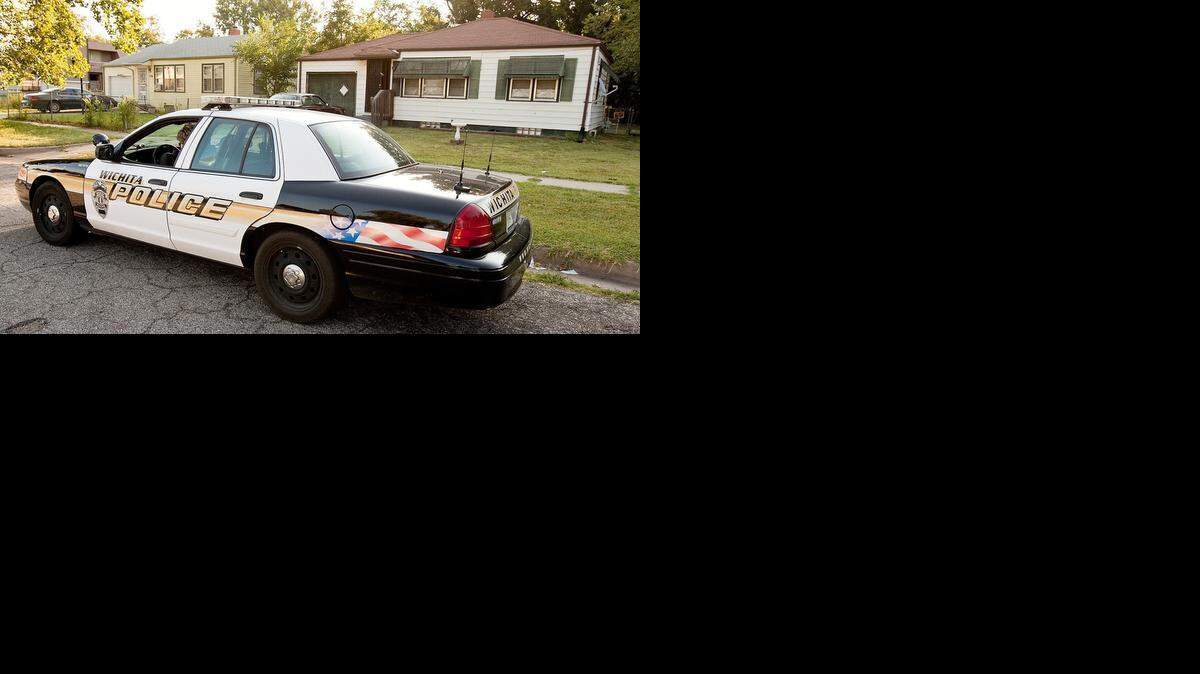
Families of several people shot by Wichita police officers in the past three years have said Sedgwick County’s system of justice protects police officers, no matter how badly officers might act when they shoot someone.
Police commanders and Marc Bennett, the Sedgwick County district attorney, say the system is fair.
But Bennett also said he’s spent much time evaluating how police shootings are investigated. He said national protests after the Ferguson, Mo., police shooting and the choking death of a man in police custody in New York are reminders that authorities need to be transparent about police shooting investigations.
When a Wichita police officer shoots someone, the investigation is almost always handled within the department, with help from the Kansas Bureau of Investigation. Investigators turn over a report to the Sedgwick County District Attorney, who then decides whether the officer gets charged, or cleared with a statement saying the shooting was justified.
No Wichita police officer has been charged in three decades of police shootings, police and the district attorney have said.
James A. Thompson, a Wichita attorney who represents families of three people killed by police, said current policy means “friends investigate friends,” which protect officers from criminal charges and lawsuits. “My sense is that they (police) start from the assumption that the shooting’s justifiable, and that colors their subsequent investigation.”
Police say the DA’s role guards against potential problems. “We don’t rule on WPD shootings, the DA does. This is done to avoid conflict of interest,” Deputy Police Chief Hassan Ramzah said in a statement e-mailed to The Eagle on Friday.
Police and Bennett say investigations of police shootings are done fairly because the KBI, an outside agency, is nearly always involved.
But Thompson said he’s noticed that in the three police shootings he’s studied while preparing lawsuits, it was Wichita homicide detectives who took the primary role in questioning Wichita officers. The KBI agents involved, according to law enforcement investigative files, appear to play more of an observer role, Thompson said.
Any time an agency investigates one of its own, “You’ve got an inherent conflict of interest,” Thompson said. “You’re asking people to investigate and prosecute friends. And they’re supposed to be making an objective investigation.”
Karen Jackson’s family challenged police in the past on why they thought it necessary on July 10, 2012, to shoot a grandmother crippled from leg and hip problems.
Troy Lanning’s mother has questioned the police version of her son’s death, in April 2012, especially after the officer who killed her son left the department after telling accounts about another shooting that his own commanders questioned. Jerome Dixon’s family sued after police shot him in his doorway and in front of his children, on Nov. 7, 2010.
Bennett did not dispute that Wichita detectives worked those cases. But the KBI does not play a mere observer role, he said.
He posed a question: If experienced Wichita and KBI investigators are not qualified to investigate, who is?
Another complication
Bennett’s own office adds yet another complication to his concern, Thompson said.
Bennett employs three of his own investigators—all former Wichita police detectives: Kelly Otis, Clint Snyder and Scott Wiswell.
They serve as a link between police and prosecutors, Bennett said, with one or more going to the scene of every police shooting.
But their past employment creates the perception that the deck is stacked to favor police, Thompson said.
The better way, Thompson said, would have the KBI work the cases in full. Even better, he said: An agency with no close link to the Police Department would do the investigations. “You do that, and you no longer have friends looking at friends’ cases.”
Two Wichita lawmakers are considering legislation that would do just that. State Rep. Gail Finney and Sen. Oletha Faust-Goudeau, both Democrats, are discussing introducing a bill that would call for “outside, independent prosecutor” – someone other than a district attorney or county attorney to investigate police shootings, Finney said.
Legislators in several other states, including Missouri and Colorado, have proposed that independent review boards control investigations of officer shootings.
Troy Lanning
After Wichita police shot Troy Lanning to death, on April 1, 2012, under circumstances that even the District Attorney said were questionable, Lanning’s mother waited two and a half years before anyone from the city said a word to her about what happened.
“The only way I think anyone finally said something to me was that I sued,” Dawn Herrington said. “The lawsuit was never about money,” she said. “It was about finding out what happened, when nobody would tell me. A little transparency goes a long way.”
Bennett conceded that the Lanning case prompted public criticism of how police and his own office handle investigations.
Troy Lanning Jr., 24, was killed by a Wichita officer after he and several other burglary suspects, with stolen goods in their van, ran from officers. Lanning, cornered by one officer, reached into a bag he was carrying, police said at the time. The officer regarded that as a suspicious move, and shot Lanning. Lanning was not armed.
But five months later, the officer who killed Lanning was suspended, and the officer left the Police Department. Police sources said then that commanders suspended him after “grave concerns” were raised about an account the officer gave of a Sept. 4 situation in which he claimed he fired at someone threatening him.
Bennett later took the rare step of calling a news conference to say the case would remain open, neither closed nor justified. “There just wasn’t enough credible evidence” that the shooting was unjustified, he said. But that officer’s later troubles persuaded him to also decline to rule the shooting justified, he said.
Other agencies
Bennett said he has tried to find a better way to investigate officer shootings. For example, he said, he intervened directly, after the shooting of Jared Woosypiti. About 150 law enforcement officers from 18 agencies were involved in the prolonged standoff at the Southlake Village Apartments, 4141 S. Seneca, before Woosypiti was killed in an exchange of gunfire at about 10 p.m. on July 11, 2013.
As a result of Bennett’s intervention, Reno County Sheriff Randy Henderson ran that investigation and assigned four Reno County detectives and an investigator from the DA’s office to interview officers and witnesses. Bennett concluded that the shooting was justified.
Bennett thinks using outside agencies is problematic.
“Could Randy’s detectives show up every time we have an officer shooting here?” Bennett said. “Probably not.”
Homicide investigations require immediate investigation, so how fast could another agency report for duty from Reno or Butler or some other Kansas county? Bennett asked. What government agency would pay for detectives’ overtime compensation? If a detective from outside Wichita gets injured working here, who pays the health care?
Even bringing in the KBI is problematic, Bennett said. Wichita homicide detectives are right here, Bennett said. Including supervisors, the KBI has only 38 investigators to cover 105 counties.
In most officer shootings in Wichita or Sedgwick County, the KBI assists by oversight or observation, and the agency comes in “generally upon the request of the involved agencies,” Special Agent in Charge Mark Malick said in an e-mail. That means KBI agents go to the scene and ask questions, he said. The KBI role involves “shadowing the investigation, taking part in ‘key’ interviews, collection of all reports and investigative material for review and (being) actively involved in the presentation of the case” to the District Attorney’s Office, Malick said.
Special treatment?
According to national police training articles, an officer who shoots someone should receive consideration during the investigation.
According to Richard Ney, a veteran Wichita criminal defense lawyer, the consideration amounts to special treatment that civilians don’t get.
A January article in The Police Chief magazine, published by the International Association of Chiefs of Police, says: “Every effort should be made to conduct only one interview of the officer. … Providing one detailed statement to the agency’s shooting investigative team and the agency’s internal affairs division will avoid putting the officer through two questioning sessions. This will also eliminate the opportunity for a defense attorney to try to discredit the officer by finding slightly different answers to the same question asked in two different interviews.”
But when a homicide suspect agrees to questioning, Ney said, detectives will often question the person multiple times over several hours, asking them to repeat their version. Detectives will testify that “in fact they’re trained to do that,” Ney said.
Paul Zamorano, president of the union that represents about 500 Wichita police officers, says an officer who shoots someone in the line of duty should be able to consult with an attorney before giving a statement. “They maintain the same rights” as a civilian, he said.
Typically, a Wichita officer will provide a statement to detectives four to six hours after the shooting. Usually, they are waiting on investigators and outside agencies like the KBI and the DA’s Office, who are being called in.
The attorney encourages officers to give a statement “if they’re able” psychologically and emotionally, he said.
Sometimes, officers choose not to give a formal statement, and that has occurred in some of the more recent shootings, he said.
In the last fatal shooting by an officer, on Jan. 3 outside a home on North Oliver, the officer who fired a rifle that killed John Paul Quintero did give a statement, and it helped police officials provide media a detailed narrative of the shooting, Zamorano said.
The approach
Tony Monheim, a former longtime member of Florida’s Miami/Dade homicide unit who trains police, including some in Kansas, provided The Eagle some of his written advice for police, including how they should approach the criminal and internal investigations of an officer shooting:
“Make no mistake about it,” Monheim writes. “Both of these investigations are defensive in nature. That is, both are conducted with the best interest of the police department (and the shooting officer) in mind. The truth of what occurred is of paramount importance of course; however, the lead investigator must act as a devil’s advocate, so to speak, and insure that his/her agency is not caught in a compromising or embarrassing situation.”
In an interview, Monheim said, there isn’t a double standard. An officer-shooting investigation is not the same as a murder investigation, he said. To treat an officer as a suspect would be unfair, he said, and it’s reasonable to give the officer the benefit of the doubt.
Reach Tim Potter at 316-268-6684 or tpotter@wichitaeagle.com.
Reach Roy Wenzl at 316-268-6219 or rwenzl@wichitaeagle.com. Follow him on Twitter: @roywenzl.
This story was originally published January 25, 2015 at 11:34 PM with the headline "Families of those killed by officers question justice system."