
Former jailer to speak in Wichita on ‘Mandela: My Prisoner, My Friend’
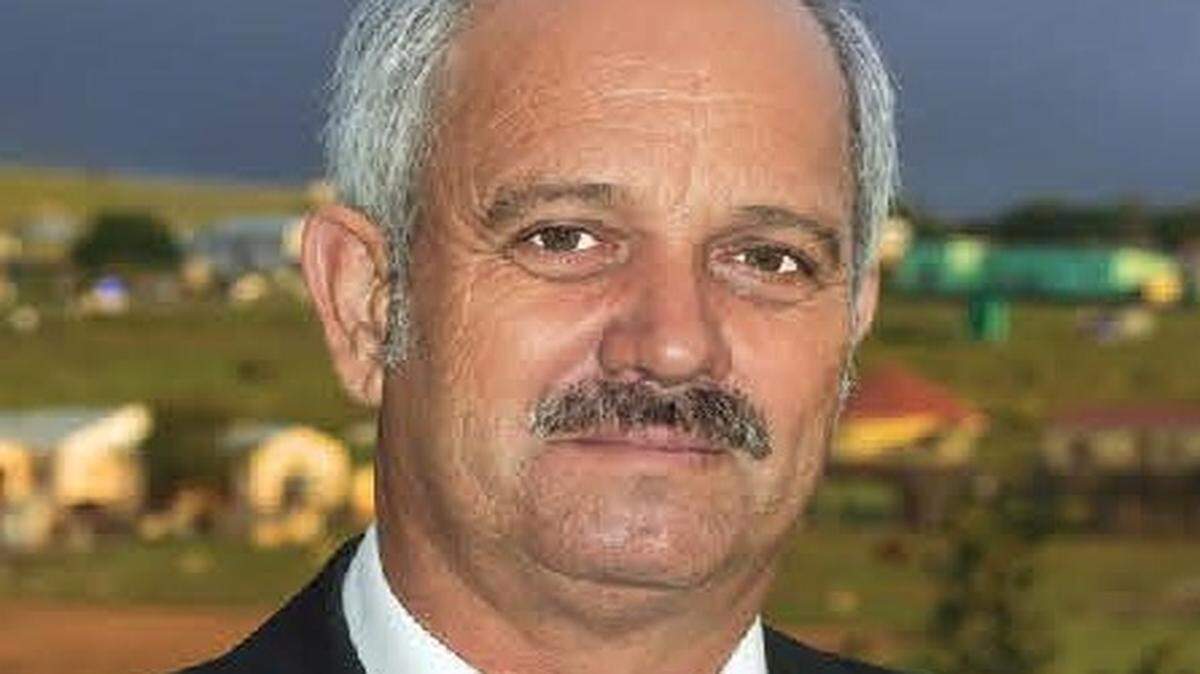
Christo Brand was a teenager when he met Nelson Mandela, an old man sitting alongside the little strip of garden the black South African prisoners were allowed to tend. The old man spoke kindly to him.
“Where are you from?” Mandela asked
“A farm,” Brand said.
“A farm,” Mandela said. “Maybe you can teach me how to grow things here.”
He did. Not long after, the teen prison guard brought him onion seedlings, and apple tree seedlings, and from those seeds a fruit tree grew. And from the seeds of that friendship much more began to grow, in a nation where Brand says his white teenage countrymen were taught lies, and where black teenagers disappeared while held in white police custody.
Brand told this story in a book, “Mandela: My Prisoner, My Friend,” and will tell it in person at 7 p.m. Monday at Wichita State University’s Hughes Metropolitan Complex.
“In my country many white people were taught to hate black people,” Brand said in a telephone interview from Boston. But Brand soon concluded that much of what he saw with his own eyes was appalling. Blacks were mistreated in the prison and made to sleep on concrete, with few blankets. They were denied bread, denied rights. And yet the old man talked constantly of forgiveness.
For that old man, an alleged terrorist, Brand took considerable risks.
Mandela’s wife, Winnie, one day sneaked Mandela’s granddaughter into the prison, hidden under her clothing, and Brand, fearing for his job, stopped her from taking the baby to the room where Mandela waited.
But Mandela cried when told what had happened. Brand took a deep breath, took Winnie back out to where the baby was, and helped her sneak the baby inside.
Mandela became like a father to him, talking about family, love, hate – and forgiveness. “He talked a lot about reconciliation,” Brand said. “Even in prison he talked about how to heal the country.”
Nelson Mandela walked out of prison in 1990 at age 71. Brand watched on television with tears in his eyes.
Mandela won the Nobel Peace Prize in 1993, became president of South Africa in 1994, and kept his word about reconciliation.
Today, South Africa, though still traumatized by racism and division and political problems, is a different country, Brand said.
South Africa is no longer treated as a pariah by other countries. Entire neighborhoods and regions and all the schools are now multiracial instead of segregated, “and my son and many other people have multiracial friends.”
“There are still people who don’t like black people, but they are mostly older white people now,” Brand said.
To this day, black and white people in his country follow Mandela’s example about reconciliation, some of them taking considerable risks to do so. Some white former police officers, inspired by Mandela’s forgiveness, have come forward and met with families of black people whose sons they murdered, he said.
“They’ve met with those families and said, ‘I was a police officer, and I did these things, because it was my job – and I killed.’” Because of those former officers, Brand said, many families have found the bones of family members who disappeared. And those black families, Brand said, have forgiven as best they can those who led them to the bones.
Brand has heard about the racial divide in this country; he’s heard about the Ferguson shooting and the protests. Much of what he has heard, about the disputes and the disagreements, sounds familiar.
“In my country, sometimes when a white police officer is raised in a more wealthy neighborhood and then gets assigned to work in a much rougher neighborhood, they can tend to worry more about their safety and be more ready to shoot to protect their own lives,” he said. Sometimes, he said, when this happens in South Africa, the police bring the officers forward to talk to the families involved and try to work it out. It is not easy, Brand said.
In 2005, Riann Brand, one of Brand’s two sons, was killed in a car wreck. On his way to the mortuary, Brand’s cellphone rang.
“I am so sorry,” Mandela said.
Mandela was in Mozambique, tied up in meetings with heads of state. He was six years retired from his presidency but still involved in many philanthropies. He’d dropped everything when he heard about Brand’s son.
Mandela was about to ask him when the funeral was, because he was going to drop everything he was doing to come, but Brand’s cellphone battery died.
When the old man realized he had missed the funeral, he dropped all his appointments, sent for Brand and his family and sat down with them in his home for hours. One of Mandela’s sons had died in a car crash, while Mandela was in prison. And in his own home, the old man did what he could to comfort the family of the dead.
Copies of “Mandela, My Prisoner, My Friend” will be available for sale, and Brand will sign books after his talk, WSU said.
Reach Roy Wenzl at 316-268-6219 or rwenzl@wichitaeagle.com. Follow him on Twitter: @roywenzl.
If you go
Christo Brand
What: Author of “Mandela, My Prisoner, My Friend” will talk about Nelson Mandela.
When: 7 p.m. Monday
Where: Lowe Auditorium, Hughes Metropolitan Complex, 5015 E. 29th St. North
Admission: Free and open to the public
This story was originally published December 6, 2014 at 4:28 PM with the headline "Former jailer to speak in Wichita on ‘Mandela: My Prisoner, My Friend’."