
Wichitans push for $147 million casino in southeast Kansas
A year ago, Wichita businessmen Brandon and Rodney Steven were looking at whether to put a minor league hockey team in Joplin, Mo.
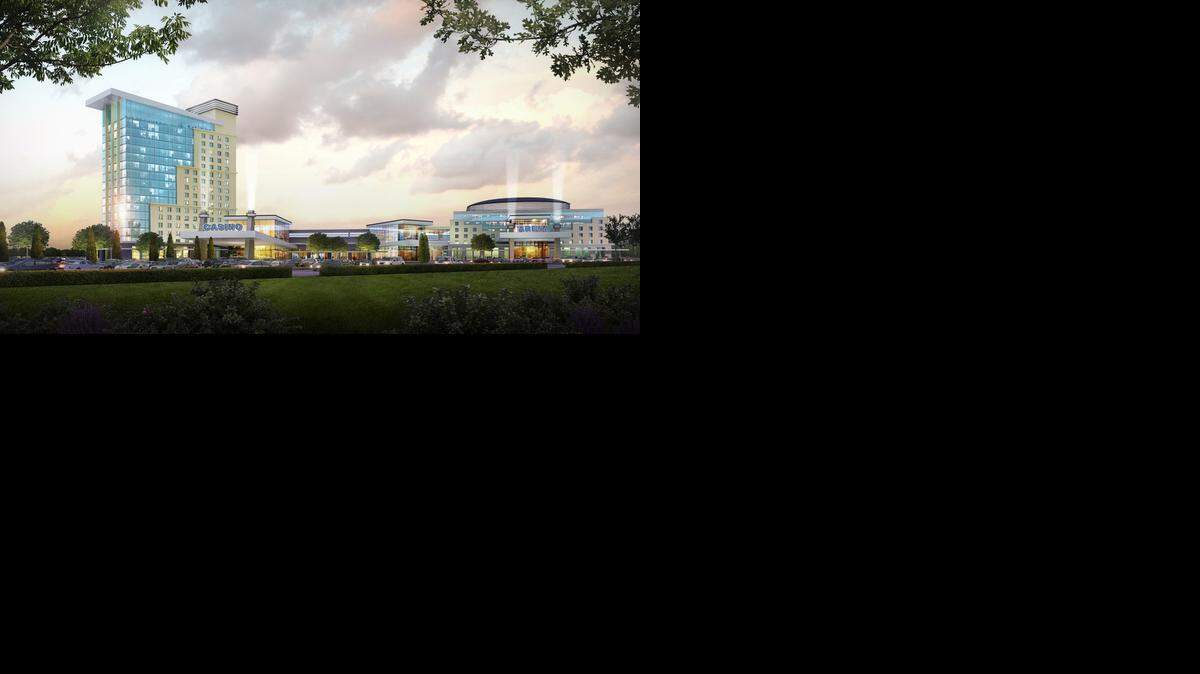
On Monday, they and a group of Wichita investors they recruited unveiled an unexpected outgrowth of that search: a proposed $147 million casino in southeast Kansas.
The project, Castle Rock Casino Resort, would sit on U.S. 400 in Cherokee County less than mile of the Oklahoma and Missouri borders.
Their investment group will face off against at least two other groups to develop Kansas’ fourth state-owned casino. The other three casinos have already been built in Mulvane, Dodge City and Kansas City, Kan.
The state approved building of four casinos, including one in Cherokee or Crawford counties, in the southeast corner of the state, in 2007. The other three have since opened, but earlier casino proposals for the southeast location were withdrawn when economic times got difficult.
This year, the state Legislature lowered the financial requirements for the southeast location and the state offered the proposal again. The deadline for the state to accept new proposals is Dec. 17. A winning bid is expected to be awarded by May 19.
The decision will be made by the Lottery Gaming Facility Review Board, a seven-member board appointed by the governor and legislative leaders.
On Monday morning, several of the investors and others affiliated with the project appeared before Cherokee County commissioners to get their approval – a requirement of state law – and in the afternoon held a news conference at Signature Flight Support, a business at Wichita Mid-Continent Airport.
Gathered for the presentation were the Steven brothers, David Burk, Dave Wells and other investors and advisers. Artist drawings of the casino complex formed a backdrop.
“It’s Kansas investors spending money in Kansas,” said Wells, an owner of Key Construction. “We hope to pull as many people as we can from Oklahoma, from Arkansas and from Missouri to spend their money in Kansas.”
If their project is selected by the state, the casino would have more than 65,000 square feet with 1,400 slot machines and 35 table games and a poker room with 16 tables. The project also would contain an upscale 200-room hotel, three restaurants, spa and more than 27,000 square feet of meeting and convention space, and an 5,000 to 6,000-seat arena that might feature a minor-league hockey team.
They said the casino resort will create more than 1,000 jobs in southeastern Kansas and is expected to generate more than $3.5 million in local taxes and casino revenue sharing. The project would generate an estimated $20 million in tax revenue for the State of Kansas.
Brandon Steven explained that they had actully studied the casino bidding process when the Wichita area casino was being considered. And when they started looking at placing a hockey team, they also started thinking about the southeast Kansas casino project that had gotten delayed. One thing led to another, he said.
“So they just kind of mixed together,” he said.
But the proposal faces some stiff competition. The other proposals come from those with deep experience with Kansas gaming.
Wichitan Phil Ruffin, a billionaire and owner of Treasure Island Casino in Las Vegas and numerous non-casino properties, is partnering with the Quapaw Tribe of northeastern Oklahoma to propose opening a smaller casino on the grounds of the former Camptown Greyhound Park in Frontenac, just north of Pittsburg, which he owns.
He said his proposal would have about 800 slot machines and an unknown number of table games. If it proves successful, he would build a hotel and resort to go with the casino.
And Equity Ventures, a Topeka real estate developer involved in winning bids for casinos in Mulvane and in Dodge City, is proposing a casino at the corner of U.S. 400 and U.S. 160, about five miles south of Pittsburg. The developers have asked the city to annex the property into the city, according to Pittsburg City Manager Daron Hall.
Ruffin on Monday cast doubt on the business sense of the Castle Rock project, saying it’s too expensive and in the wrong location.
The big issue is that Quapaw Tribe already owns an enormous resort casino, Downstream Casino Resort, just over the Kansas state line in Oklahoma. It’s so close to the state line that its parking lot extends into Kansas. Castle Rock would basically sit across the road from Downstream.
Downstream couldn’t lose that competition, Ruffin said, because it doesn’t pay any federal tax. It’s tribe owned.
“One pays taxes; the other one doesn’t,” Ruffin said. “That’s a 27 percent advantage. But it’s their choice.”
He opted to work with the Quapaw, having them run his casino, and reduce the risk by building a smaller, less expensive casino 40 miles away from the Downstream Casino.
Castle Rock’s top adviser, Saverio “Sal” Scheri, president and CEO of the casino consulting firm WhiteSand Gaming, said they are well aware of Downstream Casino and considered it a plus rather than minus.
The locale will become a gambling and resort destination for the hundreds of thousands of people in the region.
“There is already a market there,” he said. “There is already something exciting, compelling. And it’s important for the gaming customers to have options.”
And, he said, in any competition, they felt good because they’ll have all new slot machines and none of the restrictions on table games that Downstream has.
“It will have the only true Las Vegas-style table games,” Scheri said.
The casino in Dodge City has generated more than $200 million in revenue after paying out winnings since opening in late 2009. Of that, the company that manages the casino has received $146.7 million, from which it pays all operating expenses.
Reach Dan Voorhis at 316-268-6577 or dvoorhis@wichitaeagle.com. Follow him on Twitter: @danvoorhis.
This story was originally published November 24, 2014 at 7:59 PM with the headline "Wichitans push for $147 million casino in southeast Kansas."