
Natural remedy or addictive drug? Starting July 1, kratom and 7-OH will be illegal in KS
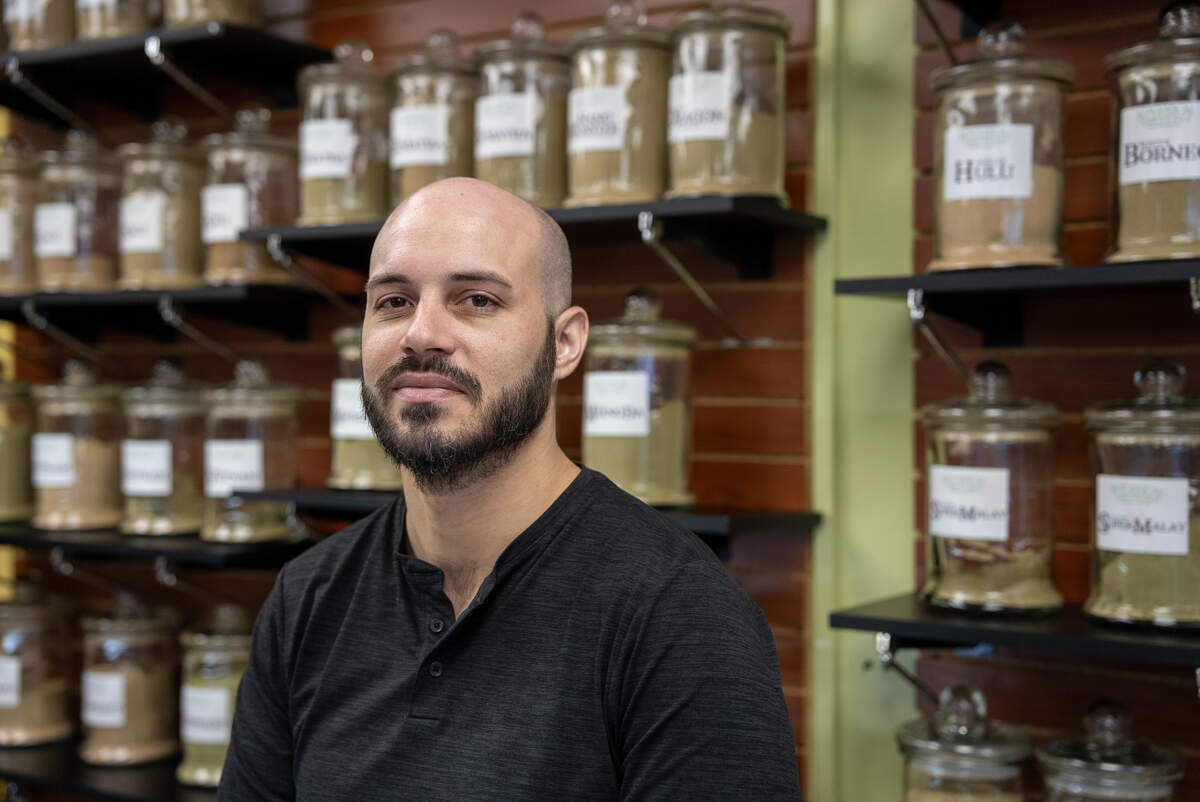
As he stood behind the counter of the Kratom City store he operates in south Wichita, Josh Schwab talked about the changes that will need to happen for his business to continue in the city.
That’s because kratom will be illegal in Kansas beginning Wednesday. In April, Gov. Laura Kelly signed legislation brought by lawmakers to designate kratom and related substance 7-OH (7-hydrooxymitragynine) as Schedule I drugs.
The Schedule I label notes that the government believes a substance has a high potential for abuse and that it doesn’t have an accepted medical use.
In April, Kelly said this about kratom in a statement:
“The U.S. Food and Drug Administration is in the process of determining whether kratom is a safe and effective means of treating certain medical conditions. Until such a time as quality scientific reviews determine positive impacts and minimal health risks, it is wise to safeguard the health of Kansans.”
A plant that is native to southeast Asia, kratom has become more popular in the United States in recent years among those wanting to treat anxiety, pain and in some cases, drug dependence.
It’s also used by some who simply want a jolt of energy. Taken appropriately, Schwab said, he views kratom as something of a step up from caffeine.
“Saying that kratom is dangerous is like saying coffee is dangerous,” Schwab said. “Kratom is quite literally a member of the coffee family. In the capsule form, it’s no more addictive than coffee.”
With many, the gray area in the kratom debate seems to center on 7-OH, a chemical compound that is a component of kratom. 7-OH is much stronger than kratom.
Heath Bechler, CEO of Cherry Creek, a drug treatment facility in Wichita, said he applauds the change.
Bechler said he understands that kratom has a positive for certain people who deal with certain ailments, but he said the 7-OH compound has been particularly troublesome.
“As a 30-year drug treatment professional, I’m happy this has finally come along,” Bechler said. “Kratom has been so problematic for so many people. We have seen people where the effects of kratom and the new (7-OH) have been devastating. Some have come into our center and described the withdrawal symptoms from (7-OH) as being worse that opioid withdrawals.”
Seller of kratom, 7-OH prepares for change
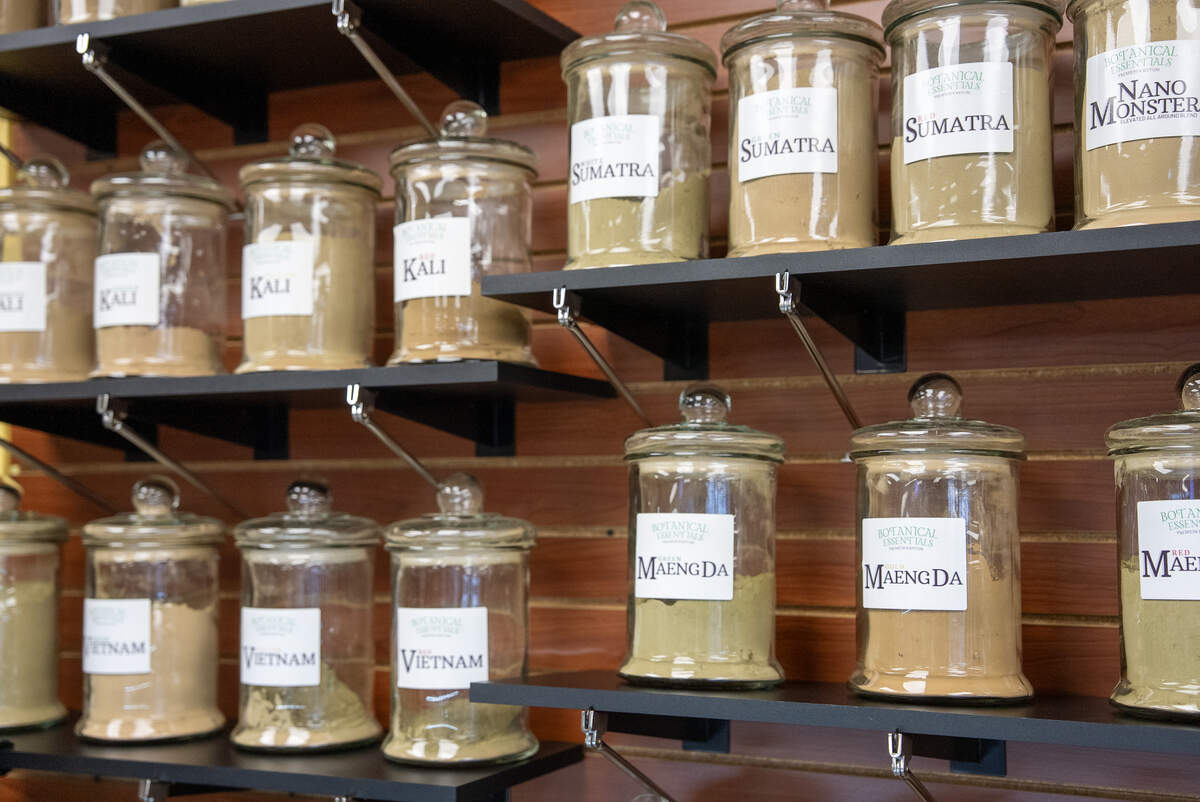
At Schwab’s store, at Seneca and Pawnee in south Wichita, he sells a multitude of different types of kratom capsules. There are different blends, such as Bali Gold Power, Elephant Gold, and Indo Green, though Schwab admits the names are mostly used for marketing effects.
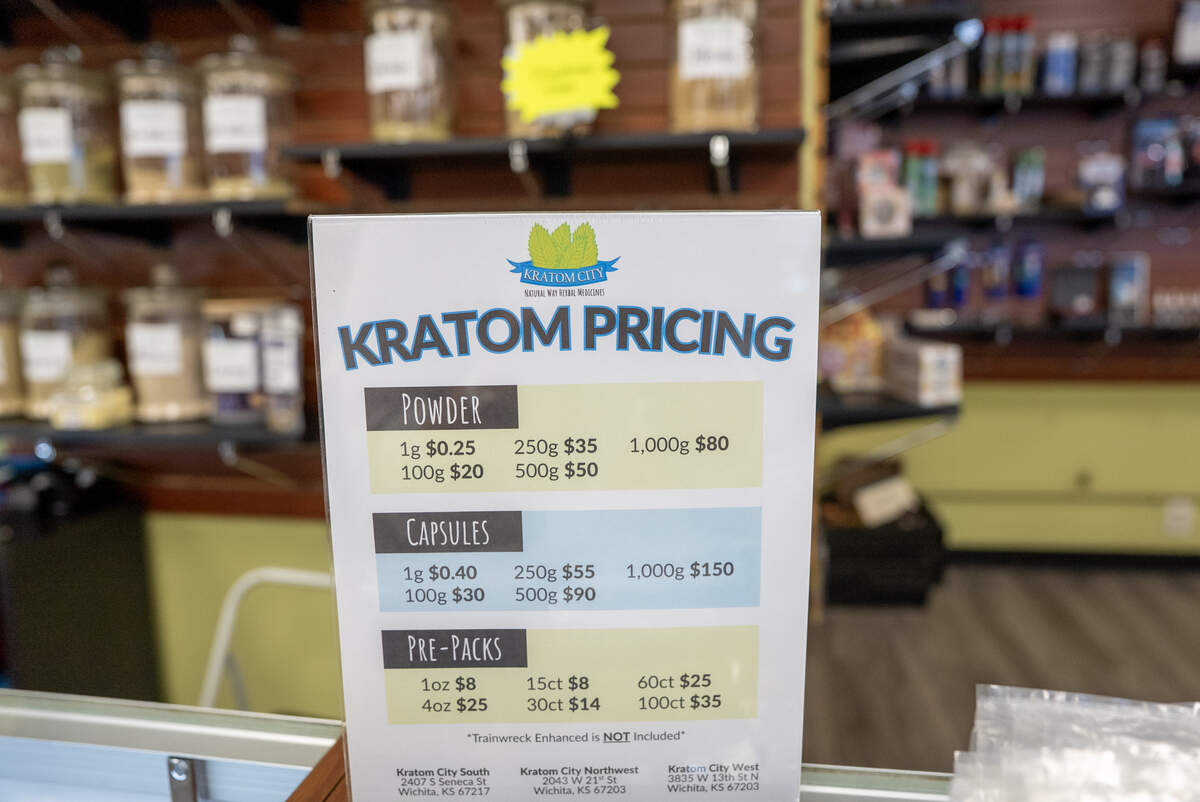
For the most part, one capsule costs anywhere from 25 cents to 40 cents. There are also drinks that contain kratom – one is called “K Shot Focus” – and tablets. In a separate area behind the counter, containers of tablets labeled as 7-OH sit on a shelf.
Schwab said kratom products have been selling at double or triple what they normally would in recent weeks as the ban approaches. Kratom isn’t the only thing Schwab sells at his stores, but the change, he said, will certainly cut into his bottom line.
Last week, Schwab, a Wichita resident, was in Oklahoma. He’s attempting to open some new stores there to help mitigate likely financial losses in Kansas after the new law takes effect. For now, he said he doesn’t plan to close to his portfolio of Wichita stores, which also include two “Up N Smoke” locations.
“We felt like we had to start carrying 7-OH because so many of our customers were asking for it,” Schwab said. “Honestly, I don’t think the synthetic 7-OH has any place in our society. It’s no good and, ultimately, 7-OH has been related to kratom. I think whoever created 7-OH ruined things for everyone.”
Andrew Ford, a spokesman for the Wichita Police Department, said the new law will be enforced the same as any other law that deals with an illegal controlled substance.
“As the law goes into effect, members of our department will receive updated information, so officers are aware of the change and how it applies in the field,” Ford said in an email.
Kratom, 7-OH and addiction
Schwab said he got into the natural remedy business partly because he saw numerous friends suffer from drug addiction.
Schwab said he’s taken kratom for about a decade and that he believes in the plant’s benefits. He said his wife has also taken kratom for years to help with pain management.
“Kratom is not only natural, but it’s a very cheap alternative,” Schwab said. “We have thousands of customers who have benefited form kratom. Kratom has helped give many people their lives back.”
Jon Siebert – an addiction medicine doctor who now works as chief medical officer for Valley Hope, which has addiction treatment centers in Wichita, Moundridge, and other locations in Kansas – said he first started hearing about kratom five or six years ago.
“To me, I just wonder how 7-OH was ever legal in the first place,” Siebert said. “It’s heavily modified and the potency of that stuff, it’s very similar to morphine.”
About a year ago, Siebert said it was relatively rare for someone to come into a Valley Hope location because of kratom or 7-OH. Now, he says, it’s basically a daily occurrence.
“I’m worried about what’s going to happen with some of these people when the law goes into effect,” Siebert said. “When you look at kratom and 7-OH, what usually happens is when something is related enough to something else, it will get lumped in together. I’m not a lawmaker, but I think that’s what happened with kratom and 7-OH. We wouldn’t be seeing near the problem if we were just talking about kratom and not 7-OH.”
Schwab said he never thought Kansas would ban kratom. Now, though, that’s the reality he and his business partners will have to navigate.
“We thought Kansas would recognize the difference between a synthetic man-made drug and a natural kratom leaf,” Schwab said. “Right now, I know people are panicking and stocking up online. I’m sure there will be plenty of businesses that will ship to Kansas. Right now, I’m just afraid that we’re going to find that some of our customers, our friends, are going to go back to drugs. Sadly, I think we’ll see a lot of that soon.”