
A third Wichita suburb eyes rules for future duplexes. It joins Derby, Goddard
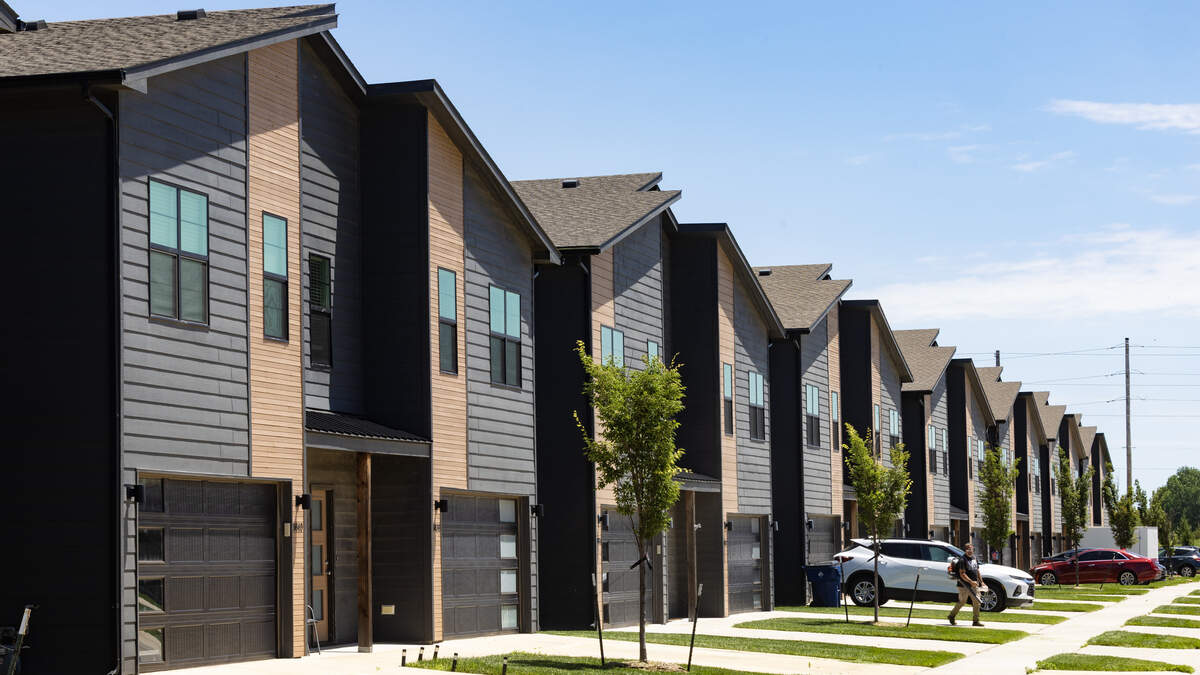
When members of the Wichita Area Builders Association speak to the Goddard City Council on June 15 about the city’s proposed duplex regulations, council members and residents aren’t the only ones who will be paying attention.
“I’m observing carefully what’s going to happen with Goddard’s (proposed regulations),” said Maize City Manager Nick Gregory during a recent interview with The Wichita Eagle. “I think we want to do something probably sooner rather than later, and it’ll probably coincide with some (updates to) our comprehensive plan.”
Maize would be the third Wichita suburb to consider regulating duplex developments in some way. Derby recently approved regulations governing everything from the density to design of future duplex developments.
The Goddard City Council’s scheduled vote on its duplex regulations is July 6, according to City Manager Craig Crossette. Goddard had planned to vote on new duplex regulations May 18, but the measure was tabled after Crossette told council members that he had received some last-minute correspondence from WABA, and he thought it would be prudent to talk to the home builders trade group before approving any changes.
“I don’t want anyone to get the impression that we’re having cold feet on the spirit of the law as it is, but more so we think it is important to have a lengthier conversation with (WABA) and get some of their feedback” before taking a vote on the resolution, Crossette told council members then.
“Our goal isn’t to ultimately stop these standards from going through,” Tyler York, WABA’s president and CEO, told The Wichita Eagle during an interview late last month in reference to speaking before the Goddard City Council. “But we would like to talk about what these regulations could mean to the cost of these developments.”
He said some WABA members are experiencing the same duplex fatigue that these communities are. He said he didn’t want to discuss specifics of Goddard’s proposed policy until WABA has a chance to meet with the City Council.
In an interview last month with The Wichita Eagle, Crossette said he couldn’t say whether the Goddard City Council would make any changes based on WABA’s comments, but city staff already was looking at a few tweaks to wording in the latest version of the duplex regulations. In a follow-up email on June 12, Crossette said additions to the proposed regulations will include requiring a storm shelter, and space and a rough-in for a water softener, as well as language that would encourage developers to locate duplexes on the curved portions of roads whenever possible.
Meanwhile, Maize will be watching and making its own decisions about whether it considers any duplex restrictions.
“We’ve had multiple discussions with different communities and the challenges that are arising with the sheer amount of duplexes coming through,” Gregory said. “You look at a lot of our new neighborhoods, they’re great. They’re great to have the duplexes. But we’d like to see some variety. … We may look at something very similar to what Goddard is proposing.”
In an earlier interview with The Wichita Eagle, Gregory said Maize had about 1,300 home sites that were ready for development, and he said a good chunk of those will be duplexes.
So far this year, builders in Maize have pulled permits for 31 single-family homes, 54 twin homes, nine duplexes and 12 multifamily units, meaning that 70 percent of all new homes are something other than single family. In 2025, builders doing work in Maize pulled permits for 147 single-family homes, six twin homes and 57 duplexes. And, in 2024, builders doing work in Maize pulled permits for 119 single-family homes, 12 twin homes and 104 duplexes. All data was supplied by Mitch Young, planning and zoning administrator and floodplain administrator for the city of Maize.
Gregory said he understands that developers are looking at projects from a financial standpoint, but the city needs to look at future development based on what the community might look like 20 to 30 years from now.
“We want to make sure they’re quality duplexes,” he said. “And we want to make sure if that trend ever turns backwards, where people don’t want to see duplexes, don’t want to live in duplexes, that we haven’t overbuilt that.”
Gregory said he doesn’t have a particular date in mind when something might be presented to the City Council, but at least part of any changes to how duplexes are built going forward might be included in the updated comprehensive plan the city is working on. Those updates will need City Council approval.
Goddard’s proposed duplex regulations
As proposed on May 18, Goddard’s duplex resolution would include the following stipulations:
• Duplexes may not make up more than 40 percent of the total number of homes in future developments.
• New design standards would seek to diversify the look and improve the perceived quality of these properties.
• Developers must install a private amenity that meets the standards provided in the resolution. Options include playground equipment, trails, open lawn play areas, picnic facilities, benches, shade structures, sports courts or other improvements approved by the city.
• The proposed resolution allows the City Council to waive in part or in whole provisions of the resolution in the event they are deemed impractical.
• The latest version of the resolution has removed language related to irrigation, lighting and other elements in an attempt to prevent a developer from stating these items constitute an amenity.
• Five-foot-wide sidewalks would be required on all through streets in new developments featuring duplexes, and a minimum of two trees per lot would be required before a certificate of occupancy is issued.
• Varied porches, rooflines and facade depths would be required to create variety and individuality of the dwelling units. In addition, windows must make up at least 10% of the front wall of each home, and garage doors may not take up more than 50% of the front of the home.
• A minimum of 30% of front exterior walls or side walls that face the street would be required to be finished with decorative masonry, stone or stucco. “Synthetic or imitation materials with a false or ‘tacked on’ appearance” will not be allowed without the written approval of the city manager or his or her designee.
• Roofs and exterior paint colors would have to be varied and have predominantly earth-tone colors.
• Side and rear elevations, garages, carports and all accessory structures would have to show the “same level of design, aesthetic quality and architectural detailing” as the front-facing parts of the main structure. “Long, monotonous rows of garage doors and building walls” would not be allowed in the current version of the resolution.