Former church building downtown will take on a new mission. Here’s what’s planned
A downtown church building that once supported parishioners spiritually will soon be remodeled in order to serve the physical, mental and emotional wellbeing of public safety workers across Wichita and Sedgwick County.
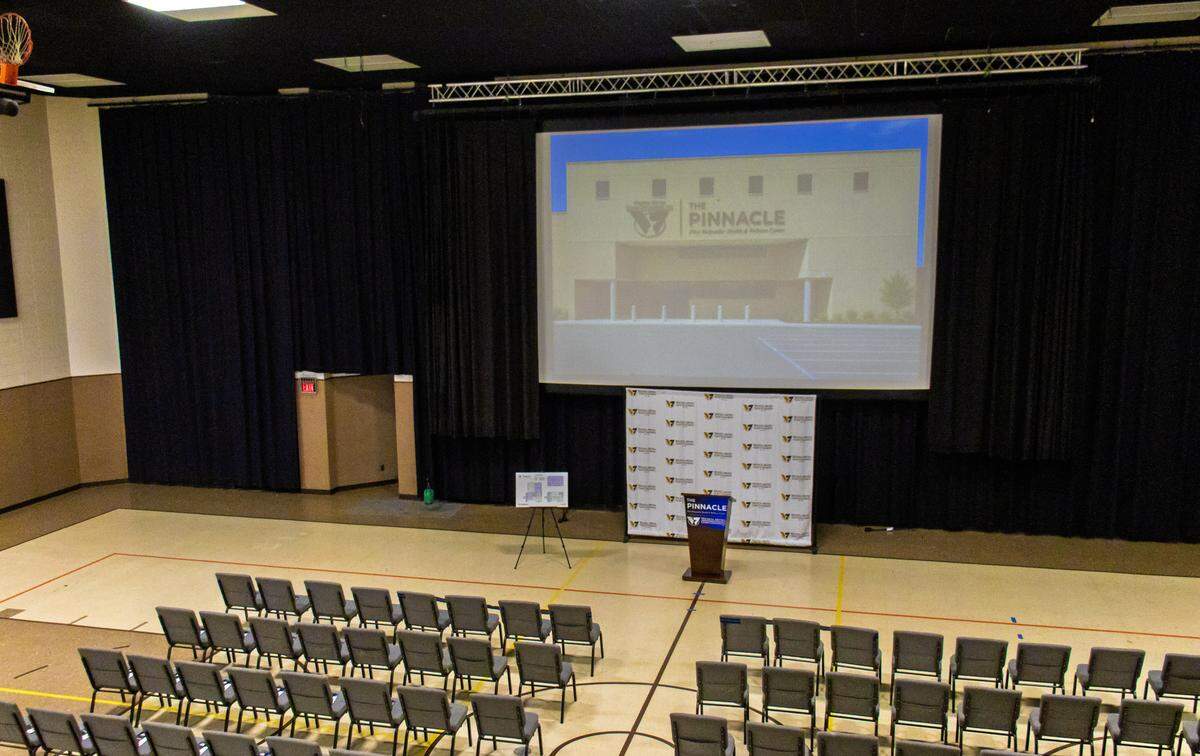
City and county law enforcement officials said Thursday that the Wichita Metro Crime Commission has purchased what was once the First United Methodist Church’s Building D, on the southwest corner of 3rd and Topeka. Construction will soon start to transform it into the $5 million privately funded Pinnacle First Responder Health and Wellness Center, a premiere “one-stop-shop,” Sedgwick County Sheriff Jeff Easter said, to serve and provide support to more than 2,000 city and county public safety employees, from first responders and coroners to forensic scientists, district attorneys and more.
“We’re all kind of in the same boat when it comes to experiences that they’ve seen that can affect them both mentally … (and) physically,” Easter said. “It’s just a case out in the streets, but it touches all these entities. Some of those things are extremely tragic to deal with all the way through the system, and so it gives everybody the opportunity to seek help when they need it, hopefully to stay in shape, and then other services that the center will provide.”
The facility will consolidate services previously offered by agencies individually. Under one roof, Pinnacle will house on-site counseling, peer support and fitness resources, and will expand over time to meet the evolving health and wellness needs of people who work in public safety. Eventually, that may include healthy and accessible meals, physical therapy and health screenings, Easter said.
It’s a continuation of what Easter said has been an active effort, both for the city and county, to change the culture around first responders’ health and wellbeing, specifically mental health care.
“In my day, you didn’t talk about this stuff. You didn’t show emotion. If you did, you were seen as weak and ostracized,” he said. “We know what that’s contributed (to), which is high suicide rates for cops, high divorce rates, and high alcoholism rates.”
In addition to dismantling the stigma surrounding mental health care, Wichita Police Chief Joe Sullivan said the care provided from the dedicated facility will enable public servants to provide even better services to the community in return.
“We know in order to do our jobs the best, we need to be healthy mentally and physically, and this will be a center that will enable our personnel, all of our public safety partners, to do just that,” Sullivan said. “To come in and enrich themselves physically and mentally, and to be in a place where they have resources available, right down to the healthy meals.”
The trickle-down effect won’t stop there, Sullivan said; the availability of services and support will also positively affect retention and recruitment for workers including law enforcement officers, firefighters, emergency medical personnel, emergency communications workforce and community corrections professionals.
“We know from our recruitment experience when we survey our new hires of what it was that attracted them to our department, and they talk about our investment in wellness,” Sullivan said. “Because young people today understand the importance of wellness and the importance of a work-life balance, so this will be incredible for recruitment.”
The project — from the purchase of the property to demolition and construction — is privately funded via donations collected by the Wichita Metro Crime Commission, board chair Alan Banta said. When Pinnacle opens, Sedgwick County and the city of Wichita will each pay 50% of operating expenses not to exceed $94,000 annually. The commission will cover additional expenses, and the county will act as the facility manager.
Banta said Thursday that Pinnacle is the biggest project the commission has undertaken in its 75-year history.
“This is a big step for us, and was a leap of faith, but also a commitment to law enforcement and all first responders, and to our community,” Banta said. “This is going to benefit our community for decades to come. So it was a big challenge, but we felt like the heart was there amongst the donors in Wichita, and the population, and the electeds.”
He said he hopes when the facility opens in early 2027, it can be the model for what it looks like to take care of the people dedicated to taking care of others.
“I can’t imagine what they (first responders and public safety personnel) go through,” Banta said. “Thankfully we’ve got people that will do that — really, really good people. You’ve got to take care of those people, and I think that around the country you’re seeing interest and realization that this is important, and I think what we can do is show that Wichita is the leader.”
This story was originally published May 22, 2026 at 4:23 AM.