Commissioners approve using $1.28M from contingency fund to cover missing auction money
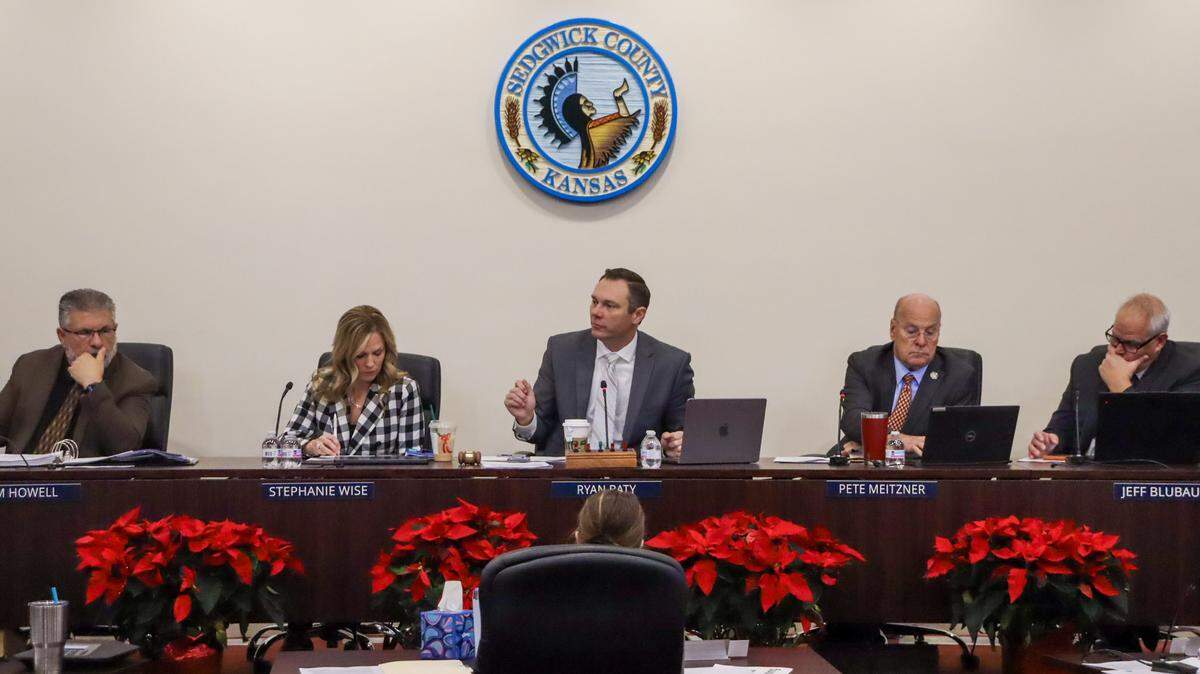
Sedgwick County will use $1.28 million in contingency money to pay people left hanging after an online auction company failed to pay money owed from October tax foreclosure sales.
Commissioners said it’s the first step in not only making right with those who participated in property foreclosure sales but also in potentially reforming the process that allowed the county treasurer to approve the contract CivicSource without getting commissioner approval, using the county’s competitive bidding process or consulting the county’s legal counsel.
“To all the creditors out there that would have received some of these funds ... They did nothing wrong. They deserve their money through this process,” Commissioner Jim Howell said. “ ... We trusted this company, and unfortunately, we didn’t have everything in place maybe as good as we maybe could or should have.”
Segdwick County has been using CivicSource, a New Orleans-based online auction company, since 2022 to conduct property tax foreclosure sales and to collect the auction proceeds.
This year, a sale for about 80 parcels was held through CivicSource on Oct. 21. The company collected $1,281,357.08 in sale proceeds and fees from the auction.
Despite previous successful sales and multiple assurances from the company’s CFO that they would pay up, CivicSource has failed to give the county the money, Sedgwick County’s Chief Financial Officer Lindsay Poe Rousseau said.
On Dec. 10, county officials announced that a theft report had been filed with local and federal authorities against the auction company. A spokesperson with the county said it would pursue “any and all legal remedies to recover the funds.”
As a result of the theft, commissioners voted Wednesday to take $1.28 million from the county’s operating reserve in the general fund and place it in the treasurer administration fund center in order to pay creditors and lien holders who participated in the October sale.
“I’m extremely disappointed in the fact that we have to pay taxpayer money to make this whole,” Howell said. “And I sure hope that we can redeem this by having this company do the right thing and we receive our payment down the road, that would be the very best outcome.”
CivicSource did not respond to requests for comment.
The operating reserve comes primarily from surplus general funds that are rolled over year to year and used as needed in emergencies. Poe Rousseau said the reserve is specifically suited for these kinds of unforeseen circumstances. For example, during the COVID-19 pandemic in 2020, funds were pulled from the operating reserve to host vaccination sites and provide other essential services.
“We always just have a pocket of funds there that’s available for the commission to access if we have something unexpected pop up in the course of the year,” Poe Rousseau said.
Commissioner Ryan Baty said commissioners “believe and hope that the county will be made whole at some point in time. But individuals that participate in these 81 properties ... did so in good faith. So what we are doing because of the position that we are in is we are going to make them whole while we’re continuing to work.”
That work may include amending the purchasing charter and tax foreclosure public auction processes. Although the treasurer acted within her authority when approving the CivicSource contract without a competitive bidding process or the approval of the county commissioners or legal counsel, some commissioners suggested they want to reform how the funds are received and how contracts are approved.
“No one did anything that wasn’t allowed by the processes and procedures that we currently have defined for county government,” Howell said. “ That’s the process that was allowed by law, but that’s not where I want to be in the future.”
In the meantime, Poe Rousseau said, the county hopes to either be paid by CivicSource or to obtain the $1.28 million — or at least some of it — through litigation against CivicSource.