Cuteness magnet: Viral hippo at Kansas wildlife park attracts fans, awareness
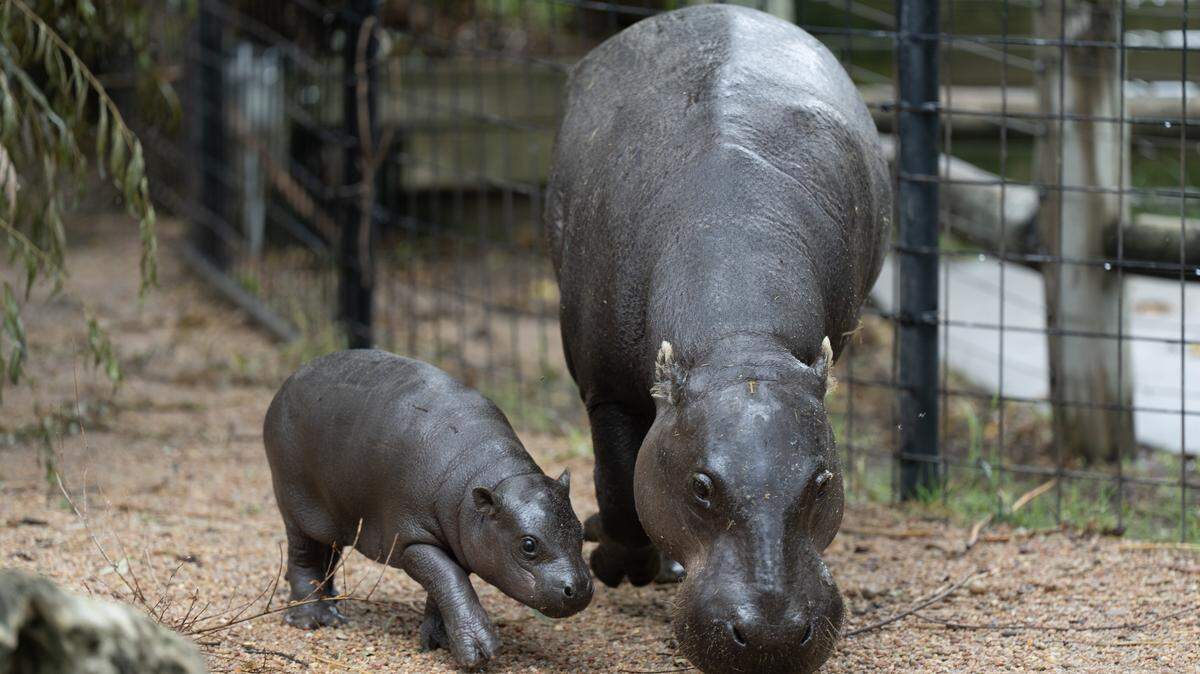
Kansas has a superstar. He’s slippery, spunky and stealing hearts around the world with his stubborn antics.
His name is Mars.
Tanganyika Wildlife Park’s newest pygmy hippo calf has sparked a social media frenzy in recent months, taking over timelines and racking up millions of views and likes on TikTok, Instagram and Facebook.
Fans are watching video after video of the tiny hippo: lazing in the sun, swimming in his pool and, mostly, trying to thwart his keepers when they are ready to take him inside at night.
“I think it is pretty clear from the side flop and ear wiggle that he absolutely does NOT want to walk on his own to the inside,” one commented on a video of Mars refusing to walk inside.
They call him a potato — a flying potato when he is airborne as a keeper carries him — and joke online about buying a little red wagon or calling AAA for a flatbed tow.
Park employees say it’s not all about the clicks and shares. Mars’ newfound fame helps bring awareness to the endangered species — awareness that can turn curious social media scrollers into animal advocates.
“… That's kind of the overall strategy that we have in turning this exciting little guy that everyone finds so cute into something that makes an actionable difference for rare, endangered species,” Tanganyika marketing manager Daniel Neale said.
One poster agreed: “Isn’t it mars-velous how a silly stubborn baby hippo has the internet ablaze? I love watching him. And bc I see him - I also get to see other animals and learn about them.”
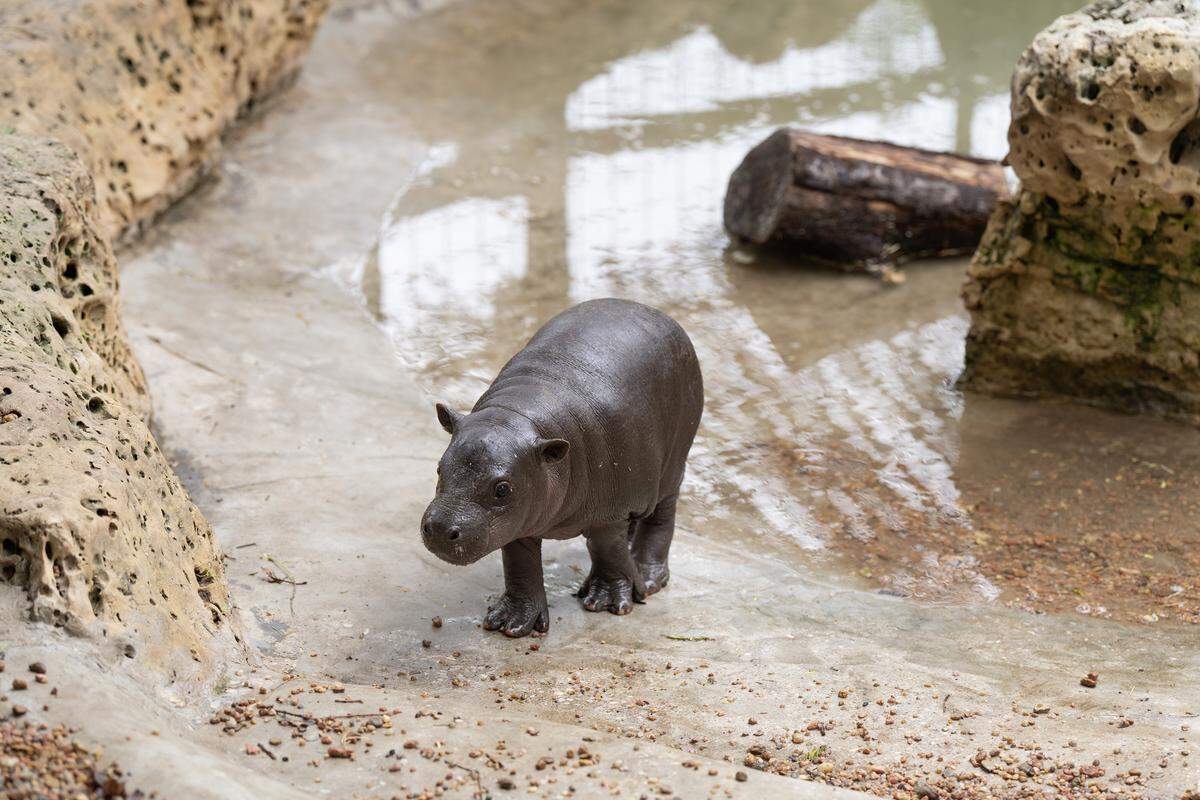
The making of Mars, the pygmy hippo star
At first, Tanganyika’s digital content specialist and the creator behind the popular Mars videos was stymied about how to capture Mars. “He wasn't doing a whole lot of anything,” Melissa Steven said. “He was just ... laying around and sun bathing. All the videos were starting to look the same — just Mars laying there — which still, I’d have to say, pretty cute.” But soon, she found the action. His stubborn personality surfaced when it came time for Mars and his mom, Posie, to enter the indoor enclosure. Desperate for a few more minutes in his outdoor enclosure’s pool, Mars would slip away from keepers and plant himself, using his 40-plus pounds of pygmy hippo weight to make himself more difficult to move. “I started recording that, and realized that if that was making me laugh out loud, that the world was going to love it, as well,” Steven said. She was right — the most viewed video of Mars on TikTok amassed more than 6.5 million likes and more than half a million shares. And that popularity has translated to park attendance, as well.
Park guests have come from as far as Canada and California just for a peek at the potato-shaped sensation, director Matt Fouts said. And when Mars gets his midday feeding, families and fans are eagerly awaiting him. “People line up and wait for that,” Steven said. “And when he walks out the door, they cheer for him.”
Steven and Neale said they’re overjoyed to see park guests and followers on social media share the love they feel for Tanganyika animals.
And once they fall in love with Mars, they can take the next steps in helping the endangered species the park raises awareness for. Neale compared the staff’s conservation tactics through social media to a marketing funnel — once you generate awareness, you can translate viral excitement into visits and actionable conservation.
Mars is one of roughly 450 pygmy hippos living in human care around the world, Neale said. Estimates gauge there are less than 2,500 left living in the wild, according to World Wildlife Fund. That’s why Tanganyika started a breeding program — the only one like it in the state — for pygmy hippos.
Mars not the first pygmy hippo calf in Kansas
Mars isn’t the first pygmy calf to be born at Tanganyika. Over the last several years, Mars’ parents, Posie and Pluto — the only breeding pair in the state — have had four other calves, with Mars marking the couple’s fifth successful birth.
None of Mars’ siblings have reached his level of stardom.
“For 40 years, we’ve been a breeding facility, and we’ve had lots of babies,” Fouts said. “And periodically, you’ll get one that kind of seems to catch the public’s attention more so than others, but nothing to the extent of what Mars has currently done. I don’t think we had any idea that he would be quite so popular.”
Since Mars’ birth in June, conversations about him and the conservation work being done at Tanganyika have been featured on ABC News, TODAY and USA TODAY.
Neale said the team at Tanganyika has had a unique advantage when it comes to Mars’ easily acquired popularity, thanks to other famous pygmy hippos like Thailand’s Moo Deng, Edinburgh Zoo’s Haggis and Virginia’s pygmy hippo Poppy.
But the success has also been the product of a dedicated and passionate social media team, whose videos of Mars keep park visitors, fans and animal enthusiasts coming back for more.
“It’s definitely still a small but mighty team, but we’re really, really lucky to have a group of folks who are incredibly passionate about the mission at the park to save rare and endangered species, and put all of their efforts and all of their creativity and all of their work ethic into trying to accomplish that goal,” Neale said.
Although the pygmy hippo offspring at Tanganyika are typically sent to other facilities across the country to aid in species repopulation, Neale reassured Mars fans that there’s no plans for the calf to go anywhere anytime soon.
Neale said pygmy hippo family experiences with Mars are booked out through the end of the year. Eventually, Mars will be old enough to participate in his own interactive experience where guests can feed him chunks of butternut squash and receive their own one-of-a-kind nose print painting. And the park will soon offer Cameos — personalized video messages — of Mars as well.
That may not be enough for some fans. One commented on a Mars video: “What if ... and hear me out ... I just want to take him home?”