Despite losing vision, Kansas man paints a brighter future for sight-impaired children
AI-generated summary reviewed by our newsroom.
- Balbir Mathur trades original paintings for donations funding children's eyeglasses.
- Art Connecting Hearts, run by Trees for Life, raised $3 million for eye care in 2024.
- Despite blindness, Mathur produces spin art and inspires global philanthropic efforts.
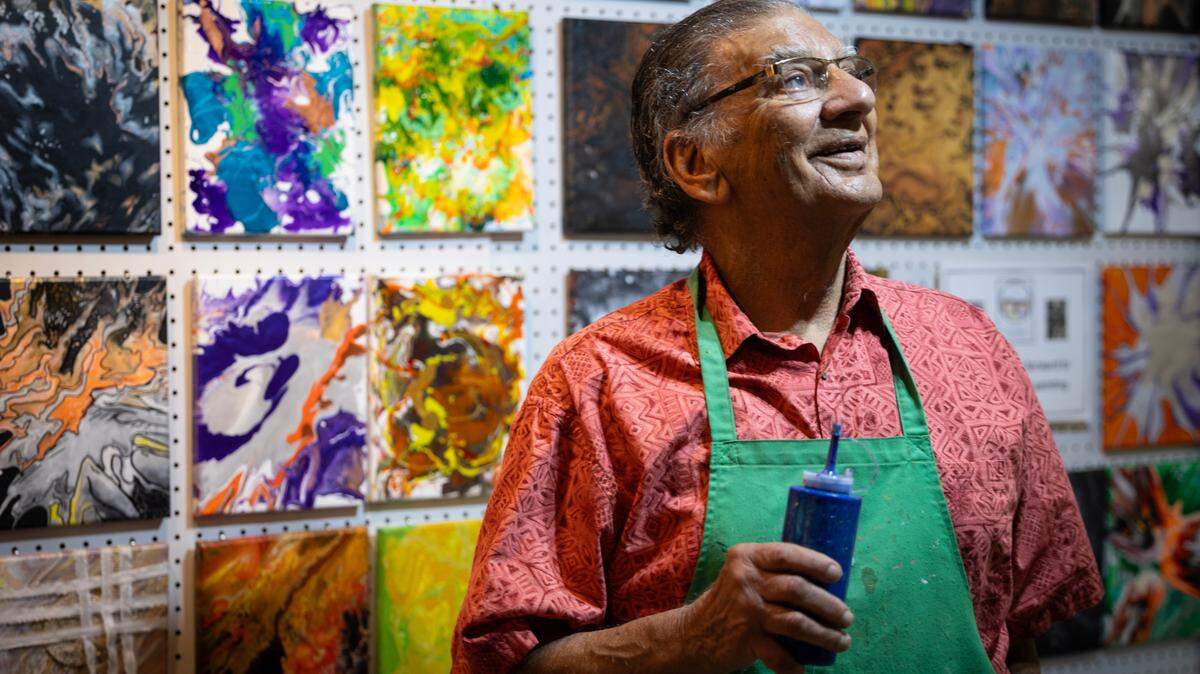
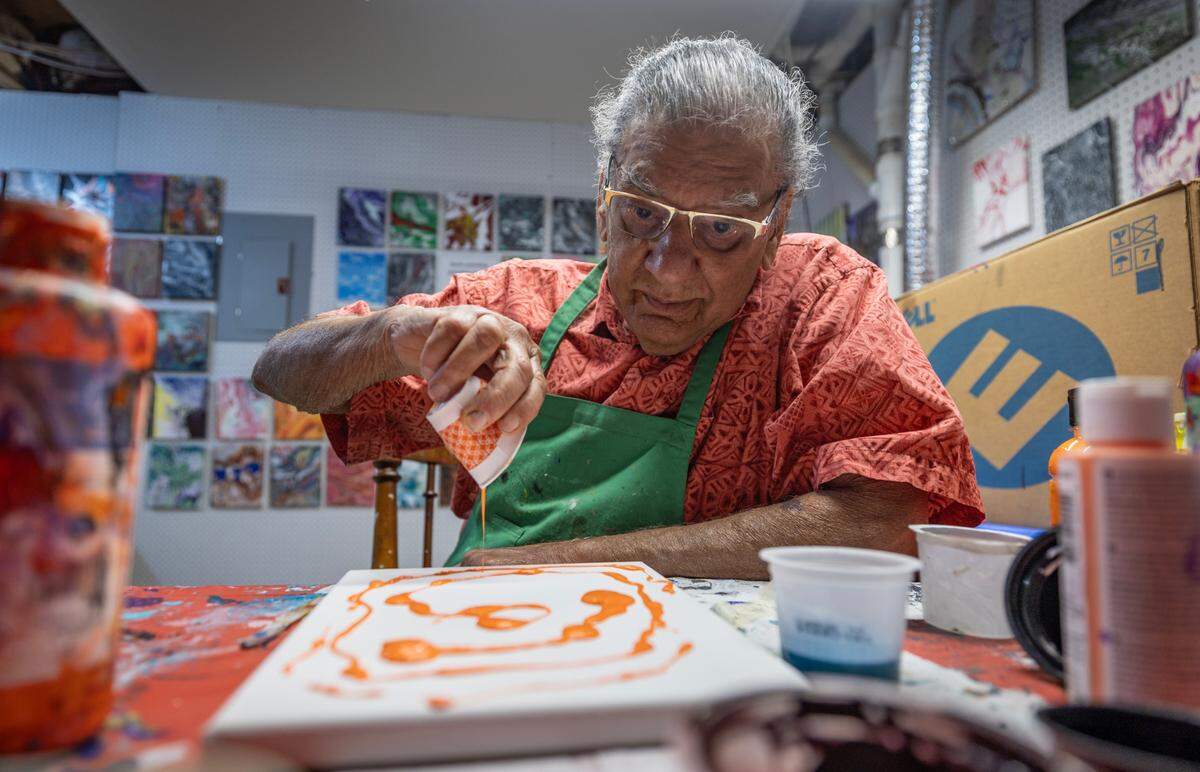
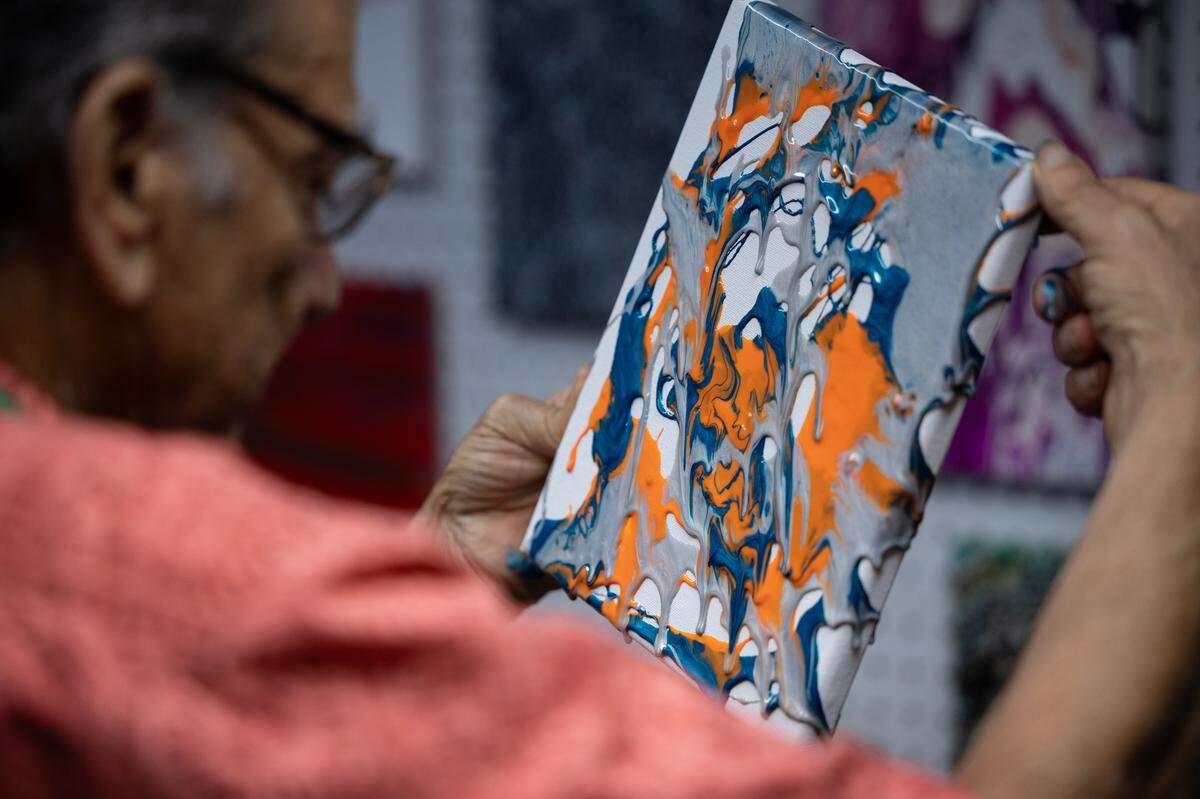
Legally blind and largely retired, Balbir Mathur sits quietly in the basement of his Wichita home, dripping bright-colored paint onto canvas he can barely see.
What began as a retirement pastime for the 89-year-old founder of Trees for Life has turned into a lifeline for hundreds of children in need of glasses.
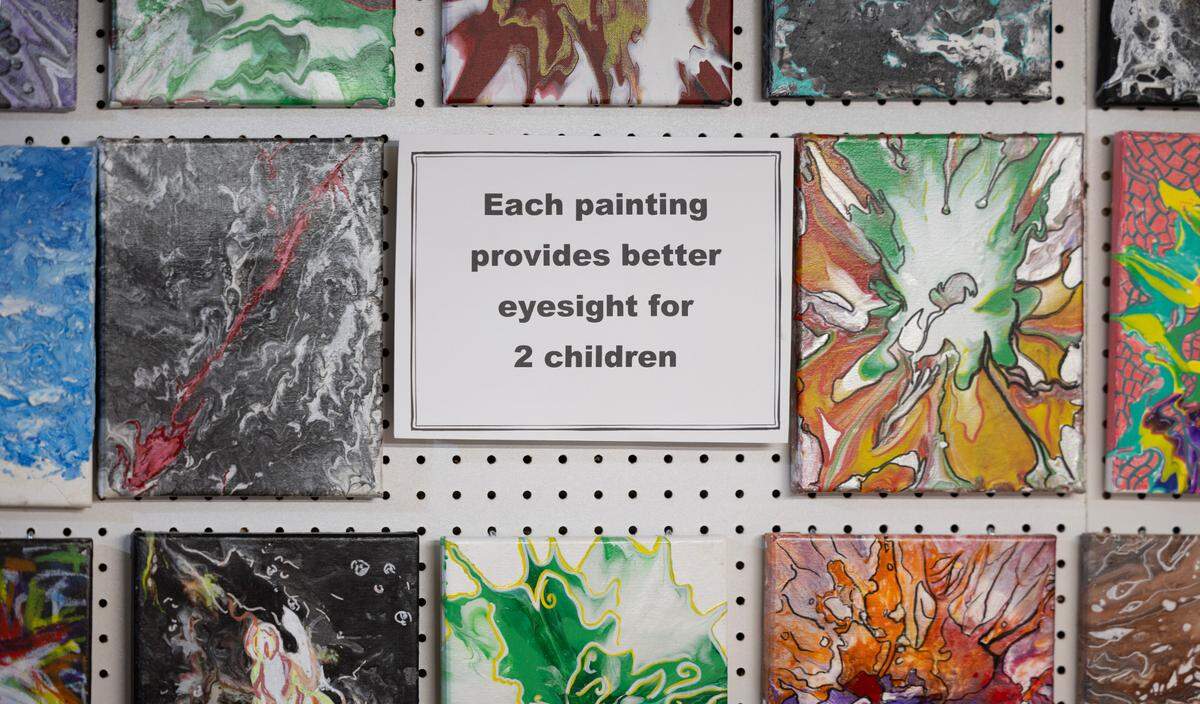
This man who has lost nearly all of his sight is now helping others gain theirs by selling his paintings to buy eyeglasses for children with vision impairments. For a $30 donation — enough to provide 10 eye exams or eyeglasses for two children in need — supporters receive one of Mathur’s original, abstract paintings.
He said he doesn’t quantify his impact by paintings produced, dollars raised or pairs of glasses donated. Instead, he measures by how many human connections he fosters along the way.
“I can touch only very few hearts, but those people then go out and touch (other people’s hearts) and miracles take place,” Mathur said. “Literally, miracles take place beyond our ability to describe … and I believe millions of hearts got touched.”
A career in compassion
After moving to Wichita from India in 1958, Mathur pursued a career in business and consulting. Al Higdon, one of the founders of Sullivan Higdon & Sink (now Signal Theory), said he met Mathur while the new entrepreneur was looking for help designing billboards. He said that right away he was taken by Mathur’s unflappable and determined demeanor.
“Here’s a guy who knows what he wants, what he needs, and is not hesitant about pursuing it,” Higdon said. “That’s the way he is. He’s fearless.”
Mathur’s work would take him across the country and, later, around the world. He was flying to Afghanistan when he said he had the epiphany that he was traveling not just through space, but seemingly through time as well.
“What I was seeing in Afghanistan, it was like traveling 200 years in time because they were like America would have been 200 years ago,” Mathur said.
The observation, along with a mysterious two-year ailment, led to a profound epiphany that made him consider what the implications could be for the future. It inspired him to take action.
“That gave me a perspective that if we continue on this curve, what happens after 200 years to us?” Mathur said. “We have to be concerned about our planet, and that’s where Trees for Life emerged.”
Trees for Life is an international nonprofit organization Mathur founded in 1984. Based in Wichita, Trees for Life helps address hunger in impoverished countries through education and by planting fruit and moringa trees. The goal, he said, was not to cure world hunger, but to create a “people-to-people” method of raising awareness and meaningfully affecting others.
“I’m a small bubble in a large, big ocean, so I cannot do too much,” Mathur said. “But I can set an example or set an awareness that, hey, we in each bubble can do something.”
‘Experiencing a new life’
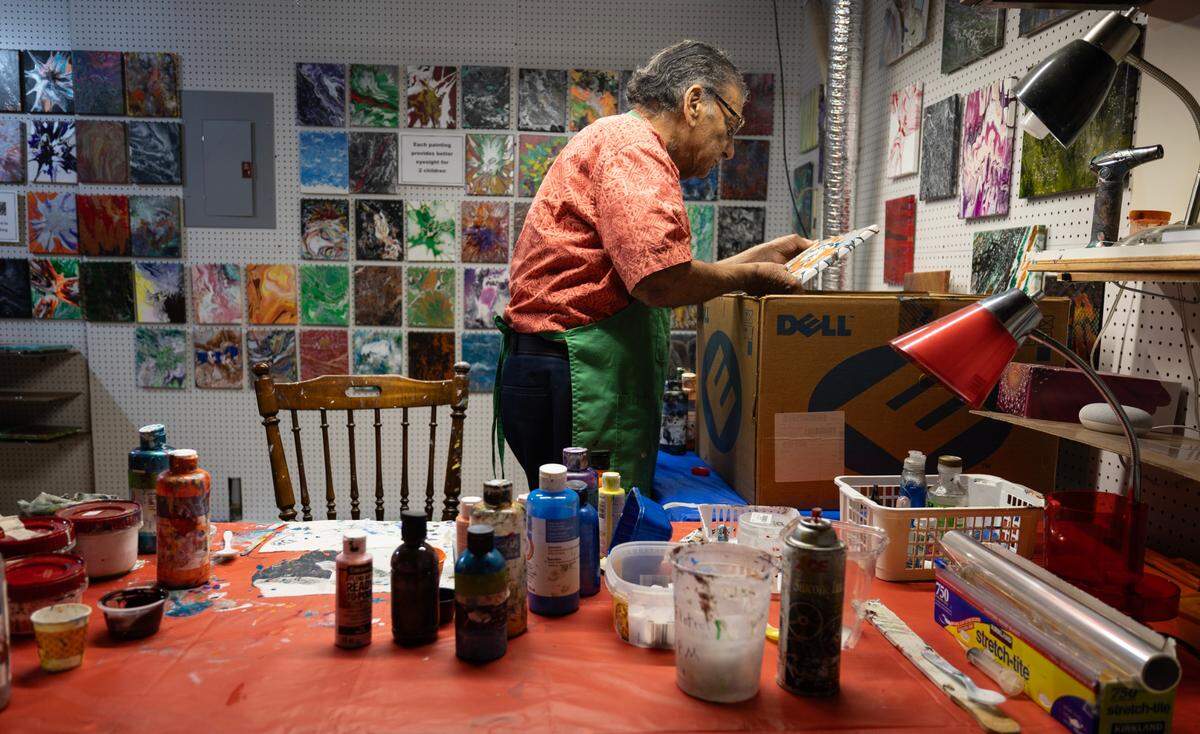
When Mathur retired from Trees for Life in 2014, the nonprofit had collected millions of dollars in donations and helped plant about 200 million trees around the world. He said the timing couldn’t have been more perfect, and that he was looking forward to taking up macro photography, reading, writing and painting during his retirement.
But then his eyesight began to deteriorate. He was soon diagnosed with macular degeneration, an incurable and blinding condition. Mathur said navigating his once-familiar neighborhood now made him feel as though he was “on a new planet every single day.”
“Treva (Mathur’s wife) would take me on some street or anything, and I’d say, ‘Where are we?’” Mathur said. “I could have been in London. I could have been in Timbuktu … I was experiencing a new life.”
Unable to read, write, learn photography or even recognize friends and neighbors, he took up painting. His first attempt, Mathur said, did not go well.
“I painted one painting. And I was so disgusted with what came, I threw all my paint on the canvas and left,” Mathur said.
But over the course of the next few days, he said, “the colors kept on urging me to go back.” Four or five days later, he returned to the painting and managed to finish it.
After some time, he got “a great urge to paint again” and decided to make a painting for Treva. Without knowing what colors he was using, Mathur applied a base coat and began dripping paints onto the canvas. Then, using a homemade spin art machine, he rapidly rotated the canvas, creating a swirl of color.
“I brought it up for her; she said, ‘Oh my God, this is beautiful,’” Mathur said. “And so I went to Michael’s to get some more paint and canvas to do some more like that.”
After he showed the woman working the register a picture of his painting, she offered to buy it from him. The unexpected interest gave him an idea.
“Well, my intent was not to sell the painting …” Mathur said. “But the thought occurred that, since I cannot see, I could help two other children see.”
So he made an offer: Two pairs of children’s eyeglasses — approximately $30 — for one painting. She took him up on the deal, and soon, support and requests for paintings came flooding in. Treva said that with Mathur’s friendly personality, it was inevitable that others would be drawn to his new undertaking.
“(Balbir is) somebody who never knows somebody who’s not their friend,” Treva said.
Higdon agreed.
“He is a master relationship builder,” he said. “Just because of his nature, and he’s so easygoing. Everybody likes him and respects him.”
That network of friends and accumulated respect brought new opportunities to Mathur. A conversation with a woman at a YMCA resulted in painting lessons, while a chat with another led to Mathur presenting to college students, many of whom volunteered to help “enhance” Mathur’s paintings.
“It became a collaborative project,” Mathur said.
‘A prayer of hope’
Now, nearly blind and nearing 90, Mathur has more than 200 paintings already committed to prospective buyers. Treva — in addition to buying canvas and keeping Mathur supplied with paint — helps handle the donations, which go directly to Trees for Life. She said she’s just happy to see him doing something enriching.
“I have been so happy that he’s found something that he really has a love of,” Treva said. “Because when you’re blind, there’s so many things you can’t do. I always ask myself, well, how would I handle that? I know I wouldn’t handle it very well. I would probably be shouting at the world how awful you are to have done this to me.
“But Balbir has always been a very open person, and he just took it. And so if that’s what he wants to do, then I’ll be glad to order the paint and do this and do that.”
Simmi Dalla, who took over as the president of Trees for Life in 2014, has also become integral to the initiative. Along with bringing hot meals regularly to the Mathurs, she’s started and managed several additional philanthropic ventures through Trees for Life, including Art Connecting Hearts, the official nonprofit for selling Mathur’s paintings in exchange for eye care.
Under Dalla’s leadership, Mathur said, they raised more than $3 million last year for eye care facilities and hospitals.
Besides providing the invaluable gift of sight, Dalla said, Mathur’s paintings offer much more.
“It’s not a painting. I see that as a prayer,” Dalla said. “A prayer of hope for millions of children around the world from somebody who himself is losing eyesight.”
More information about Art Connecting Hearts, as well as a gallery of Mathur’s spoken for and for sale paintings, can be found at www.artconnectinghearts.org/.