
‘Like a warm hug’: Wichita funeral home’s therapy dog comforts in a way no human can
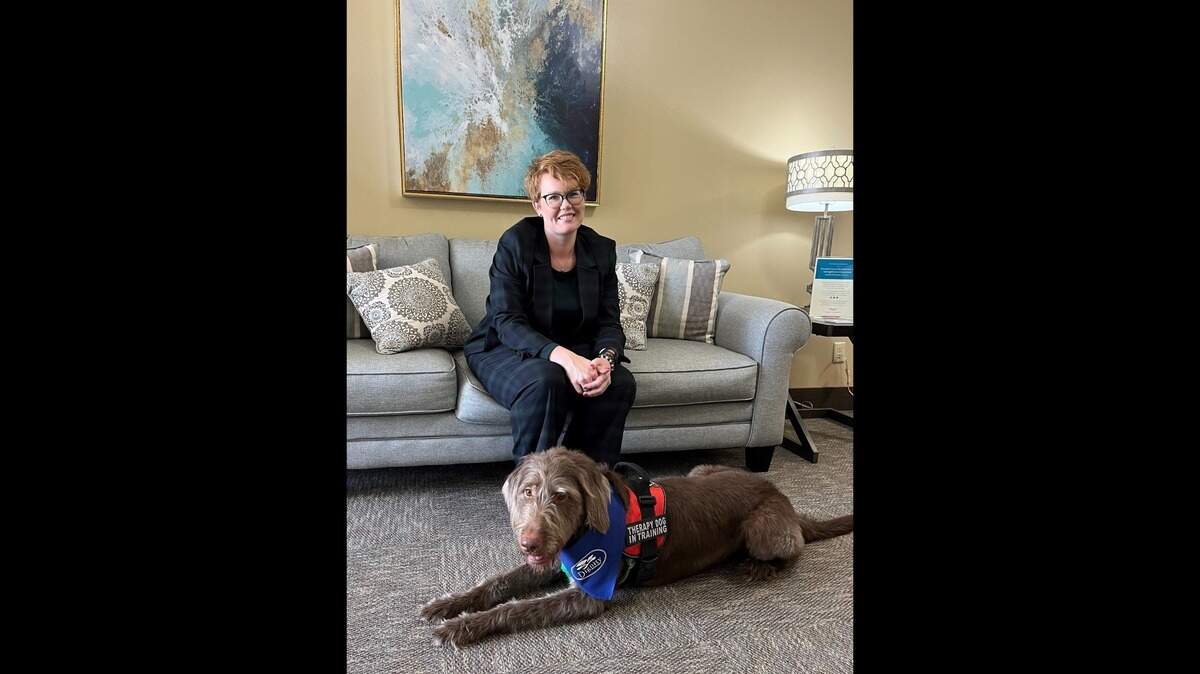
Capone Morris, Dignity Memorial Group’s newest employee, is the perfect companion for people who are grieving.
It’s because of his calm demeanor, understanding eyes and hypoallergenic fur, manager Annie Morris says.
Since joining the funeral home team a little over a year ago Capone, a 2-year-old labradoodle and therapy dog, has helped over 200 people. According to Morris, there is a certain comfort that dogs can provide, but humans can’t.
“He comes in when I make funeral arrangements with families or any of my other directors make arrangements,” Morris explained. “He goes in the room, he circles the room, they pet him, they love on them, they hug him, he lays on them, whatever they need.”
Susan Innes met with Capone and Morris after the loss of her mother, and she said just having him in the room was “like a warm hug.”
“Some people might not understand why you feel the way you feel, and with a dog like Capone, there’s no set rules,” Innes said. “It was just very reassuring and made it easier to grieve openly because he was in the room and he was there for you.”
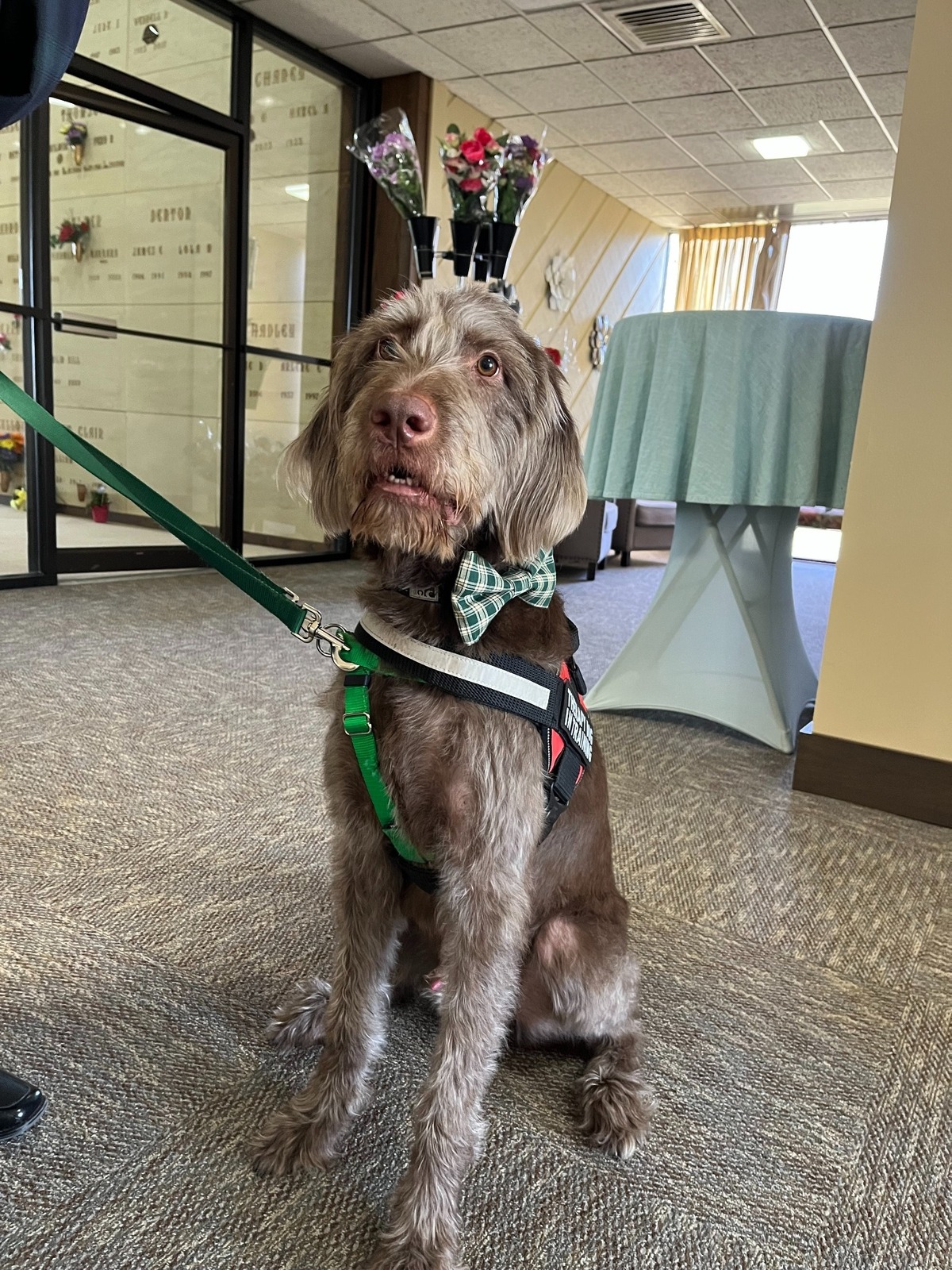
He has also been asked by some people to attend the funerals. Morris said this can be for emotional support or as a nod to the deceased’s love of dogs.
“He was meant for this job,” Morris said. “I really feel that he knows who he needs to see at that table.”
Although he isn’t officially licensed as a therapy dog yet, he goes into the DeVorss Flanagan-Hunt Mortuary with Morris at least three times a week.
He’s had over a year of training with Morris both at home and with professional trainers at K-9 Kudos in Derby. He failed his first qualification test because he was too familiar with the trainers and thought they were playing when he was supposed to be solely focused on Morris, she said.
Passing won’t change his duties, but it will change who carries his insurance. Right now, Morris carries his insurance in case he ever damages something or harms someone. The funeral home will carry it once he is licensed.
According to Morris, Capone has been studying hard and will take the test again later this year with instructors he isn’t as familiar with.
“You have to keep your dog under control, but when they’re less than a year old that’s a little hard to do,” Morris said. “I want to wait till he gets a little bit more mature, I guess you could say, and then retest him.”
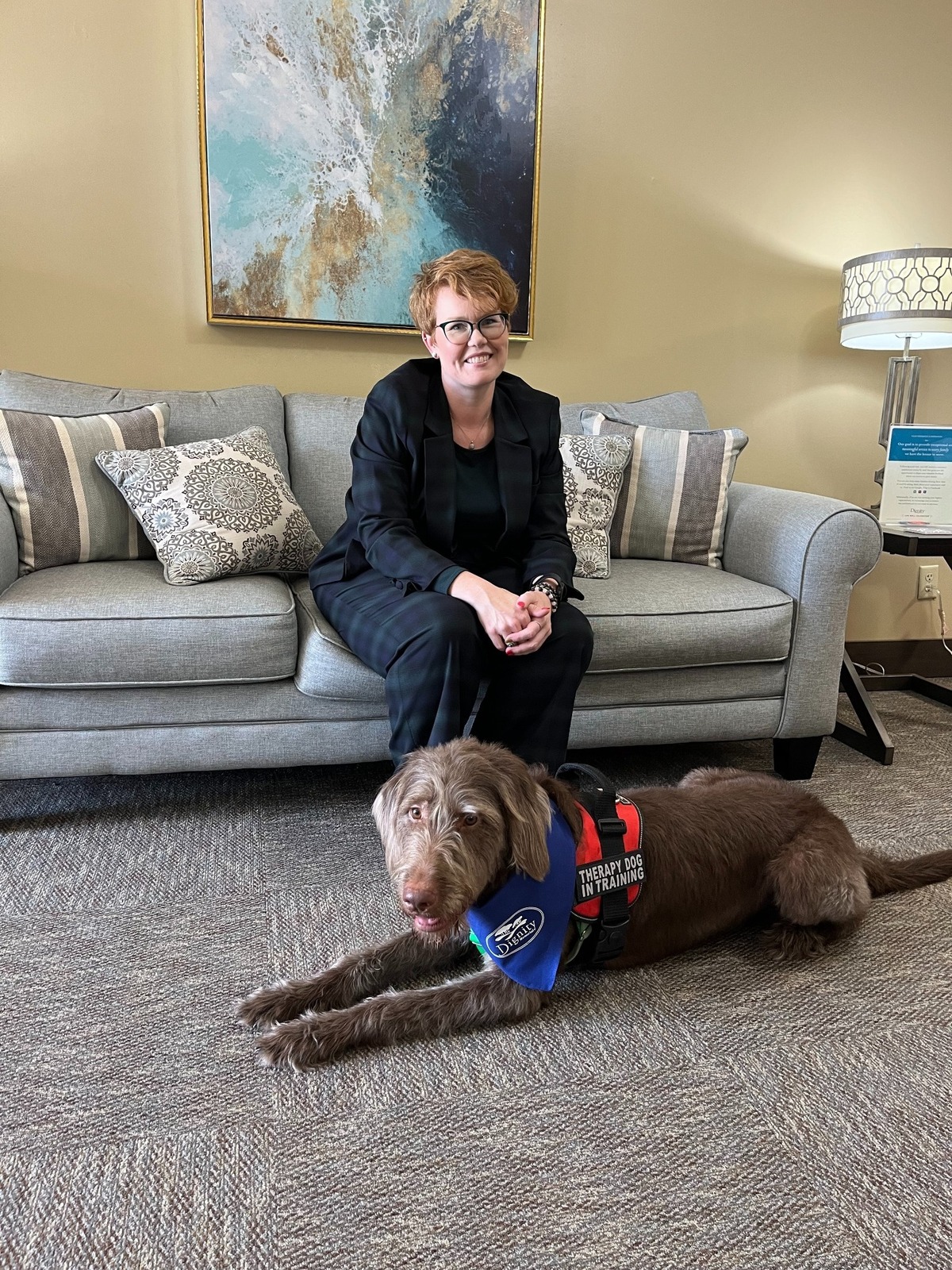
Unlike service animals that help people with disabilities, therapy dogs, like Capone, are trained for people to approach him when he and Morris are in public. Service animals need to remain “on the job” all the time, and oftentimes wear vests that ask people not to touch them.
The best rule of thumb is to ask the owner before petting their dog.
Morris checks with everyone before Capone meets them, letting them know he is still in training, but she’s never had anyone say no.
“I think it has made people, I don’t want to say less sad, but more willing to talk,” Morris said. “I think it’s a very good distraction for them for a little bit of time.”