
Sewer plants have made Wichita’s south side smelly for years. Is change on the way?
You get used to the smell of sewage, but that doesn’t make it any more pleasant. That’s one thing Chauncey Kemp has learned from living in Planeview for 63 years.
“If the wind is blowing from the west, we’ve got to stay in the house. Let all the windows down,” Kemp said.
Two south Wichita wastewater facilities — plant 1, situated between I-135 and K-15, and plant 2 at 57th Street South and Hydraulic — process 90% of the city’s raw sewage.
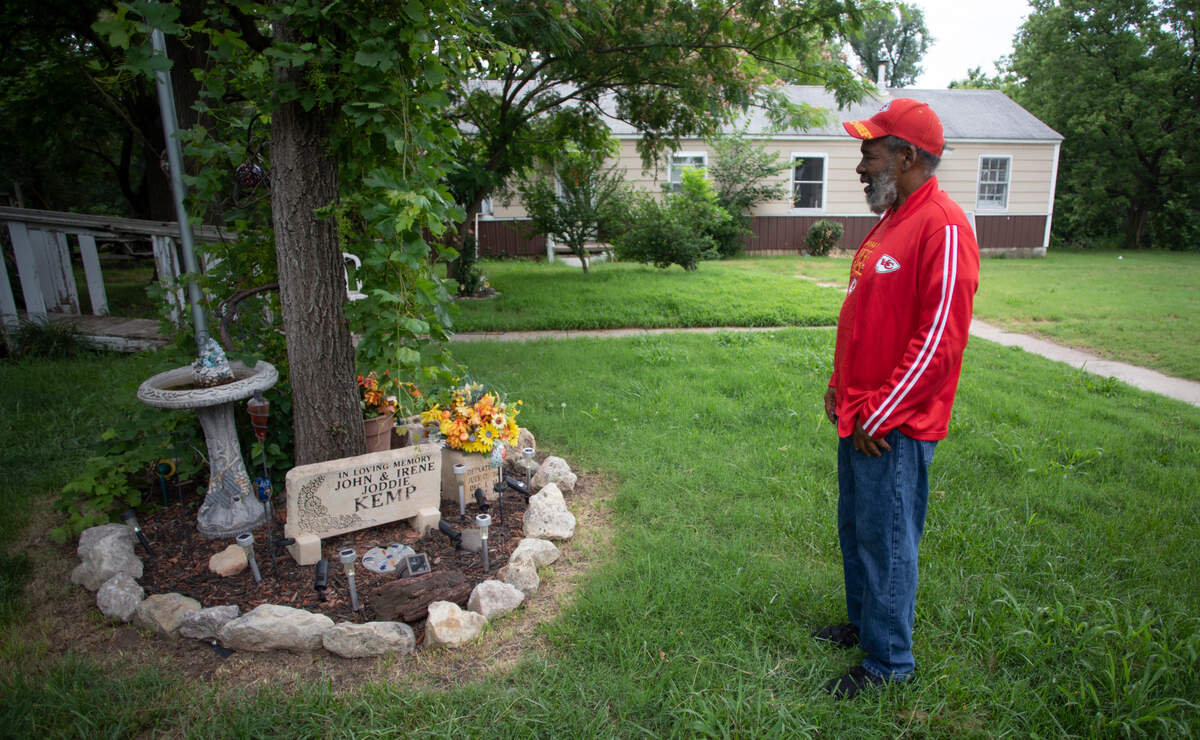
Blades at the bottom of massive circular digester tanks break up roughly 30 million gallons of sludge a day, sending it through a suction system for refining. The stench rises from vats of waste and chemicals, enveloping parts of the south side like an invisible fog.
“Although we check constantly and there’s no health hazards with the odor, it still weighs on my mind,” said Mike Hoheisel, who represents the area on the Wichita City Council. “People’s property values, nuisance, just the overall stigma that our side of the city gets having to deal with this odor on a daily basis.”
Kemp, Planeview’s neighborhood association president, worked at plant 1 for two years in the early ‘80s after leaving the military. His wife soon got sick of the unsavory smell that clung stubbornly to his clothes when he returned home in the evenings.
He remembers his father’s frustration and anger when the foul odor ruined a neighborhood get-together his father was hosting at his house, which sat directly across K-15 from plant 1. After that, odor control became his top priority as a member of the District 3 Advisory Board.
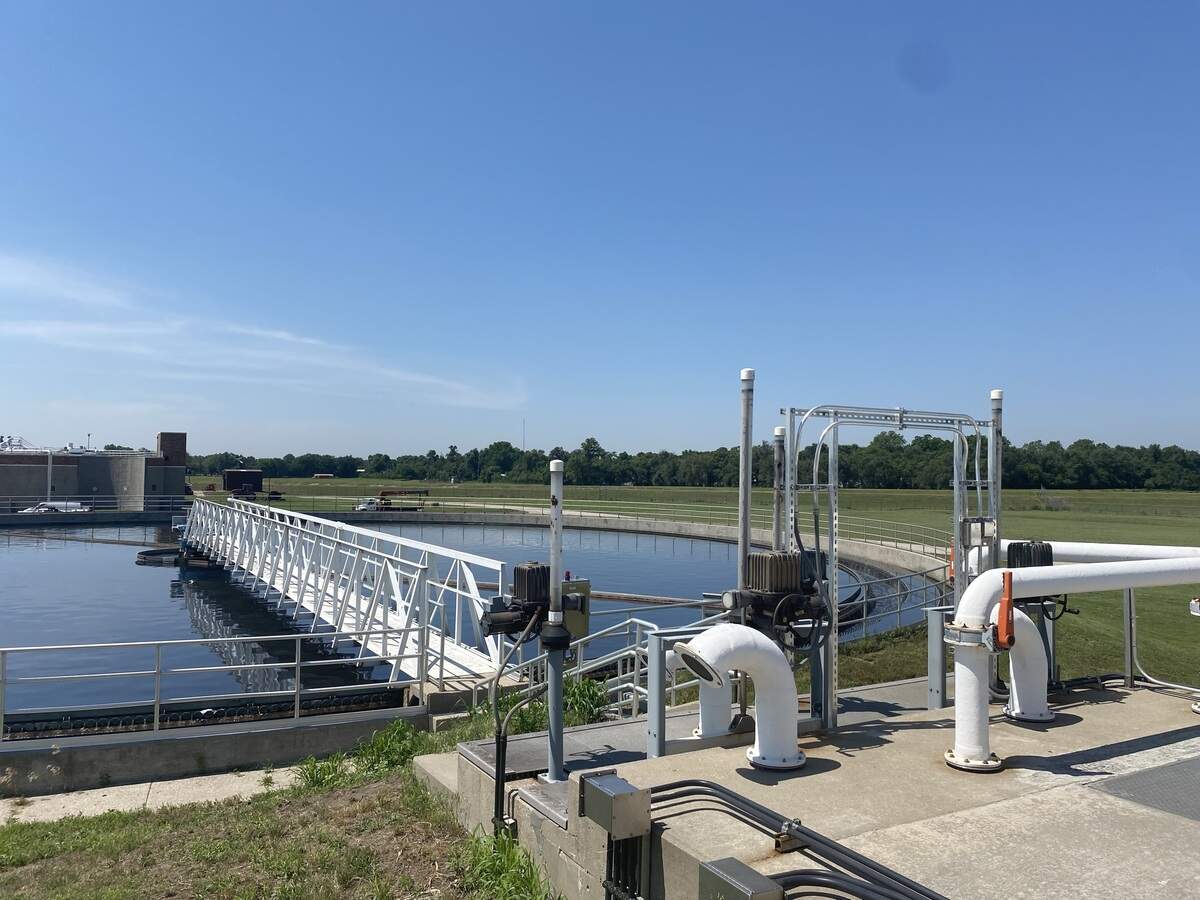
“Funny thing, he tried to have a little yard party with all the grand kids and all the kids, friends and neighbors,” Kemp said. “And it was one of them evenings where the wind was blowing from the west and the hot dogs didn’t smell like hot dogs anymore. And the barbecue ribs didn’t smell like — I mean, they tasted OK but the stench.”
When his father died, Kemp and his family struggled to find a buyer for his house.
“We were given the choice to live in the house or sell it. And didn’t no one want to live in it because of the vicinity that it was in,” Kemp said.
“The value was downrated. It was a $167,000 home, and we ended up selling it for $125,000.”
The city has tried numerous techniques to control the odor, including spraying perfume twice a day from spigots sticking up around the digesters.
But over the decades, not much has changed for Planeview and other south-side neighborhoods near the sewage plants.
Sewage overhaul
City officials say the solution is just a few years down the road. By 2027, they expect $357 million of upgrades to be completed on the two sewage plants in an effort they’re calling the biological nutrient removal project.
The sewage overhaul, designed to bring the city’s wastewater system into compliance with more rigorous federal environmental regulations, will also solve the plants’ persistent odor problem, Hoheisel said.
“Most of what’s driving the project is what we’re putting back into the river and what’s getting flushed down to the Gulf of Mexico,” Hoheisel said. “But again, I also listen to the constituents and odor is one of the main priorities.
“If we go through this $300 million project and we still have the odors that we have now, it will be regarded as a failure in the eyes of the public.”
It’s the second largest infrastructure project in city history, behind only the city’s new drinking water treatment center, a $602 million facility under construction in northwest Wichita.
“Everybody talks about the drinking water plant, which is — yes, it’s the most important heritage project that our city has seen in 50 or 60 years. But what we do after we drink the water is just as important, and what we do after we drink the water by and large hits south Wichita the hardest,” said Jared Cerullo, who represented the area on the City Council before Hoheisel unseated him last November. He lives a quarter mile from one of the south-side plants.
“This city, for a long time, has had the notion that we can just dump — quite literally dump — all our problems on south Wichita,” Cerullo said.
“It causes so many problems for the quality of life for people in south Wichita. For economic development in south Wichita. It hinders us. It holds us back.”
Public Works and Utilities Director Alan King and other department officials were unavailable for an interview over the course of two weeks. Instead, city spokesperson Megan Lovely provided emailed responses to The Eagle’s questions.
Asked how the project will quell the smell of sewage, Lovely said, “The improved advanced treatment process will more efficiently remove bio nutrients, reducing odors, and will install improved odor control systems.”
But the impetus for the major infrastructure project is compliance with upcoming environmental standards — not the odor complaints south-side residents have been raising for decades.
Wichita discharges more than three times the amount of nitrogen and four times the amount of phosphorus into the Arkansas River than will be allowed by 2027.
The city has been approved to apply for a federal loan through the Environmental Protection Agency’s Water Infrastructure Finance and Innovation Act (WIFIA), which could cover up to 49% of the $357 million project. Officials hope to supplement that with a revolving loan through the Kansas Department of Health and Environment.
The rest of the cost will be passed on to taxpayers through wastewater rate increases. A 2022 sewage rate increase from $4.11 to $4.23 per 1,000 gallons of metered water is “in accordance with” the biological nutrient removal project, Lovely said.
The city is still in the design phase of the project. Engineering design work on plant 1 has been awarded to PEC and plant 2’s upgrades are being designed by CDM Smith.
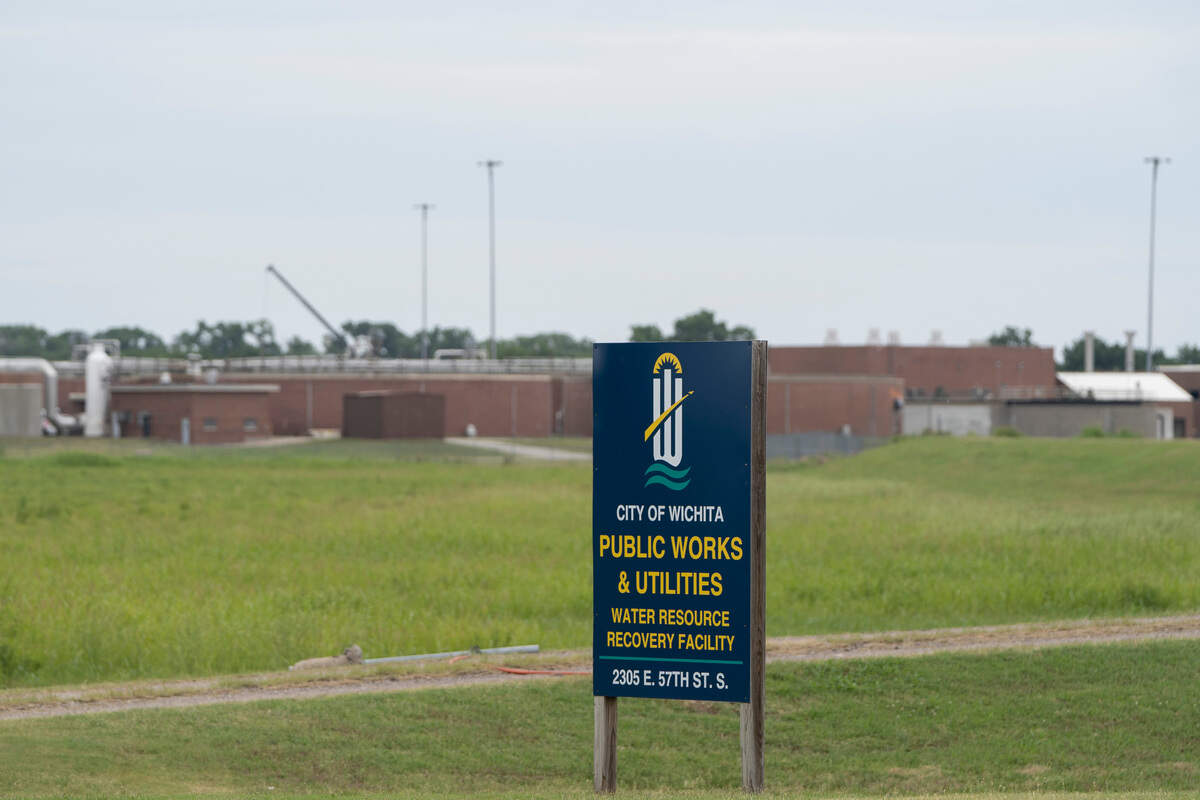
If designs and federal and state loans are approved on time, construction is expected to begin in 2023 on the two plants, which will continue to operate as upgrades are completed over four years.
The changes can’t come too soon for aging city infrastructure. A 2017 city study determined that the 60-plus-year-old wastewater pipeline at plant 2 was a single point of failure, meaning that if it were to rupture, the plant would likely have to be shut down for extensive repairs.
Infrastructure investment
Hoheisel said he’s confident the improved odor mitigation will remove barriers that have held south Wichita back, including lagging property values.
“I think property values will go up. I think the most important thing is that the quality of life for people living around the plant will go up,” Hoheisel said. “You know, you’ll be able to have your neighbors over. You won’t have to go test the smell beforehand.”
But Kemp said that if the city is serious about investing in infrastructure in south Wichita, there’s more work to be done. After all, everyone in Wichita relies on the sewer system — not just south-side residents.
“It brings the question of whether or not, if they spend all this money on this plant then they can’t spend any money anywhere else in that area,” Kemp said.
“Shoring up the streets. Putting pavement down. The cul-de-sacs that are in Planeview, if it rains, everybody gets flooded. You literally have to walk out of your house with galoshes to get to your car. The drainage system — it don’t exist in Planeview.”
Cerullo, too, said the city has neglected south Wichita while prioritizing infrastructure in more affluent areas of the city.
“There are not only roads that are falling apart. There are roads that are still dirt and gravel in south Wichita,” he said. “We have 19th century technology, residential streets in many south Wichita neighborhoods.”
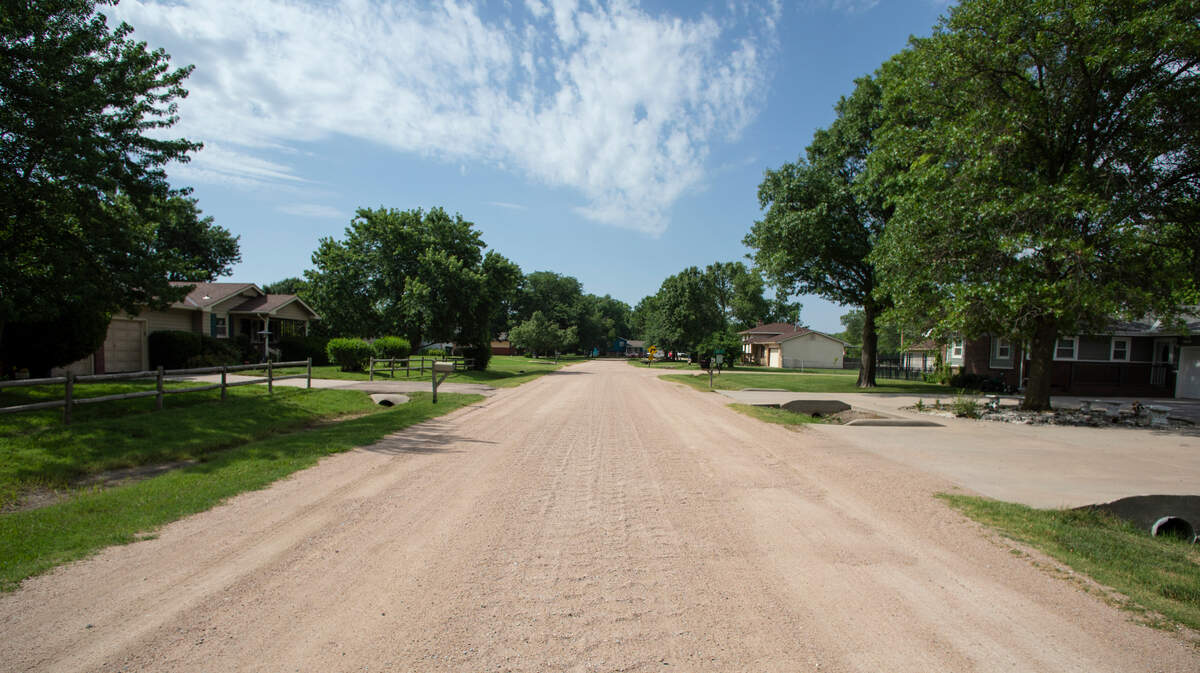
If a neighborhood wants to have their streets paved, they have to organize a petition and get it signed by a majority of residents. The city then taxes each resident’s property to pay for the new road.
Several years ago, Kemp organized a petition asking the city to lay new asphalt and gravel in Planeview cul-de-sacs and improve drainage to keep water from collecting in the streets.
“They came out to a meeting and told us that they could do that but in order for them to do that cost-effective, we would have to put our property on a levy at eight grand — I think it was $8,600 bucks, each piece of property at $8,600 bucks in order for them to do it,” Kemp said.
“When you call the police about people parking in front of your house, they come out and say this is city property. But when you go to them and say, ‘Let’s fix the roads,’ they’re going to say well, ‘You’ve got to pay to fix the road.’ So is it our property or is it the city’s?”
“South Wichita people that are on fixed incomes and low incomes, they’re not going to sign the petition to raise their own taxes,” Cerullo said.
South Wichita is home to several of the city’s poorest zip codes, U.S. Census data shows.
Mayor Brandon Whipple lives in south Wichita and represented the area in the Kansas House before his election in 2019. He said decades of empty promises have conditioned south-side residents not to expect much from elected leaders.
“If you talk to folks on the south side, absolutely there would be consensus that the south side does not get the same level of services as other areas within the city, particularly more affluent areas,” Whipple said.
“There’s a lot that we should be doing acknowledging that we have actually, by not investing in infrastructure in these areas, we have actually artificially kept the market in those areas at a lower price . . . In doing that, you actually created an environment where people really just can’t afford to pay the extra money to have those roads paved.”
Whipple said there’s a will on the majority-Democrat City Council to come up with a more equitable plan for allocating the city’s road improvement dollars.
“The idea that we need to be focusing all of our budget on repairing and actually over-repairing roads in the richest areas as opposed to at least laying down asphalt, at least putting some type of program together for the lower-income areas, is the attitude that has for too long taken over this debate,” Whipple said.
“I’ve been working with the city manager for the last year and a half, trying to develop a plan to actually pave the roads, and that thing has been on the back burner . . . Now, with the new council members, we do have folks who actually want to not only have a plan but execute the plan.”
The city’s annual budget process began in January, and next year’s budget will be finalized in August.
Cerullo said that for elected leaders to earn south-side residents’ trust, they’ll need to know that their concerns are being taken seriously.
“Quite so often, south Wichita people don’t think they’ll be listened to. And for many years, rightfully so,” Cerullo said. “They have been cast off. They have been thrown away.
“The problems have just been thrown away for 30 or 40 years.”
This story was originally published June 30, 2022 at 4:53 AM.