
Heating bills for natural gas expected to be lower this winter
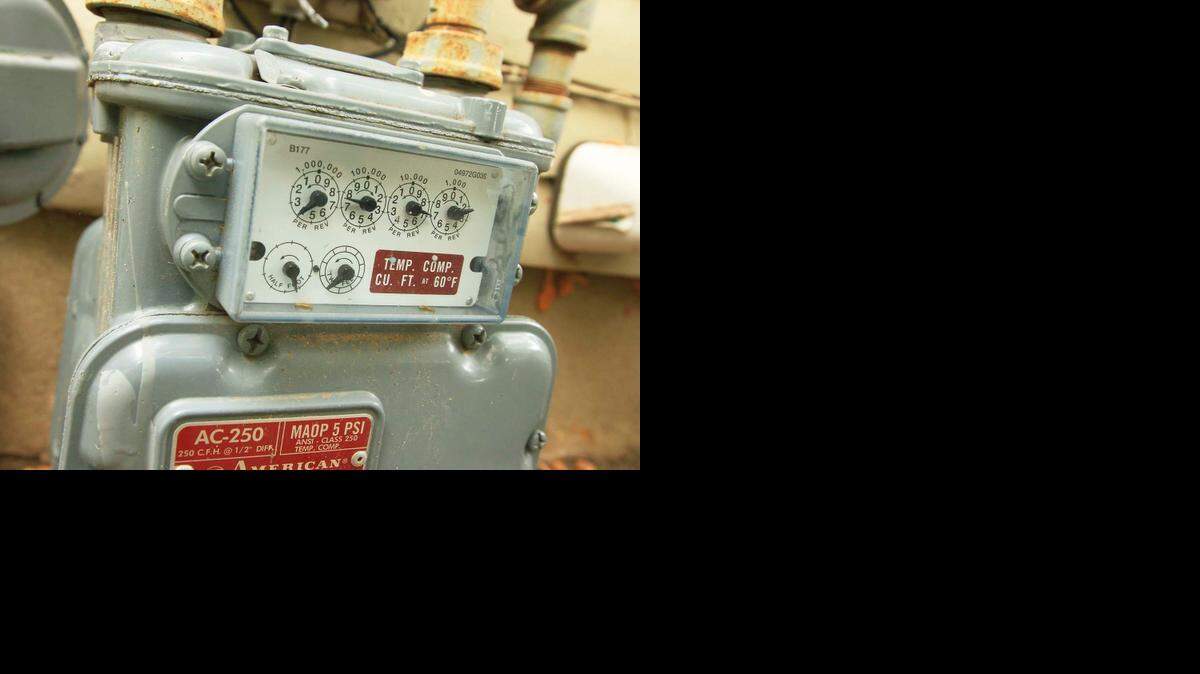
Natural-gas customers can expect to pay slightly less on their heating bills during the upcoming winter, especially if the weather is warmer than last year’s deep freeze.
Although the price of natural gas is expected to be higher than last winter, Kansas Gas Service customers should see an average drop of about $50 in the overall cost to heat their homes from November to March, spokeswoman Dawn Ewing said – provided temperatures stay in a more normal range this winter.
“If normal winter weather is the case this year, we are anticipating a reduction” in customer bills, she said.
The savings will be due in large part to expected lower usage and weather-related credits prompted by last year’s lingering cold – including 22 days when temperatures dipped into single digits.
After very cold winters when utilities sell lots of gas, customers receive bill credits to keep the gas company from getting excessive revenue. After unusually warm winters, the utilities get to charge customers extra on subsequent bills to make up for lost revenue they would have made during a normal winter.
“Last year’s temperatures were colder than normal and, as a result, customers will actually see a credit on their bills to reflect the weather normalization adjustments,” Ewing said.
Black Hills Energy, which provides gas service to about a quarter of Wichita residents, says its patrons are on track to pay less for their heating bills, too.
“It’s not a lot less but slightly less,” said Monique Garcia Pope, spokeswoman for Black Hills Energy.
“We do expect for the most part that the natural-gas prices will be stable this winter because of the abundant supply in storage.” She added that recent downward pressure on pricing also is contributing to the drop.
But “weather is still king,” she warned.
“A cold weather snap will drive up usage demand,” Pope said. “And prices and volatility will follow.”
In Wichita, the past winter was the 42nd coldest since records first were kept in 1888. Last year, persistently low temperatures across the Midwest, the South and in the East forced people to crank up the heat. The high demand jacked up the price of some fuels, especially propane. Heating bills soared.
This year, milder temperatures are expected to reduce homeowners’ fuel use, according to the Energy Department’s annual prediction of winter heating costs.
If the weather prediction tied to the Energy Department’s cost forecast holds true, average highs in Wichita from November through March should beat last year’s 48 degrees.
On the coldest day Wichitans saw last season – Jan. 6 – the temperature dipped to a frigid 5 degrees below zero, National Weather Service meteorologist Jerilyn Billings Wright said. February was the chilliest of the five-month period, she said, averaging a high of 41.9 degrees.
“Oh, it was a cold winter,” Billings Wright said.
But, she said, it’s still too early to say with certainty what weather the next five months will bring.
Lower energy costs give the economy a boost.
Gasoline prices are expected to soon drop below $3 per gallon on average in up to 30 states. In addition, in some parts of the country, some customers could see savings of nearly $800 on their heating bills, according to the Energy Department’s Energy Information Administration. That means consumers will have more money to spend on other things, and consumer spending is 70 percent of the nation’s economy.
The Energy Information Administration, using forecasts from the National Oceanic and Atmospheric Administration, predicts the number of heating degree days – a measure of heating demand – will fall 12 percent this year.
Here’s the outlook for customers of the most common heating fuels based on current forecasts.
NATURAL GAS
Natural gas remains the cheapest heating fuel by far, and nearly half the nation’s households are heated with natural gas.
Kansas Gas Service customers will pay an average of $550 for natural gas for the entire winter, according spokeswoman Ewing. That’s down from an average of about $600 last year.
But in the northeastern United States, customers will see a sharp increase in natural-gas prices, in part because last year’s cold winter drained gas in storage. Prices in New England are higher because there is not enough space on existing pipelines to carry the increasing amount of gas needed in the region for heating and generating electricity.
ELECTRICITY
Electricity prices are heavily influenced by natural-gas prices, so they’re on the rise. But electricity customers should use less this winter, resulting in lower heating bills for many.
Thirty-nine percent of U.S. customers heat with electricity. The Energy Department predicts prices in the northeast for power will rise 12 percent this winter due to natural-gas pipeline constraints.
For Wichita-area residents, the story may be a bit brighter. According to Westar Energy spokeswoman Gina Penzig, the utility’s isn’t “expecting anything unusual as far as electricity prices.”
PROPANE
The propane market was thrown into chaos last year. Supplies were low going into the winter, thanks to high demand for use in drying crops. Then the Midwest, where propane use is most prevalent, got socked by the cold, boosting demand even further.
Local distribution companies saw supplies fall sharply, and prices skyrocketed.
The Energy Department says supplies going into this winter are higher than at any time since at least 1993, and demand is expected to be lower. That will lead to an average price of $1.99 per gallon in the Midwest, down 24 percent from last year’s record average of $2.61.
Propane customers in the Midwest will pay about $1,500, a savings of $767.
Contributing: Jonathan Fahey of the Associated Press
Reach Amy Renee Leiker at 316-268-6644 or aleiker@wichitaeagle.com. Follow her on Twitter: @amyreneeleiker.
Tips to help save energy, money
▪ Adjust your humidity to 68 degrees; it is as comfortable as a dry house at 75 degrees.
▪ Insulate exterior walls and ceilings to avoid losing up to 20 percent of your heat energy.
▪ Replace older windows that allow air drafts.
▪ Install glass storm doors.
▪ Cut heat loss by caulking and weather-stripping doors and windows.
▪ Close any openings, such as fireplace dampers, when you’re not using them. Closing the damper could save 8 percent of your home’s heat.
▪ Clean or replace your furnace filter monthly.
▪ Keep radiator surfaces clean.
▪ Check the duct work; most are in unheated spaces and are a common source of heat loss.
▪ Turn your thermostat back 10 to 15 percent for eight hours to save up to 10 percent a year on your heating bill. You can also save by lowering it 3 to 5 degrees at night or if you’re leaving your home for more than four hours.
▪ Set the temperature as low as you can and still be comfortable (ideally around 68 degrees). Each degree you lower your heat in the 60- to 70-degree range saves 2 percent on heating costs.
▪ Make sure your thermostat is on an inside wall where it won’t be affected by the sun or a heat source.
▪ Wear warm, loose-fitting clothes at home to help hold in body heat.
▪ Use the sun to heat your home; open drapes and take down awnings.
▪ Use ventilating fans sparingly. They can blow away a house full of warmed air in an hour.
▪ Move furniture away from the registers and vents so heated air can flow freely.
Source: www.blackhillsenergy.com
This story was originally published October 8, 2014 at 8:38 PM with the headline "Heating bills for natural gas expected to be lower this winter."