Can the pandemic lead to worker solidarity in Kansas? Lessons from 100 years ago
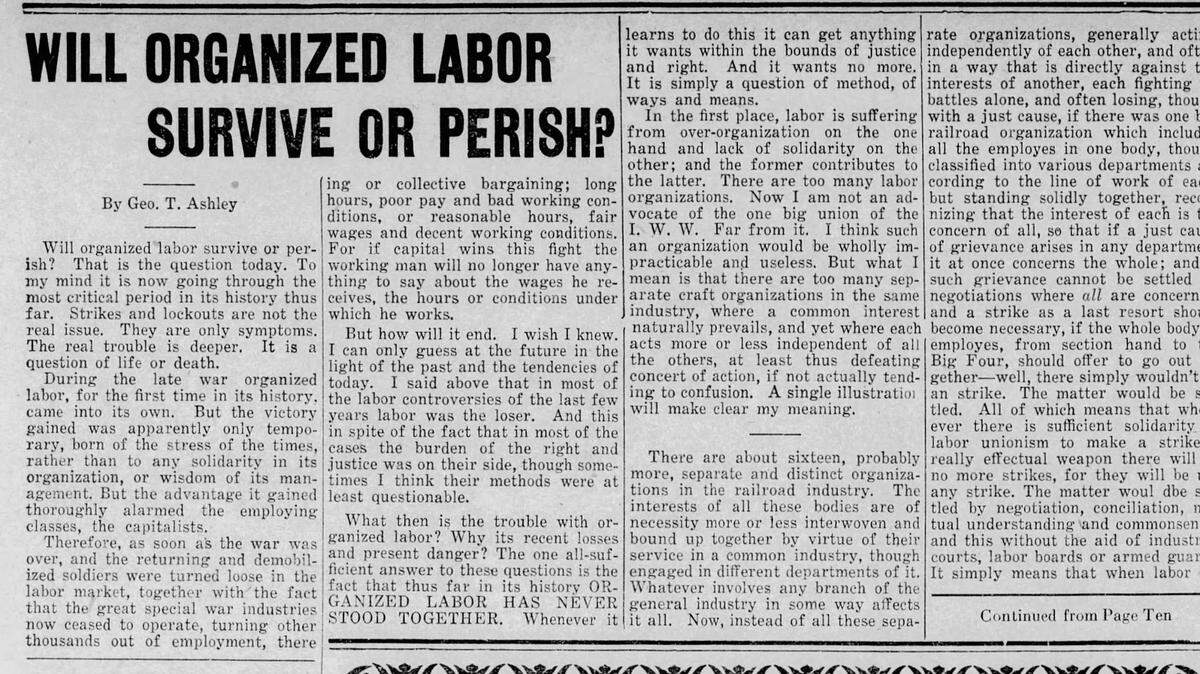
On Aug. 25, 1922, in a headline for an article in the weekly labor newspaper, the Plaindealer, George T. Ashley posed a question to Wichita union members: “Will organized labor survive or perish?”
Less than five years after the end of World War I and the 1918 Spanish flu epidemic, which historians believe originated in Kansas, Ashley wrote that organized labor experienced its most critical period a century ago.
“During the late war organized labor, for the first time in its history, came into its own,” he wrote. “But the victory gained was apparently only temporary, born of the stress of the times, rather to any solidarity in its organization.”
Nearly a century later, leaders of Wichita’s contemporary labor movement are facing a similar question — how will the coronavirus pandemic and subsequent recession impact solidarity among workers.
Although the twin crises of the war and the Spanish flu epidemic helped labor gain momentum, it wouldn’t continue unless workers realized their own collective power, Ashley wrote.
The Plaindealer, which began printing in 1919, isn’t published anymore, but the digital archives maintained by the Kansas State Historical Society offer a window into how union members connected across Wichita. Former leaders say union decline caused labor’s power to wither, and along with it, member solidarity in a “right-to-work” state such as Kansas.
In the past decade, labor unions have seen a decline in members across the country. But in Kansas, union membership has risen. From 2009 to 2019, membership in the U.S. dipped 2% overall. In Kansas, it rose 2.5% in the same time period, according to data from the Bureau of Labor Statistics.
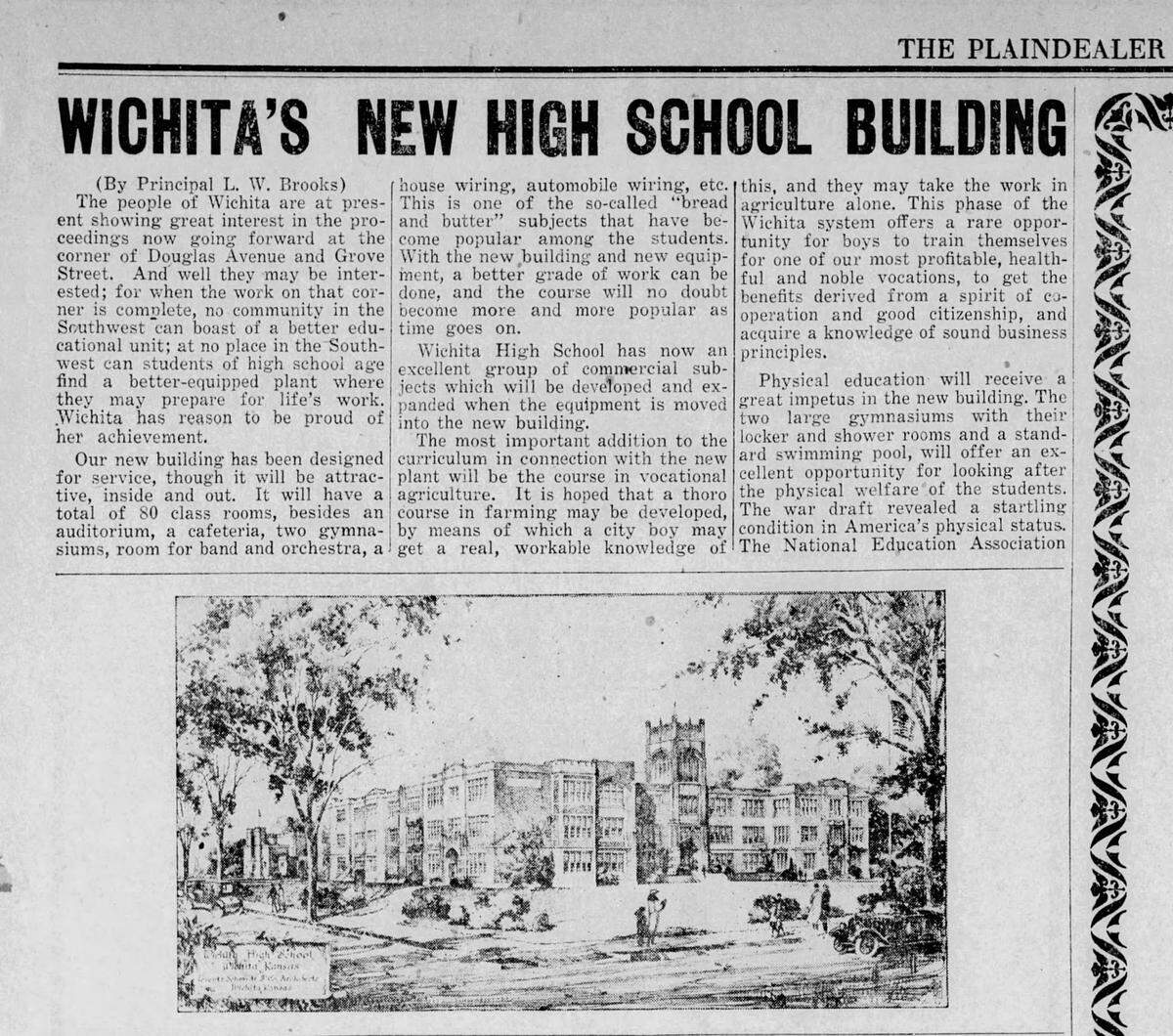
The Plaindealer educated union workers about their power as a group and the impact of solidarity on their working conditions, said Harold Schlechtweg, who edited the paper from summer 1995 to spring 1997.
“Just because you pay dues doesn’t mean you have the faintest idea about what a union is,” Schlechtweg said.
Now retired from both editing and his job as a union representative for SEIU Local 513, Schlechtweg recalled how he wrote nearly every story in the paper and attended every local union meeting he could. The paper was published monthly then, but it was a full-time gig.
Schlechtweg doesn’t shy away from admitting the Plaindealer had an agenda: His stories aimed to boost the labor movement and portray it in a positive light. It was mailed directly to the homes of union members and paid for by their local lodges. The motivation was political, too, and much of Schlechtweg’s coverage centered on elections. He printed candidates’ answers to endorsement questions. He once wrote a column headlined “Why are unions active in politics?” Unions wanted to get out the vote among members to support economic policies that staff believed could boost their quality of life.
The stories he covered varied widely, though. He interviewed striking workers on the picket line, like those at Boeing in 1995, and took photographs. He highlighted frustrations within the labor movement when United Way underwent a construction project with non-union workers despite receiving paycheck deductions from unionized shops.
Some stories were more positive. He rode around in a truck with union electrical workers when the city tasked them to put up Christmas lights downtown along Douglas. He visited a manufacturing plant in nearby Winfield when union workers helped construct the Olympic torch that would be lit in Atlanta in the summer of 1996.
Schlechtweg crafted the stories in the basement of the Wichita Machinists Hall, the headquarters of the Machinists Union District Lodge 70. It’s considered the biggest union in Wichita and represents aerospace workers at two of the city’s largest companies, Spirit AeroSystems and Textron Aviation, among others.

Aircraft manufacturing has long been important to Wichita’s workers and economy. Durable goods manufacturing, which includes the aviation sector, made up about 23% of the Wichita area’s gross domestic product in 2018, the most recent year for which data is available. Manufacturing more generally made up about 29% percent of Wichita’s GDP, according to the Bureau of Economic Analysis.
Pat Lehman, who hired Schlechtweg as editor, worked upstairs as the secretary and treasurer for the Machinists Union. Lehman and other union leaders got together to purchase the Plaindealer when the longtime family owners were ready to shut it down, she said. Having picked up her first issue in the late 60s, when she was an aircraft employee at Beechcraft (now part of Textron Aviation), Lehman was intent on ensuring it didn’t disappear from Wichita.
“I think it helped hold us together,” Lehman said of the Plaindealer. “It was that sense of being a part of the labor community for the average person. When it was going into everyone’s home, people that weren’t necessarily union activists still could read about what was going on.”
The newspaper showed up in her mailbox because she joined the union her first day at work. Lehman had been familiar with the Machinists Union since she was 9 years old. Her dad worked at a small manufacturing company that was organized with the Machinists, and she would attend the union’s Fourth of July picnics, seeking out the free ice cream.
Lehman saw the union’s impact on her family more substantially when her dad earned a week’s worth of paid vacation.
“I was old enough to understand the big difference when my dad went to work where there was a union contract,” Lehman said.
The large aviation manufacturing plants in Wichita are historically union, said Schlechtweg, and have remained so despite the number of members whittled down over the decades by permanent job losses and the “right-to-work” law, which allows a new employee to opt out of paying dues while still receiving union representation. For example, 8.7% of Kansas workers were union members in 2019, but 10.1% of employees were represented by unions, according to the Bureau of Labor Statistics.
Union decline isn’t new in most Midwestern states where manufacturing work has dried up. But in the past decade, union membership remained stable and rose overall in Kansas, the BLS data shows. Last year, Kansas saw the largest uptick in paying union members since 2009: a 1.7% jump, from 7% in 2018 to 8.7% in 2019.
In 2009, as the Great Recession hit Kansas in earnest and many were out of work, participation was at 6.2% — its lowest point in the past two decades. In 2001, Kansas was at a high of 9.2% union membership. The BLS historical information dates to 2000 in Kansas.
Lehman contributed the eventual end of the Plaindealer to Wichita unions’ decline. When companies laid off workers en masse, unions lost dues-paying members and dealt with their own financial strain.
It reached a point where enough of the larger unions canceled their subscriptions. It was simply too expensive to keep printing the newspaper without that income.
The gap left by the labor newspaper still hasn’t been filled, Lehman said. But she thinks the pandemic and recession are pushing workers to consider their needs when it comes to working conditions. She is among those leaders who believe that when unions shrink, members are more likely to lose their sense of collective power the Plaindealer worked to build.
Whether 2021 will see an uptick in new members remains to be seen. Organizing workers is difficult with restrictions on gatherings and large layoffs continue to hack away at membership, as in 2009.
But the working class is experiencing a new form of solidarity, some contend.
“I think workers are always going to find some way to fight back,” Schlechtweg said.
First published by USA Today, this article is part of a series called “On the Ground” with Report for America, an initiative of The GroundTruth Project.