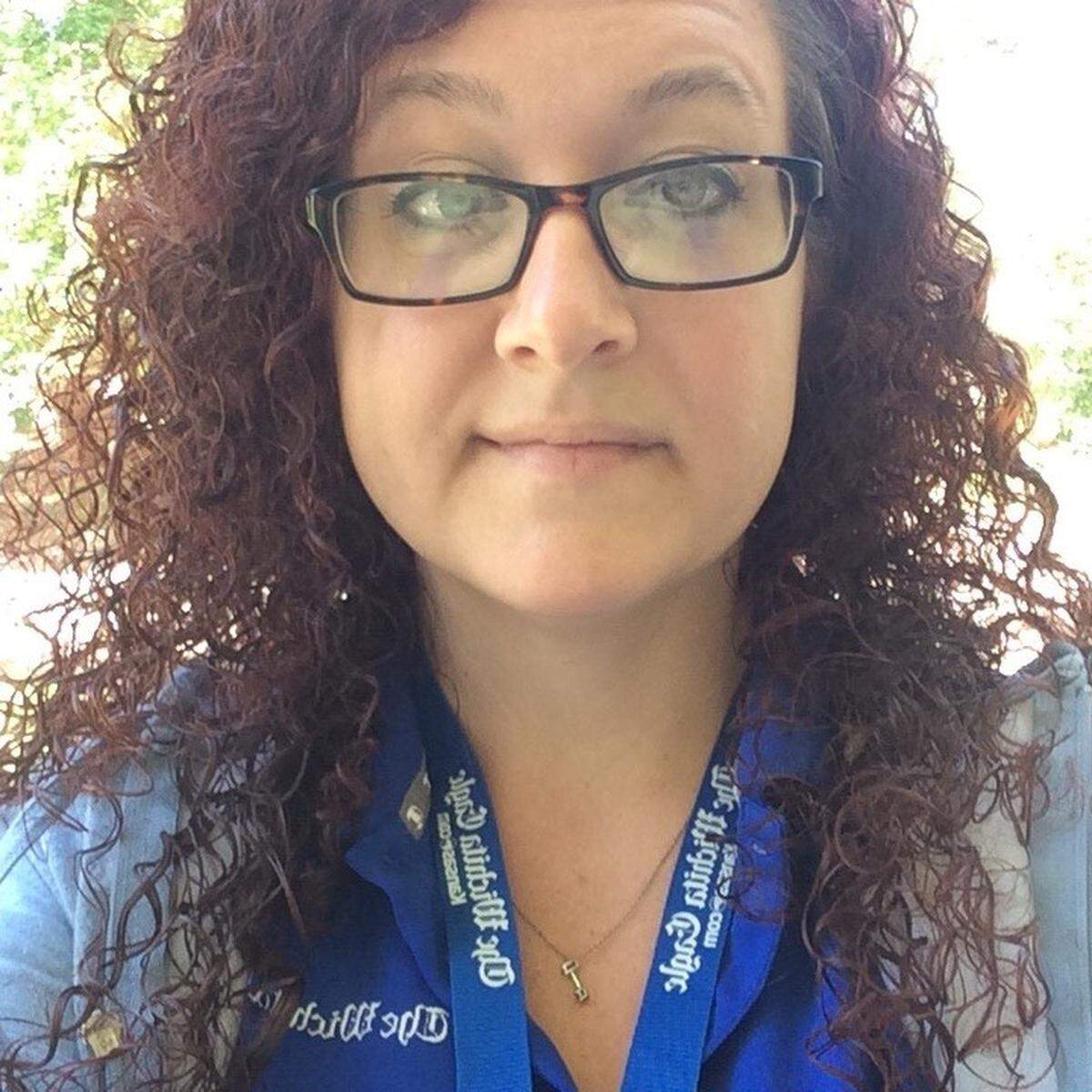
Born in England, Kansan remembers her time serving the Allied effort in World War II
Joan Hall was 18 for just a handful of days when she volunteered to join the British Royal Air Force, driven by a desire to serve.
Though she’s lived in Kansas for 74 years, Hall was born and raised in London, spending her formative years surrounded by a worldwide war that wouldn’t end until 1945.
When she was 13, she and her younger brother were among half a million children evacuated out of London to escape bombings that would tear through the city. The night London burned during an air raid in 1940, she ran down a fire-filled road to seek refuge in a windowless, basement shelter with her family. She still remembers the smell.
At 15, Hall returned home and went to work as a secretary until she was old enough to join the war effort.
Initially, she wanted to serve as a radar operator in the Royal Navy. But her mother wouldn’t sign the enlistment papers.
Back then, she was 17 1/2 and known as Winifred Joan Hawgood.
She turned 18 on Dec. 30, 1943. Three days later, on Jan. 2, 1944, she signed up for the Royal Air Force, like her older sister and brother before her.
She would spend the next two years using Morse code to communicate with flight crews and notifying them of any dangers around them. The war lasted from 1939 to 1945.
“I volunteered because I wanted to do what I wanted to do,” she said in a British accent.
On Wednesday, the 94-year-old will celebrate Veterans Day at Andover Court, the assisted living community where she moved in August to be closer to family members. She said she’s staying in to avoid any quarantine period required by the facility when a resident goes off site during the COVID-19 pandemic.
But, she says, throughout the day she will proudly wear a commemorative T-shirt and name tag she received when she flew to Washington D.C. on a Kansas Honor Flight a number of years ago.
And if anyone asks, she’ll gladly sit down and tell stories about her service in World War II.
“I think it made me more independent because you had to use your own resources and everything. And there was nobody looking after you. You looked after yourself,” she said of her military service.
In the United Kingdom, more than 640,000 women served in the armed forces including The Women’s Royal Naval Service (WRNS), the Women’s Auxiliary Air Force (WAAF) and the Auxiliary Territorial Service (ATS).
Stateside, some 350,000 American women served in branches including the Women’s Army Corp (WAC), the Coast Guard Women’s Reserve (SPARS), the Women Air Force Service Pilots (WASP), the Marine Corps Women’s Reserve (WR) and the Women Accepted for Volunteer Emergency Service (WAVES).
“It gave me more control over my life and more reliance,” Hall said.
Although she was born in England and served there during the war, Hall has been an American citizen since 1953. She moved to Anthony, Kansas, on her own in 1946 to marry an American soldier she met and became engaged to in 1943 while he was stationed in England.
Hall said when she first volunteered for the Women’s Auxiliary Air Force, she wanted to operate a teleprinter, an impressive machine that was a successor to old-fashioned telegraphs. But there wasn’t a need for those.
So she went to boot camp, studied Morse code and trained as a wireless radio operator.
“Basically what we did, once the Lancaster bombers or the Halifax bombers … had taken off, the only communication they had for the next eight hours was with us on the signals on Morse code,” she said, recalling her time at the Lancaster, Halifax bomber station where she and other young women bicycled 4 miles one way to work hours-long shifts nearly every day.
After her training, she was stationed at Foulsham, Norfolk, with the No. 462 Squadron, No. 100 Group, Bomber Command.
“You had maybe four or five, six planes of these, and you just stayed on there, and every 30 minutes, you would get the signal from your planes,” Hall said.
If she received a signal, she knew her planes were still in the air.
If a plane missed sending two consecutive signals, it meant either their radio was out, or worse — that they’d been shot down.
“We lost so many, many, many planes,” she said, recalling one night a bomber didn’t receive a message saying there was an enemy plane — a bandit — flying over the base as she worked a midnight to 7 a.m. shift.
The planes that received the message were “scrambled” — meaning they were sent to safety at other airports, she said.
But this one, which carried a crew of eight, didn’t make it.
“It was a German plane that was over our airdrome, and it shot that bomber right down,” Hall said.
“They were all killed. That’s one of the most awful things that I remember.”
Hall said another of her most memorable experiences serving in the Royal Air Force came three or four days after Victory in Europe Day, which marked the end of the war in Europe on May 8, 1945. Japan signed formal surrender documents aboard the USS Missouri later than year, on Sept. 2, officially ending the war worldwide.
While Hall and the other women she lived and served with were clearing out their cabin after Victory in Europe Day, an officer came in and asked her if she wanted to fly.
She was shocked. Back then, women weren’t allowed to.
“I said, ‘I’m sorry. I don’t know what you mean.’ And he said, ‘We’ve got an 8-hour reconnaissance mission going out tomorrow, if you would like to fly.’”
She made sure she was aboard.
That day, she flew with an Australian crew over war-torn Europe to survey the damage.
“When I was flying over the (English) Channel, I crawled down into the nose where the nose gunner spent eight hours on his belly … and I thought, ‘My God, how did they do it with nothing but Plexiglass?’”
She didn’t have the nerve to explore the rear gun turret.
“When I climbed out of that plane, I could remember standing there on the tarmac at the age of 19 thinking, ‘How in the world did they do it?’ Eight hours with nothing and so young — 19, 20 years old. To this day I don’t know how they did it.”
Hall said her own experiences in the Royal Air Force gave her the courage at age 20 to travel by sea to America aboard the SS Washington to marry the American soldier. They wed in October 1946 and had a daughter the following year.
The couple later divorced, and Hall went to work for the First National Bank in Harper after her British accent left her struggling to find jobs other than sewing and apartment cleaning.
In 1953, she married an attorney named Martin Hall and had two more children, both sons.
After her husband died in 1973, she traveled the world.
She never used Morse code again after the war.
But she kept her skills honed for years.
“I can remember some of the letters, but if I wanted to do Morse code now I’d have to get the book and study it all over again. Yeah, I think it would come back,” she said with a laugh about how her 94-year-old wrists don’t move quite as quickly as they used to.
“Being in the service made me realize that I could do anything, if I really wanted to.”
This story was originally published November 11, 2020 at 4:43 AM.