
Speeding a deadly problem in Wichita, the nation, officials say
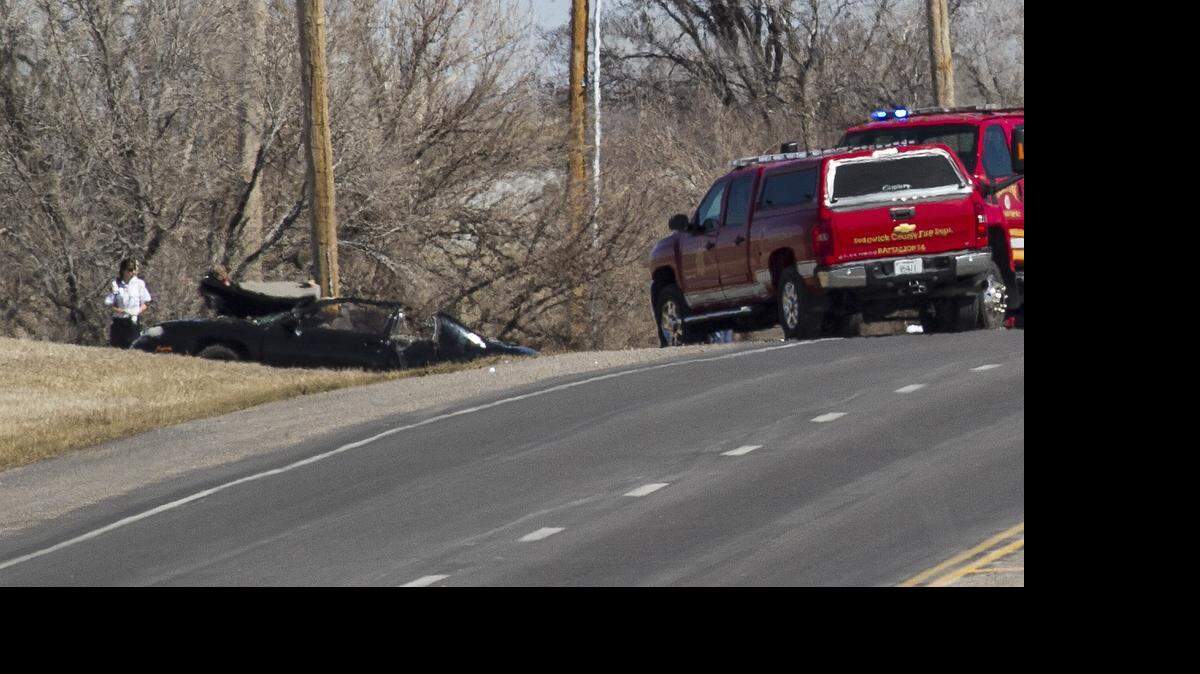
Garrett Holmes appreciates a powerful car engine and knows one when he hears it.
Just past noon last Sunday, the 21-year-old noticed an engine rumbling, coming from the intersection at Maize Road and 13th.
“Man, that sounds pretty good,” Holmes told a co-worker at a car wash just south of the intersection. The engine revved, and Holmes saw a gleaming white Mustang speed by, then out of sight, followed by more acceleration, tires squealing and a crash.
“I bet that guy (in the Mustang) just messed up,” he told the co-worker, not yet knowing how bad it was.
The Mustang, driven by 39-year-old James C. Adams, appeared to be speeding when it hit a curb and shot into oncoming traffic, Wichita police said. The Mustang slammed head-on into a Range Rover before striking a second car, police said.
The collision critically injured a 9-year-old girl belted into the Rover’s back seat. People pulled occupants out of the vehicles, which caught on fire. Adams – described as an accomplished pilot and flight instructor and a devoted husband and father – died at the scene.
Speeding remains a persistent and deadly problem in Wichita and across the nation, officials say.
In Wichita, speeding has been a factor in one-third of the 237 fatal crashes from 2005 through 2014, according to Police Department data. Last year, speed was a factor in six of 22 fatal crashes, which killed 28 people, records show. Some years the ratio has been as high as one out of two.
State records show an average of 11 fatal crashes a year in Wichita in which drivers were speeding or “driving too fast for conditions.”
Around Wichita, there has been a string of deadly crashes over the past year in which investigators suspected speeding.
In March, Derrick Burnett, 17, and Dontrez Williams, 15, died after the car they were riding in veered off Pawnee and struck a utility pole.
Last August, an SUV allegedly going more than twice the speed limit wove around traffic in south Wichita before smashing into a car and killing Trevadawn Pauley, according to an affidavit. Pauley was seven months pregnant.
Her daughter, delivered by emergency Caesarian, died from prematurity and complications from the mother’s injuries. The SUV driver was charged with multiple crimes.
Where do drivers in Wichita get ticketed most often for speeding? So far this year, the No. 1 general location is West Kellogg, Police Department data shows. The most common speed people are driving when they are ticketed by Wichita police is 10 mph over the limit, records show.
Tickets aren’t written to be malicious, said Sedgwick County sheriff’s Lt. Lin Dehning.
“Traffic has to be regulated to keep everybody safe,” he said. “If there’s one driver speeding and driving recklessly, they can cause a wreck without even hitting somebody” by causing others to swerve or overreact.
‘We all speed’
At a time when traffic safety has improved across multiple fronts – with safer vehicles, increased use of safety restraints and progress against drunken driving –speeding remains a frustrating and in some ways worsening problem, a national expert says.
Just as in Wichita, nationwide about a third of auto fatality victims die in speed-related crashes, said Anne McCartt, with the Insurance Institute for Highway Safety in Arlington, Va.
The root of the problem is human nature.
“We all speed,” said McCartt, senior vice president for research at the institute.
Society accepts and expects speeding. “We get away with it,” she said.
Car advertising emphasizes sportiness – and speed.
“So there’s a lot in our culture encouraging people to speed,” McCartt said.
And there’s a false sense of security. Although cars have more safety features, they aren’t strong enough to hold up in high-speed wrecks, McCartt said. Motorists tend to underestimate the risk and overestimate their driving ability.
When the unexpected happens, speeding compounds the problem. McCartt related how she was driving on a 70-mph Virginia interstate recently when she suddenly spotted a blue chair in the middle of the lane in front of her.
“I swerved. I missed it.”
Speed limits rising across the country is not a positive trend, she said.
One argument she has heard goes this way: People are speeding anyway, why not raise the limit? Especially on interstates, the public wants to go faster.
“The legislatures like to keep people happy,” McCartt said.
So the speed at which people drive keeps increasing.
In Kansas, the state raised the speed limit 5 mph to 75 on some highways in mid-2011. Since then, deaths and injuries on those highways have soared, according to numbers compiled by the state and reported by the Kansas City Star in December. The highways include I-135 north out of Wichita.
Resource-stretched law enforcement agencies have had less ability to enforce speeding laws, McCartt said.
From 2005 through 2014, Wichita police speeding citations have been mostly down from year to year but rose to 19,024 last year, records show. So far this year, through April 20, the number of speeding tickets is on pace to be about 2,000 less than last year.
Enforcement perspective
For the Kansas Highway Patrol, speed enforcement remains a daily role, said Lt. David Hundley, who supervises troopers patrolling mostly highways in the Wichita metro area.
Troopers focus on “the higher speeders,” he said.
Speeding makes safe distances between vehicles even more important. Especially in the metro area, there are “tons and tons of rear-enders,” where drivers are going too fast to stop in time, Hundley said.
Aggressive traffic enforcement can help reduce accidents by making drivers more careful, he said.
At the Sedgwick County Sheriff’s Office, most patrol cars are equipped with radar equipment to catch speeders, said Dehning, the sheriff’s spokesman. It allows deputies to look for violators when not responding to 911 calls, he said.
But deputies use discretion and give motorists some leeway.
“We’re not going to be out there writing tickets to people who go 61” on the 60-mph stretch of Kellogg, Dehning said.
He remembers writing a speeding ticket 20 years ago and how the driver resented it, telling him, “Maybe we can find you something better to do.”
But Dehning thought to himself: “This is the best I can do.”
‘Impaired emotions’
Leon James is a University of Hawaii psychology professor who has studied aggressive driving, and he teaches a driving psychology course.
“Every driver basically has the potential of being reckless,” James said. “It all depends, I found over the years in research, how the drivers talk to themselves … while behind the wheel.”
A driver can talk himself into something dangerous. Everything gets magnified while you are in a car, he says.
When drivers do something aggressive or risky, they are acting on “impaired emotions,” James said. Without rational thought, you make the wrong conclusion.
“Driving under impaired emotions is very, very common,” he said.
James concedes that even he likes the feeling of acceleration. “Definitely, there is this thrill,” he said. Acceleration also can be a way for an emotional driver to show disapproval, he said.
But responsible drivers have to learn to temper their excitement or irritation, he said. They have to be realistic.
“Often people think that ‘nothing’s going to happen to me, I’ve got things under control,’” and a driver who takes a risk is showing “insufficient care for other people,” James said.
Part of speeding and aggressive driving is that “people are so busy that they don’t train themselves to care,” he said.
People approach driving as if they are “competing against” others, he said.
“Until that attitude changes, there’s going to be a lot more aggressive driving,” James said. “The culture of rage and the culture of self-promotion on the highway – opportunism – is very strong.”
James sees aggressive driving getting worse with each generation – “because we teach it to our children.”
He has a term for it: “road rage nursery.” A child sitting in the back seat watching and listening to a parent drive aggressively learns to drive the same way.
Speeding has become such a habit that “people tend to drive the speed limit plus X,” James said.
It’s one thing, he said, to go a few miles over a speed limit.
But at around 10 mph over the limit, he said, a driver is losing his or her ability to control a machine that has the power to hurt or kill.
Reach Tim Potter at 316-268-6684 or tpotter@wichitaeagle.com.
Top 10 speeding spots
Where do drivers in Wichita get ticketed for speeding most often? So far this year, the top 10 general locations for speeding tickets, in descending order:
West Kellogg
West 13th
West 21st
East Kellogg
East 13th
East 21st
South Broadway
South Woodlawn
South Turnpike
South 119th
Top 5 speeds over limit
The top five speeds over the limit cited this year:
10 mph, 24 percent
11 mph, 15.6 percent
12 mph, 12 percent
9 mph, 10.8 percent
13 mph, 8.6 percent
Fatal speed-related crashes
Number of fatal crashes, recorded by Wichita police, where speed was a factor:
2014: 6
2013: 9
2012: 9
2011: 9
2010: 13
2009: 5
2008: 3
2007: 5
2006: 14
2005: 7
This story was originally published April 25, 2015 at 2:58 PM with the headline "Speeding a deadly problem in Wichita, the nation, officials say."