
Civil War defined Kansas like no other state
Correction: Old Cowtown Museum will celebrate Civil War Day on Saturday, April 18. The date was incorrect in a previous version of this story.
One hundred fifty years ago Thursday, Confederate General Robert E. Lee surrendered to Union forces at Appomattox Courthouse in Virginia.
The war that began four years earlier, on April 12, 1861, cost hundreds of thousands of lives and changed the course of a nation.
And it defined Kansas like it did no other state, said Deb Goodrich Bissel, a Kansas historian from Topeka.
“We became a state at the beginning of the war,” Goodrich Bissel said. “Our formative years are during the Civil War. The era of Bleeding Kansas led up to the war and set the tone for what the war would be in the entire nation.”
Indeed one of the war’s early sparks was John Brown, who led members of his family and followers from Kansas in the fall of 1859 to attack the federal arsenal at Harper’s Ferry, Va. His goal was to incite a national slave rebellion.
His plan failed, and he was hanged for his actions. But his radical fervor added to the growing tensions between North and South.
“We are always, always at the center of the war,” Goodrich Bissel said. “ … We are the quintessential American because of the trial by fire we went through in becoming a state. All those issues come to a head and are decided here.”
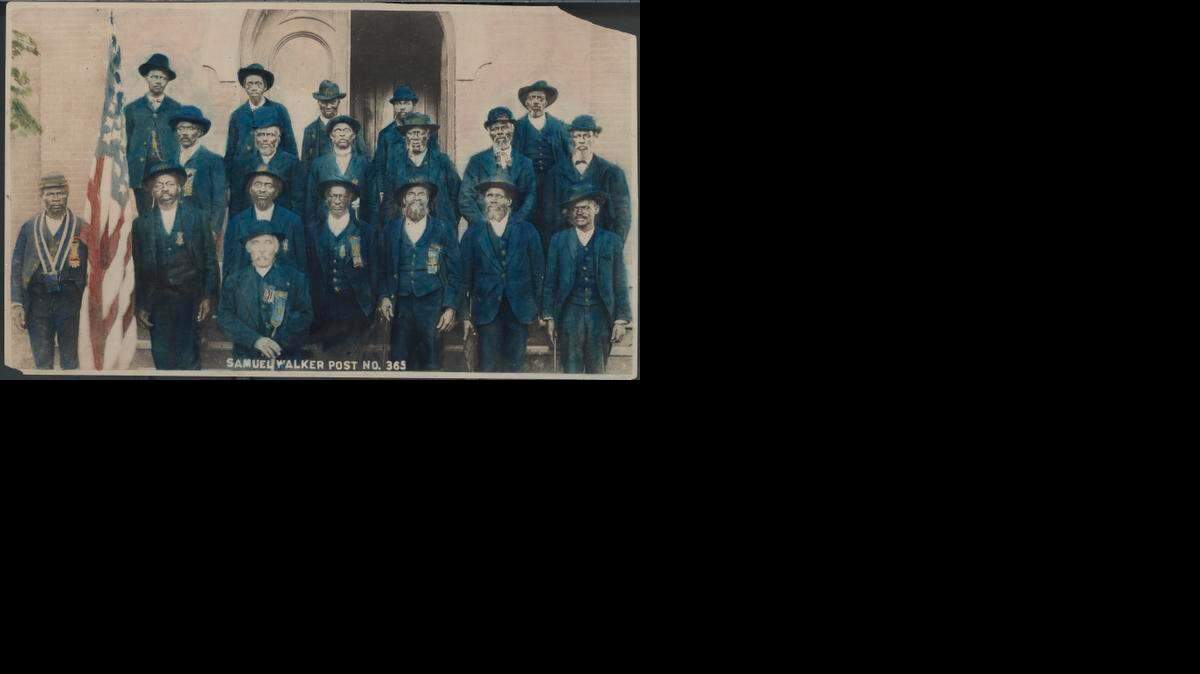
And when those issues were decided and war-weary veterans began returning home, many decided to start their lives over in Kansas.
“I’m thinking about when the war is over and all these people are coming home,” said Kansas historian and filmmaker Ken Spurgeon. “Here they went from trying to kill each other to becoming neighbors again. They went to church and school together.
“There was a tremendous amount of healing that had to be done.”
The Kansas frontier
The Civil War took a toll on Kansans with its ferocity and violence.
William Quantrill’s most infamous raid occurred on Aug. 21, 1863, when he and his Confederate raiders sacked Lawrence. On his orders, they aimed to kill “every man big enough to carry a gun.”
Raiders killed 150 abolitionists, all of them men.
But Quantrill would make more raids into Kansas, one of which resulted in the Baxter Springs massacre of Oct. 6, 1863.
Gen. James Blunt and about 100 men, a wagon train and regimental band were en route from Fort Scott to Fort Smith, Ark. Blunt was preparing to stop at a Union encampment at Baxter Springs when Quantrill took him by surprise.
Because several hundred of the Confederates were wearing different shades of blue, Blunt mistook Quantrill’s approaching riders as Union soldiers. Quantrill and his men began rapidly firing on the Union troops, overpowering them and killing 101 Union soldiers.
“This was the most brutal and barbaric area of the war,” contends Civil War historian Arnold Schofield of Fort Scott.
“Why? Where was the American frontier in 1861 and during the Civil War? The frontier was basically the Kansas-Missouri border and Indian Territory. Traditionally, the frontier has a much more violent and brutal way of life than you have in those more civilized areas.”
The end of the war on April 9, 1865, didn’t mean the end of the war in Kansas, Scholfield said.
“January through March of 1865, the people in eastern Kansas don’t know the war is going to be over,” he said. “Then, all of a sudden, this news – boom – it’s over in the East.
“That doesn’t mean it ends out here. In what is called the Indian Territory, the war is still going on. … By 1865, the border is still a very dangerous place.”
The Soldier State
Mary Bickerdyke was among those who came to Kansas after the war.
She served as a nurse on 19 Civil War battlefields following the Union battle line through Tennessee, Mississippi, Louisiana and Georgia. On those battlefields, she established laundries and kitchens, dressed wounds and chastised Army surgeons for their uncleanliness.
She also founded nearly 300 hospitals along the way to aid the wounded. Soldiers she tended adoringly called her “Mother.”
At the end of the war, the Kansas prairie beckoned. It was a clean slate and it offered many a chance to start over with new land. Bickerdyke would help bring hundreds of Union soldiers to Kansas following the war, temporarily earning it the nickname “The Soldier State.”
Many of those soldiers were returning home after signing up to fight. Their eagerness to defend the Union, which Kansas joined only months before the war began, is another remnant of the war that still exists, Spurgeon said.
“When the hour came, we had a very high rate of enlistment,” Spurgeon said of Kansas soldiers. “We were not fence-sitters. … We didn’t need a draft in Kansas. People were ready to step up and fight.
“I feel like that is our legacy of volunteerism. We are doers.”
Reach Beccy Tanner at 316-268-6336 or btanner@wichitaeagle.com. Follow her on Twitter: @beccytanner.
Events observing the end of war
April 18, 10 a.m. to 5 p.m. Old Cowtown Museum celebrates Civil War Day. There will be Union and Confederate re-enactment groups. In addition, Randal Durbin and Lane Smith will present lectures and a play “Lee and Grant at Appomattox;” music will be provided by Andover’s Prairie Creek Elementary.
Events observing the end of war
Saturday, 9 a.m. to 6 p.m.; Sunday, 9 a.m. to 3 p.m. Fort Scott National Historic Site hosts the 33rd annual Civil War Encampment. An evening performance “Martyr of Liberty,” will include living history interpreters portraying several people, including Abraham and Mary Lincoln; Clara Harris, who was in the theater box with Lincoln when he was shot, and Edwin Stanton, Secretary of War who oversaw the investigation and trial. Events throughout the day include a flag raising, cavalry drill, infantry drill and weapons demonstrations, a medical talk and church service.
April 25, 8 p.m. Flint Hills Victorian Dance Society will present a Grand Gala Ball celebrating the end of the Civil War at 410 Palmer St., Strong City. The dance hall is in the old gymnasium of the Strong City Elementary School. The Kansas Brigade Band, a seven-piece brass band, will perform authentic 19th-century music. Cost is $12 for adults and $5 for teens. Children 12 and under will be admitted for free. Period dress is encouraged. Formal dress and gloves are required. Casual dress such as blue jeans or shorts will not be permitted. Hobnails or heel-plates, spurs, swords or sidearms are prohibited. For more information, call 620-273-0053 or e-mail prairie-maid@sbcglobal.net.
Significant dates leading up to end of Civil War
Sept. 1, 1864 – Fall of Atlanta. Gen. William Tecumseh Sherman’s army occupies the city and its defenses.
Nov. 8, 1864 – Abraham Lincoln is re-elected president.
Nov. 16, 1864 – Sherman’s Army of Georgia begins “March to the Sea.”
March 4, 1865 – Lincoln inaugurated for second term as president.
April 3, 1865 – Union troops occupy Richmond and Petersburg, Va.
April 9, 1865 – Surrender at Appomattox Court House, Va.
April 12, 1865 – The Army of Northern Virginia formally surrenders and is disbanded.
April 14, 1865 – Lincoln is assassinated.
May 12, 1865 – The final battle of the Civil War takes place at Palmito Ranch, Texas. It is a Confederate victory.
May 26, 1865 – Confederate Gen. Simon Bolivar Buckner enters into terms for surrender of the Army of the Trans-Mississippi.
Source: National Park Service. For more details and dates, go to: www.nps.gov/gett/learn/historyculture/civil-war-timeline.htm
This story was originally published April 8, 2015 at 11:55 PM with the headline "Civil War defined Kansas like no other state."