
A return to normal from COVID is still a ways off, Kansas doctors say
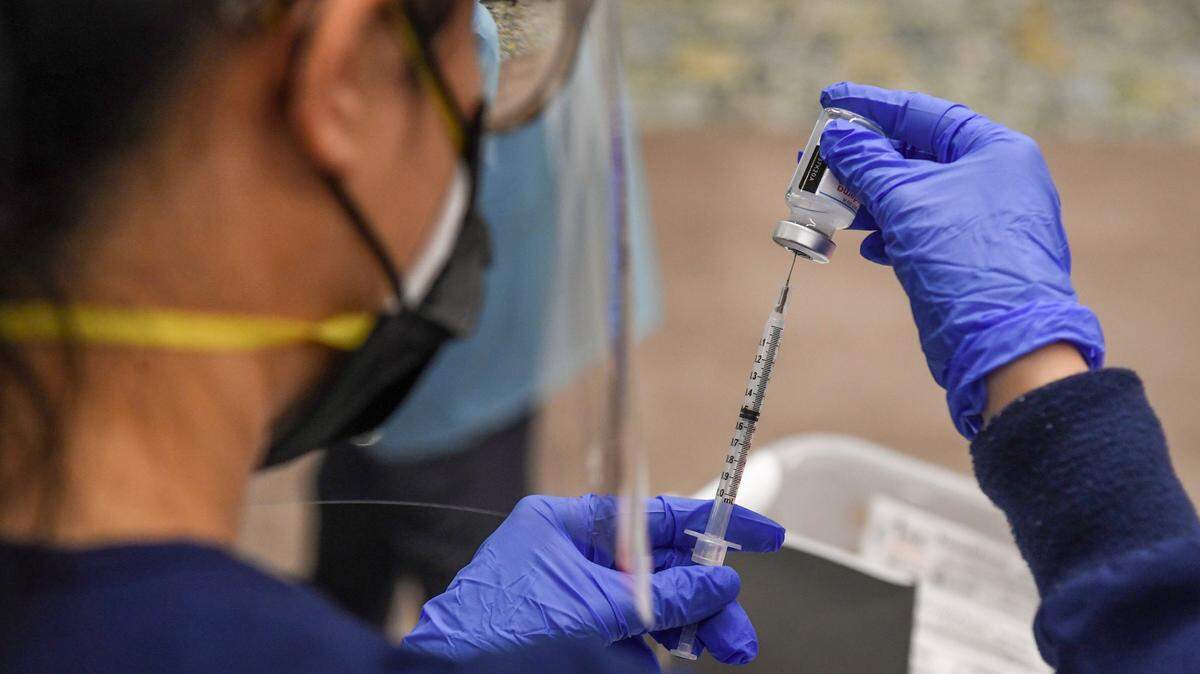
Despite improvement in pandemic indicators and the continued roll-out of COVID-19 vaccines, the top doctor in Kansas says it is too early to celebrate and start returning back to normal.
As secretary of the Kansas Department of Health and Environment, Dr. Lee Norman has led the state’s response to the coronavirus pandemic, which recently hit the one-year anniversary for the incident command team.
“I have a COVID-19 pinata that I was going to pull out and celebrate on that 365th day, and I chose not to because we still have people getting sick, we still have people hospitalized and we still have people dying,” Norman said.
He and other health officials say now is not the time to stop following health guidelines.
“I don’t know when that will be,” said Dr. Dana Hawkinson when asked about an end to wearing masks. “I don’t think it’s going to be anytime maybe before the end of the summer or the fall. I don’t think we know that because just such a small percentage of people have gotten even one dose of vaccine, much less two.”
Hawkinson, the medical director of infection prevention and control at The University of Kansas Health System, spoke during a Tuesday media briefing hosted by KU that included Norman.
Relatively few people have been vaccinated, and it is recommended that they continue to follow health guidelines to prevent unknowing spread of the coronavirus. Health officials credit the public’s adherence to mitigation strategies for recent drops in the positive test rate, new cases, current hospitalizations and new deaths.
Meanwhile, the vaccine rollout has been slow. Limited supplies at a national level mean there are not enough doses for everyone who wants to be vaccinated. Kansas’s share of the allocation at “45,500 doses a week ain’t going to cut it,” Norman said. That’s causing anxiety among some older folks, who are included in Phase 2 of the state’s roll-out plan.
The KDHE’s report from Monday showed about 6.4% of Kansans have received a first shot of a COVID-19 vaccine. But only about 1.5% of the population has been fully inoculated with a second dose.
“I do think there’s strong hope here,” said Dr. Steve Stites, the chief medical officer at KU. “Once you have been vaccinated, it just feels a little safer to travel, it feels a little safer to get on an airplane, it feels a little safer to go out to the grocery store.”
Stites asked Norman “is it safer, can we open things up a little more?” Norman said it is safer for those who have been vaccinated.
“I think that there will be a general trend towards opening things up a bit,” Norman said. “I don’t think there’s a bright line on the ground that says ‘OK, we’ve reached that spot now.’ I’m getting a lot of questions from the Legislature, and they’re asking what does this mean for the statewide emergency declaration and when can we back off and return more towards normal. And I don’t think we’re anywhere near that yet. With this trickle of vaccine coming into the state, there’s such a huge demand for it that we’re going to be deep into the summertime before we really, I think, can exhale.”
That is later than what some may have hoped for. Already, Dodge City has rescinded its mask order and Sedgwick County’s health officer has softened the restrictions on bars and gatherings.
The state’s plan calls for vaccinating the general public under Phase 5 starting in late spring or early summer. That would likely be delayed without a significant increase in vaccine allotment from the federal government.
Gov. Laura Kelly’s office has estimated about 1 million Kansans are in the current Phase 2. At the rate of 45,500 doses a week, it would take about 44 weeks to get enough doses to give two shots to everyone in that group.
Norman said he doesn’t expect an increase in supply from Moderna and Pfizer. Additional supply is more likely once more pharmaceutical companies get their vaccines approved, such as Johnson & Johnson, Novavax and AstraZeneca.
The emergence of variant viruses puts increased pressure on the vaccine rollout. Stites suggested there may be another surge if those variants “take off,” noting that “they’re so much more infectious, they spread pretty rapidly.”
The state has upped its capacity to do genomic sequencing. Norman said the variants from the United Kingdom, South Africa and Brazil “have not been found in Kansas yet. ... These strains are around in our country. They will find their way to Kansas.”
“The vaccine will likely be protective, but to the degree that it’s protective is yet to be known,” he said.
As pandemic trends continue to improve, health workers ask people to continue following the protocols.
“We just cannot take our foot off the gas pedal here,” said Ascension Via Christi’s Dee Dee Dewell during a regional hospital teleconference on Tuesday. “Don’t get comfortable. We’ve got to continue to take all of our precautions to keep ourselves and everybody else safe.”
While coronavirus disease patients no longer have hospitals at critical capacity levels, Dr. Richard Watson, of Cheyenne Mountain Software, said during the teleconference that he expects there to be a spring spike in COVID-19 cases. He is hopeful that vaccines can dampen the effects of a surge.
For now, the patients he helps to transfer are no longer experiencing the excessive wait times they faced just a few weeks ago.
“It’s a constant reminder to people that we are still active in this and hopefully that there’s a reason to continue,” Watson said. “A light at the end of the tunnel always seems to improve everybody’s compliance. When it seems like it’s hopeless what you’re doing, then we tend to stop that activity.”