Moral dilemma about who goes first deepens with vaccine roll out
Donna Bales is faced with what she sees as two horrible choices: live with untreated breast cancer, or undergo surgery before she’s eligible to receive a COVID-19 vaccine.
Both carry a heightened risk of serious complications and death. She’s 74 and has been sequestered in her home since last March with the exception of doctors visits — but even those are mostly telehealth appointments to lessen her chance of contracting the infection.
On the advice of her surgeon last fall, Bales put off having a lumpectomy to remove a four-centimeter calcification in her right breast, in anticipation of the vaccine’s release.
But she can’t receive a COVID-19 inoculation in her own county because the local health department says she’s still too young.
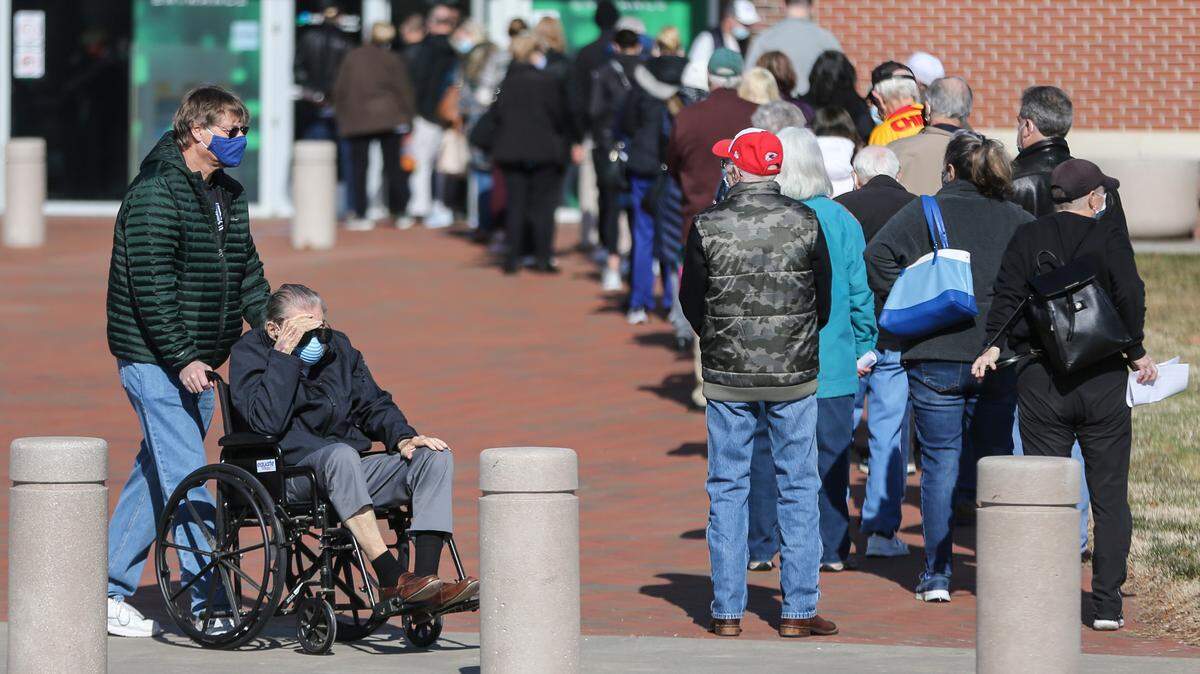
Currently, Sedgwick County is letting people 80 and older as well as health care workers set appointments to get a shot. But as it stands, there are no avenues for people with chronic health conditions — no matter how severe — to jump to the front of the line.
“I was willing to lay low because my doctors indicated to me that I would be at the top of the list to be inoculated,” Bales said during a recent phone interview where she spoke of her cancer battle and the fear that she won’t become eligible for the vaccine before she has to go under the knife, likely in the coming weeks.
“If it were not cancer for me, I would happily spend a few more months in my house and wait for my turn at the vaccine,” she said. “But cancer kind of changes things.”
With a mass vaccination campaign underway, the U.S. is facing a moral dilemma as officials from states nationwide decide who gets the shots first. Everyone from the elderly and those with chronic medical conditions to communities of color and front-line workers are clamoring for the scarce vaccine — and each group has a compelling argument for why they should get priority.
It has local health officials and volunteer advisory committees doing ethical gymnastics the likes of which haven’t been seen since the military’s rationing of a new wonder drug — penicillin — during World War II or the decision to give white men first access to life-saving dialysis machines in the 1960s, when the new technology was in short supply.
A moral dilemma
Hospitals and medical professionals make such moral decisions when triaging emergency room patients in a disaster or ranking recipients for organ transplants, said Courtney Campbell, an ethics professor at Oregon State University.
But what’s happening now is on such a large scale that ordinary people — not just public health officials — are reckoning with questions of who is most important to society and why, he said.
“We’re being asked to emphasize some of our shared national values. … We’re being called to treat other persons as equals, and that means equals in the sight of the law, but also moral equals, so that matters of privilege or wealth or socioeconomic status get leveled out,” he said.
“This is a time when we get tested as to whether we’re going to walk the talk.”
While the nationwide priority has been inoculating health care workers and those in nursing homes, the decisions get more difficult deeper into the vaccine roll out. Federal guidance says states should prioritize the elderly, front-line essential workers and those with underlying medical conditions in the next phases.
But ultimately it’s up to state and local officials to decide how to distribute the shots.
“I’m a lot more aware of inequities in health care than I’ve ever seen,” said Mary Boyce, a Wichita physician treating Bales as she waits for surgery and the vaccine.
“There’s no combination of this where someone doesn’t feel upset and disenfranchised.”
In Oregon, the governor faced criticism for putting teachers ahead of seniors so the state could reopen schools. Minnesota’s governor was criticized by teachers for putting seniors first. Other states, like New Jersey, raised eyebrows by putting smokers toward the front of the line.
And Kansas Gov. Laura Kelly’s decision to begin this week vaccinating all prisoners while many of the state’s residents over 65 are still waiting their turn brought protests from Republican legislators.
Vaccine shortage
Complicating matters is that the nation’s vaccine distribution has been marked by disarray and confusion. States have complained about shortages and inadequate deliveries that have forced some to cancel mass vaccination events and appointments.
In Kansas, the vaccine roll out has been slow. Two weeks ago, Gov. Laura Kelly opened vaccines to anyone 65 and older as well as thousands of health care workers and gave counties permission to determine their priorities as the state moved into phase two of the vaccination program.
But a local supply shortage has kept Sedgwick County from opening vaccinations to everyone eligible, although it’s inching closer to that milestone.
During a recent news briefing where the county announced it was lowering the eligibility age to 80 from 83, the county’s health officer, Dr. Garold Minns, said the decision was made to “work our way down in age” because there isn’t 110,000 doses immediately available to cover the area’s entire 65-plus population.
At the time, commission chair Pete Meitzner said the county is receiving “trickles of vaccinations and supplies” from the state health department.
“We want to get these vaccines to our residents in a thoughtful and expedient manner, most especially into the arms of the most vulnerable, which is our aged population,” Meitzner said, adding that vaccinating the elderly is “our top priority.”
“Right now, however, we are only able to vaccinate residents age 80 and older along with our medical workers.”
Underlying conditions
That doesn’t help local residents like Bales wrestling with immune compromising conditions who meet the 65-plus threshold under phase two of the state’s vaccination program but are still too young under the county’s guidelines.
For Bales, the cancer and wait for surgery “is a slow-moving medical emergency” that under ideal circumstances “would have gotten taken care of four months ago,” Boyce, her doctor, said.
“Surgeons don’t often delay surgery,” Boyce said, but the surgeon advised that Bales would not likely survive COVID-19 due to her age and other health conditions.
According to the CDC, adults of any age who suffer from a number of conditions have a heightened risk of severe illness including intensive care admission, ventilation and death from COVID-19. The list, while not comprehensive, includes cancer, chronic kidney disease, heart conditions, smoking, Type 2 diabetes, obesity, pregnancy, sickle cell disease, chronic obstructive pulmonary disease (COPD), Down Syndrome and weakened immune system due to organ transplant.
People with other conditions including asthma, Type 1 diabetes, cystic fibrosis, neurological conditions such as dementia and pulmonary fibrosis may be at an increased risk for severe illness, the CDC says.
In Kansas, almost 38% of COVID-19 deaths have occurred in people 85 and older, according to Kansas Department of Health and Environment data. Nearly 30% of deaths are people aged 75-84. Those aged 65-74 account for about 18% of deaths.
The COVID-19 death rate is similar among Sedgwick County’s elderly. Around 77% of residents who have died are over 70, Minns has said, and the 65-plus group also has had the highest number of COVID-related hospitalizations. Many who succumb to the infection have underlying health conditions that increase the chances they won’t survive.
The decisions about who is eligible and when “are being made by a team of people who are thoughtfully looking at all the data available to us,” Sedgwick County Commissioner Lacey Cruse said when the county lowered its age restriction to 80.
“Age matters, it does. We know that the older people more often succumb to COVID,” Bales said. “My question is, why do we not look at any other variables?”
Bales has been emailing and calling local and state officials for weeks asking when she’ll become eligible and why age is the only consideration, other than health care-related employment, that will secure a spot at the front of the vaccine line.
But she keeps hitting the same wall: There is nothing else she can do for now but wait until the age restriction is lowered.
No one knows for sure exactly when that might be.
Other nearby counties are vaccinating people 65 and older. But she has no luck securing an appointment there, either. She calls and checks their websites daily.
“The two messages I get are, we don’t have enough vaccine to go around, and we need to give it to the people who need it the most,” Bales said.
“I literally feel like my life’s on the line. It’s the most medically stuck I have ever been.”
In response to one of Bales’ emails, Sedgwick County Health Department Director Adrienne Byrne wrote on Jan. 21 that she and other local health officials “have heard from many people struggling with severe illnesses hoping for a vaccine” and that with the new weekly supplies, officials “hope to be to 75 years and older by March,” depending on shot availability.
Since then the county has started getting a weekly delivery of 7,000 vaccines, meaning it may be able to move to the 75 to 79 age group quicker.
But Bales still won’t qualify for the next round because she doesn’t turn 75 until September.
“I understand this is a tough issue for everybody. I do not want to minimize the issues our health officials are facing,” Bales said.
“But this breast surgery is something I may not be able to wait for.”