Distribution anomalies and information gap plagues COVID-19 vaccination in Wichita area
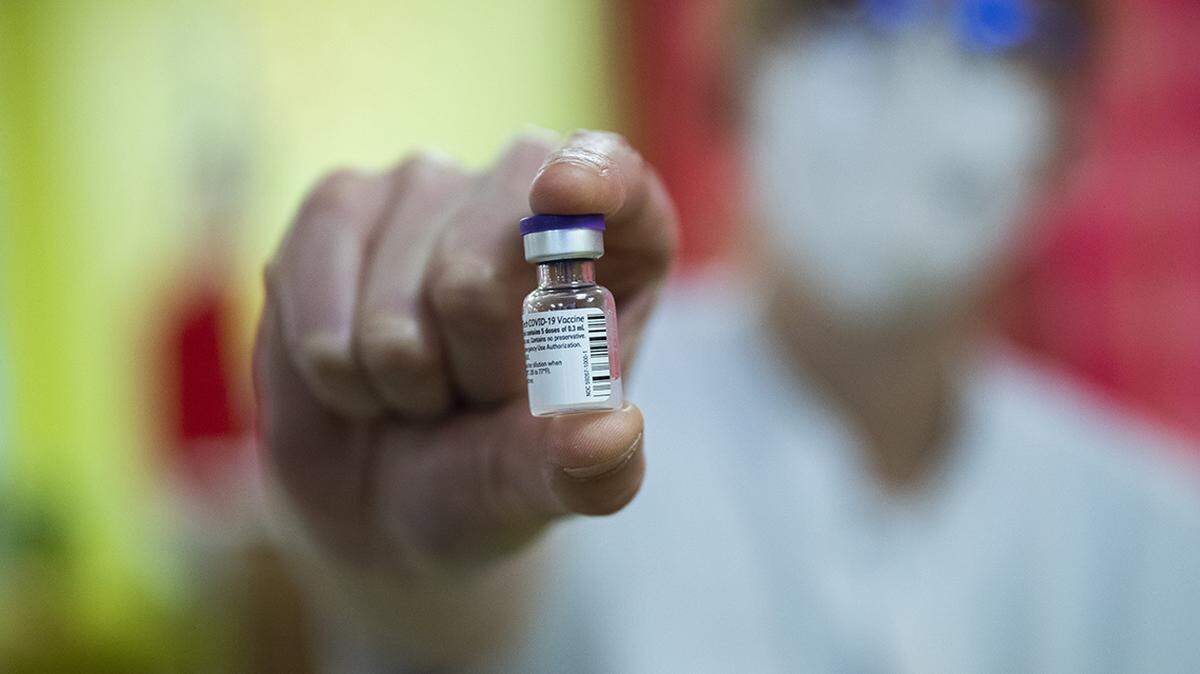
The rollout of COVID-19 vaccinations in the Wichita area continues to lurch forward, but no one knows how many vaccine doses have been received here or how many of those have made their way into people’s arms.
Differing policies between state and federal agencies and different supply chains feeding public and private partners are clouding the picture while basic questions about the rollout go unanswered.
“It seems like this is almost like an Easter egg hunt,” said a frustrated Sedgwick County Commissioner Jim Howell, who also serves as a member of the county Board of Health. “We’ve got to get some coordination moving forward. This is unacceptable.”
Rep. Brenda Landwehr, R-Wichita and chairwoman of the Health Committee in the Kansas House of Representatives, rates the rollout so far as “poor.”
“Don’t tell everybody that everything is rosy when it’s not,” she said. “It’s not about Republicans wanting to beat up on the (Gov. Laura) Kelly administration, it is about Republicans and Democrats wanting to know who, what, where, when and how.”
She said she’s hoping for more clarity to come Tuesday when her committee will join with its Senate counterpart for a joint hearing seeking answers from the Kansas Department of Health and Environment.
“Hopefully they will show up and give us those answers,” she said. “But if they’re doing a smokescreen it’s not going to be satisfying to the legislators. We’ve all got constituents asking these questions.”
Where we stand
Part of the confusion is that no one agency or individual is in charge of the vaccination process.
In the Wichita area, there are at least three pipelines for vaccine supplies feeding into the community and multiple points of distribution, each following its own set of rules.
As best anyone can tell, here’s the picture as of Friday:
▪ Sedgwick County has administered about 12,000 shots since it opened a mass vaccination station at the Intrust Bank Arena Dec 29. The Health Department got most of its supplies from an allocation of about 8,500 doses that were received by the GraceMed nonprofit clinic and turned over to the county, said County Manager Tom Stolz.
The county received a follow-up shipment of vaccines on Wednesday, but there are only enough doses to give booster shots to health workers who have already gotten their first dose, Stolz said. Vaccination is a two-step process with the first dose conferring about 50-70% resistance to the virus and a booster shot three weeks later bringing protection up to 90-plus percent.
▪ GraceMed, which operates 16 clinics serving low-income populations in Wichita, Clearwater, Topeka and McPherson, held back 300 doses for its employees and gave the 8,500 doses to Sedgwick County and about another 1,500 to Shawnee County, said its CEO, Venus Lee.
Lee said GraceMed passed along the doses because they felt the counties were in a much better position to give that many shots.
“We wanted to do our part to help out the community and that was the way we could do it,” she said.
She said she doesn’t know when or if the clinic will get more.
“We get about a 12-hour notice when the vaccines come in,” she said.
In an e-mail, KDHE spokeswoman Kristi Zears said the large distribution to GraceMed and other Federally Qualified Health Clinics was part of the state’s plan all along.
“In the initial allocations, the local health departments were given the number of doses needed for their staff and the EMS (emergency medical service),” she wrote. “The FQHCs were given the vaccine allocations for all the other non-hospital healthcare workers. Everyone was then asked to work together to get the vaccine where it made the most (sense) for their counties.
“In the Sedgwick County example, the entity receiving the larger doses was allocated for the regional catchment area they cover, which is multiple counties.”
▪ The two main hospital systems in Wichita, Wesley Medical Center and Ascension Via Christi, have reported giving about 5,000-6,000 shots to their employees, Stolz said. They receive their supplies through KDHE, but in a separate allocation than the county, he said.
▪ Hunter Health Clinic has vaccinated about all of its 135 employees and has about 600 doses left.
The clinic, the only Urban Indian Health Clinic in Kansas, has its own access to the vaccine independent of the state and received its supplies directly from the federal government through Indian Health Services, an arm of the Department of Health and Human Services, said spokeswoman Brittney Weis.
On Tuesday, the clinic will begin administering vaccinations to Native Americans 55 and older by appointment on a first-come, first-served basis.
Recipients do not need to reside in Kansas, but tribal ID will be required. For appointments, call 316-262-2415.
▪ Nursing homes, assisted-living centers and other long-term care facilities were supposed to be one of the first groups vaccinated in Kansas. But it’s unclear how many long-term care facilities in the Wichita area have received any doses.
Long-term care and assisted-living facilities, where outbreaks have proven especially devastating, were supposed to receive doses from pharmacies through a federal public-private partnership, the Pharmacy Partnership for Long-term Care Program. Through that program, the CDC sends vaccines directly to pharmacies to provide free, on-site vaccinations to residents.
Walgreens and CVS were supposed to be the primary vaccine source for nursing homes in the Wichita area.
When contacted by Sedgwick County, CVS said it had not received any doses as of Thursday. Walgreens confirmed to the county they had received and distributed some doses, but not how many or where they went, Stolz said.
CVS did not respond to questions from The Eagle. A spokesperson for Walgreens wrote in an e-mail that the company is “working on making that data available to the media and the public very soon.”
He referred an Eagle reporter to a website of the national Centers for Disease Control and Prevention, which showed only that 1.2 million doses have been delivered through the pharmacy program nationwide.
KDHE also has been authorized to distribute vaccines to pharmacies to supplement the work done by CVS and Walgreens. But the state has been unresponsive to the largest pharmacy network in the state.
The Kansas Community Pharmacy Enhanced Services Network, a network of independent pharmacies throughout the state and one of the partners in the federal public-private partnership, said pharmacies have been told that the federal government is working with state and county health departments during the first round of vaccinations, including those at long-term care facilities.
“The state government CAN activate a Federal Pharmacy Partner in Kansas for (long-term care facilities) but that hasn’t been announced in Kansas,” said Jay Williams, a spokesman for the CPESN, in an email.
Williams said the independent pharmacy network has requested authorization from Gov. Laura Kelly to begin vaccinating people but has not received a response.
“We have 100 pharmacies in the state who are ready to help their communities,” Williams said. “CPESN Kansas is the largest collection of pharmacies in Kansas and 95% of the population is within 15 minutes of one of our CPESN pharmacies. We are ready, we just need the vaccine.”
▪ The Robert J. Dole VA Medical Center is vaccinating veterans 75 or older and veterans with severe medical conditions, such as cancer patients.
VA spokesman Jeff Herndon said he was not authorized to provide specific numbers, but said the VA has vaccinated “hundreds” of people.
The VA received its first doses on Dec. 23 and gets a new shipment each week directly from the federal government. After giving first priority to frontline medical workers, the vaccine is now available to the VA’s entire staff, Herndon said.
“We’re doing pretty well so far,” he said. It’s not clear at this time when the VA will make vaccines available to a larger population of veterans.
Federal pressure
The backdrop for the chaotic rollout of the vaccine in the Wichita area is Operation Warp Speed, the Trump administration’s massive vaccine distribution plan.
Trump administration officials say the federal government has allocated more than enough vaccine doses to cover the first round of vaccinations and blamed states for the chaotic rollout, announcing sweeping changes that would tie future distribution to early performance by states in the coming weeks.
“We will be allocating based on the pace of administration (of the vaccine), as reported by states, and by the size of the 65 and over population in each state,” Health and Human Services Secretary Alex Azar said on Tuesday.
Early reports from the CDC showed Kansas had lowest rate of vaccinations in the country. State officials said the lag was due to technology problems and reporting errors, and the state has now improved.
“We’re giving states two-weeks notice of this shift to give them the time necessary to plan and to improve their reporting if they think their data is faulty. This new system gives states a strong incentive to ensure that all vaccinations are being promptly reported, which they’re currently not,” Azar said on Tuesday.
“The doses allocated exceeds the priority populations in (the first eligible group), including frontline health workers and seniors living in long-term care facilities, which means supply now exceeds demand from those groups,” he said.
Azar, head of Operation Warp Speed, also urged states to begin vaccinating everyone 65 or older and anyone else with “a comorbidity with some form of medical documentation as defined by governors.”
“It’s simply much easier to manage allocating vaccines and appointments to everyone 65 and over, rather than narrower, more complex categories, and it enables states to use much more diverse administration channels.
“There was never a reason that states needed to complete vaccinating all health care providers before opening vaccinations to older Americans and other vulnerable populations. States should not be waiting to complete (health care worker vaccines and long-term care patients) before proceeding to broader categories of eligibility.”
Sedgwick County has not received the go-ahead from KDHE to move into the next phase of vaccine distribution outside the original group of health-care workers and wouldn’t have the supplies to do so even if it did, Stolz said.
The second phase will open vaccination eligibility to about 150,000 senior citizens and workers in vital industries in Sedgwick County.
Dr. Julie Vaishampayan with the Infectious Diseases Society of America said the sudden change by the Trump administration has left public health officials scrambling without a plan or enough vaccines to carry out the federal directive.
Vaishampayan said the quick change doesn’t give health departments enough time to announce the changes and to figure out a way to get vaccines in the arms of the most vulnerable populations. She said offering vaccines to such a broad swath of the population without prior planning would ultimately skip over the most vulnerable — people with medical conditions that make it difficult to leave the house and those without transportation or Internet access.
In Sedgwick County, about 15% of the population is 65 or older and 44% of adults have a chronic underlying health condition, according to the CDC. That would immediately open the vaccine to potentially nearly half of the adult population near Wichita without enough vaccine to go around.
“Without this advance planning, the people that are going to come and, sadly, stand in long lines are going to be those, in general, who have more resources. They’re going to be healthier and able to stand in line.
“So we need to really double-down on our work to try to reach those who don’t have all those resources,” she said. “That’s the work that public health does.”
Vaishampayan compared the vaccine rollout to “trying to fill a lake with a garden hose.”
“Rather than making the lake bigger, what we really need is more water, and more hoses,” Vaishampayan said.
This story was originally published January 17, 2021 at 7:01 AM.