
What in the name of Wichita wacky weather is going on, and what should we do?
A Dillons cashier this week asked a customer the perfunctory, “How are you?” She lied and responded, “Fine.”
As they came to commiserate, though, they found each are suffering from especially bad allergies — as apparently is the second person in line, who was buying two boxes of Mucinex — and both have complaints about this week’s wacky weather swings.
First, there were tornadolike gusts on Sunday, then came single-digit wind chills on Monday morning followed by an expected high of 96 degrees on Saturday.
The cashier said he’d appreciate it if Mother Nature would make up her mind.
Are we still doing winter or are we already committing to summer? And whatever happened to spring?
And what does this back-and-forth winter and summer trickery mean?
We turned to the experts to learn how this is going to affect everything from plants and bugs to health — both physical and mental — and the forecast for summer, which already seems upon the city.
“I like seasons,” said Wichitan Wade Hampton. “Give me a real spring, and give me one month of summer. That’s enough.”
Hampton had his own choice words for Mother Nature when he went to get his mail on Thursday. He was wearing a hoodie in his house and was dismayed to go outside and feel how hot it was.
He took the moment to remind the universe that it’s only March.
As his heat-loving friends (not to mention other crazy people) revel in the 90-degree temperatures this week, Hampton’s response is, “Oh good, I hope your nine months of summer is enough for you.”
It seems most everyone everywhere is fond of saying, “Don’t like our weather? Just give it five minutes.”
An Oklahoma meteorologist wrote on Facebook this week about how a strong front diving south on March 27 “means Oklahoma is NOT done flirting with frost and freezes just yet. We’ll go from warm, spring vibes right back to ‘do I need to cover the plants again?’ in a hurry. Classic Oklahoma. You can plant flowers at noon and panic about them by bedtime.”
Kansas, too, actually has the stats to back it up its crazy weather claims.
“This is definitely one of the bigger swings that we’ve had for sure,” said James Cuellar of the National Weather Service in Wichita.
“March is typically the time where we’re going to see the biggest temperature swings. It’s just kind of the nature of how it is, especially in the Plains. There’s probably no better place in the world to see extremes.”
The cause
North America in general is “a really unique place in the world,” Cuellar said.
From oceans on either side of the United States, the Rockies in between and the Gulf to the south, the topography combines to “promote kind of your more extreme weather.”
He said the central and northern parts of the United States, particularly in transitional seasons, are some of the most notoriously difficult places to forecast.
There’s currently a heat dome over the desert southwest, which is what’s bringing unseasonably hot temperatures to Kansas.
According to climatology, Cuellar said, Wichita should be having average lows in the mid-30s and average highs of about 60 degrees instead of what it’s getting right now.
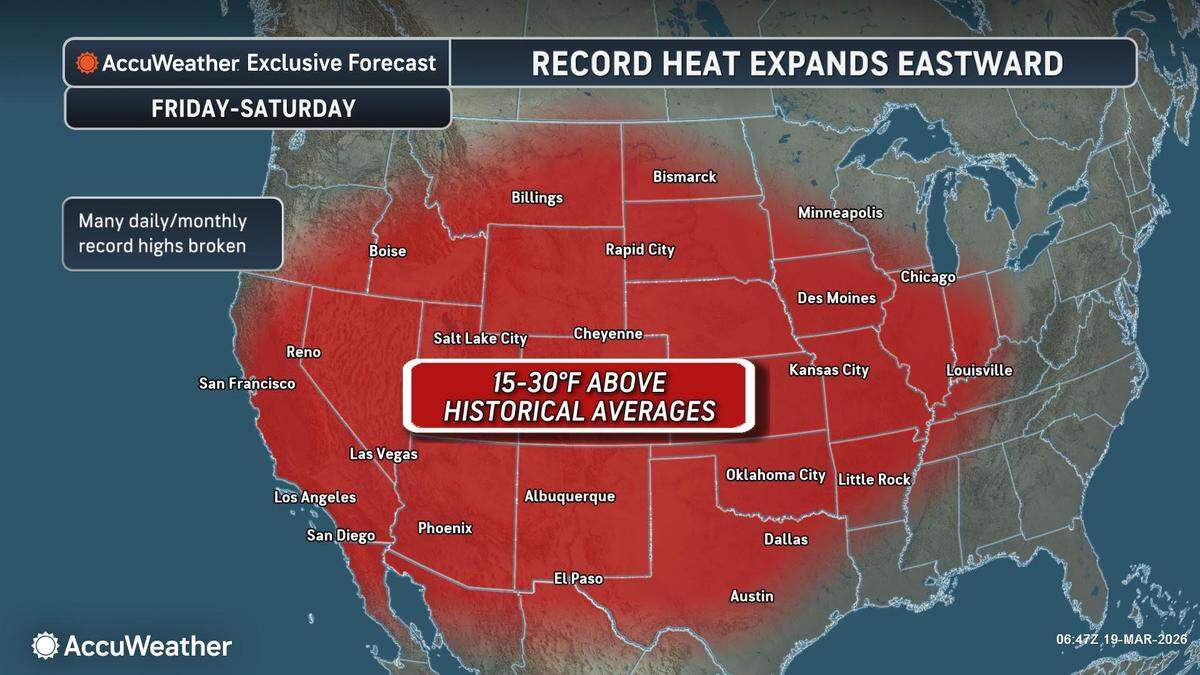
A cold front late next week is going to be following the heat dome for another flip flop in temperatures, but AccuWeather senior meteorologist Tom Kines, who is based in Pennsylvania, said that’s typical for March and even April.
“What we’ve seen so far and what were probably going to see is certainly on the extreme side of things, but to my point, big temperature swings do happen,” he said. “I think we’re going to see this more times than not over, I guess, maybe the next several weeks.”
Kines thinks the next month or two likely is going to stay above average in temperature.
“Whether or not this translates into summer, it’s kind of hard to say.”
Plant problems
With flowers popping up and leaves bursting on trees, even the natural world can be a bit confused right now.
“Kansas will always keep us on our toes,” said Steven Brady, general manager and production manager at Brady Nursery.
Tulips and daffodils may be normal for this time of the year, but Brady said he’s seen some trees coming out of dormancy about three weeks early due to the heat.
The problem is subsequent low temperatures can lead to injury.
Brady said a lot of plants are breaking dormancy because of the warm soil temperature due to a mild winter.
“They get tricked. They come out early.”
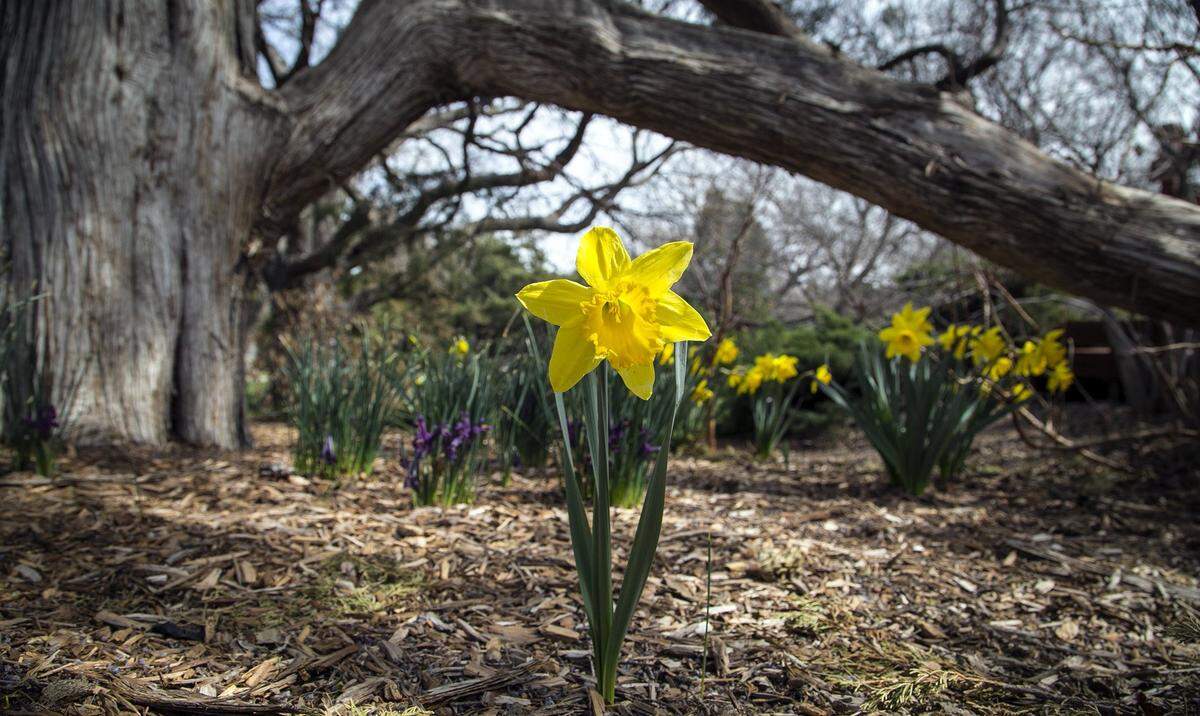
He said trees can start pulling moisture and sap into their branches and trunks, and that water can freeze and expand. Sometimes bark will pop off as a result.
“Sometimes it takes a year before you even know it happened,” Brady said. “I’ve seen big oak trees get killed by that.”
However, freeze damage is worse when there isn’t moisture in the ground, he said. It may seem counterintuitive, but Brady said the biggest factor in a plant’s resiliency is good hydration. Plants already stressed by drought are more vulnerable to issues, but he’s not too concerned about that.
“The thing we had on our side was really good moisture.”
At the same time, he said he witnesses more plant loss because of overwatering rather than underwatering.
“It’s not super black and white.”
What to do
So what should a confused Kansas grower do right now?
Nothing might be your best bet.
Brady said his grandfather used to say, “The sap rises in people before it does in plants.”
“We have a couple nice days, and people want to get everything planted,” he said. “Kansas always backhands us with late freezes.”
The final freeze usually is mid-April, although sometimes it happens in May.
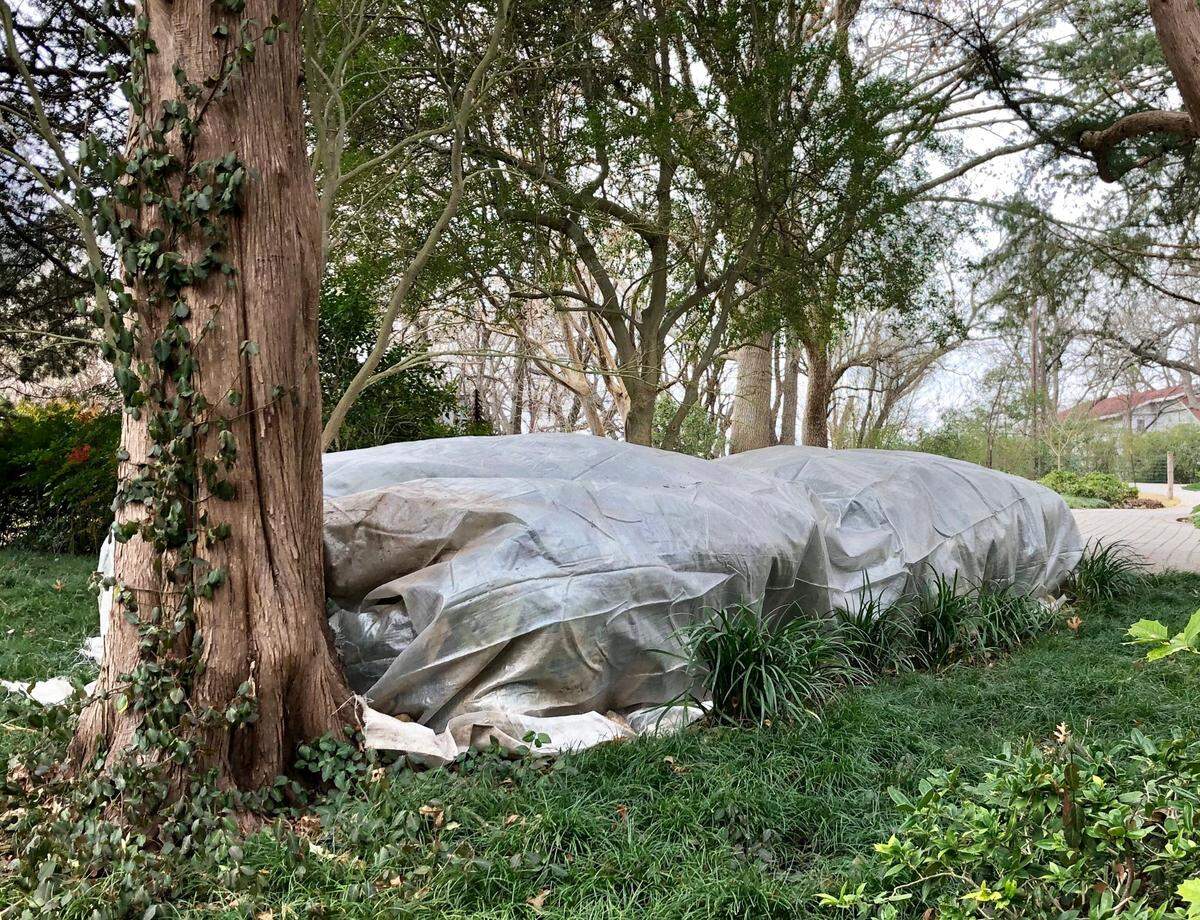
If you already have plants or buds or leaves popping out, you can use a thin cloth cover for them in big beds or buckets over individual plants, which creates something of a greenhouse effect.
There’s a way to check to see if your plants need watering before the freeze, too.
“With the warmth that we’re having, I already know that people are going to be . . . watering their lawns like crazy,” Brady said.
Before doing that, he advised taking a Phillips screwdriver that’s about 6-to-8 inches long, probe it into the ground, twist it and pull it out.
“If there’s mud in the teeth of a screwdriver, you don’t need to water,” Brady said. “It’s kind of like checking a cake.”
Even if your topsoil looks dry because it is powdery on top, he said there’s often moisture half an inch lower, so watering is unnecessary.
“They don’t need to be doing that. Less can be more.”
Irritating insects
If you think you’ve been seeing some bugs a bit earlier than they usually appear, you’re not dreaming.
“Some of our insects have emerged from their dormancy and hibernation a little earlier than normal,” said Matthew McKernan, consumer horticulture extension associate for Kansas State University.
Does that mean another freeze could come along and wipe them all out before they ruin our summer?
Now you’re dreaming.
“Insects are really good at hiding and finding cover or protection, let’s say, from the cold,” McKernan said.
They might be able to find shelter in leaf debris or crevices and cracks in trees and houses.
A lot depends on what stage the insects are in their life cycles.
If insects emerge too soon from their egg or pupa stages, which generally happens only after long periods of warmer temperatures, McKernan said they’ll be more prone to injury from the cold.
Though the hardiness of insects may be as annoying as the insects themselves, McKernan said, “They do serve an important ecological function to be a food source.”
Creatures such as birds and amphibians rely on the insects. A little help from humans, say, filling bird baths, is great too, McKernan said.
“It’s always a good idea to provide habitat for local wildlife and local insects.”
A haze descends
Van Strickland was up with the sun on Sunday, and everything looked all right at first.
There was blue sky, a typical bright sun and white contrails from an airplane.
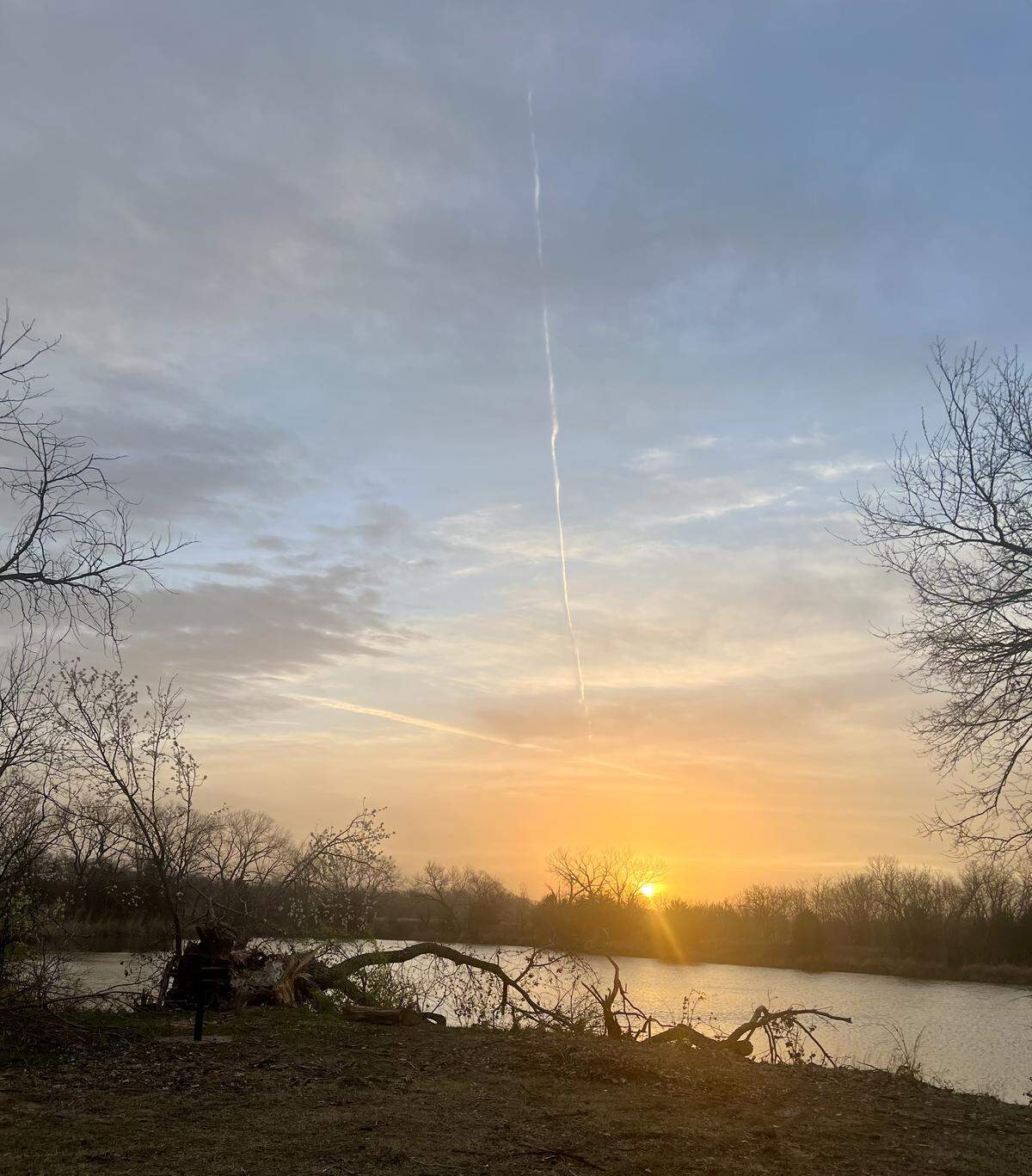
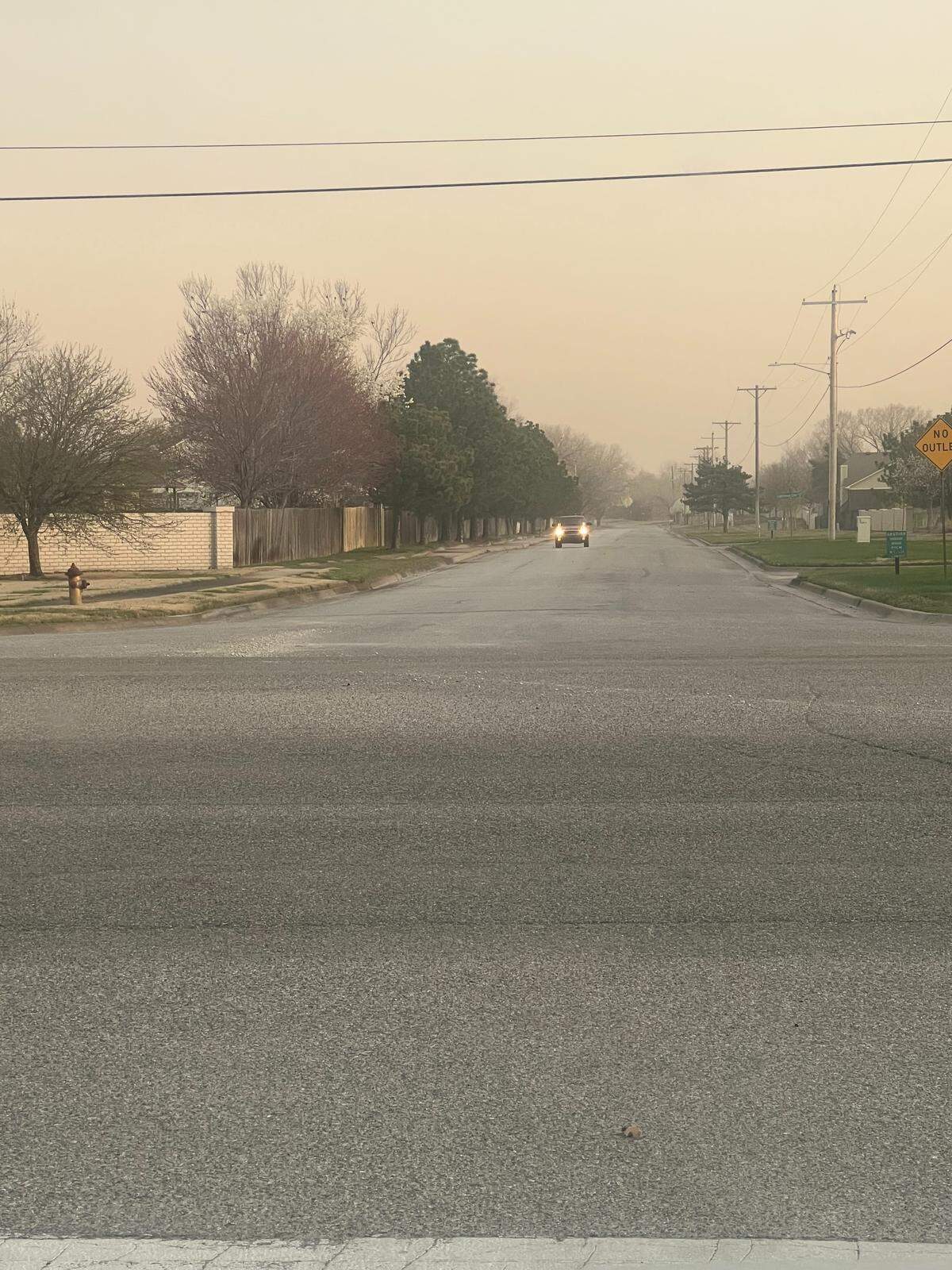
Mere minutes later, following the beginnings of some crazy wind, a haze descended on Wichita, and the allergist and immunologist knew what he’d be in for when he returned to work on Monday.
“I’m seeing people coming in and saying their allergies are terrible,” he said. “People have gotten sick this week. . . . Then they’re mad at me because I can’t move a mountain.”
Just how bad are allergies in Kansas right now? A couple of medical practices couldn’t even spare their allergists to speak for this article because they’re so busy.
“Definitely, the allergies are getting worse every year,” said Eric Bunting, an otolaryngologist with Mid-Kansas Ear, Nose & Throat Associates.
A lot of that is coming from climate change and what that produces, he said.
“Extremes in weather certainly are difficult for allergies.”
Things such as dust, dirt and pollen are carried by the wind.
“That certainly makes it worse.”
Dryness is another factor, Bunting said.
Added to that, most allergy medicines have gone over the counter, he said.
“People struggle with exactly what to take.”
The allergy aisles of stores can be perplexing places.
Bunting and Strickland both recommend a combination of approaches.
First, pick an antihistamine like Allegra, Claritin or Zyrtec. Combine that with a nasal spray like Nasacort or Flonase.
Before using a spray, rinse your nose with saline. That could be through a product such as the NeilMed Sinus Rinse or a neti pot.
“It’s kind of like taking a shower,” Bunting said. “It’s rinsing those allergens out of the lining of the nose.”
The problem is people don’t want to do them, Strickland said.
“Sinus rinses are great. Get that stuff out of there.”
Similarly, he said that “nobody wants to put a spray in their nose, but you’ve got to.”
If you’re still struggling, both doctors said, then it might be time to see an allergist for some testing and a preventative program.
Patience? Please.
Kines, the AccuWeather senior meteorologist, said for people struggling with allergies a bit earlier this year, “You just need to be patient with the weather.”
And if your patience has already run out?
“You better move then. I’m not sure to where, but . . . .”
Bunting said that won’t help.
“You can move and find relief for a few years,” he said. “You’re eventually going to get . . . reactive to the local environment after a few years.”
In addition to allergies, what about people struggling with their mental health over the weather?
There’s lots of concern for people who suffer from seasonal affective disorder from a lack of light in the winter, but what about SAD symptoms for people who can’t take the heat and are depressed summer has struck too soon?
“You make a good point,” said therapist Shane McCurdy, who has “unbelievably bad seasonal allergies” and can’t stand the humidity that comes with Kansas summers.
McCurdy, who seemed to surprise himself Thursday when he turned on his air conditioning, said it’s not a stretch to say that allergies and heat can affect people’s moods.
“They can become more irritable in general.”
Hampton, whose loathing of the heat is legendary among his Facebook friends and beyond, has often commented on Kansas extremes in his posts.
For instance, in early September 2023, he had a post trying to hurry Fall along amid horrible heat.
“I just glanced out the window and I saw a single leaf fall from a tree. Now I know that it probably died from heat exhaustion, but A LEAF FELL FROM A TREE.”
Hampton, who turns 60 in a couple of years, said he remembers “when we had actual winter storms” in Kansas instead of a long fall that turns into “damn near summer.”
“With climate change . . . it’s probably only going to get worse,” he said.
“It’s kind of terrifying.”