
Why did this piece of Riverside history need a historic designation? Money.
Riverside resident Susie Cunningham was walking her dog in the summer of 2019 when she noticed an issue at the Minisa Bridge on West 13th Street just past her alma mater, North High School.
The lifelong artist grew up on the Little Arkansas River, and though she never knew the proper term to describe the bridge — it’s Pueblo Deco, as she came to learn — she always liked the buffalo and Indian figures she saw embedded in it.
Cunningham was concerned when she noticed “the nose had popped off . . . of one of the Indians.”
She said she notified the city, but nothing was done. Then, Cunningham said, she began to notice how the colors on the bridge were cracking and flaking off.
“Nothing was done year after year.”
With help from the Little Arkansas Community Coalition, of which she’s president, Cunningham decided to try to get the bridge listed on the National Register of Historic Places so it can qualify for more grant money.
“I worked on that for two years,” she said.
In an e-mail, city spokeswoman Megan Lovely said it’s understandable that Cunningham is anxious to see the bridge’s restoration, but “the process is more complicated than hiring an artist to help restore the artistic elements.”
“The Minisa Bridge’s historic designation and its structural purpose as a bridge first and foremost requires the work of a specialist for restoration.”
The city has $1 million in community improvement project funds that Lovely said will be used to repair the bridge by the end of 2026. Work will start after the school year finishes because the bridge likely will have to close during some of the repairs.
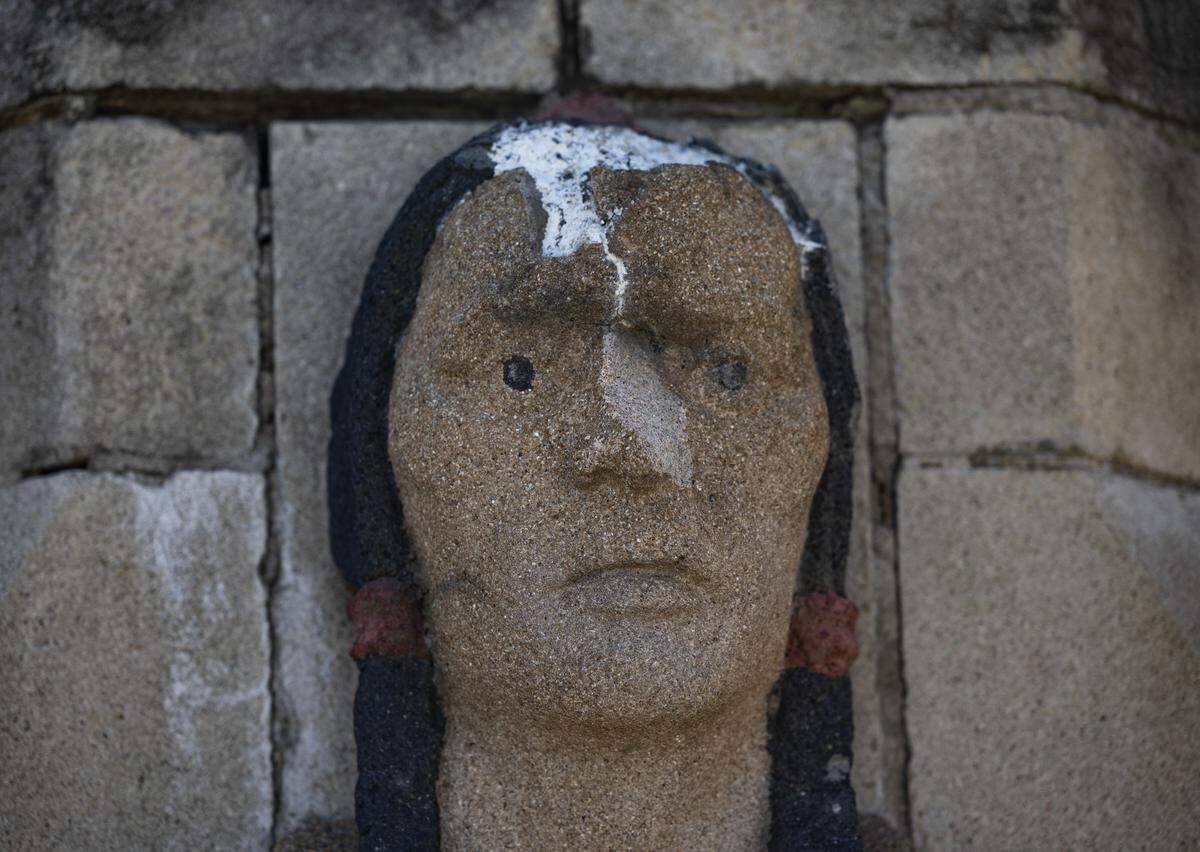
Last month, the bridge was accepted onto the national register, and Cunningham said her plan is to not only see that the bridge is fully restored but to find enough money to add “a layer of safeguard to make sure it (is) kept up.”
Cunningham, who can see the bridge from her backyard, said the bridge is one of a kind in a field of rare art bridges.
“That’s kind of notable, and it needs to be taken care of.”
Red waters?
A large, dignitary-filled crowd gathered at the Minisa Bridge on a nippy Friday evening in September 1932 to celebrate its dedication, which kicked off with North High sophomore Olive Sayles christening it with a bottle filled with water from the Little Arkansas River.
According to a Wichita Eagle article that ran the next day, it was North High students who named the bridge Minisa, “which means red waters in an Indian tongue,” the story said, since the water below the bridge sometimes looks red as the sun sets.
A plaque at the bridge says the same thing and attributes the word Minisa to the Zuni tribe. However, through her own research and that of others, Cunningham couldn’t verify what the word means or that it even is an Indian word.
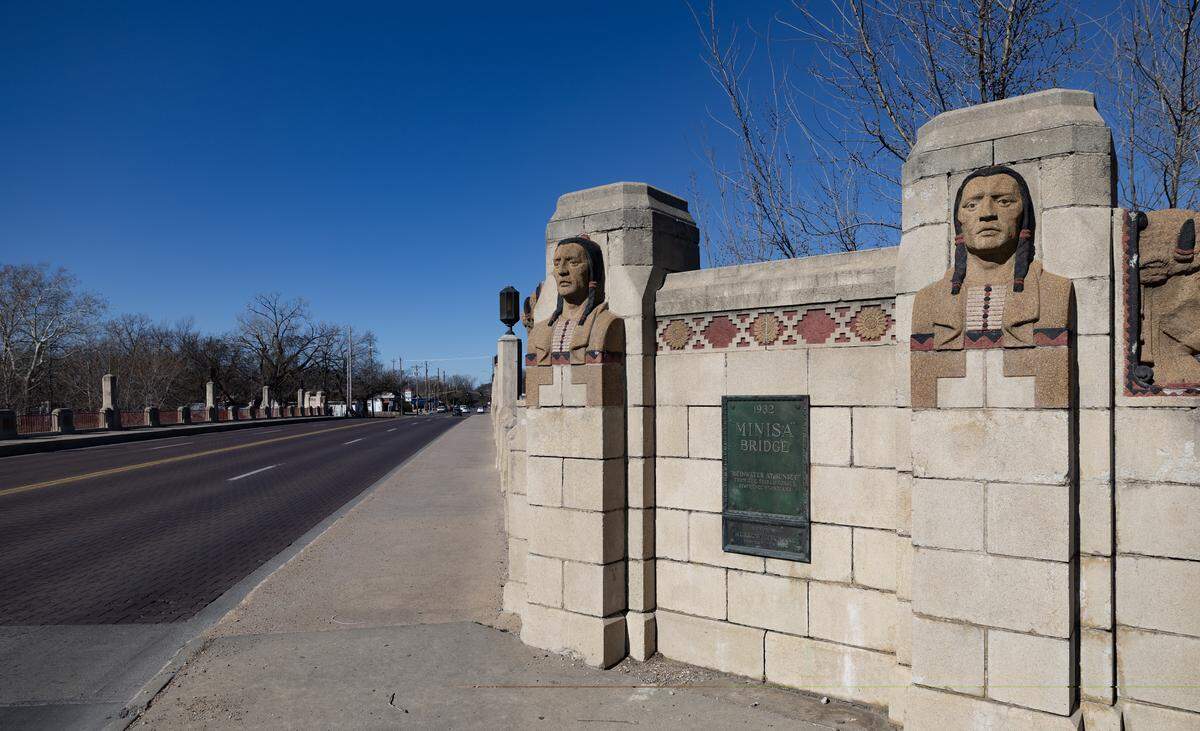
“Minisa” also is the name of a musical piece by composer Thurlow Lieurance, a former dean of music at what’s now called Wichita State University. He was at the bridge’s dedication and is honored on the plaque.
Former Eagle editor Victor Murdock was there, too, and “declared that Wichita had done itself proud in being the first city in the world to name a bridge after a musical masterpiece.”
North High English teacher Ethel C. Parker, who also was there, had the idea — which school administrators initially rejected — to use Carthalite on the bridge to be in keeping with the Carthalite used to decorate the school’s exterior.
Carthalite, an architectural element unique to Wichita, mixes colorful broken glass with aggregates and cement to create motifs on buildings and, in this sole case, the bridge.
Little Arkansas Community Coalition communications chair Madeline McCullough, who also attended North High, said her favorite thing about editing Cunningham’s registry entry was “learning that it’s the only Carthalite bridge on the planet.”
“That’s pretty impressive.”
Historian Jay Price said the Minisa Bridge and North High are “two parts of the same conversation” as their histories are an intertwined part of Wichita’s history and the growth of the north end of the city.
He said the bridge and the depictions on it, which were poured into place instead of painted or assembled, are variants of Art Deco called Pueblo Deco, with Native American revival techniques, designs and ornamentations.
“Native American lent itself beautifully to that.”
‘Back to the budget’
McCullough noted that there is a display case about Carthalite on the first floor of City Hall, which she finds somewhat ironic given what she called the neglect of the bridge.
“It’s funny that the city isn’t more concerned,” McCullough said. “It always goes back to the budget.”
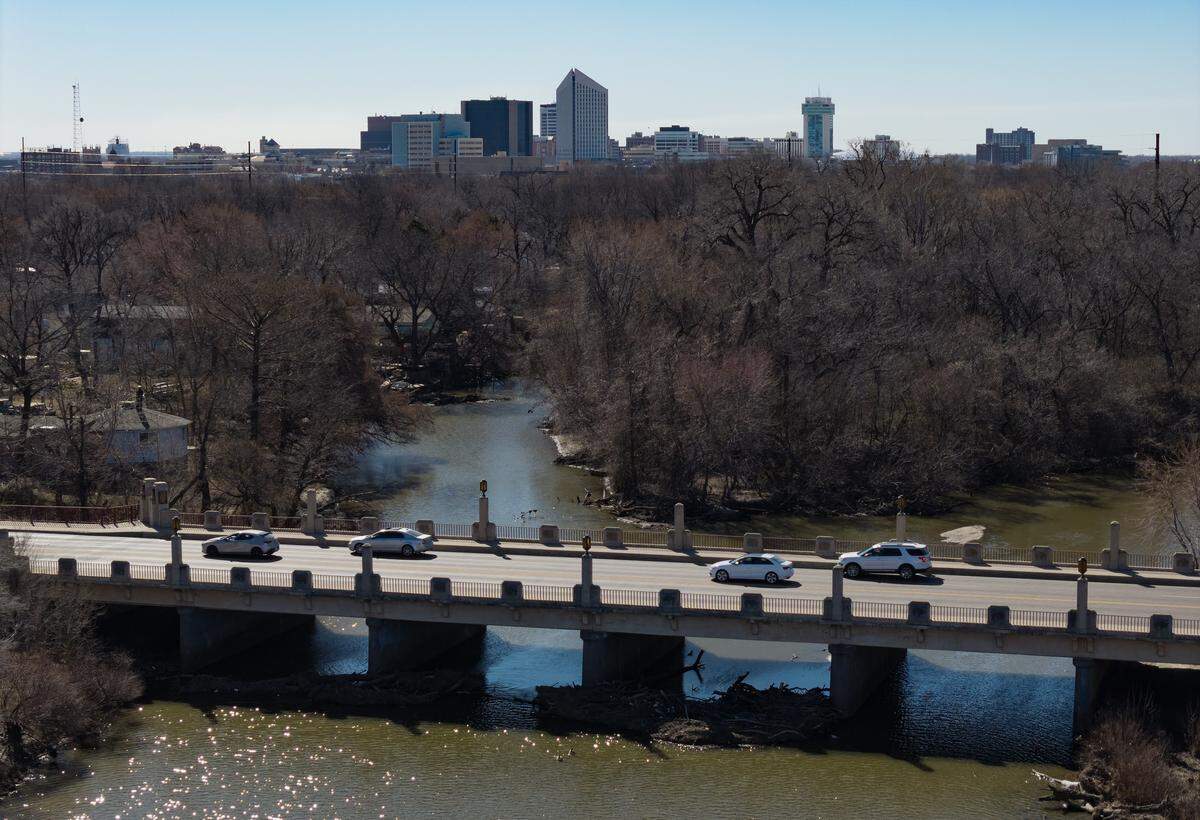
The city restored the bridge in 2007 and 2008 with help from the public, which was invited to donate glass for the project.
In a story about the restoration, The Eagle quoted William White of Oakland Avenue Craftsman Co., which the city hired to restore the artwork.
“There are the oral histories of when the bridge first opened, kids went around the community collecting supplies for the bridge,” White said.
He said he hoped Wichitans would make the same effort to share glass again.
“Carthalite is unique to Wichita. This is the only place it was made,” White said. “It is known for its longevity and beauty. Because of that, it is important to the local community the bridge be restored as authentically as possible.”
The last restoration before the one finished in 2008 was 25 years prior.
Price said concrete always is prone to spalling, or breaking off in fragments, and is affected by the weather. He said another factor in deterioration is the bridge’s age.
“Maintaining something like that always is going to be an issue.”
‘A little education’
With the new historic designation, McCullough said she is “hoping for a little education for the broader public” about the bridge.
“We’ve always been painfully aware of how abused it is.”
She said it’s often tagged with graffiti, and she said she wants the people doing it to know “this is not a bridge you ought to be desecrating.”
McCullough said she likes the story depicted on the bridge, which she said is about hunter-gatherers, not warriors.
“That’s a lovely story,” she said. “Anyone in Riverside or who drives across it notices it. It’s a stunning bridge.”
Price, too, hopes the designation helps bring recognition to the bridge. He said he wants Wichitans to “be aware of some of those facilities hidden in plain sight.”
“It reminds us that there’s a lot in our community.”
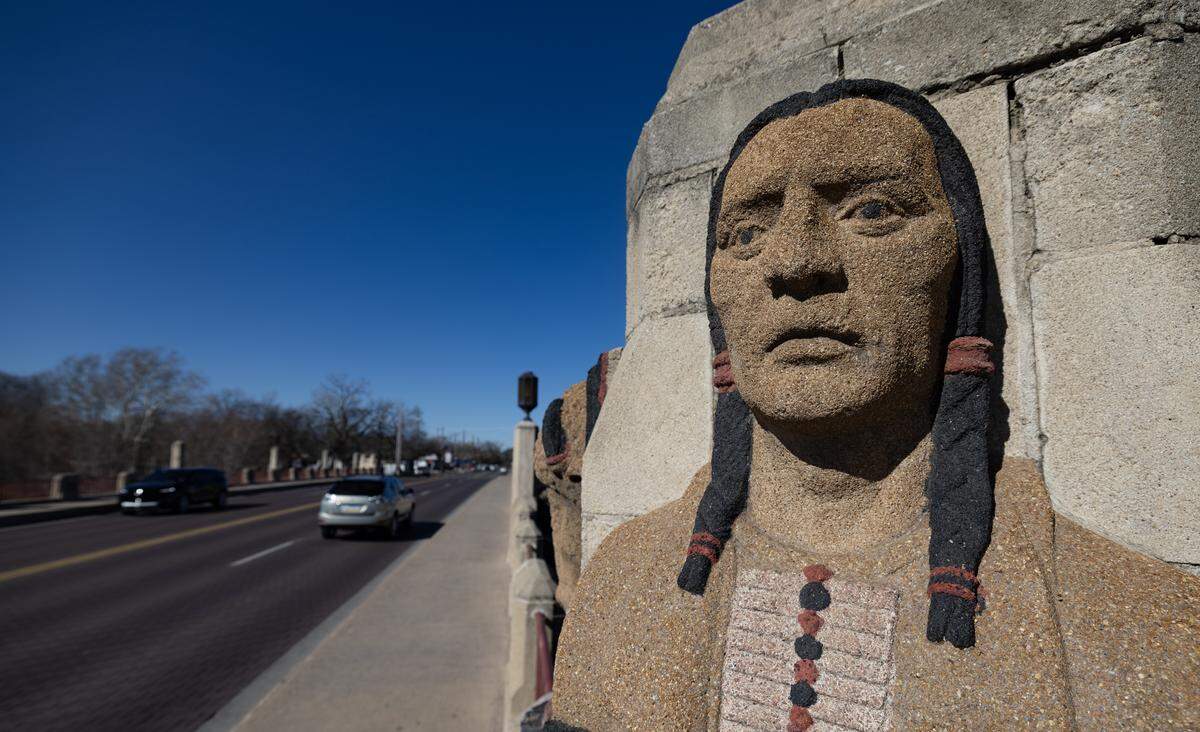
North High graduate Eric Cale, who today is executive director at the Wichita-Sedgwick County Historical Museum, said the Minisa Bridge has “always been a landmark and really remarkable.”
He said its conservation has been top of mind for generations.
“Anything that’s as functional and public as a bridge like that is a concern,” he said. “It’s probably the top of the list of bridges locally that really deserve to be conserved. There’s been remarkable efforts through the years to do that, but it’s ongoing.”
And it deserves to be, Cale said.
“That one is really irreplaceable in terms of its artistic interest.”
This story was originally published March 15, 2026 at 4:42 AM.