
What does $200 million buy for a new Wichita entertainment complex? Take a look.
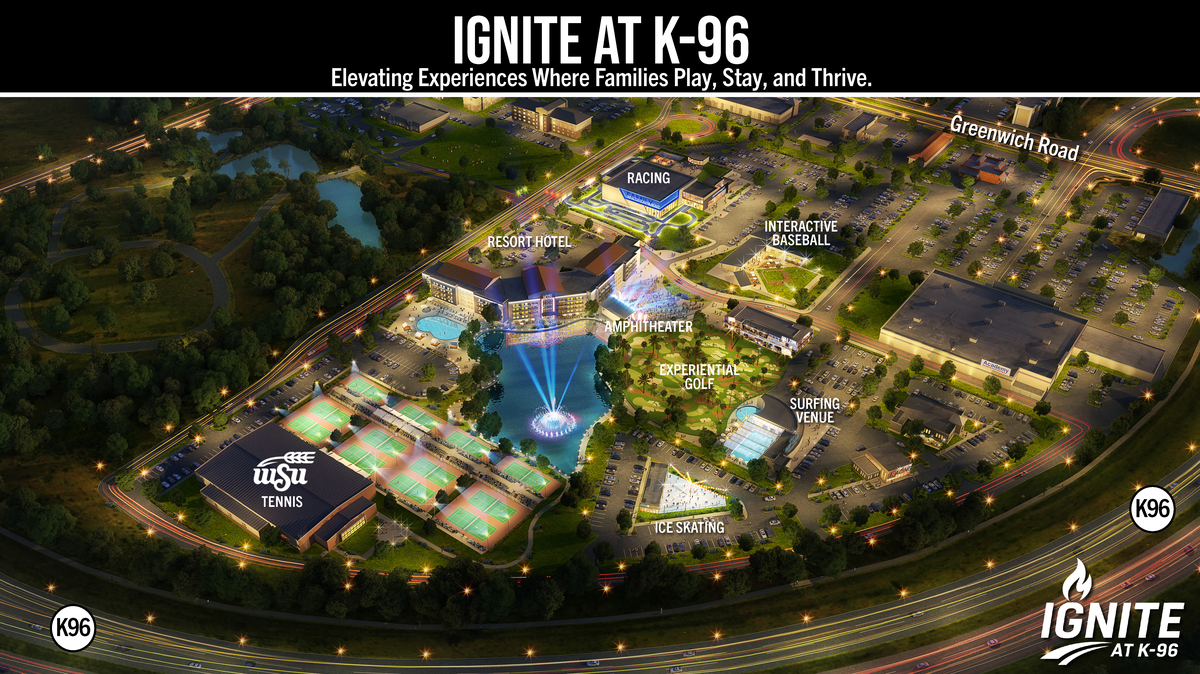
A group of Wichita developers has what they hope will be something for everyone at a $200 million new entertainment destination with a variety of sports-related draws, restaurants and bars in the STAR bond district at K-96 and Greenwich.
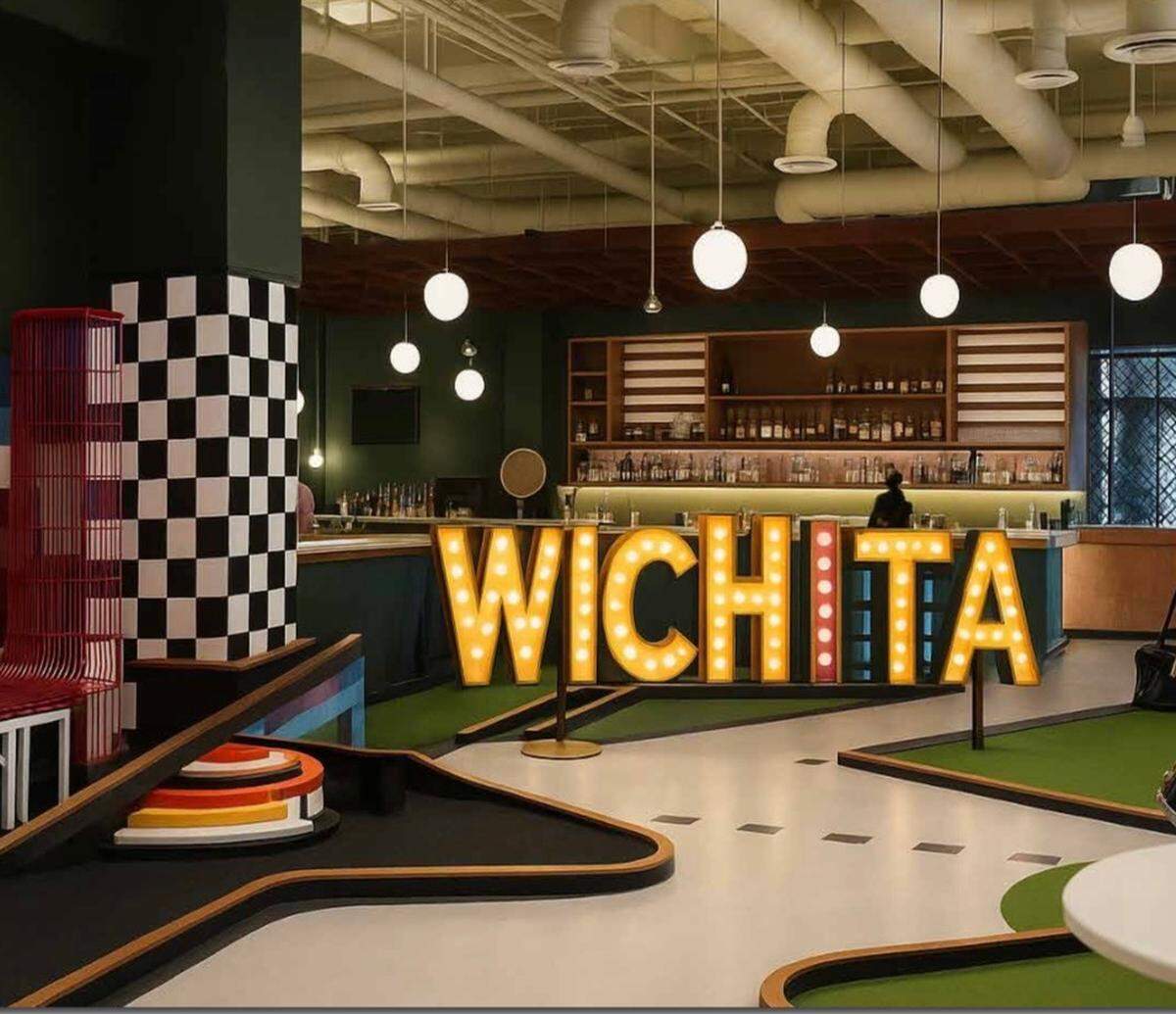
The 35-acre Ignite at K-96 would include immersive mini golf, go-kart racing, a surf wave, a baseball facility, an ice rink and an NCAA tennis complex in conjunction with Wichita State University. There also would be a family entertainment center and a 150-room family resort-style hotel.
“To me, it’s a perfect play for a private-public partnership,” said Marty Cornejo, the managing partner on the project.
Cornejo and his Family Destination Development partners, including his brother, Ron, businessman Dave Murfin and Cozine Memorial Group president and funeral director Ashley Cozine, who owns the land, would pay almost $120 million toward the development. The rest would come from the STAR bonds.
Sales tax and revenue bonds are a tool the state uses to increase tourism throughout Kansas with entertainment and commercial projects. The state works with cities to issue bonds, which developers pay off with the tax revenue their projects generate.
The state already has approved the Ignite bonds, and the city has been working with the developers on the project. The Wichita City Council will have a public hearing on the plan on Tuesday before voting on it Dec. 16.
Of all STAR bond projects, Cornejo said, the K-96 and Greenwich district is “a shining star in the state of Kansas” because of its successes.
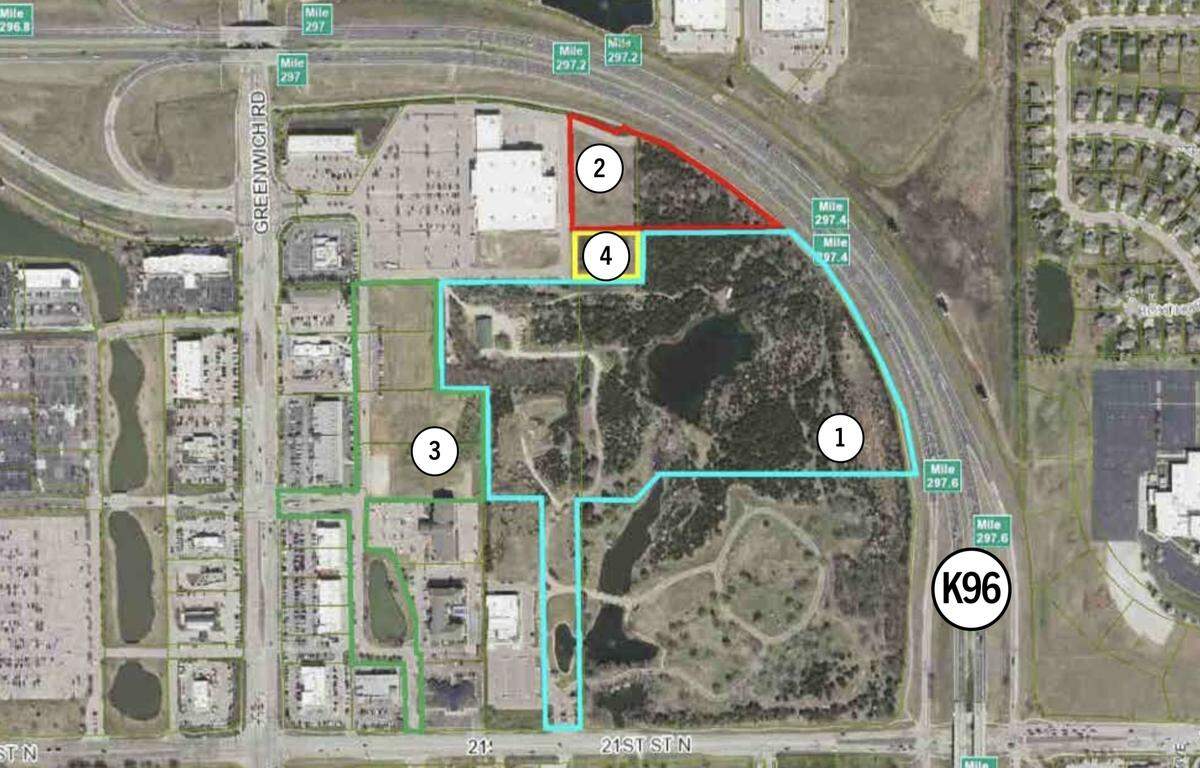
There have been two phases so far at the approximately 423-acre district, which is north and south of K-96 and on both sides of Greenwich.
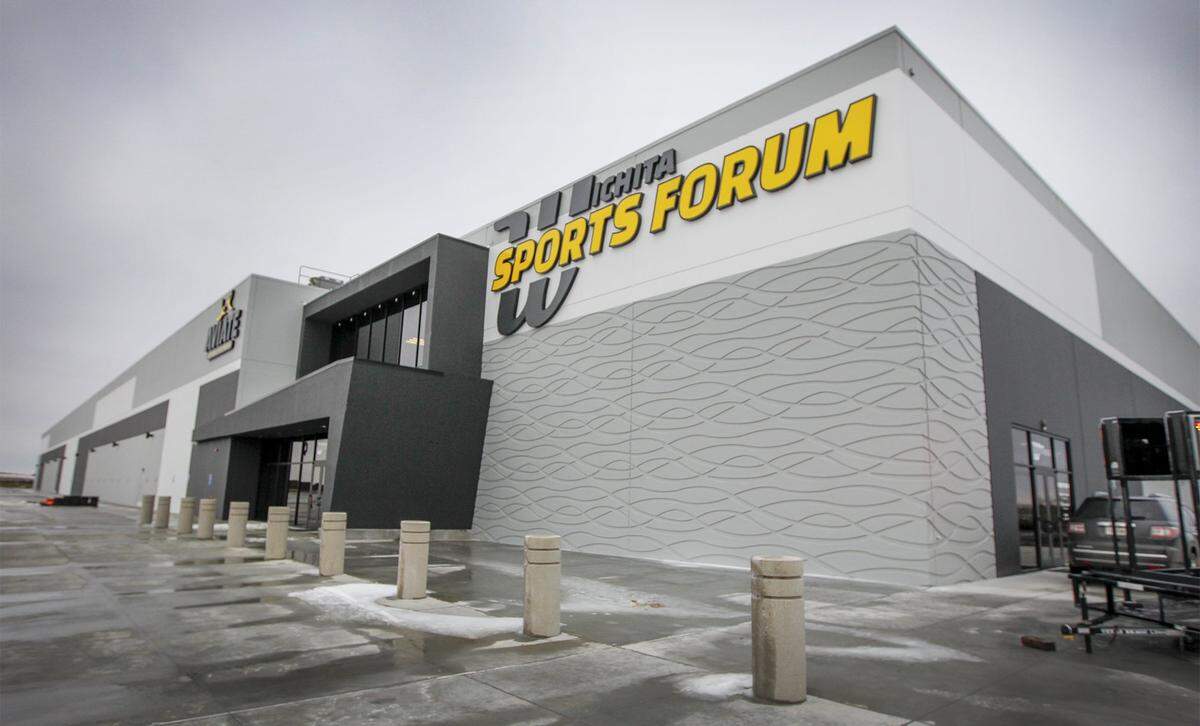
The first centered on the Wichita Sports Forum and the Greenwich Place shopping center at K-96 and Greenwich, and the second focused on the Scheels Stryker Sports Complex and Topgolf just north of there on both sides of Greenwich.
Cozine’s land is south of Greenwich Place and south and west of K-96.
The state’s 2024 STAR bond report shows $36.3 million in bonds were issued in 2013 at the start of the district. In 2016, the city expanded the district, and in 2017, the original bonds which were refinanced for more than $71.3 million in bonds.
The report showed there are no bonds outstanding from 2013, and there is $5.6 million outstanding from 2017.
The report also showed the area has $12.4 million in annual sales tax revenue, which for now is going to repay the bonds.
According to the city’s agenda for Tuesday’s meeting, the district had more than 7.7 million visitors in the last year.
If Ignite is approved, it will be the third and final phase of the district with a capital investment of $191.7 million, $73 million of which will be in bonds.
In addition to bringing thousands of direct and indirect jobs, developers expect more than $239 million in annual retail sales after the third phase is complete. Roughly $185 million would come from the first two phases, and about $62 million would come from phase three.
Developers also expect to add 250,650 more visitors to the district, with more than 72,000 of those coming from outside of Kansas once it’s completed in 2027.
With those unique visitors, they expect 996,000 total visits.
The state hired St. Louis-based PGAV Planners as an independent consultant to prepare a feasibility study on the third phase, which it presented to the city last month.
“Everything worked,” Cornejo said of the numbers.
Ignite developers will reimburse the state for the study’s cost.
In an e-mail, city spokeswoman Megan Lovely explained that the district is operating off of a 20-year STAR bond that was instituted in 2013. Though the original bond debt has been repaid, there’s still the $5.6 million from 2017 to repay and, if approved, the latest $73 million in bonds as well.
“We believe it is in a positive place to meet that deadline if not pay it off earlier,” Lovely wrote. “The district has expanded since its original institution. What we’re hearing Tuesday is additional development within the originally identified parcel, which will add more revenue.”
Cornejo said there’s been “a lot of red tape to get to this point.”
“It’s been a process. It’s not been easy.”
Since Cozine’s land already is in the STAR bond district, Cornejo said that “made it one big hoop I didn’t have to jump through.”
Based on current revenue generated in the district, he estimates it will take eight years for his team to repay the bonds, plus interest, to build Ignite.
Without them, he said, “I’ll be real honest, we probably wouldn’t be doing it.”
‘A great piece of land’
Long before the STAR bond district at K-96 and Greenwich attracted almost 8 million visitors a year, Cozine saw potential there.
In 1995, K-96 was relatively new and 21st Street was still a two-lane road in that area.
Cozine, who had been thinking his family needed land to build a new cemetery, was driving on the highway and saw some ponds from the road.
“This would be a great piece of land to buy,” he thought to himself.
His father, the late Bill Cozine, concurred.
There was no sale sign on the property around the northeast corner of 21st and Greenwich, but one of the owners was a family friend, Pete Kitch, who lived on the southwest corner of the intersection where the Oak Creek neighborhood is today.
When Cozine used to visit Kitch, he said, “It just seemed like it was so far out in the country.”

The Cozines closed on 75 acres just east of the northeast corner on the elder Cozine’s birthday, which the younger Cozine described as a special day.
They almost bought another 20 acres on the corner where the Village at Greenwich shopping center is today, but the price changed, and Ashley Cozine decided against it — regretfully.
“Looking back now, that would have been a steal.”
Initially, the Cozines had plans for a cemetery only. Their first burial at Kensington Gardens along 21st Street was in 1998.
Eventually, Cozine said he realized he didn’t need all the land for the cemetery.
In 2005, around the same time Regency Lakes and its accompanying Super Target were still new at the northwest corner of 21st and Greenwich, Cozine said he began looking at developing the property north of the cemetery.
He approached Bass Pro Shops, which had seriously considered locating at the WaterWalk development downtown before the deal fell apart.
Cozine said he secured a letter of intent, which indicated Bass Pro wanted to make a final deal to open there.
“I’m not a developer, so for me to get a letter of intent from Bass Pro was pretty remarkable. I felt like it was a victory.”
He said the deal wasn’t finalized, though, because the area didn’t have interchange access to K-96.
Even with the Target, Cozine said that “it was really hard to convince anybody to help me take this on as a development project.”
Ironically, Cabela’s located at Regency Lakes in 2012 and now is known as Bass Pro Shop.
Cozine still refers to Bass Pro as “the big fish that got away.”
The wrong decision?
For a time, Cozine thought he’d made the wrong choice when buying the land.
“Oh, my gosh, we bought property way too far out,” he began thinking.
Then, after putting “the developer dream on hold” for a time, Cozine watched as the STAR bond district developed, which included a new interchange, too.
“It didn’t just happen overnight.”
He sold about 13 acres where Academy Sports & Outdoors ended up opening along Greenwich just south of K-96.
A few years ago, Cozine worked with another potential development group on plans for his property but said it wasn’t the right mix.
In the meantime, he built the new Cozine Life Events Center along 21st Street between the Village at Greenwich and Kensington Gardens, neither of which is going to be affected by his current plans.
Then, Cozine returned to the idea of a commercial development. Someone suggested reaching out to the Cornejos. With Murfin’s support, too, they came to share a vision.
“I wanted it to be special,” Cozine said.
Marty Cornejo steered him away from his initial idea for apartments and restaurants to the bigger idea of a multisport destination, which also would include restaurants.
“It had to be a multisport athletic complex,” Cornejo said. “I know what works and what doesn’t, especially in our market. I didn’t just grab stuff out of the sky.”
He and his brother have been in the construction business and were the original developers of two All Star Sports parks in Wichita. They’ve developed other projects as well, such as the ICT21 industrial district near 21st Street and the Canal Route.
Cozine said the tennis connection with WSU was particularly important to him, but otherwise, he mostly turned over the reins to Cornejo.
“I’m Marty’s cheerleader, really.”
Project specifics
Cozine said Cornejo’s plan “actually makes a lot more sense.”
“We’ve got some really great family-type entertainment-type things.”
Cornejo said his No. 1 goal was to pick concepts that would be successful at drawing people.
He said the state was particular on what it didn’t want to see in the district. That included any concepts that would compete directly with existing STAR bond districts, such as the aquatic complex in Goddard.
Cornejo said the sports facilities will be modeled after successful national ones or be brands already proven nationally or internationally.
For instance, Cornejo said the mini golf will be similar to Tiger Woods’ PopStroke, which offers electronic and more competitive courses than miniature golf of the past.
It’ll also be both indoor and outdoor.
“What I’m trying to do is all-weather,” Cornejo said.
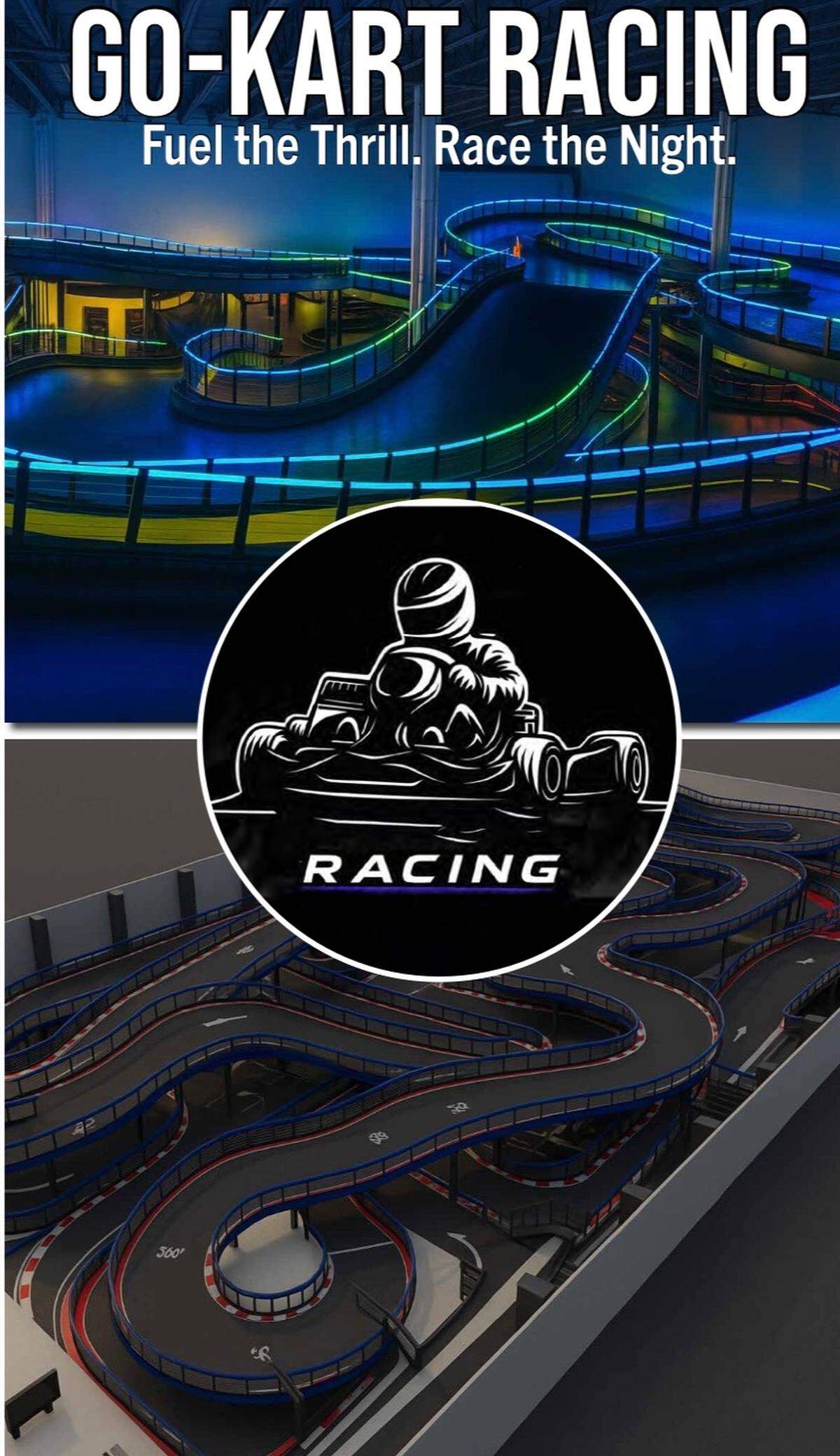
The go-kart racing will be similar to the popular Andretti Indoor Karting & Games that’s in Overland Park.
Cornejo said the Fireside Surf stationary surf concept is, “believe it or not,” for all ages. Even he’s done it, he said.
“You know, I’m not a young buck anymore.”
Ignite has a license with Texas-based Home Run Dugout, which has indoor batting that Cornejo referred to as “the Topgolf of baseball,” and he’s working with the international Xtraice Rinks on a synthetic ice rink.
He said the WSU tennis facility will have six indoor and 12 outdoor courts and stadium seating for the ability to host NCAA tennis tournaments.
“It’s a big deal.”
At $30 million, the second most-expensive concept within Ignite is a family entertainment center that could feature things like a high-end arcade or possibly even amusement park rides. Unlike some of the other concrete concepts the developers plan, they’re still working on everything that would go within this part of the district.
At an estimated $45 million, and the most-expensive single concept within the development, is a family resort-style hotel that could have features such as a lazy river, an outdoor theater or tennis or pickleball.
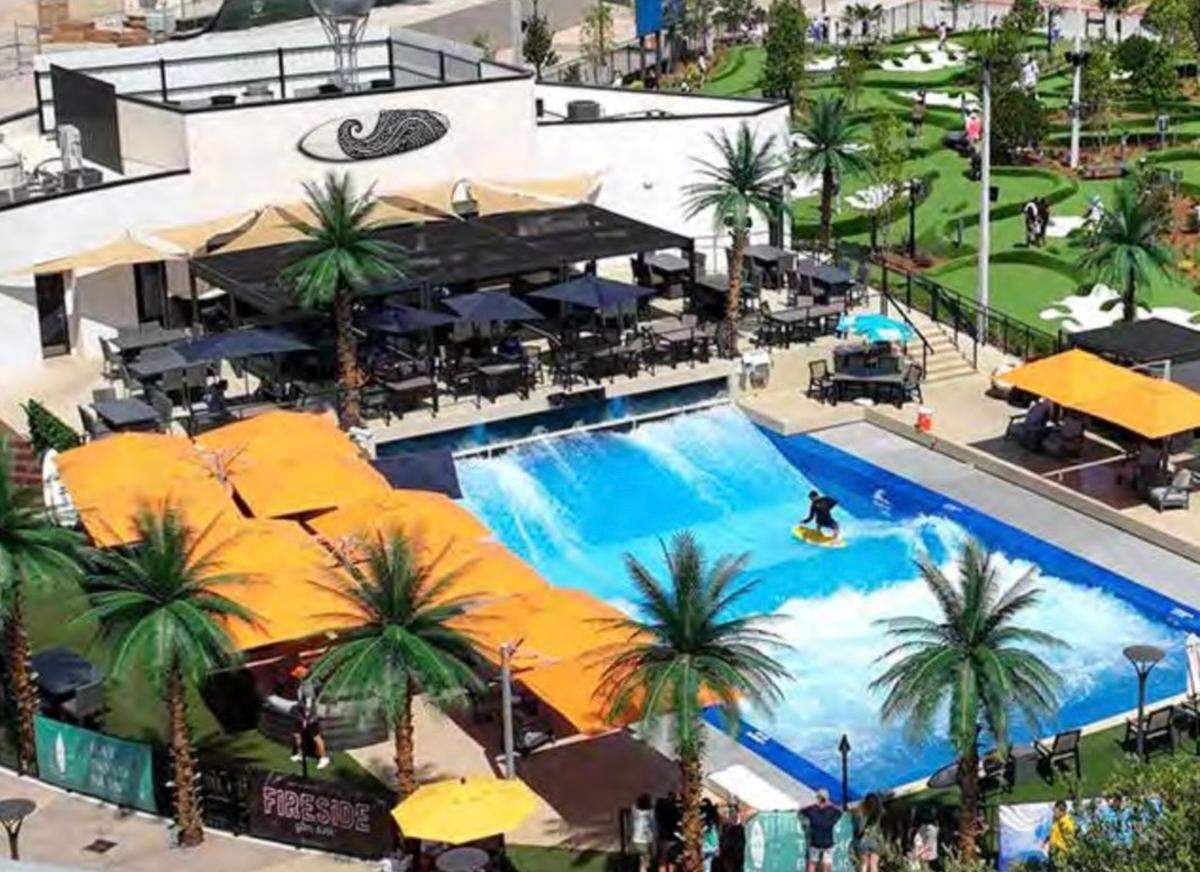
Cornejo envisions creating a winter wonderland during colder months, too.
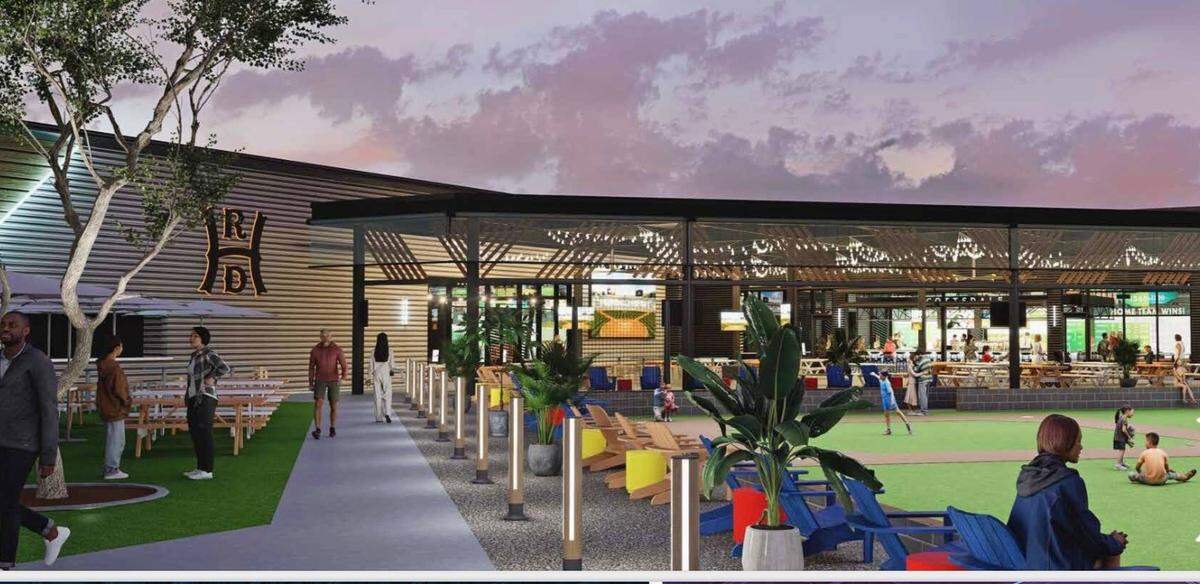
With each of the facilities, Cornejo said the idea is to have food, drinks and bars with more of a focus on families in the daytime and adults at night.
“It’s just going to give everybody something to do.”
‘Holy cow’
Other than a pond, the potential Ignite land currently is bare.
Cornejo said STAR bonds would cover horizontal development at the property, such as streets and utilities.
The only vertical construction it can pay for is related to mulitsport development and not Ignite’s potential restaurants, retail or hotel.
Cornejo also pointed out that Ignite’s 35 acres currently generate only about $700 in property taxes annually.
“But, holy cow, immediately on property tax — once I start building — it’s going to shoot out the roof. I think it’s important for people to know.”
Cornejo said past city councils and developers were visionaries in creating the first two phases of the district.
“To the naysayers, the proof’s in the pudding. . . . It’s paid off.”
Cornejo said he continues to talk to national businesses about joining Ignite.
“I spend a lot of time selling Wichita to the bigger-market players, and I’m gaining traction. . . . They’re believing in Wichita. They’re seeing what’s going on.”
He and Cozine are both sensitive to potential public perception about the project and inevitable criticism from other developers for using STAR bonds when those aren’t available for all development projects.
“It’s going to benefit the city dramatically over time,” Cozine said. “That’s where I hope that people . . . don’t see it for the wrong reasons.”
He said he gets tired of hearing talk about how Kansas City has so much more than Wichita. He believes Wichita already is a great place to live, but he wants to make it better, and he said the STAR bond district would allow his team to build on the “amazing amount of growth out there.”
Cozine said he and his partners are lifelong Wichitans who are looking at this project as one of their legacies in the community.
Cornejo, too, said, “I don’t need to do this. I’m truly doing it for our community.”
Cozine said the City Council vote on Ignite is coming almost a year to the day his father died.
“My dad is a huge part of who I am. He taught me a lot.”
He said the bookends of signing the deal on his father’s birthday in 1995 and having the vote a year after his death is “really touching and meaningful for me like, OK, Dad, we saw this through for you.”
“I know he would be he’d be excited for us.”
This story was originally published December 8, 2025 at 9:28 AM.