
Commodore, still to be auctioned, stands as testament to the woman who designed it
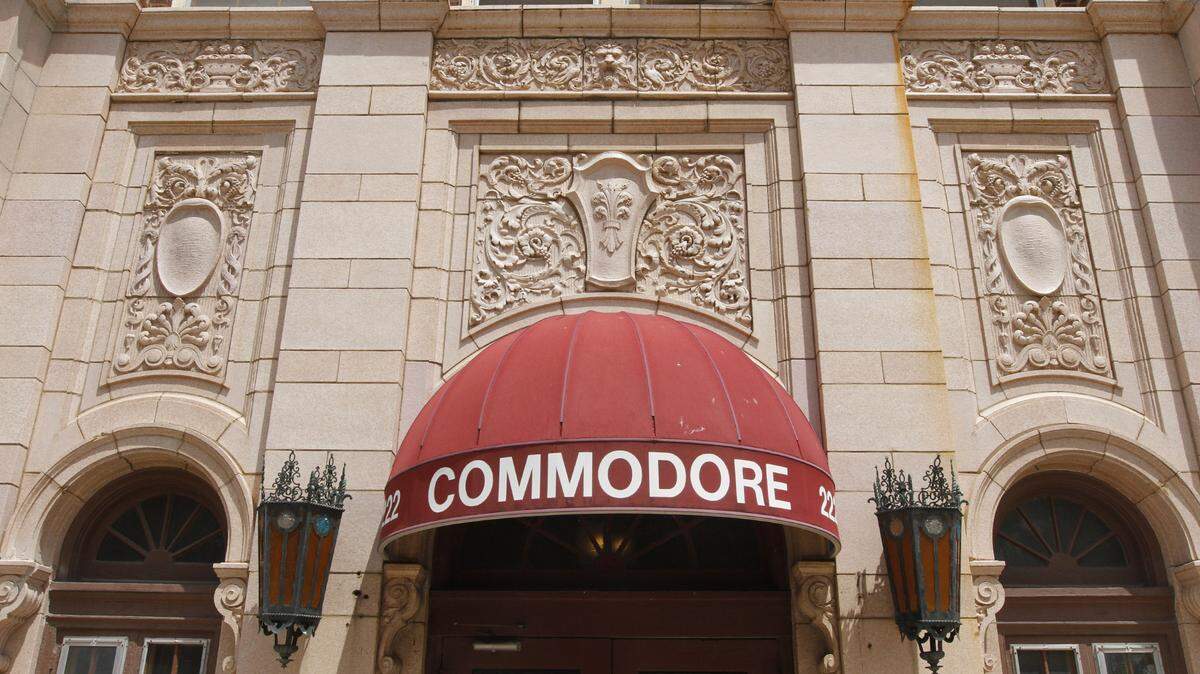
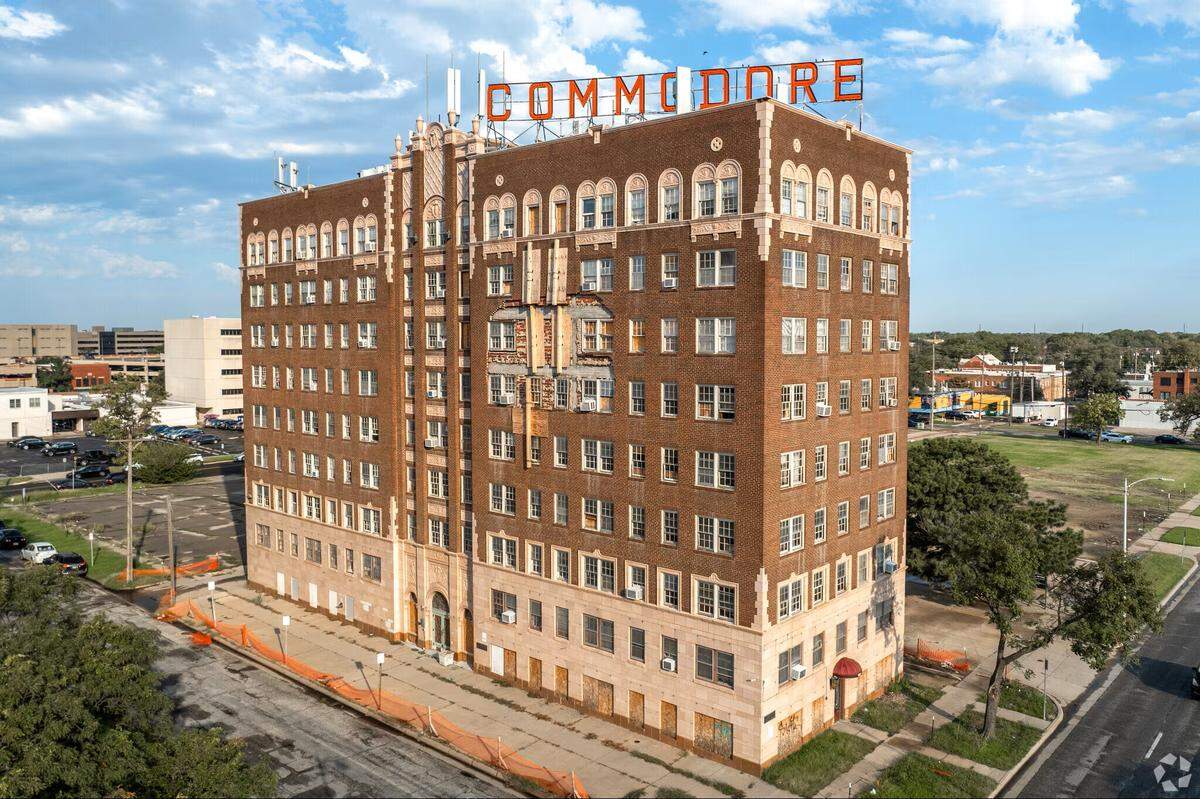
Except for when some bricks fell from its facade earlier this year, the Commodore building on North Broadway hasn’t had much attention in recent decades.
Still, the 1929 structure, a block north of Central, stands as a silent testament to the skill of the female architect who designed it.
Nelle Peters — or the genderless N.E. Peters as she was known professionally — has had a largely unknown story that only in last decade or so has begun to be told in earnest.
“I’d say the tragedy about Nelle Peters is our lack of codified recognition of her career and her legacy,” said Ethan Starr, executive director of Historic Kansas City.
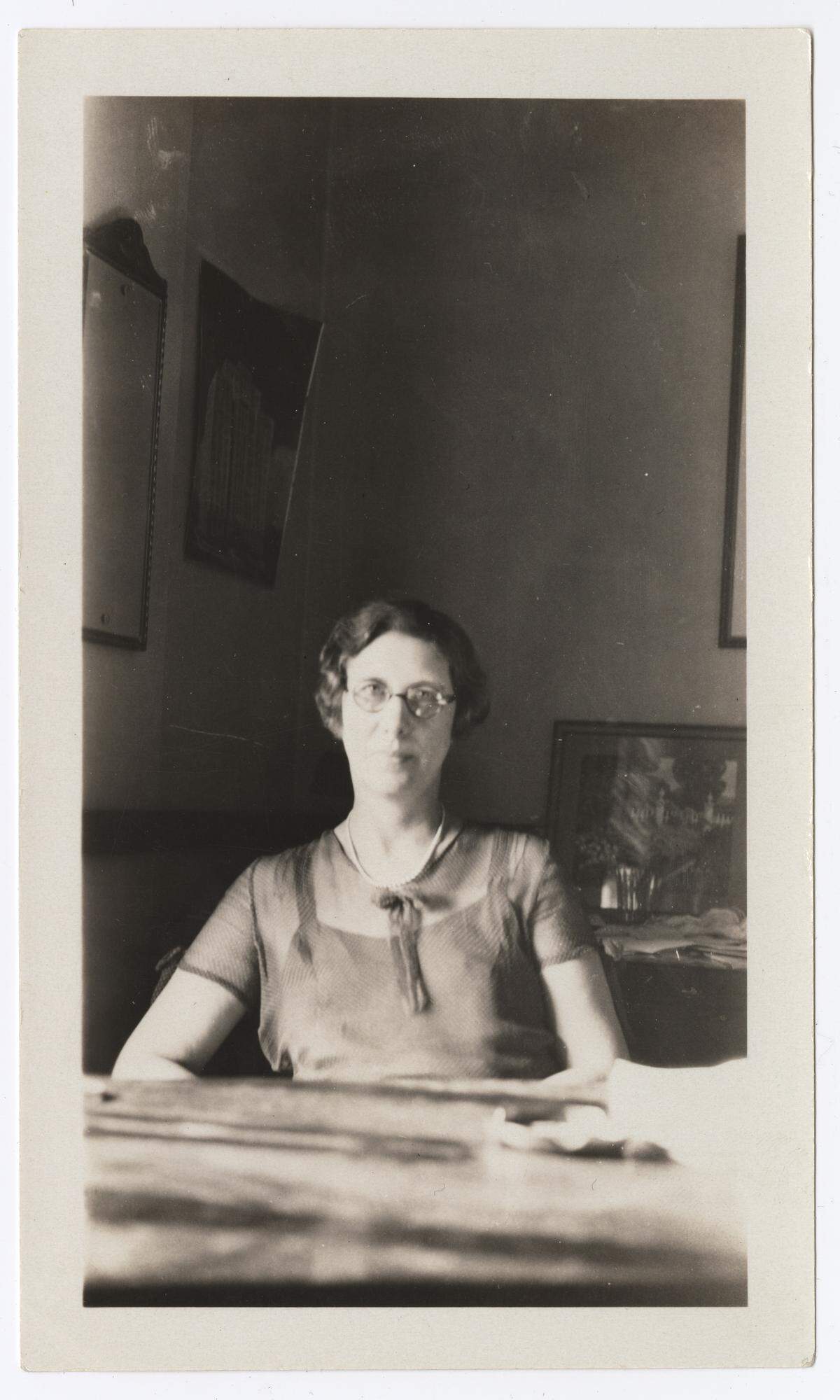
While he said that “there’s been a greatly heightened recognition and interest in her career,” Starr added, “There’s so much more to be investigated and articulated about the architectural legacy of Nelle Peters.”
Peters designed or oversaw the design of more than 1,000 buildings nationally, most of which are or were located in Kansas City, Mo.
Some of her best-known works are the Ambassador Hotels in Kansas City and Tulsa, the latter of which basically is the same design as the Commodore. Always aware of economy, Peters often reused her designs.
During a housing shortage, oil barons who were building mansions in Tulsa used that Ambassador to live in while awaiting their new homes. The Commodore started as a combination hotel and apartment complex, as was popular in the day.
Peters also is known for what’s variously called the Poets Apartments, Authors Block or Literary Block just west of the Country Club Plaza in Kansas City. The series of apartments named for writers, along with numerous other apartments she designed in the area, have been home to thousands of residents through the last century.
“Frankly, it’s become a substantial marketing aspect, a source of prestige for apartment buildings,” Starr said. “There’s a pride of place in these buildings simply solely in the fact of their association with Nelle Peters.”
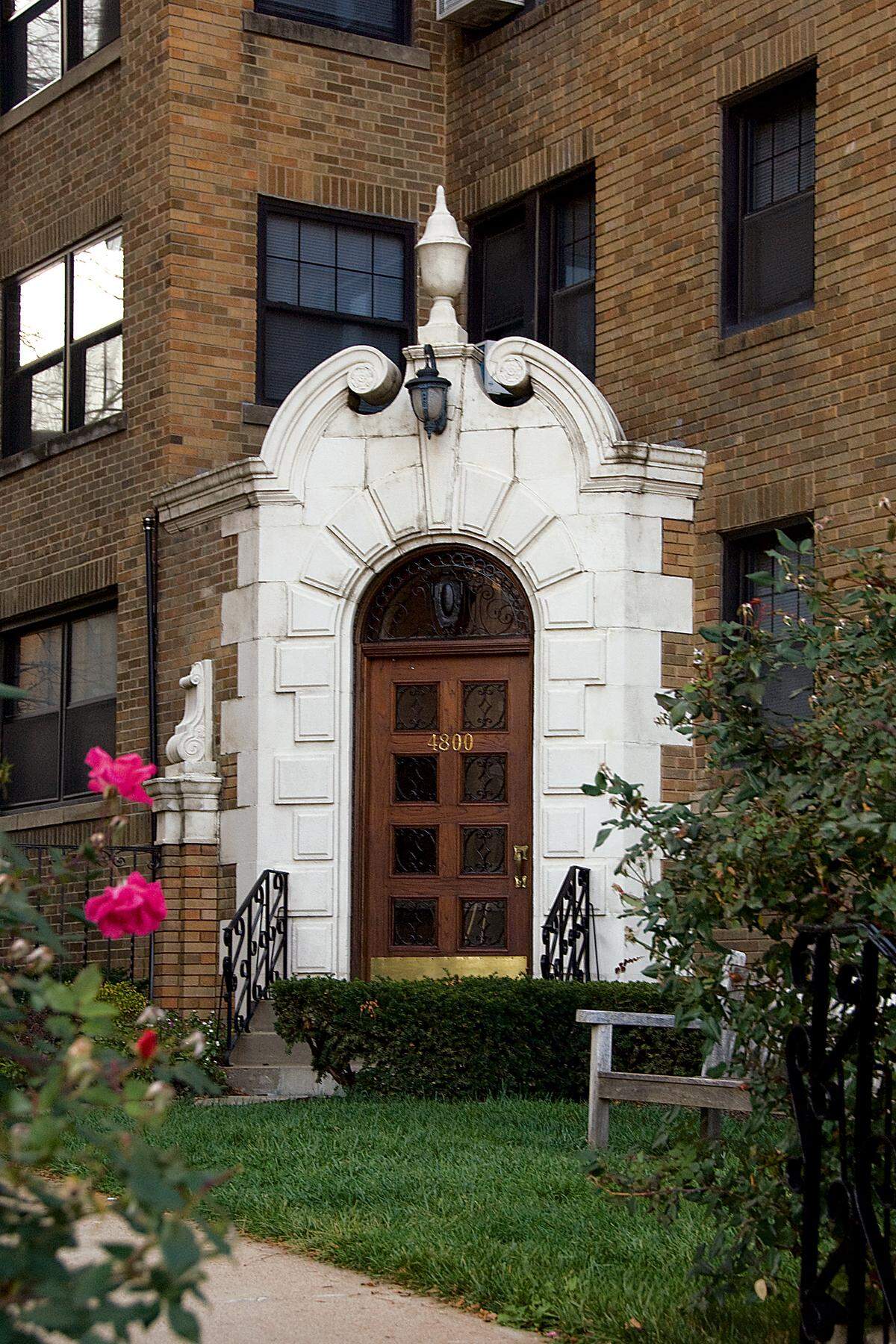
Under his predecessor, his organization and other preservationists fought to save some Peters apartments in Kansas City around 2016. The effort failed, but it succeeded in sparking interest in her.
Wichita designer Bill Gardner’s family owned the Commodore from 1968 until 1995 — his first office was in a small part of the former tearoom — and he’s impressed with how prolific Peters was.
“This was one of the more ambitious projects for her,” he said.
The Commodore has changed hands numerous times through the last century, and it looks set to again with an auction.
The auction started Monday and concluded Wednesday, but it did not sell.
Casey Litsey of Coldwell Banker Commercial said there was a last-minute personnel change with who was running the auction, which he said affected the outcome.
There will be a new auction, likely Dec. 15 through Dec. 17, at which Litsey said he is confident the building will sell for its reserve of about $2 million.
He said it likely will need another $2 million to $2.2 million in work.
“We’ve had quite a bit of interest,” Litsey said.
“I know that it’s a historical landmark, that’s for sure.”
‘A mathematical problem’
Wichitan John Thien — best known in the city as Jetman, who used to own Jet Bar-B-Q — used to handle maintenance for the Gardners when they owned the Commodore.
He said he’d always heard that Patrick Hurley, who built the Commodore and Tulsa’s Ambassador as well before becoming U.S. Secretary of War, thought the buildings could be Midwest resources if the government ever needed them because of how sturdily they were built.
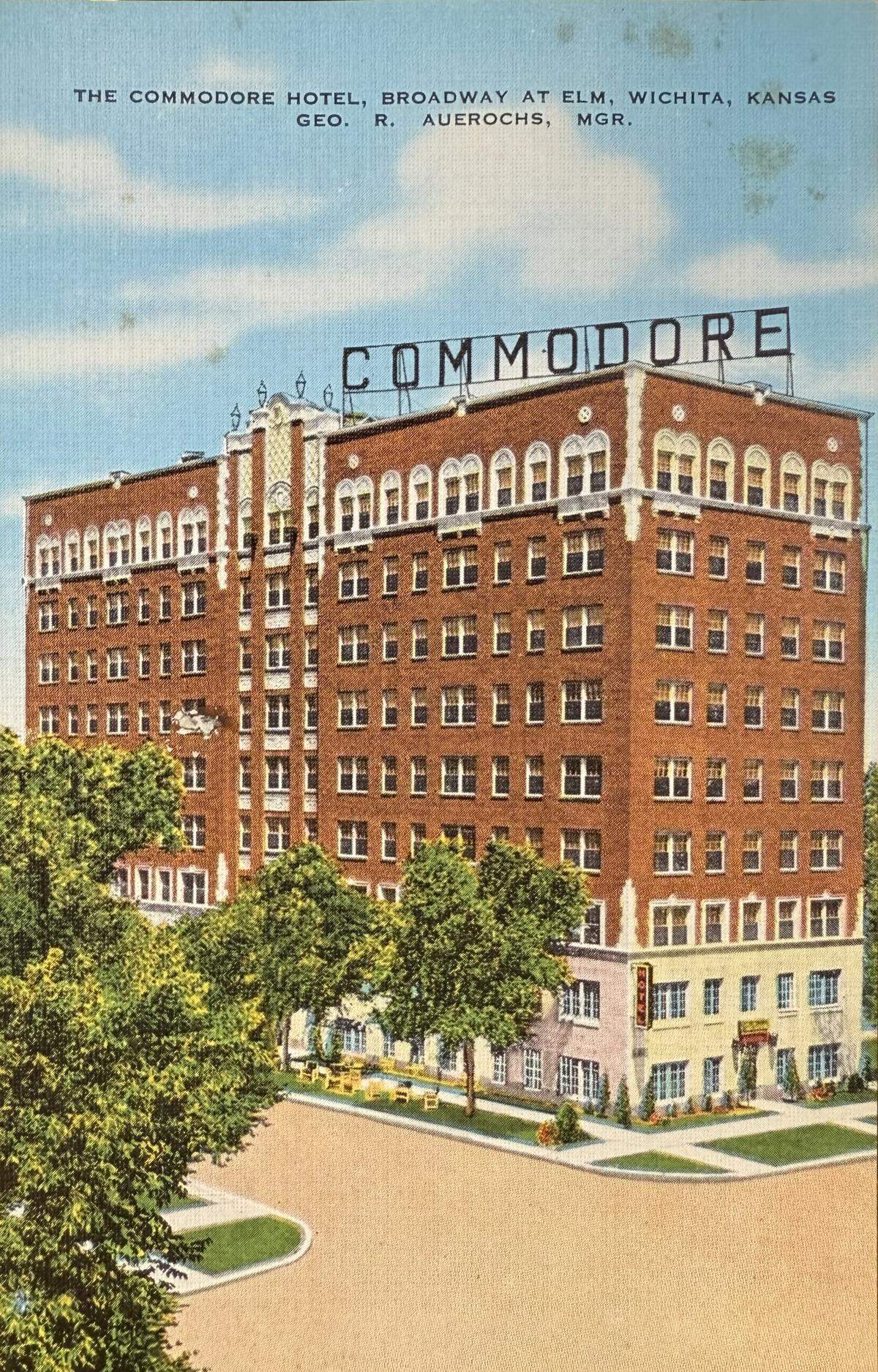
“Those two could be command centers because they were entirely made out of concrete,” Thien said.
“I mean, (the Commodore) would stand forever.”
Perhaps somewhat ironically, the woman who designed them to be so strong spent her first years in a sod house on an isolated farm on the North Dakota prairie, according to numerous newspaper and academic accounts.
Nellie Elizabeth Nichols was born in late 1884 and didn’t start going by Nelle until well into her career in the early 1920s.
“When she was a girl in school, not content with her mathematics text books, she used to get extra geometry and algebra books from the library and work out the problems in them,” said a 1925 article on her in the Kansas City Journal.
“Architecture is a mathematical problem,” Peters told the publication.
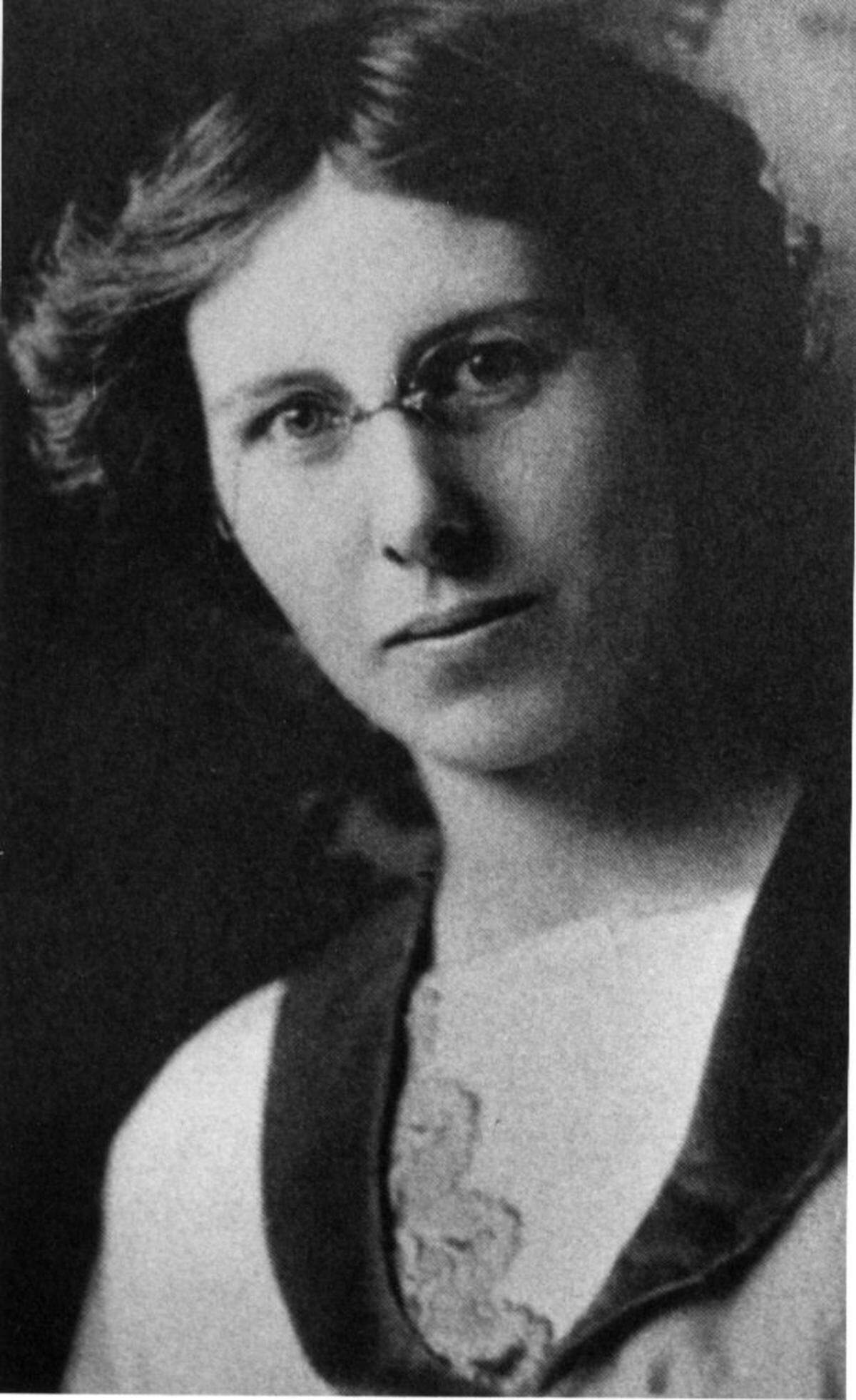
An account in Historic Missourians, a website the State Historical Society of Missouri publishes on prominent Missourians, said Peters attributed her mechanical mind to her ancestors, who were millwrights.
“When I was a child I preferred to draw mechanical things — anything from a bolt with all its threads to a steam engine.”
She also said that much in her life “just happened,” such as taking her sister’s advice to work for an architecture firm.
At first, she was rejected.
Her family had moved to Minnesota and then Sioux City, Iowa, where no firms would hire Peters until “I talked and talked and at last I talked myself into a job.”
Eisentrout, Colby and Pottenger hired her around 1903 to be a drafter for $3 a week.
Partner Frank Colby made a bet with another partner about how long Peters would last. She apparently made quite an impression, almost immediately getting a $1-a-week raise, according to multiple sources.
While she was an apprentice for the company and had on-the-job training, Peters also took correspondence classes in architecture. Around 1907, she moved to the firm’s branch in Kansas City, where she remained until starting her own firm there on what she said was “a very small savings and a large amount of nerve” around 1909, according to a December 1995 Kansas City Star article.
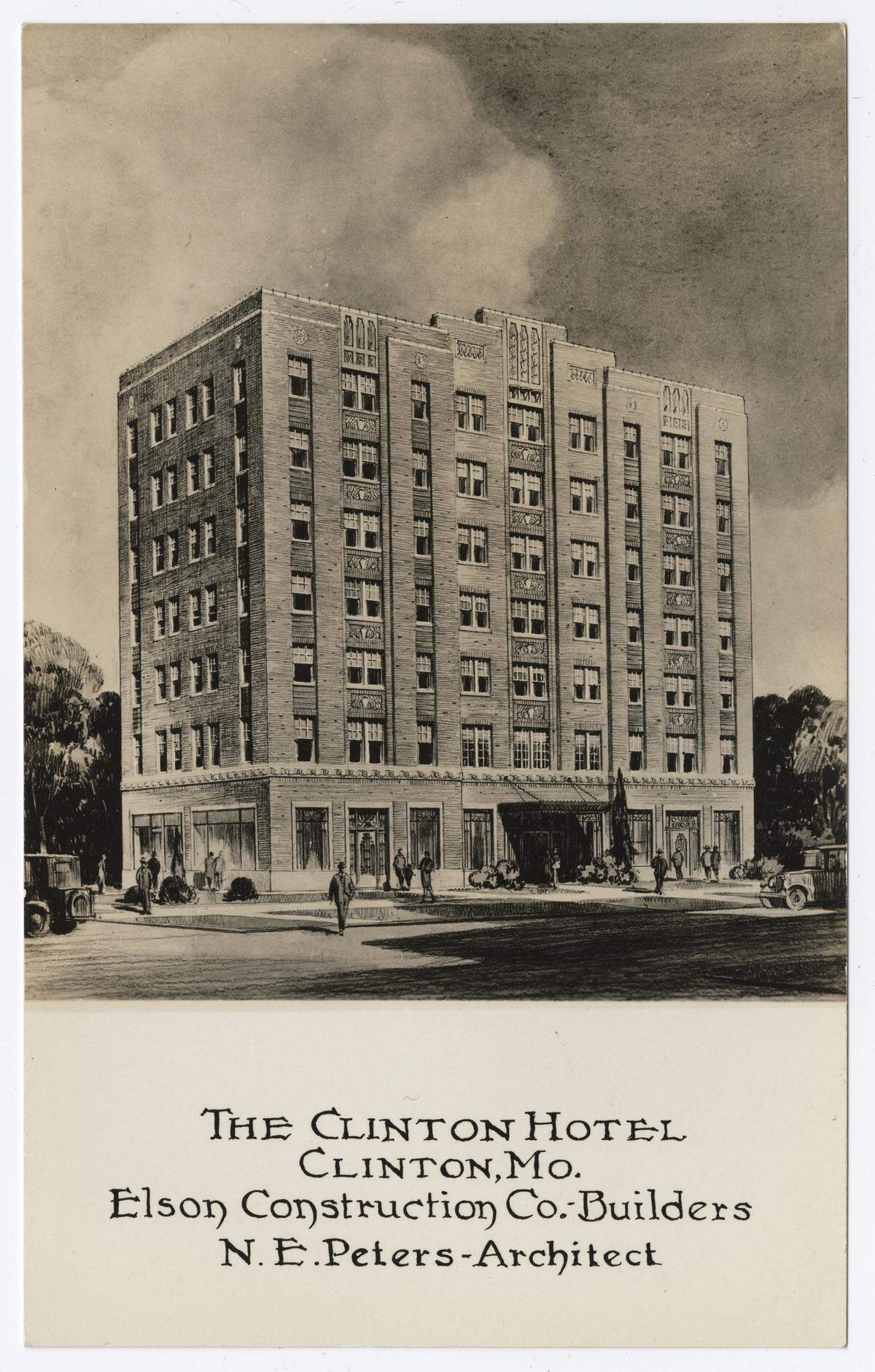
The article had an earlier quote from Peters about her first project, a small house:
“I numbered the first one No. 25 so it wouldn’t look as if I were a novice.”
In 1911, she married William H. Peters, who was a design engineer on what today is known as Union Station in Kansas City. The two divorced in 1923.
That’s when, by all accounts, Nelle Peters’ career took off.
High-and-low standards
Peters was able to excel in architecture in part because it was an unregulated industry when she started. An account by Pioneering Woman of American Architecture said not many architecture schools accepted women then.
“Her breaking into the architectural career path was enabled by a lack of oversight,” Starr said.
Simultaneously, though, Peters held herself to high standards.
“I work everything over and over on the floor plans,” she told the Journal. “I want each building to be as perfect, economical and practical, as if I were building it for myself.”
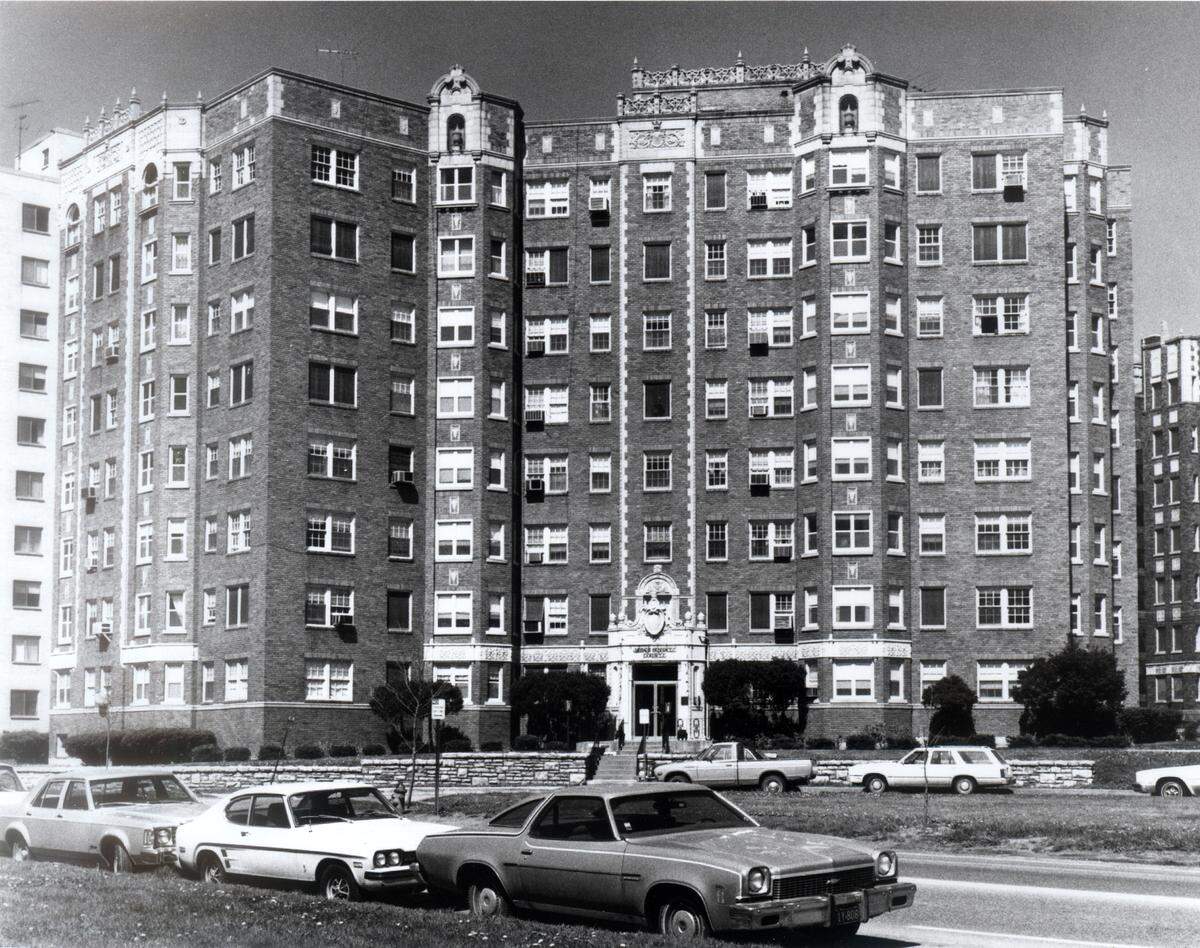
Peters pointed out to the Journal that an architect has to do what the developer of a building wants, which isn’t always what the architect wants.
Still, she said, “Now I like to feel that I am doing something worthwhile — something fundamentally necessary.”
Historic Missourians said her high-quality, quick work and efficient designs gained Peters employment and a solid reputation.
Through her career, Peters did a range of work, from residential to commercial, with interesting ties to interesting people.
For instance, Walt Disney’s first studio, Laugh-O-Gram, was on the second floor of Peters’ McConahay Building in Kansas City in the early 1920s. A group called Thank You Walt Disney is now trying to restore the building and add a museum, theater and education center there.
Peters’ competence and statuesque physique, Pioneering Woman said, helped her gain the respect of men.
As she’s frequently been quoted, Peters said, “All the talk you hear about men not wanting to take instructions from a woman is bunk, I believe.”
While she claimed to not feel discrimination for her sex, Peters seemed to possibly show a bit of prejudice against other women.
“There are not many women who have the mechanical mind to follow architecture,” she told the Journal. “They cannot ‘see’ the mechanical part. They either aren’t interested or don’t do it.”
The Journal said, “Much of the tracery work is very monotonous and tiresome, according to her, unless you can see the fun in it as she does.”
Starr, of Historic Kansas City, said this is one of the losses of not knowing more about Peters and being able to talk to her.
“That’s the kind of thing that would have been great to question her on,” he said. “What would have been her response to that?”
Unanswered questions
A significant portion of Peters’ Kansas City work is thanks to her partnership with developer Charles E. Phillips, who regularly hired her for his projects.
Two historians who looked into this relationship are Sherry Piland and George Ehrlich, who gave a presentation on Peters at the 1985 annual meeting of the Society of Architectural Historians and then revised the paper for a 1989 document for the State Historical Society of Missouri.
Piland also wrote the Pioneering Woman piece on Peters and asked a lot of questions about her work and relationship with Phillips that Starr and others would like answered, too.
“Why did Phillips select Peters to design millions of dollars’ worth of construction projects?” Piland wrote. “Was he able to hire her for less than a male counterpart? Although Peters did provide a comfortable living for herself, she certainly never became wealthy. Phillips commissioned her to design his own palatial home in 1925, but selected the male architectural partnership of Boillot and Lauck to design his twenty-story namesake Hotel Phillips in downtown Kansas City in 1929. Did Phillips see Boillot and Lauck as having more professional status, or was Peters simply too busy to undertake the Hotel Phillips project?”
Not only did Peters not become wealthy as might be expected from her work, she was forced to take seamstress jobs when work dried up for almost all architects during the Great Depression. She even reused some of her blueprint linens, Piland wrote, to create pressing cloths and handkerchiefs.
Subsequent New Deal programs and other government jobs didn’t go to her either because they mostly went to larger firms. World War II didn’t help.
As Historic Missourians said, Peters also wrote poetry, created crossword puzzles and painted watercolors and china to get by.
In the 1930s, the publication and others reported, Peters had a breakdown. She apparently was so ill, she could not walk.
Though she eventually recovered, Peters never again experienced the career highs she did in the 1920s.
Her official retirement was in the late 1960s, though Peters continued to work from her home, where Piland said she’d invite clients and serve them food since she believed “people think better when they are eating.”
In 1974, Peters died at 89 after living her final years in a Sedalia, Mo., nursing home.
Piland said it wasn’t until around 1980 when attention to women’s history started to help Peters begin to get recognized. Some of her buildings already had been lost, but some — like the Commodore — began getting added to historical registries.
Peters’ designs, Piland wrote, “made a lasting impact on the visual character of Kansas City. Indeed, it is hard to imagine the city without her livable and distinctive brick and stucco buildings.”
‘Ahead of her time’
Today, some of Peters’ greatest achievements remain.
One is the Luzier Cosmetics building at 3216 Gillham Plaza in Kansas City.
“She was way ahead of her time,” said Keith Craven, chief executive officer for Luzier Personalized Cosmetics, in the 1995 Star article. “It’s structurally and functionally well designed. If a bomb hits this building, it’s going to stay. It’s built.”
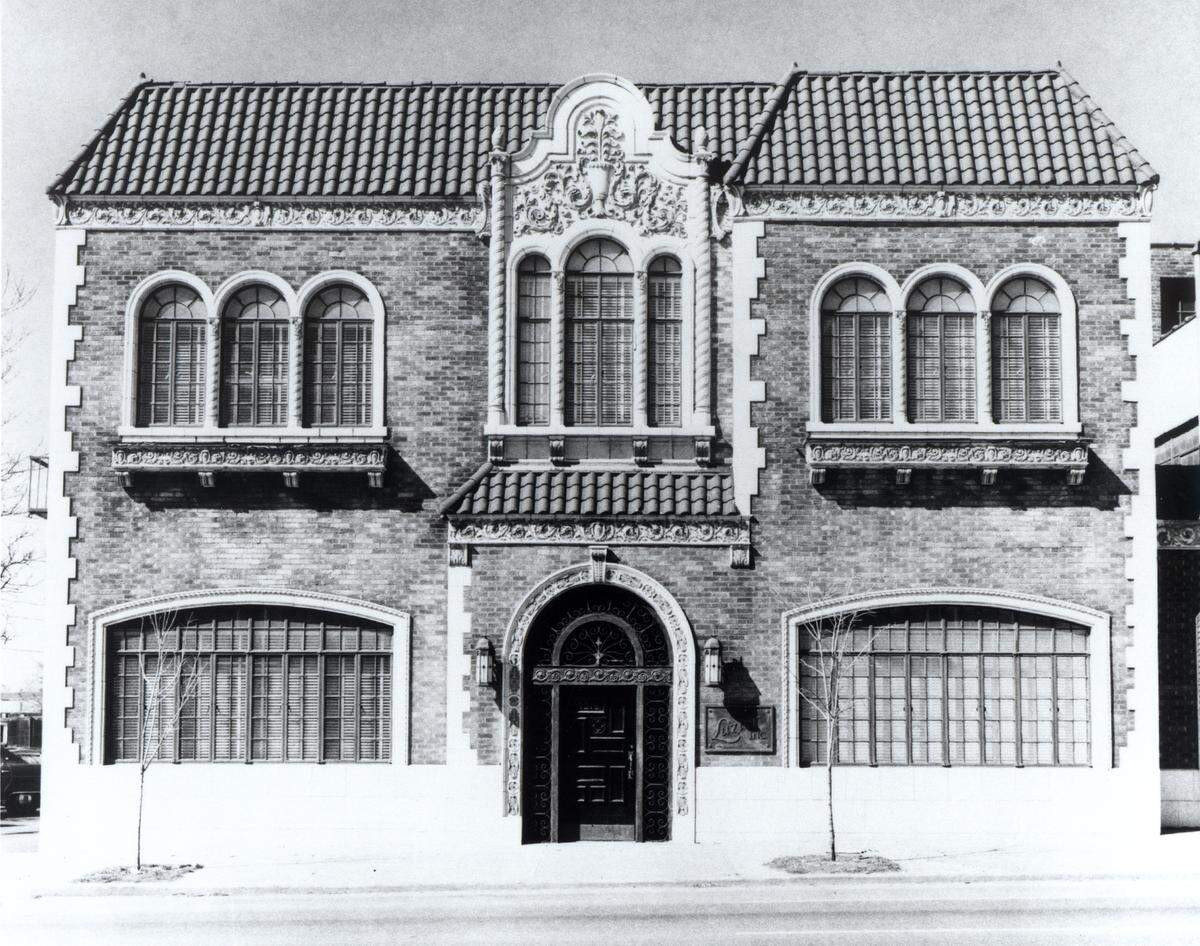
And it has beautiful touches, a Peters trademark. She also was an early adopter of new fireproofing regulations Kansas City adopted in 1924.
Starr said the apartments for which Peters is known, from big ones to fourplexes, “became a real intensive form of building in structurally reinforced concrete clad with an often whimsical and Tudor-inspired facade.”
For a while, Wichitans Jo Anne Lofland and Art Busch had an apartment in the Peters-designed Washington Irving building just off the Plaza at 4746 Roanoke Pkwy.
“It’s just set into the site beautifully,” Lofland said.
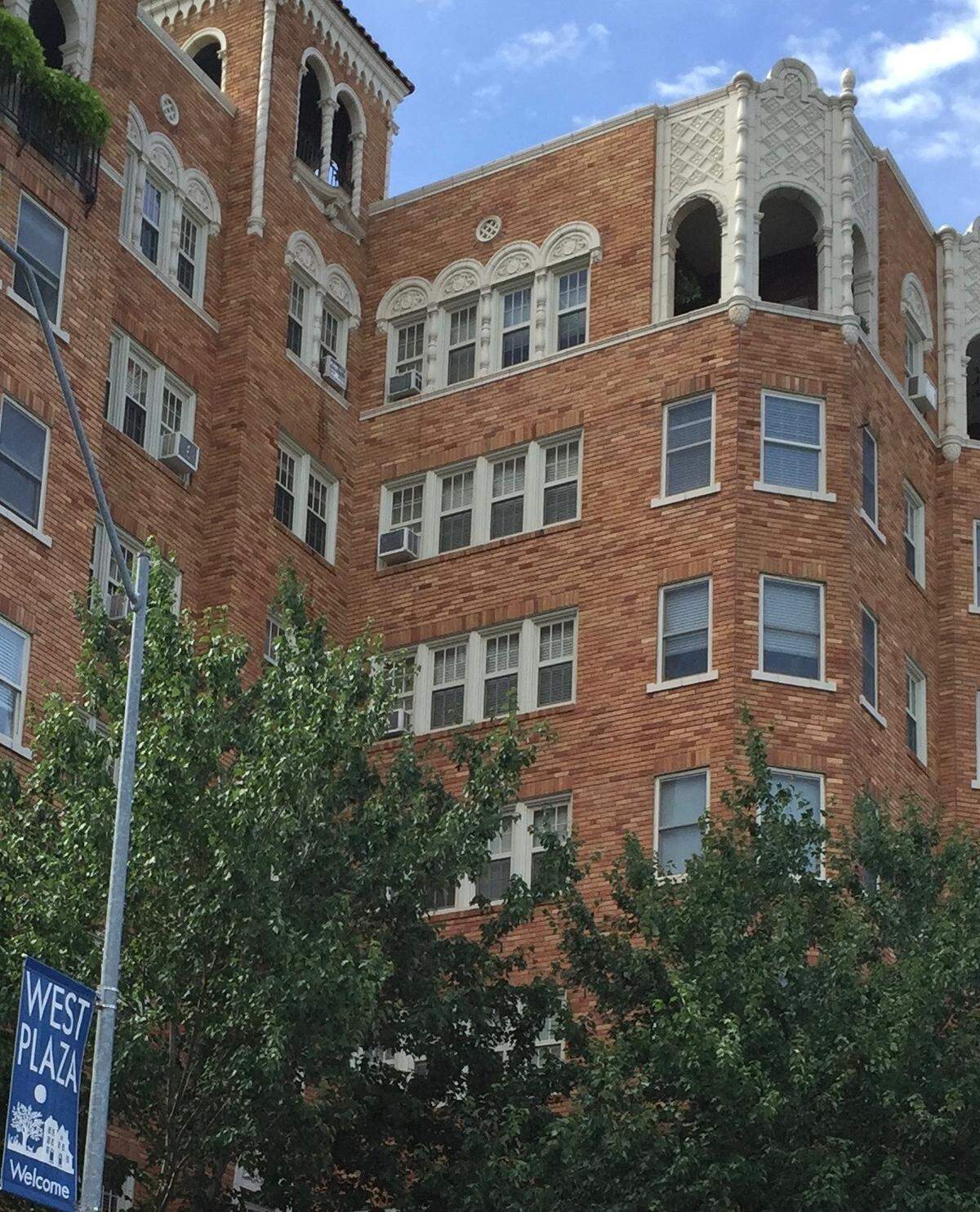
She said there was an old-world feel to the building with what she called Spanish-type tiles and interesting features in individual apartments, such as enclosed balconies with windows — in addition to lots of windows throughout — and built-in cupboards for displaying dishes like in a traditional home.
Lofland said she and Busch had considered a lot of apartments around the Plaza.
“This one was just cool.”
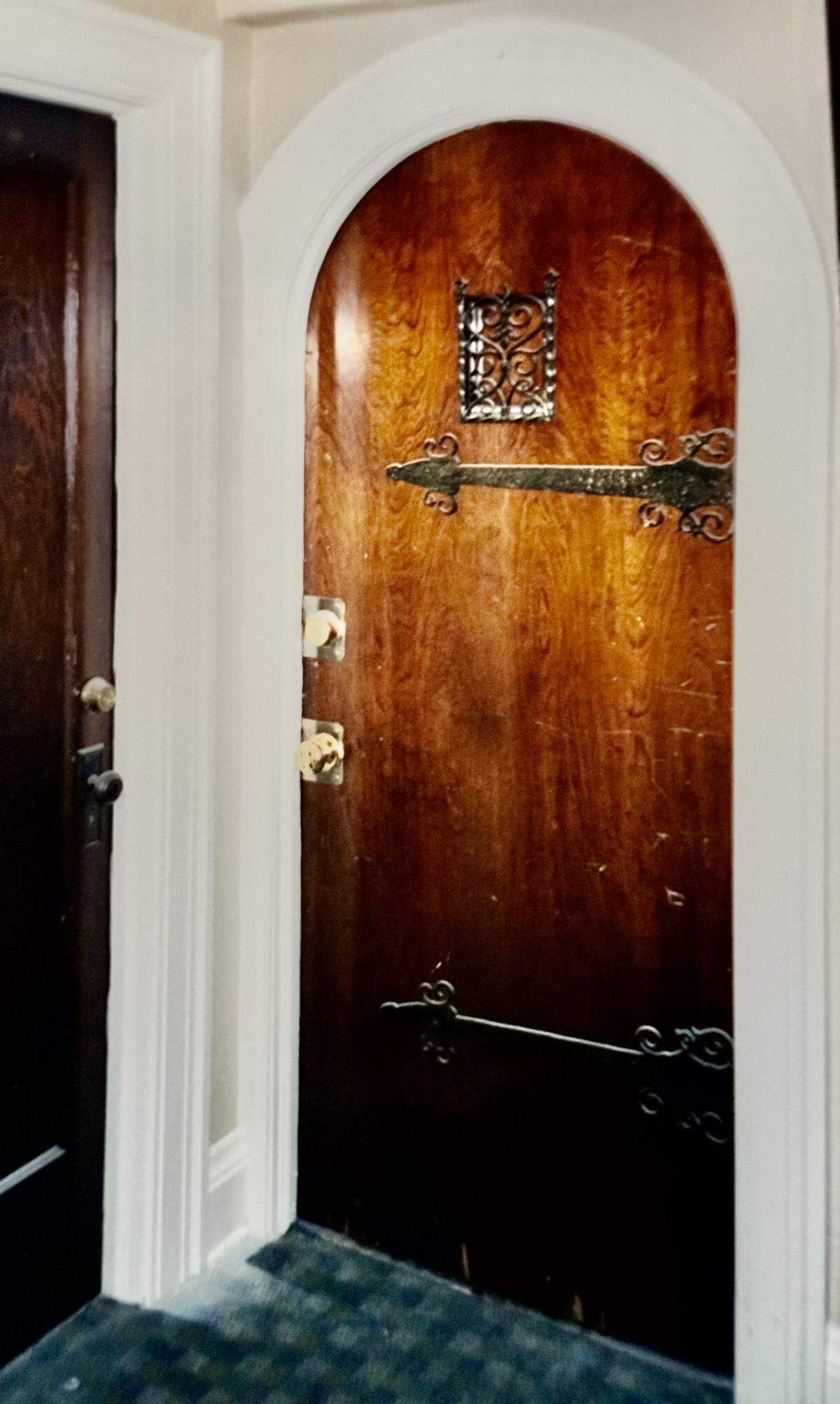
This and the other apartments named for authors are part of one of two Kansas City historic districts that honor Peters.
“I had grown weary of seeing Nelle Peters buildings around the Plaza demolished,” architect Becky Cotton Zahner, the original designation sponsor, told the Star.
In a first, the Star said the Kansas City Chapter of the American Institute of Architects joined as a co-sponsor.
“Peters’ designs often included terracotta ornamentation, towers and gables, angled bays, limestone, and varigated brick,” the Star said.
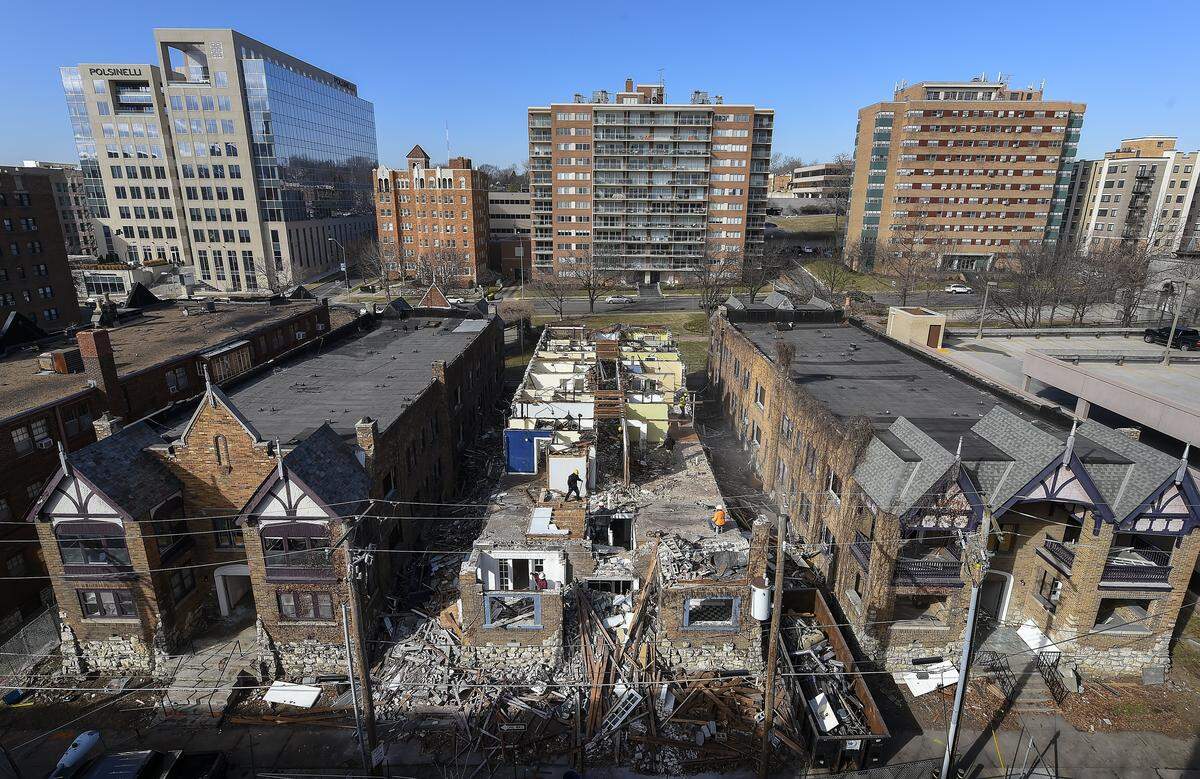
A lot of Peters’ apartments were built around courtyards. Piland noted that this design was “not as spatially or economically efficient as some plan configurations” Peters made, but the extra wall space and windows gave light and cross ventilation.
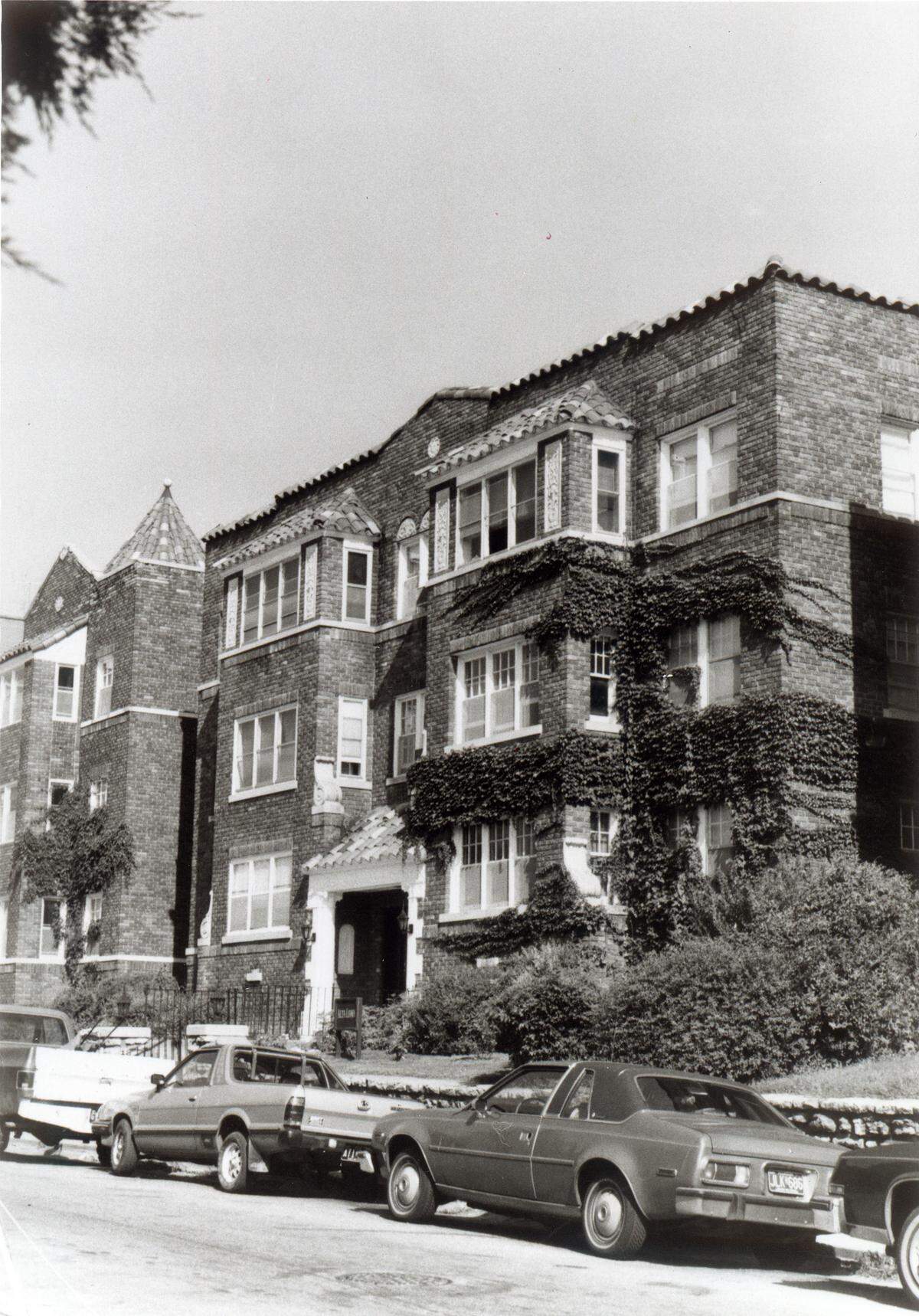
At the Commodore, before air conditioning was added, there were big fans at the end of each hallway, and residents could open windows as well as transoms above their doors to let the fan air circulate through.
Starr said Peters didn’t sacrifice aesthetic quality or an open and airy feeling for the high-functioning character of her apartment units.
Peters mimicked the Spanish influences of Kansas City’s Plaza, which was built concurrent to many of her apartments, including the ones named for authors.
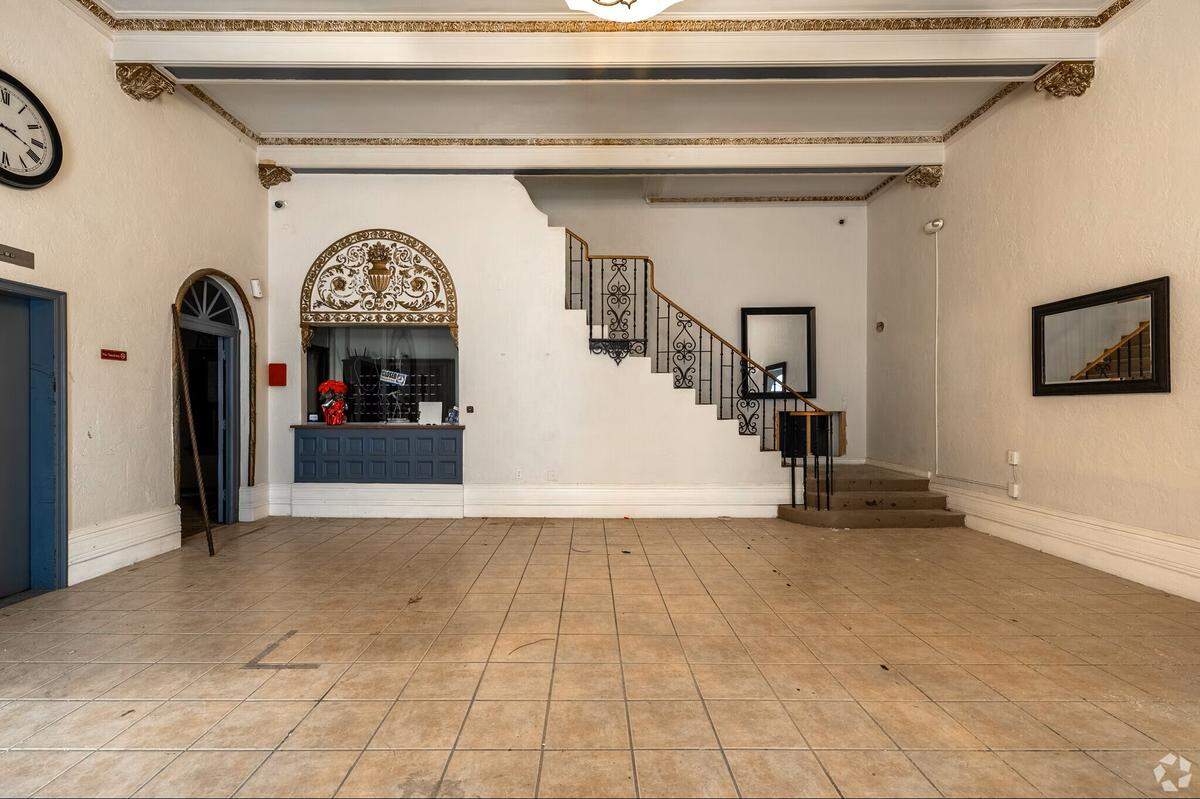
Also, she oversaw some of the architects who did work on the Plaza.
“That in itself is really marvelous,” Starr said.
There are Spanish influences at the Commodore, too. Gardner, whose family owned it for a time, laughed at how they were called Italian Revival details in Wichita and Spanish Revival highlights at Tulsa’s Ambassador simply because of the difference in colored terracotta that Peters used.
Gardner was a child when his family bought the Commodore, and he said he had the run of the place.
“It seems like when we bought it, it was ancient.”
Much fanfare
On Sunday, June 9, 1929, the Commodore opened to much fanfare in The Wichita Eagle.
At the time, Broadway was known as Lawrence, and the publication wrote of how “110 beautifully appointed suites” were opening at the nine-story building at Elm and Lawrence.
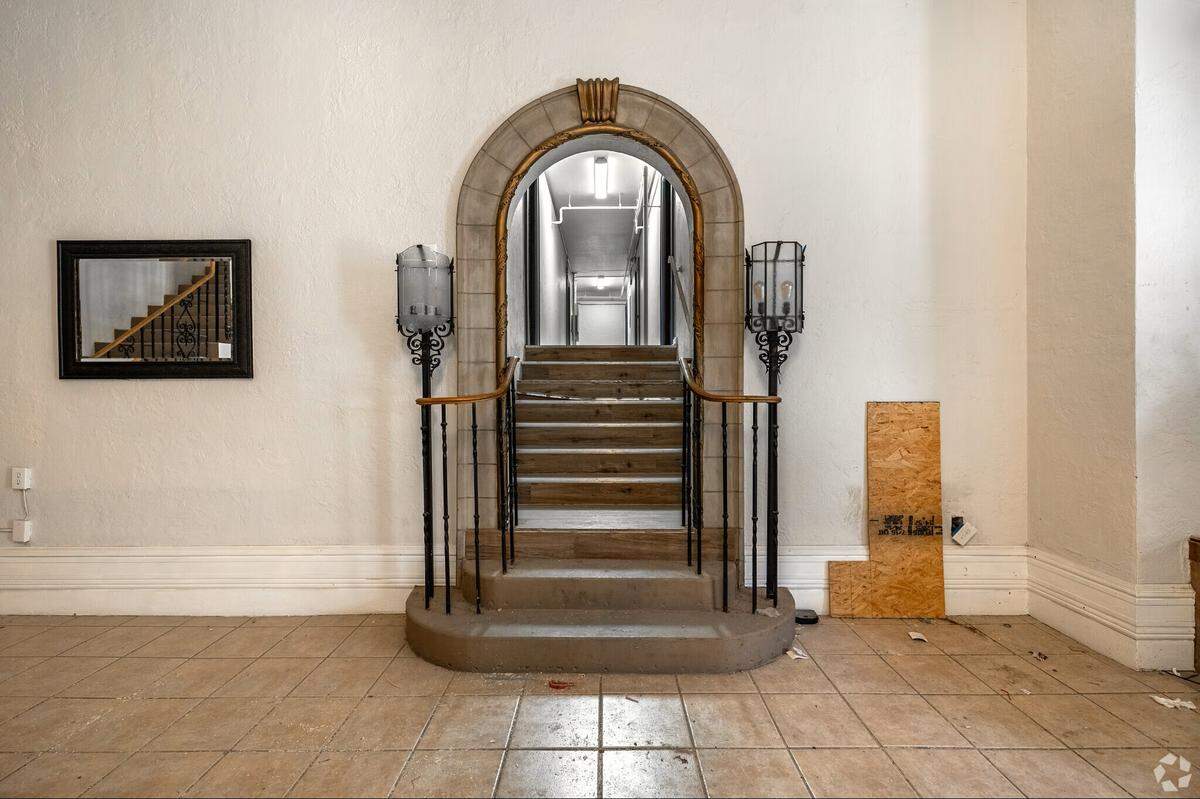
The paper reported there was “an Italian lobby which is a delight to the eye and a tea room thoroughly in keeping with the cultured taste that characterizes every feature of this latest addition to the city’s sky-line.”
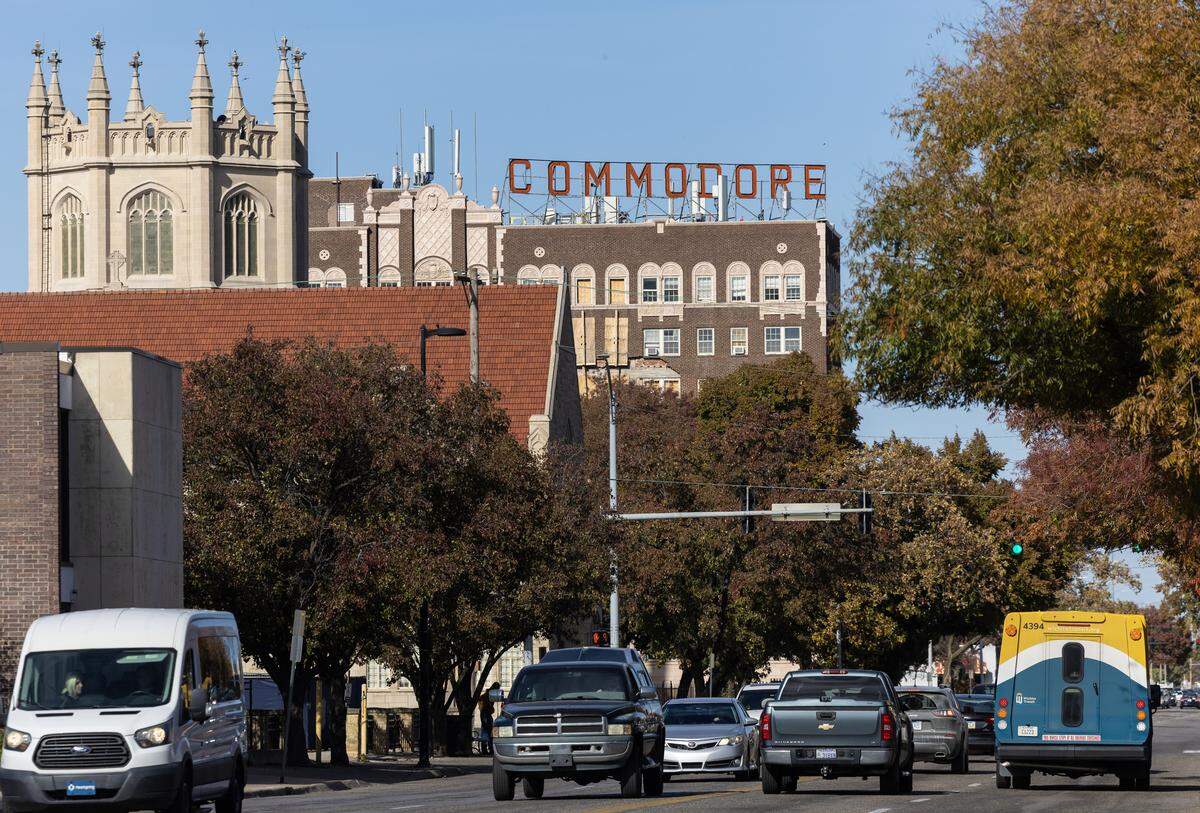
On a frame 20 feet above the roof, the building has 6-foot red neon letters that spell Commodore across 61 feet.
The Eagle reported that workers had to trek up nine stories “over and over and over again” to carefully deliver each letter formed from glass tubing.
“But they got some consolation from the thought that their work resulted in the largest Neon placed in operation in this state.”
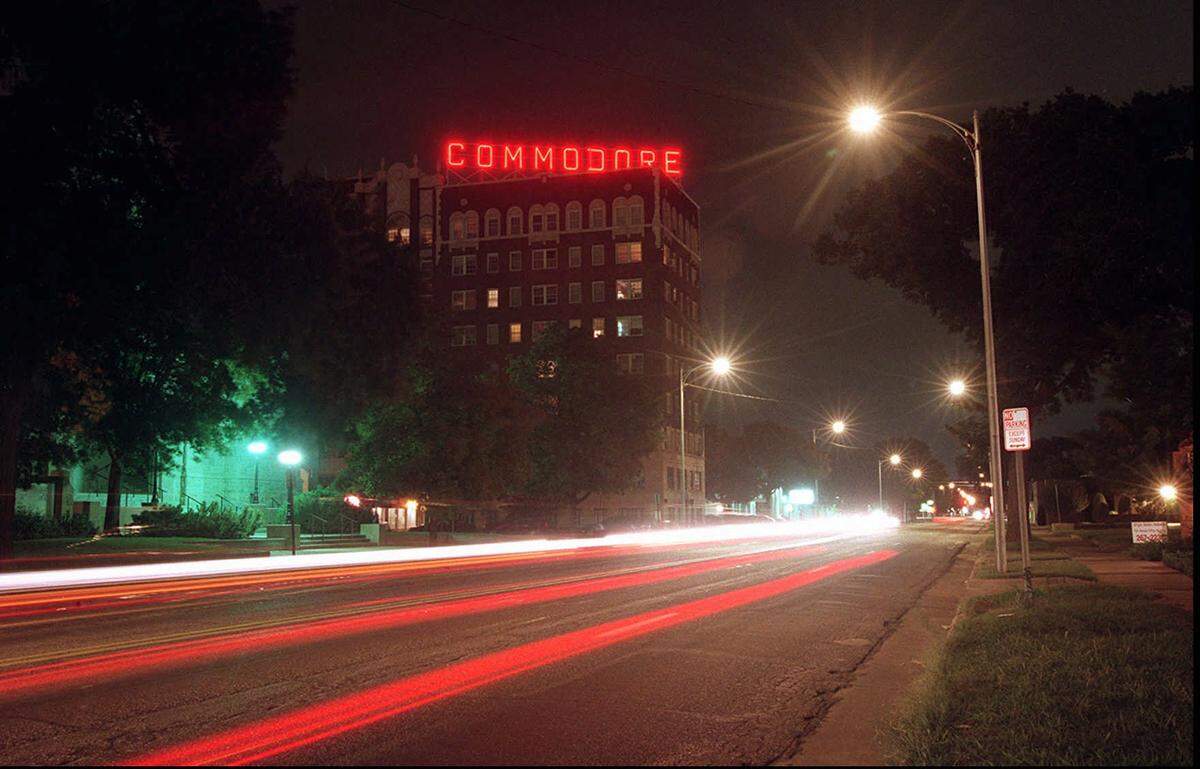
When Thien later handled maintenance there, he said anytime the bright lights went out due to hail or wind storms — which he described as constant — the Gardners “would immediately get someone on it.”
“To them, having the Commodore sign lit was kind of like a beacon for Wichita.”
Bill Gardner handled some of the building’s maintenance while in college and knows something of what it will take to bring back the building.
“It could be done, but it would take significant investment.”
‘Transformation’s tough’
In 2011, developer Paul Coury considered opening one of his Ambassador Hotels in Wichita. He’d already bought the one in Tulsa, and he’d learned a lot about its history, including some about Peters.
When a Wichita contractor who helped Coury redevelop the Tulsa Ambassador told him of the shared history and style of Wichita’s Commodore and Tulsa’s Ambassador, Coury thought it would be great to open his next Ambassador Hotel in the Commodore.
However, as Coury said he’s learned the hard way, “Transformation’s tough in the city unless you’ve got a lot of things happening and a lot of demand.”
.jpg "P0664-024377 (1).jpg")
One problem is there was no demand in that section of Broadway. Instead, there were — and are — a lot of people with no homes roaming the street and setting up encampments.
The bigger hurdle, Coury said, is the Commodore was still in pretty good shape and on historical registries, so that meant he didn’t have a lot of options for modifications.
The Tulsa Ambassador also is on historic registries, but Coury said he wasn’t forced to abide by them because that building had been abandoned for more than a decade and was pretty dilapidated.
Coury ended up putting his Wichita hotel at Douglas and Broadway where Union National Bank and a Dockum Drug Store famous for sit-ins once were.
From the outside, it doesn’t look like much has changed in the area around the Commodore, so it begs the question: What can a developer do with the vacant, dilapidated building?
Bruce Rowley, who has redeveloped a number of downtown properties, said it’s only a matter of time to see that area of Broadway come to life thanks to all the interest and property purchases in the area.
“You may not see it right now,” he said. Rowley said developers “think in years and decades,” and from that “standpoint, the early work is all going in up there.”
He said there have been significant real estate purchases in the area, including Chase Koch’s purchase of a number of properties to the south.
Then there’s the Wichita Biomedical campus at Broadway and William, which is expected to spur redevelopment all the way up Broadway to Ascension Via Christi St. Francis a few blocks north of the Commodore.
“Stuff has to get super cheap before it makes economic sense to redevelop it,” Rowley said.
He said he has no doubt that entire corridor will be redeveloped — and relatively soon.
“In 10 years, it will be fully redeveloped, and the Commodore sits smack in the middle of that, so that makes it an interesting redevelopment opportunity.”
‘A sad thing’
Gardner said he hopes the Commodore can be saved.
“It’d be sad to see the thing come down.”
Starr said it’s important to pay attention to when Peters’ properties are endangered and in need of reinvestment.
He said historic tax credits can help “bring them well into a second century of life.”
Starr said particularly in Kansas City, it’s crucial to keep as much of Peters’ work as possible even though it “didn’t push the boundaries of materiality or style.”
“It’s the intangible recognition of her prominence and the contributions that . . . she offered up to Kansas City.”
He said without the work of Peters and Phillips, “Kansas City would not be what it became.”
For starters, he said, “It wouldn’t have fit nearly as many residents.”
He said that tax revenue from the many apartments helped keep the city’s urban core going, even as Peters’ work became victim to urban sprawl as people left the kind of apartments she designed for their own homes outside the core of the city.
Starr called her apartments “a tremendous ongoing resource for our community.”
Dense, affordable, attractive and durable are the continuing qualities, he said.
Starr said students entering the architectural field need to learn of Peters. He said they could “learn from her triumphs and even emulate them.”
Much like her legacy should last, Starr said Peters’ buildings — including the Commodore — are designed to last and should be destined to.
“They deserve to last for generations in the future.”
This story was originally published November 17, 2025 at 4:04 AM.