
Sheldon Coleman leads Kansas crusade for clarity over THC-infused beverages
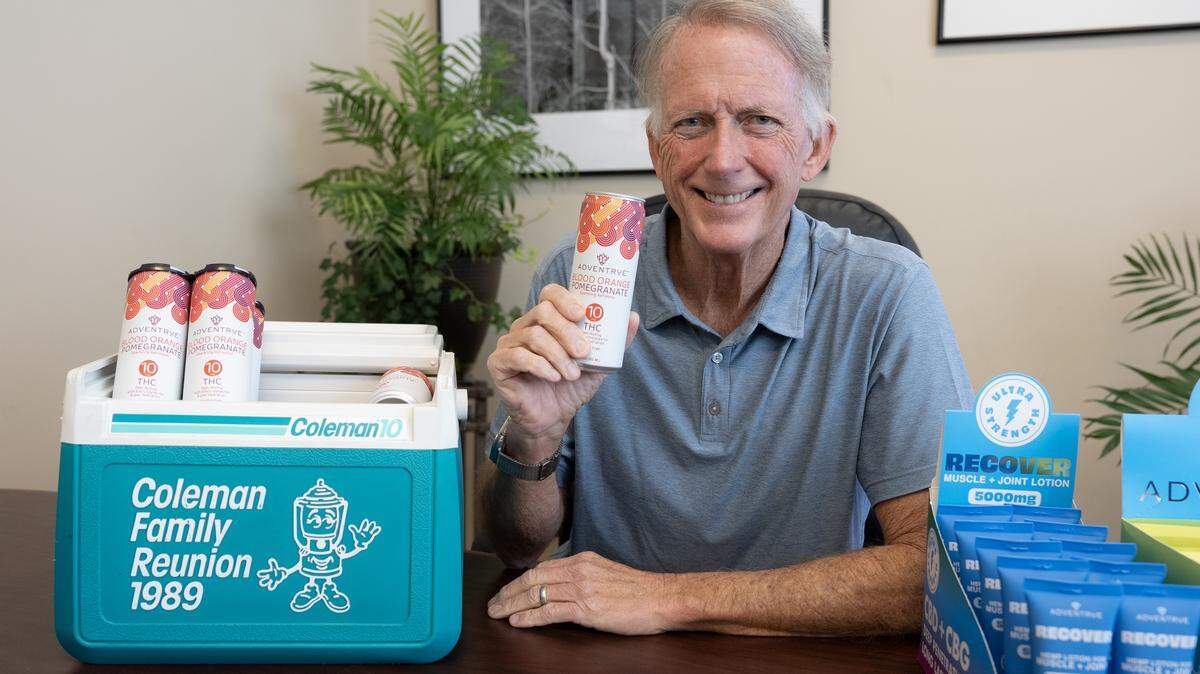
As THC-infused beverage sales explode locally and nationally, confusion over the legality of what’s in the products has grown as well.
Some, including one prominent manufacturer, wonder if that is intentional.
Sheldon Coleman — best known as the Coleman Co.’s former CEO and founder of the now-defunct Big Dog Motorcycles — is leading a crusade of sorts not only for the continued sale of legal THC-infused beverages and other products made from hemp-derived THC, but clearer regulation, too.
Adding to an industry already plagued by confusion over what’s legal and what’s not is what Coleman called a bizarre letter on the issue from the Kansas Bureau of Investigation.
The Aug. 14 KBI letter, which was sent to Kansas THC-infused beverage wholesalers, distributors and retailers, started with this subject line: “NOTICE that THC-infused beverages are prohibited by Kansas Law.”
Part of the short letter said: “The Kansas Commercial Industrial Hemp Act prohibits the sale of any ‘hemp products intended for human or animal consumption containing any ingredient derived from industrial hemp that is prohibited pursuant to the Kansas food, drug and cosmetic act. . .’ K.S.A. 2-3908(a)(1)(E).”
The letter said those involved with the manufacturing, distribution or sale of THC-infused beverages “bear the risk of ensuring their products meet any narrow exceptions to the prohibition on the sale of these products.”
Coleman said there’s a “very strong wow factor” with the letter that implies retailers and distributors most likely are doing something wrong by selling THC-infused beverages.
“The wordsmithing is very careful, and it concerns me,” he said.
“Is this confusion intentional or is it really not having all the facts right?”
There are plenty of others — along with organizations in the industry — questioning and condemning what the KBI is doing.
“We’re being defamed, in my opinion,” said Troy Flager, who owns SugarLeaf Distributing and is vice president of the Kansas Cannabis Chamber of Commerce.
“That letter is an overstep of power in the KBI and a misunderstanding of the law.”
He said he believes the KBI’s recent raids of some businesses that sell these products prove his point.
Flager said enforcement was sparse and selective, causing some business owners to lose their livelihoods, “And then you’ve got others that are just business as normal like nothing ever happened.”
Even though Flager said he knows the law inside and out, he said he started questioning himself after the letter and raids, and he said he’s not the only one.
“Retailers are no longer wanting to do business because they’re scared. They don’t know what’s legal or not.”
When asked if there is someone at the KBI to comment on possible confusion surrounding the letter, spokeswoman Melissa Underwood replied with an e-mail.
“The notice issued by the KBI was a courtesy to the industry informing them that THC-infused beverages have been observed in Kansas that do not comply with Kansas law, and therefore enforcement action is possible.
“If business owners have concerns about the legality of their products, they need to consult with their manufacturer and/or legal counsel for guidance.”
In a follow-up e-mail, Underwood wrote that the raids “were not focused on THC-infused beverages. While a small number of illegal beverages were seized, we focused the cases on shops selling marijuana bud, pre-rolled joints, and THC and psilocybin edibles. Selling these products is expressly prohibited in Kansas.”
‘Draconian statements’
Coleman said the KBI has made “Draconian statements.”
“I can debunk (them).”
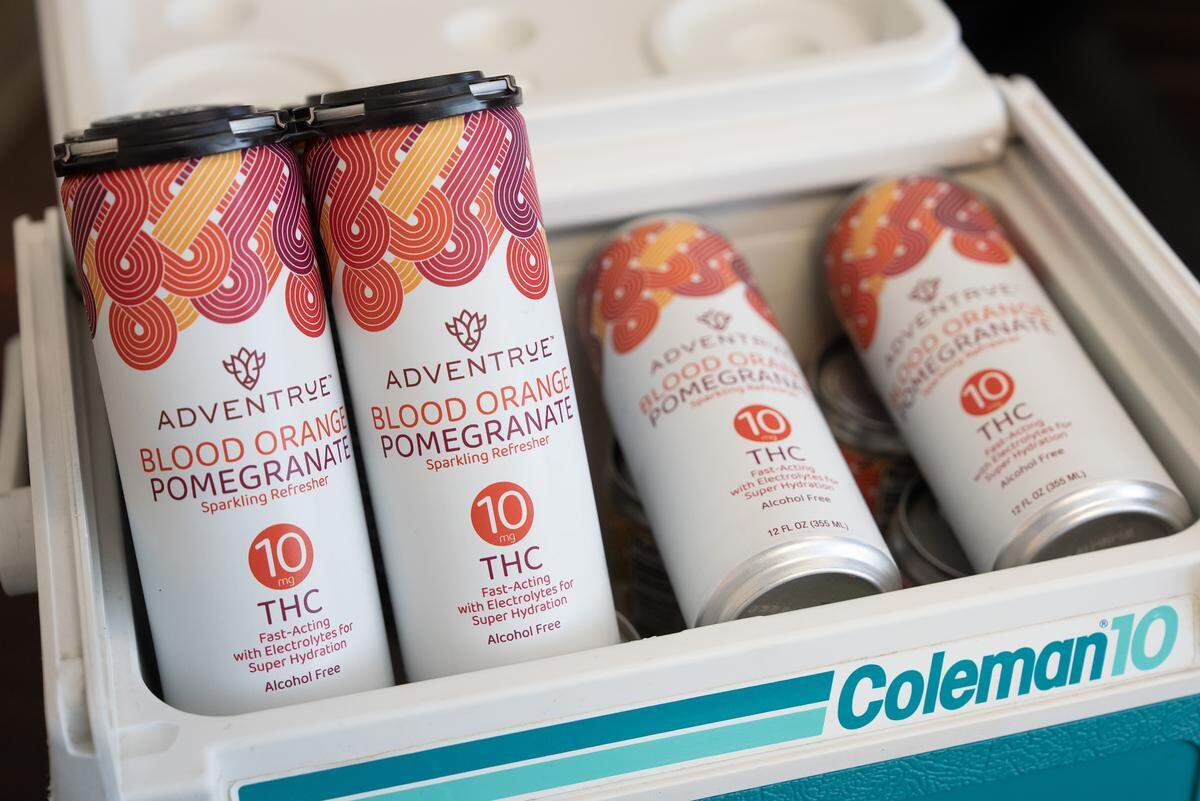
He said what the KBI referred to as illegal THC-infused beverages comes from illegal marijuana THC, not legal hemp-derived THC, and that beverages are allowed to have levels of hemp-derived THC at 0.3% or below by weight.
“It’s not narrow. It’s what the law is.”
Coleman cares because his company, AdvenTrue, is kicking off sales of its THC-infused beverages in the next couple of weeks.
He said AdvenTrue already has more than 5% of the country’s hemp-derived THC business.
“We’ve got a lot of expertise in the hemp-derived THC field.”
He said his products are legal from their start in the fields where the hemp is grown.
Coleman said the national Farm Bill of 2018 made hemp federally legal along with many of the oils and beverages made from it as long as the THC is diluted to 0.3%.
There’s confusion in several areas, though.
First, there’s misinformation over what constitutes legal hemp.
Second is confusion over the KBI’s reference to a statute that governs vapes, not beverages.
Third is what Coleman called an inaccurate apple-and-orange comparison between THC levels. There are various levels that get talked about as well as listed on beverages.
There’s 0.3%, which is the legal limit for THC concentration if a product gets regulated as hemp derived. It’s all about the weight. So if a product weighs more, it can have more THC in it.
Then there’s a 10-milligram measurement, which is in regard to how much THC is in each serving of a beverage.
Coleman said KBI director Tony Mattivi was on a Topeka news show and explained how his office found THC-infused beverages are illegal because they’re above 0.3%.
In another interview, Mattivi said that if a person drinks one can of this level of a THC-infused beverage, it would be like smoking a joint.
Coleman said someone would have to have more like five of the beverages to equal even half a joint and that 10 milligrams of THC is an infinitesimal amount in a 12-ounce beverage with 355,000 milligrams of liquid.
“Oh, there’s so much confusion, and I don’t think that’s by mistake,” said Inga Selders, who started the Cannabis Justice Coalition last year.
“Tony has had a focus on this for quite some time,” Selders said of Mattivi. “This has definitely been a big plan of action for him.”
The coalition’s Hemp Safety and Regulations Advisory Committee is looking into a possible class-action lawsuit on behalf of the industry.
Instead of enforcing what’s legal and what’s not, Coleman said, some law enforcement officials imply that almost all THC-infused products are illegal.
“They’ve thrown the baby (out) with the bath water.”
‘Bullet-proof document’
Coleman and the Kansas Beer Wholesalers Association hired two attorneys to create what Coleman called a “bullet-proof document” explaining THC-infused beverage regulations. They shared it with the KBI along with a letter from the attorneys on Sept. 9.
“We have not had a response, and we have asked for that,” Coleman said.
“We would have liked to have heard back from them,” said Jason Watkins, executive director of the Beer Wholesalers Association.
However, Watkins is feeling comfortable that since the KBI’s Aug. 14 letter, there may be an increased understanding of the law. He pointed out that the raids focused on other THC products besides beverages.
Coleman also said that he feels the KBI now is focused more on smokables rather than beverages, which he said he sees as a validation of his attorneys’ communications with the office, even though there hasn’t been an official response.
Still, Watkins said, “I understand a lot of people in the industry remain uncomfortable.”
Selders said that’s the case.
“It’s been very damaging even if they weren’t directly seized.”
Selders, Watkins, Flager and Coleman said they believe that there’s still a need for more regulation.
Coleman said there are not nearly the same amount of regulations over THC-infused drinks as there are with alcohol, so retailers who sell alcohol already are set up to regulate this area well. For instance, they already card customers.
For now, Coleman said self-regulation is needed in the industry, both on the level and concentration of THC in drinks but in other ways as well.
“Beverages should have a QR code that goes to certify . . . the analysis from a third-party lab. That’s important.”
He said there should be warning labels about not operating heavy machinery while drinking the beverages.
Most important, Coleman said, is to make sure the packaging and promotion of the drinks does nothing to appeal to children.
Coleman said legitimate distributors and retailers want people who are truly thwarting the law to be out of the business.
“Let’s get a grip on the bad actors, but let’s clean up and support the products . . . that are just fine.”
Flager agreed and said “legislators need to get together and pass a bill with proper regulations.”
Though there seem to be widespread concerns about children and teens having access to products they shouldn’t, Selders said, the irony is that some of the biggest customers for THC-infused products are middle-aged women who simply want a good night’s sleep.
“The prohibition scare tactics are out of line.”
‘Random move’
Coleman had been living in California when he took “a little bit of a random move” and began growing hemp on a cousin’s farm in Oregon, where he said hemp was legal early and extremely profitable.
“I also was fascinated by the health properties of CBD,” he said.
There are more than 100 varieties of cannabinoids, and Coleman enthusiastically began learning about them.
The first CBD product he took was a sleep aid.
“I thought this is really the answer.”
Around that time, the price of hemp crashed, but Coleman pursued making a variety of products from hemp that was rich in CBD and then often combined with other cannabinoids in products such as gummies and lotions.
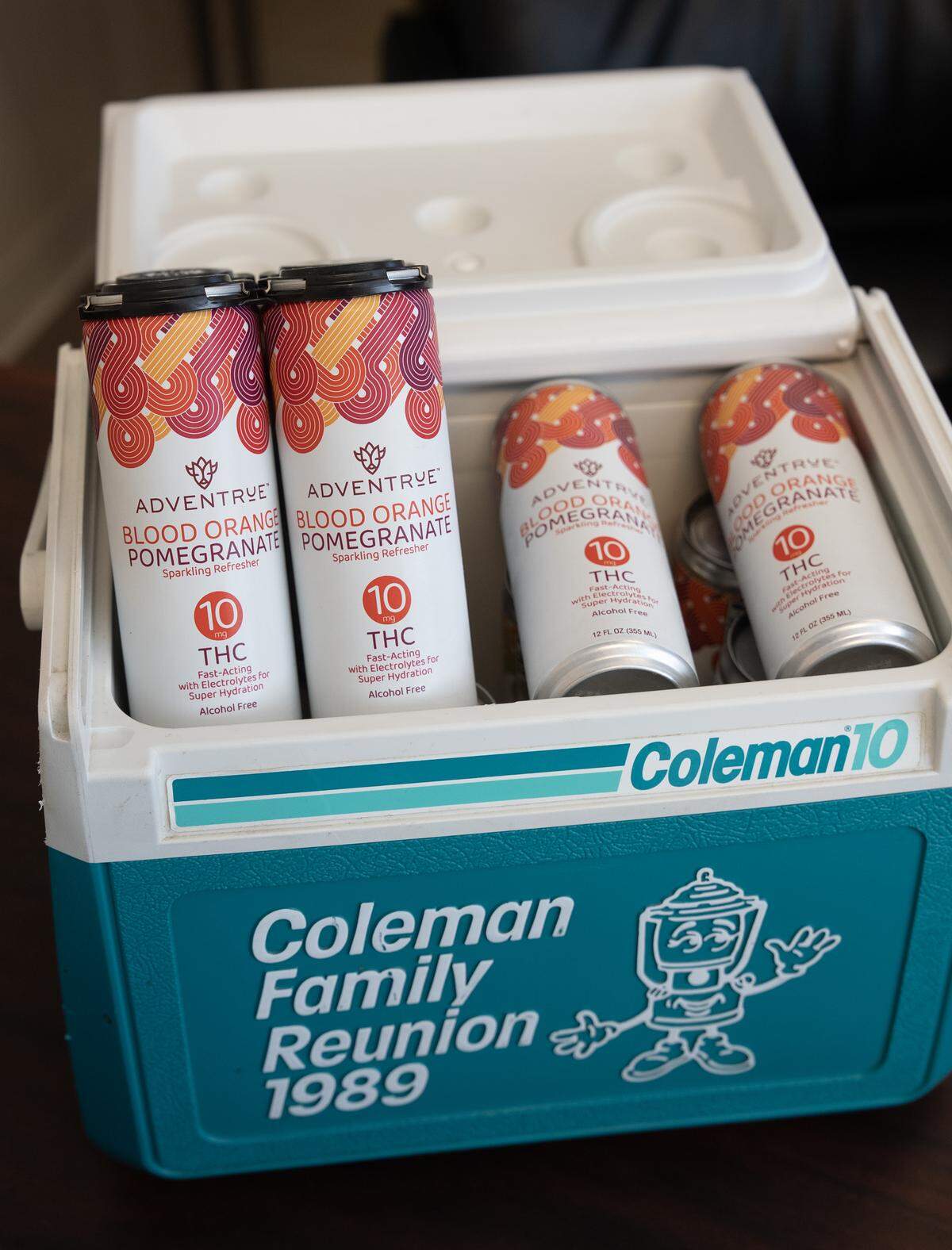
For a time, Coleman, who is back in the Wichita area, had a hemp-drying operation in Newton and a hemp farm in Andover. He’s since disbanded both and is focused on the larger Oregon production facility.
In addition to finding benefits with THC-infused products for himself, Coleman said he hopes other people give them a try as well.
“I have seen absolute miracles happen from these products.”
This story was originally published October 30, 2025 at 12:42 PM.