From rock ‘n’ roll to B-52 bombers, new Wichita firm’s goal is to save history on film
There’s a new Wichita digitization company that, if things go especially well, should be obsolete in a lifetime or two.
Or maybe not.
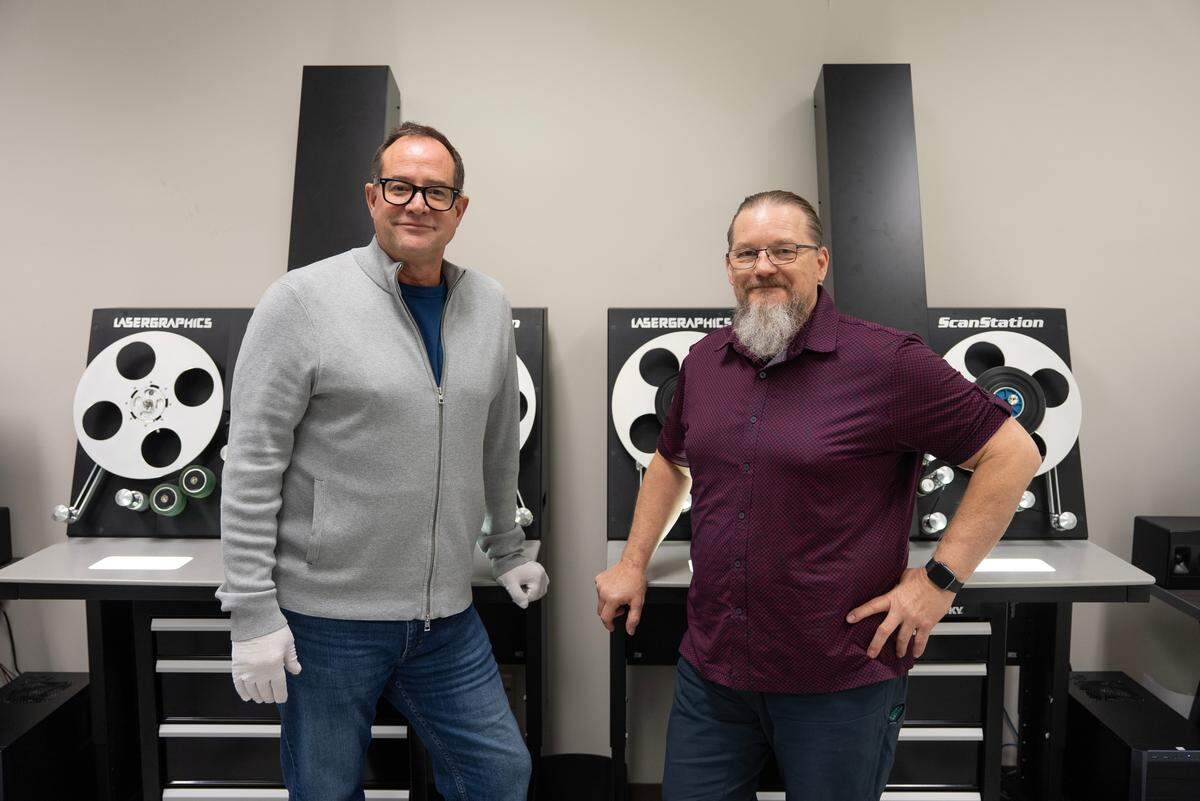
“We have no idea where we’re going to end up, which I think is part of the fun thing about what we’re doing,” said Dan Reisig, vice president of technology and innovation for Underground Vaults & Storage.
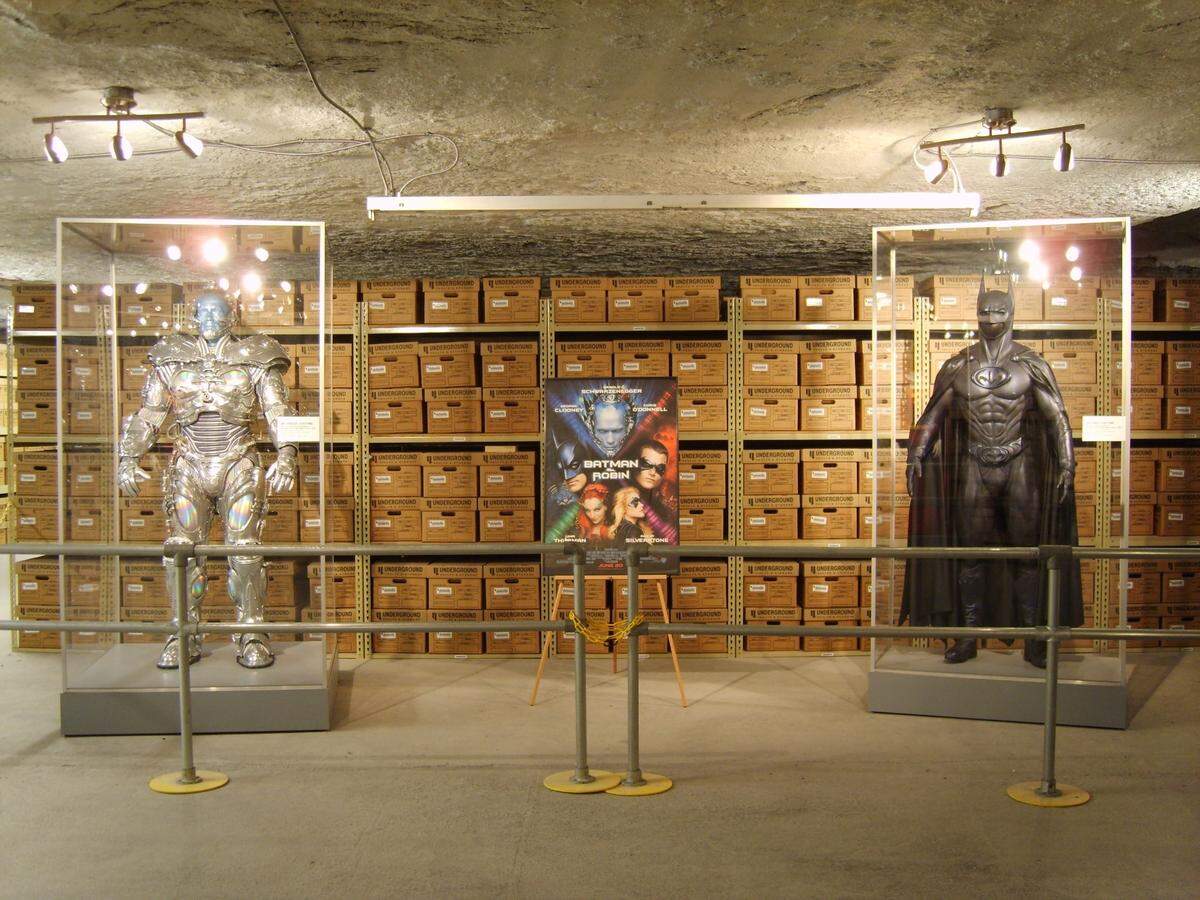
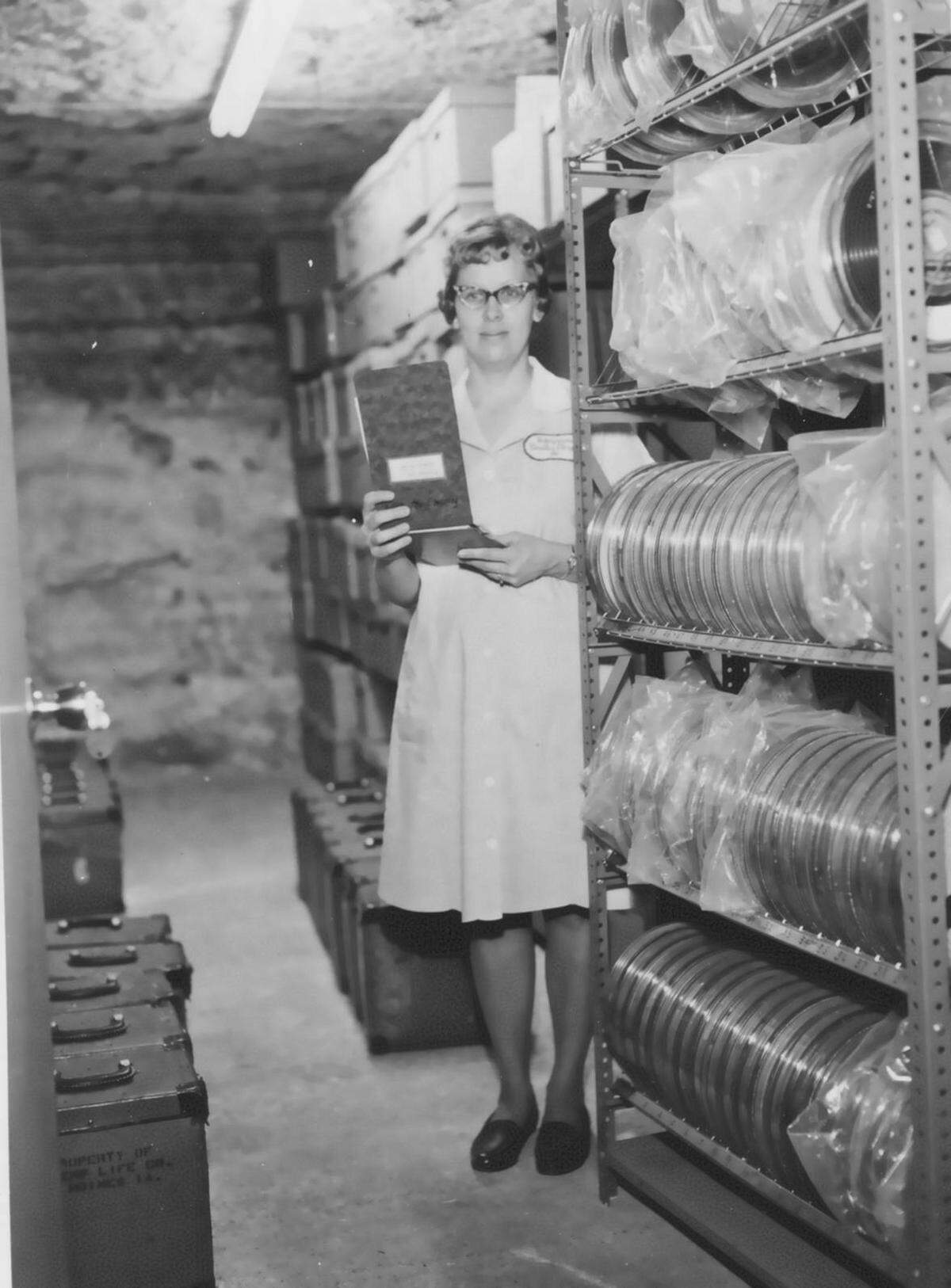
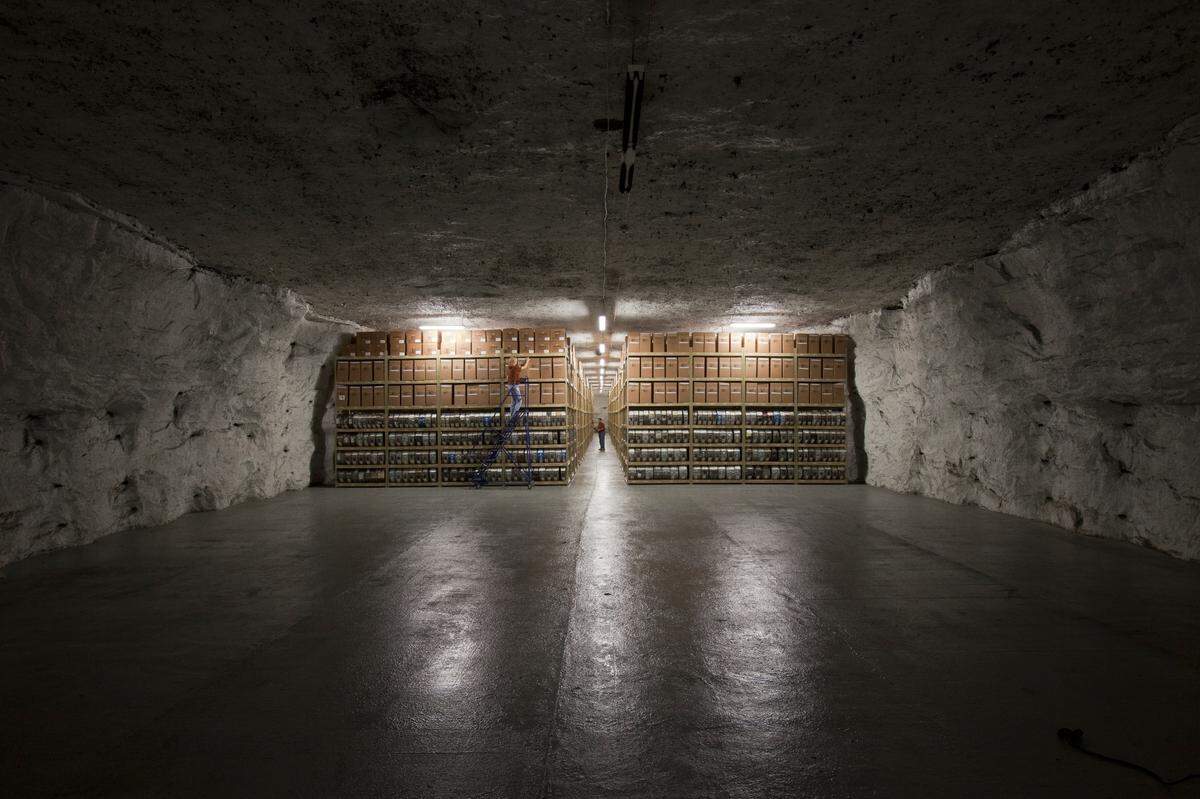
That’s the salt mine in Hutchinson that’s known for storing all kinds of things, most notably original footage and props from films, some of which are on display in the mine through Strataca, the Kansas Underground Salt Museum, a separate nonprofit organization.
The new company is the U.S. division of London-based R3Store Studios, a film digitization and restoration business that UV&S purchased in April 2024 as part of its continuing effort to diversify its services.
A recent example of what R3Store Studios does can be seen in the new Becoming Led Zeppelin movie.
The London-based division of the firm spent almost five years working to digitize a lot of previously unseen footage for the movie, and it transferred the footage to files that could work in the IMAX format.
It also worked on an Elton John movie, a Wham! documentary and saved vintage footage from Wimbledon, among numerous other projects.
“We digitize everything from . . . rock and roll to surgeries,” Reisig said.
The U.S. division, at 245 N. Waco in the Farm Credit Bank Building along the Arkansas River, now is working on similar projects. Reisig said he expects this division to one day be bigger than its London counterpart because of the salt mine’s long association with the media and entertainment industry.
“We store one of the largest collections of movie, film and video, commercial video, in the entire world,” he said. “We have millions and millions of assets and tens or hundreds of millions of hours of video and film.”
Not that R3Store Studios has access to all of the boxes that customers store 650 feet below ground in the mine.
“If they store it with us for 100 years, we don’t open it unless they ask us to open it and inventory it,” Reisig said. “All we get paid to do is maintain security on that.”
He and UV&S are now trying to tell the story of their digitization capabilities so existing and new clients know there’s an opportunity to not only store but preserve film, video and audio — and monetize it, too.
“The challenge with film is it’s degrading, and it’s going away,” Reisig said. “Video is degrading, and it’s going to go away eventually.”
He said the goal is “to preserve as much as possible for forever.”
“It’s a very daunting task. We have lifetimes of work in front of us.”
‘It’s gone’
From the late 1800s to the 1950s, extremely volatile cellulose nitrate film was used to make movies.
“When they start deteriorating, they’re literally the same makeup as gunpowder,” Reisig said.
He said experts have determined that 85% of silent films, which were made on nitrate, have been lost.
“And if you don’t store things at the right temperature and humidity, it degrades faster over time.”
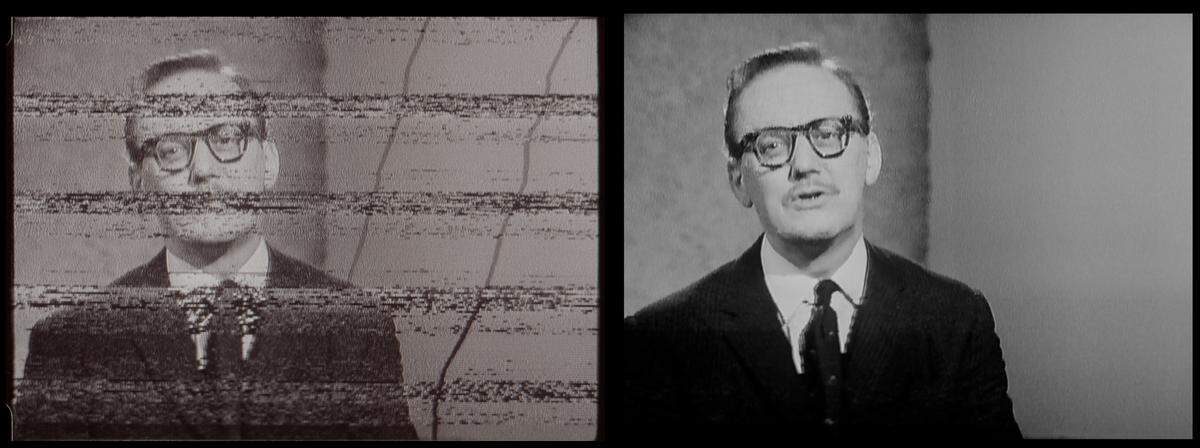
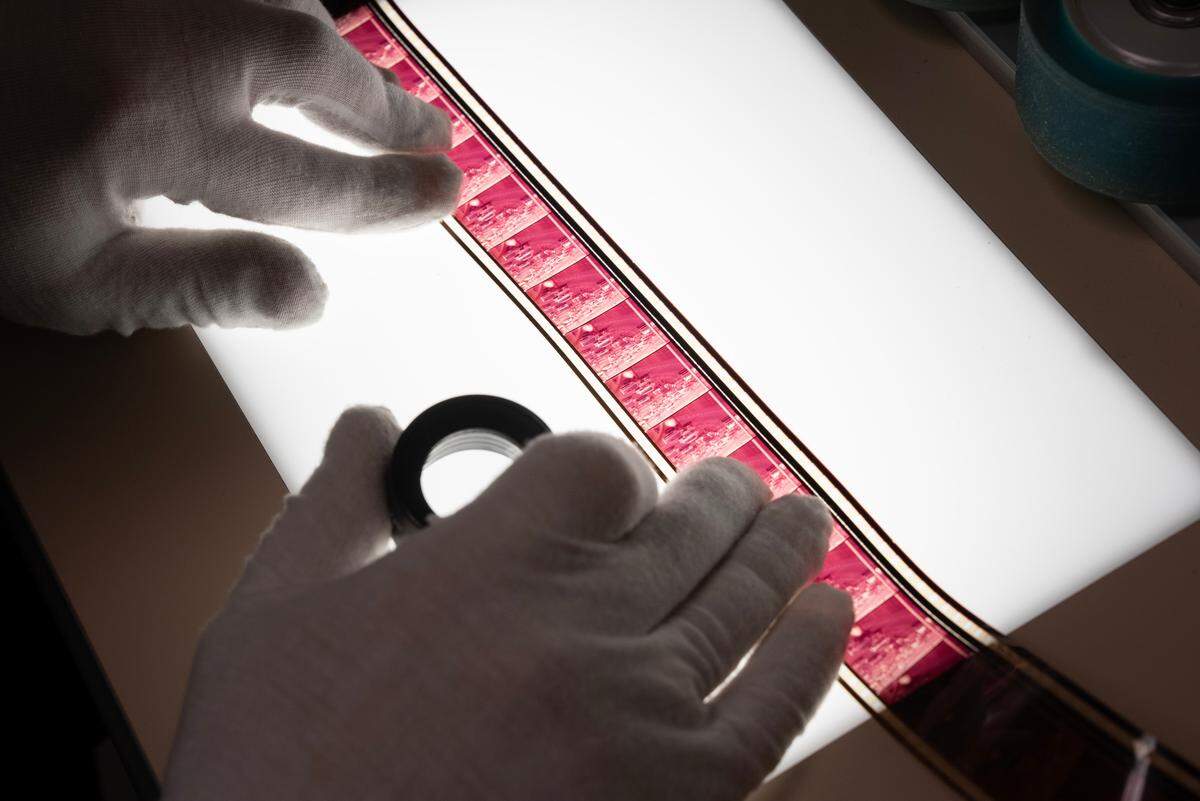
Then cellulose acetate film, also known as safety film, arrived. It, too, deteriorates and begins to turn red and smell like vinegar.
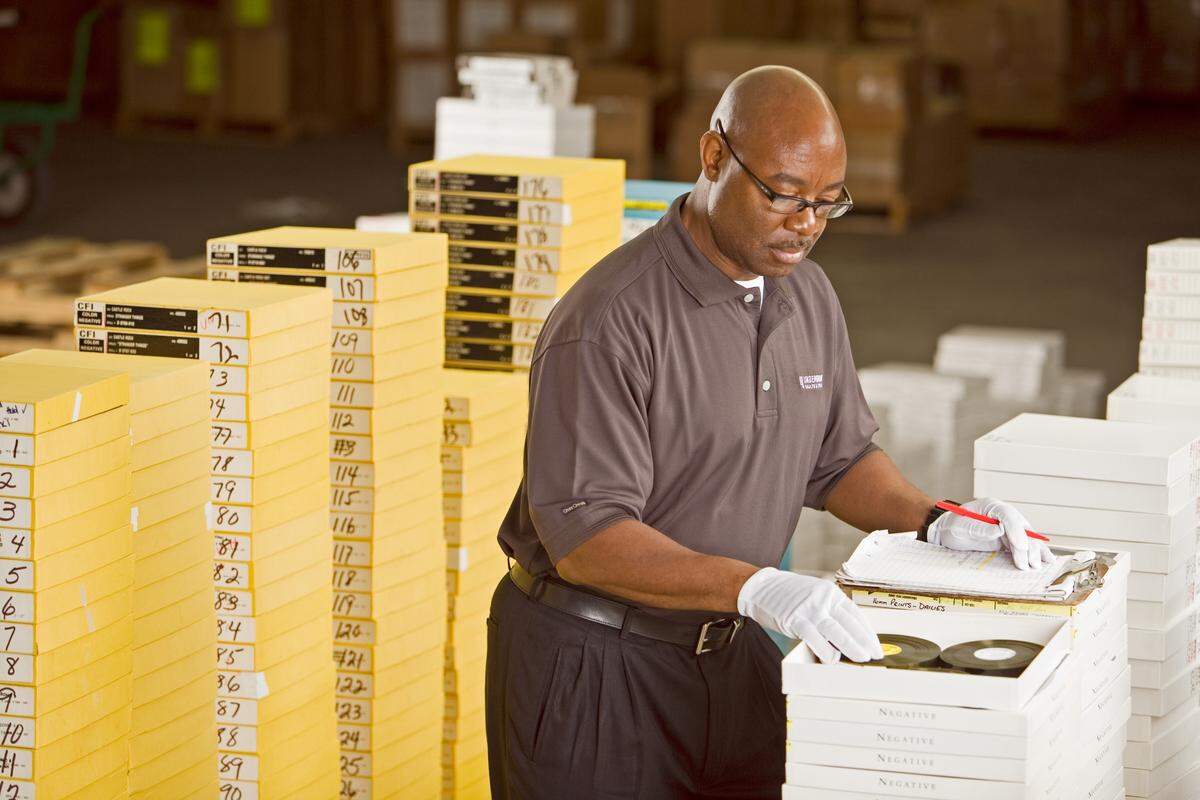
Film has a shelf life of up to 150 years, depending on how it is stored. Video life is much shorter, with its magnetic integrity beginning to dissipate in about a decade, said Shawn Rhodes, director of digital services for the U.S. division.
“It just makes me sick thinking about, OK, we’ve got a few thousand years of work already that we just have in the salt mine potentially that needs to be digitized,” Rhodes said. “We need to figure out how to make this mutually beneficial for everybody. . . . This is human history that we’re losing here. . . . Once that’s gone, it’s gone. We can’t get it back.”
Almost all of what’s in the mine is there because clients have paid to put it there.
However, Reisig said they acquired 53 truckloads of footage from a Los Angeles company going out of business. They worked with studios to get the footage to safety in the salt mine with the hope of repatriating it.
Each time Reisig and Rhodes visit the mine, they return with something new from the stash in the hopes of digitizing it and returning it to its rightful owner.
“The Talking Heads is a perfect example of that,” Reisig said.
Band members were on “The Late Show With Stephen Colbert” in 2023 discussing remixing their “Stop Making Sense” film.
“It actually was more difficult than you would think because we had to find everything,” musician Jerry Harrison said. “The negative, amazingly, was in a warehouse in Kansas that MGM has.”
“Well, it wasn’t a warehouse,” Reisig said.
It was in the salt mine.
“They got rights back to it but didn’t know where the film was at. We had it. So we connected with their management team, and they got their film back . . . which is a very great story.”
Let’s make a deal
The hope is as UV&S repatriates footage, it can strike deals to either store or digitize it.
Rhodes, an award-winning filmmaker with shows such as “This Is Love” and “Little Satchmo,” is now working with Police drummer Stewart Copeland on a film about him.
In the early 1980s, Copeland used a Super 8 camera to film the group and its travels and adventures. Rhodes said Copeland had the film digitized, but it was at a lower resolution. So before Rhodes can use the footage for his film, he has to rescan everything.
That’s how he saw Copeland “on a trip to Africa, looking for the roots of music, of American rock and roll. And he went to a plantation where they had a safari sort of thing going on. . . . They built a chain-link fence cage around him, hung meat on the outside and released the lions. And so the only way he could fight them off was to play the drums louder and louder.”
Exploring footage can be like a scavenger hunt.
“Even if the film can says that it’s X, Y and Z, you may not get X, Y and Z,” Reisig said. “Every now and then, there’s something in there that might surprise you.”
He and Rhodes recently were inventorying some footage from California and were thrilled to find a canister labeled the Grateful Dead.
“Hold on a second,” Rhodes said. “We’re getting this.”
Reisig agreed, immediately excited about possibly digitizing it and returning it to the band.
“We’ve got a gold mine sitting here,” he said. “It said Grateful Dead everywhere.”
Except it turned out to be mislabeled.
What it was still was fascinating: an alternate ending to a famous film from the 1970s (a remake Lady Gaga eventually starred in, though that’s all Reisig can say).
Rhodes and Reisig were disappointed about the Dead, naturally, but still, Reisig said, “There’s some cool stuff along the way that we get to see.”
A sophisticated dorm room
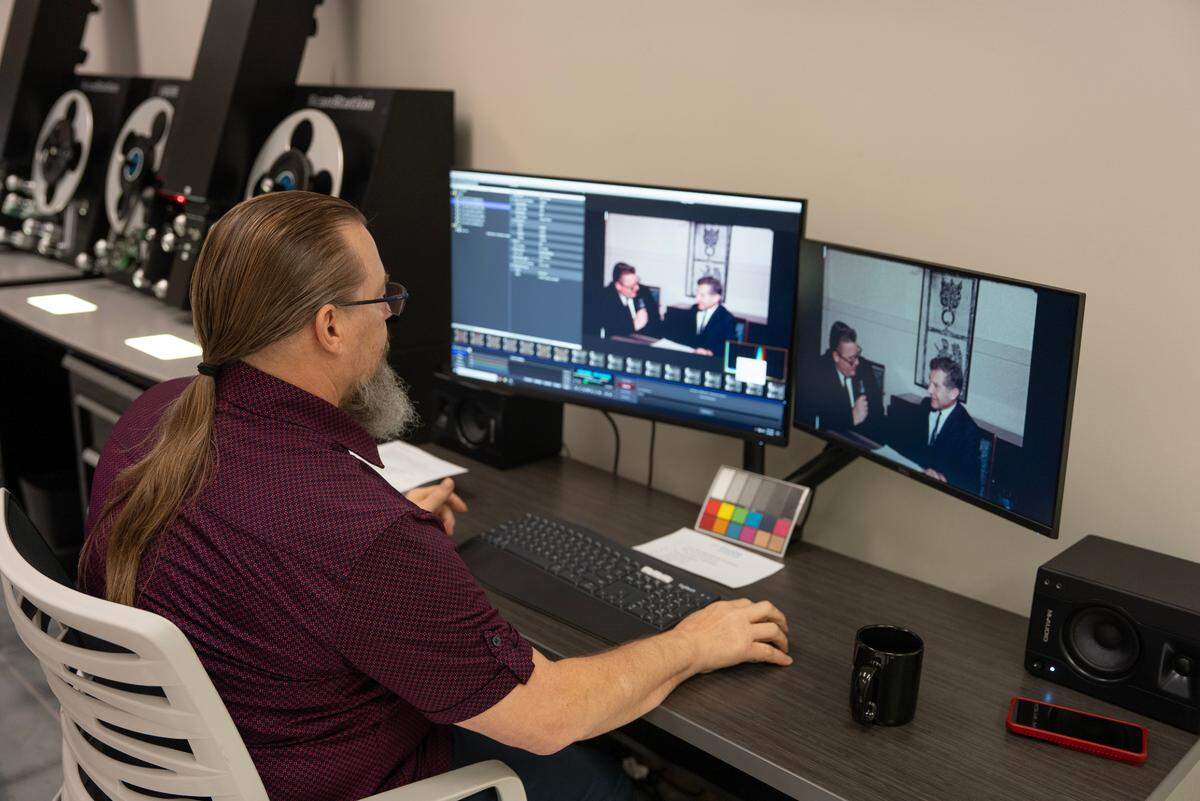
UV&S has 15,000 square feet, and counting, at the Farm Credit building. As sophisticated as the mission is for R3Store Studios, its part of the building so far looks a bit like a slightly disheveled dorm room, mainly because it’s in its start-up phase.
It’s one well-protected dorm room, though, rated to withstand an EF5 tornado. It has top-of-the-line fire suppression, too, and a raised floor to avoid flooding. There also are water pumps just in case. There’s dual power to the space from two substations as well as a 1.6 megawatt generator for an uninterrupted power supply.
A lot of prominent companies in the state have their servers in a sealed data center within the room where digitization takes place.
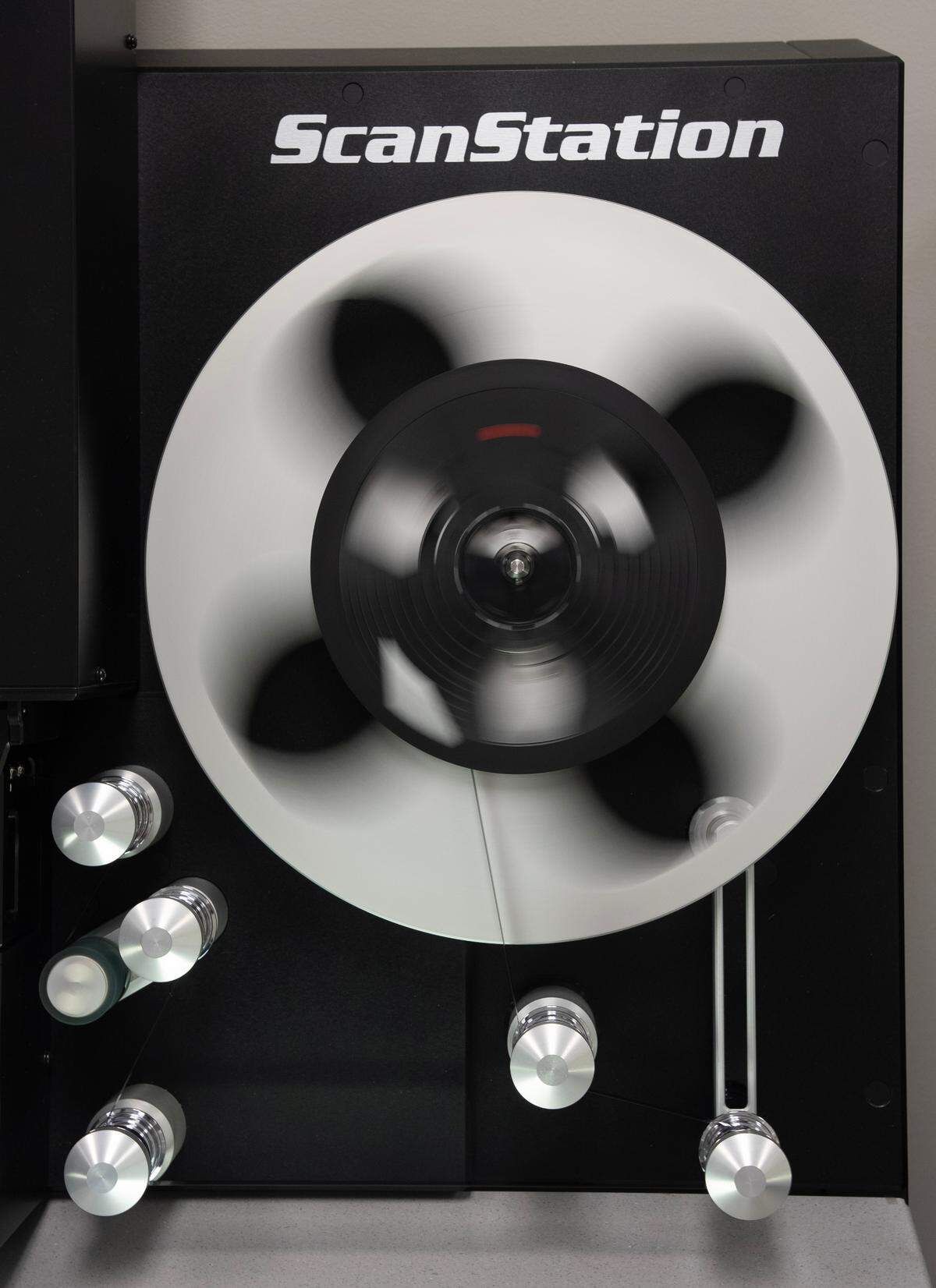
Then there are the machines that do the cleaning and digitization.
“It’s like buying a house,” Reisig said. “They’re not inexpensive. They’re the highest quality that you can buy. It’s commercial grade.”
Between the two R3Store Studios, UV&S has seven scanners and three cleaning machines, which Reisig said sets apart the company from the very few others doing this level of work.
“Our job is to grow this Wichita, Kansas, operation under the . . . technical tutelage of London, because they’re the experts on it, so they will be doing technical oversight,” he said. “But as far as product development for next-gen products, how we’re going to service our clients in the U.S. and carry this torch forward, most of that’s going to come out of us, in the U.S.”
He said one current project came from a salt mine client wanting to better understand what the firm has in its vault. Reisig said that allows for some treasure hunting.
Imagine, for example, this company owns vintage NFL footage from the 1950s that could be cleaned, digitized and sold for use by interested parties. The last part is key because, of course, everything takes money.
Digital scanning costs on average about $400 an hour.
“They can’t just go, well, we can scan all this,” Reisig said. “They have to have a reason to scan it.”
A job too big
In addition to making films, Rhodes also used to own his own business to convert home videos to digital — an important archival pursuit of its own but nothing at the level of R3Store Studios.
Though he’s come a long way, Rhodes said he still knows when a job might be too big for him, like when “that film looks like it’s melted to itself.”
Or when working with brittle film, Reisig said “you only want the most experienced people working on because you can just absolutely ruin it.”
Rhodes said that “once it gets to a certain point, I mean, it’s gone. It dissolves. . . . This one reel we had the other day, when I opened the canister, even the leader . . . was dust.”
That’s where more training will come in.
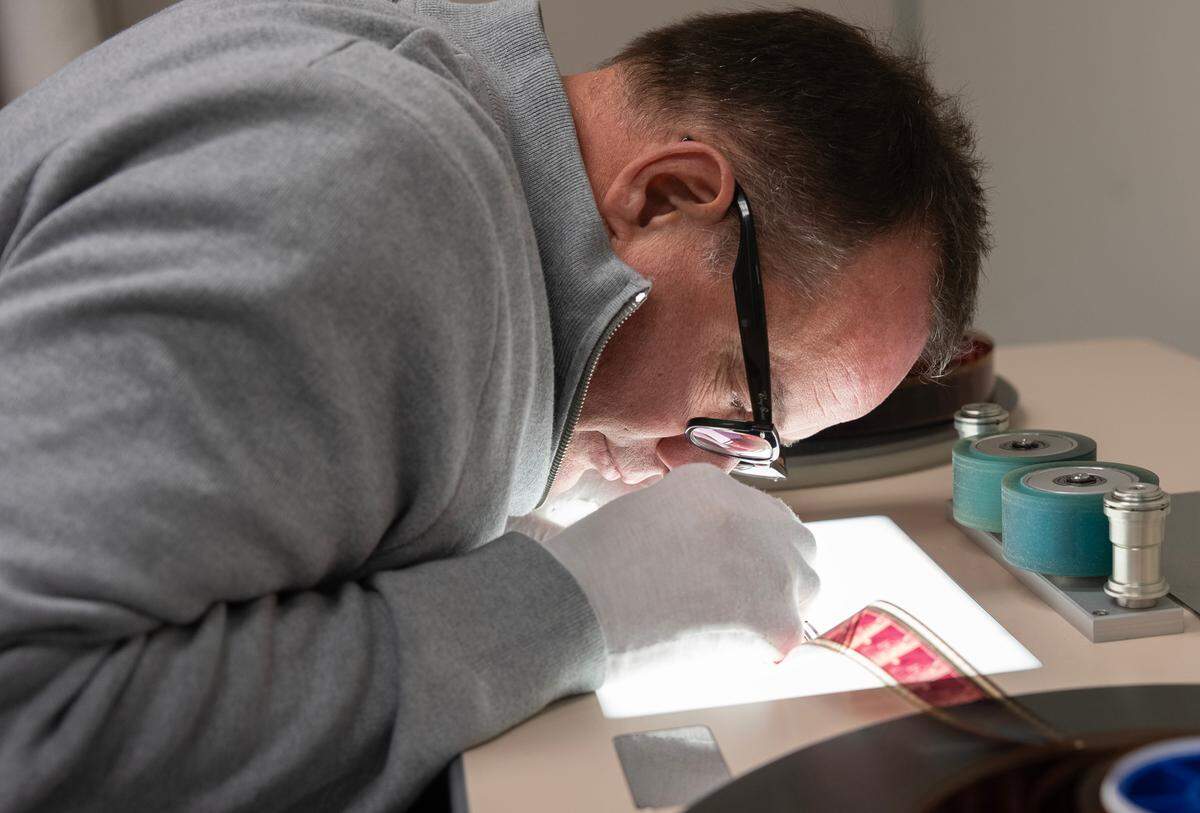
Fortunately, Reisig said, most film even from the 1950s is something that can be cleaned to where it looks brand new.
Not all of it, though.
Rhodes said sometimes he looks at film, like one client’s footage of celebrities going into a Rolling Stones concert, that he thinks has a lot of splices but then realizes it’s something else.
“They just put masking tape on. I’m like, Oh my god. So we go in here and . . . we’ll hand clean it and hand inspect it, and then, like, when I’m winding these . . . it’s like, pow, here goes one, because that splice just came right off.”
He has to piece film back together.
Film has to wound at a specific tension so as not to hurt it. The company’s cleaning machine is so advanced, the solution used to clean film on one side of it is dry by the time it spools to the other side.
“By the time it comes off the cleaner, we can put it on a scanner, scan it and be done with it,” Reisig said.
In addition to a scanning room, the studio needs a photography area, too, so clients can see photographic evidence of each step of the digitization process.
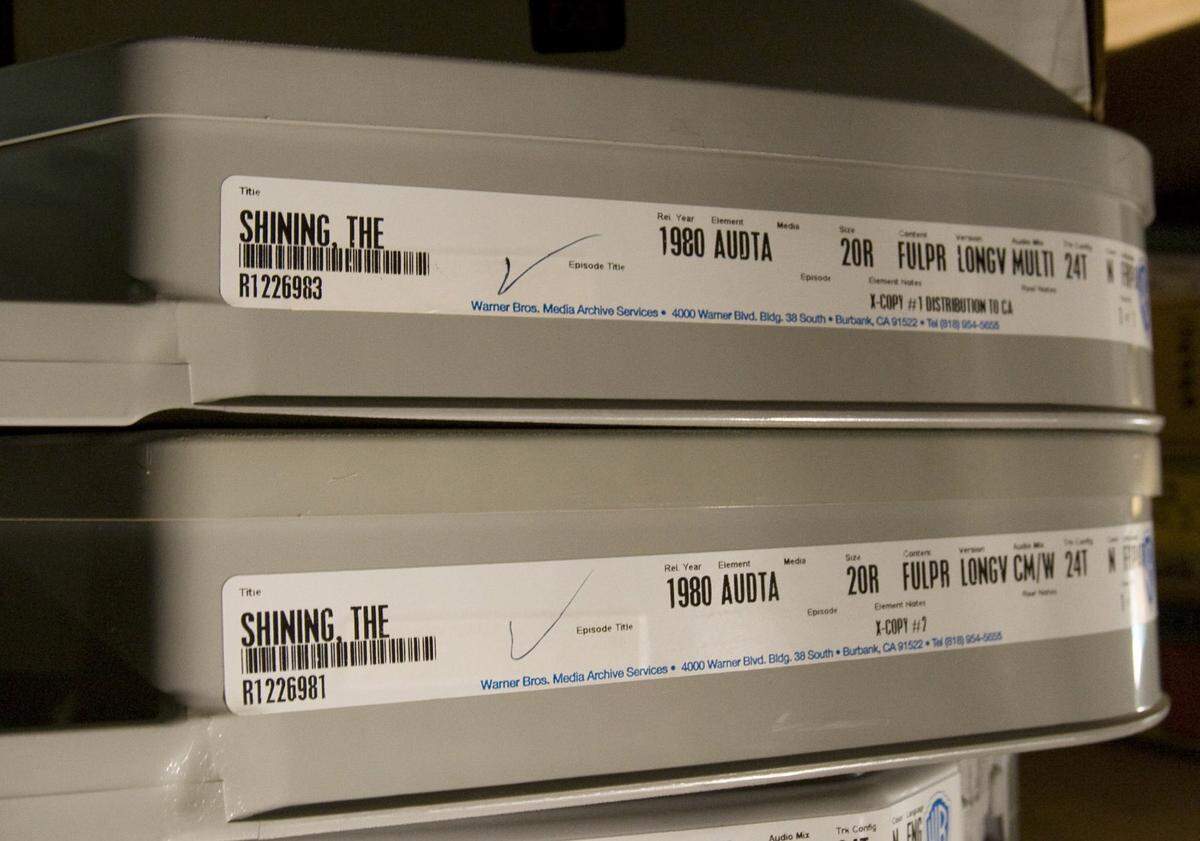
A lot of the work is slow and painstaking, Reisig and Rhodes said.
There’s a less than three-minute movie trailer that’s never been seen in public — they can’t say what except that it’s from a galaxy far, far away — that took 30 minutes to color correct since it deteriorated to mostly red due to the acetate vinegar syndrome.
Reisig said it’s only human to get excited about some of what he and Rhodes get to work with.
“I mean, we’re seeing stuff that nobody may ever see.”
‘It’s heartbreaking’
Reisig and Rhodes are both history geeks, so they’re working with historical societies and museums across the state to help preserve film and video they might have in their archives.
“We’re working with them to try to save history in many cases,” Rhodes said.
The idea is to help these places find the money to digitize, perhaps through grants, and then monetize what they’re preserved rather than put it on a shelf.
“That puts money back into their coffers,” Reisig said. “They might be able to do more film or they might be able to do a project that they couldn’t do. They might be able to remodel something or put in a new exhibit.”
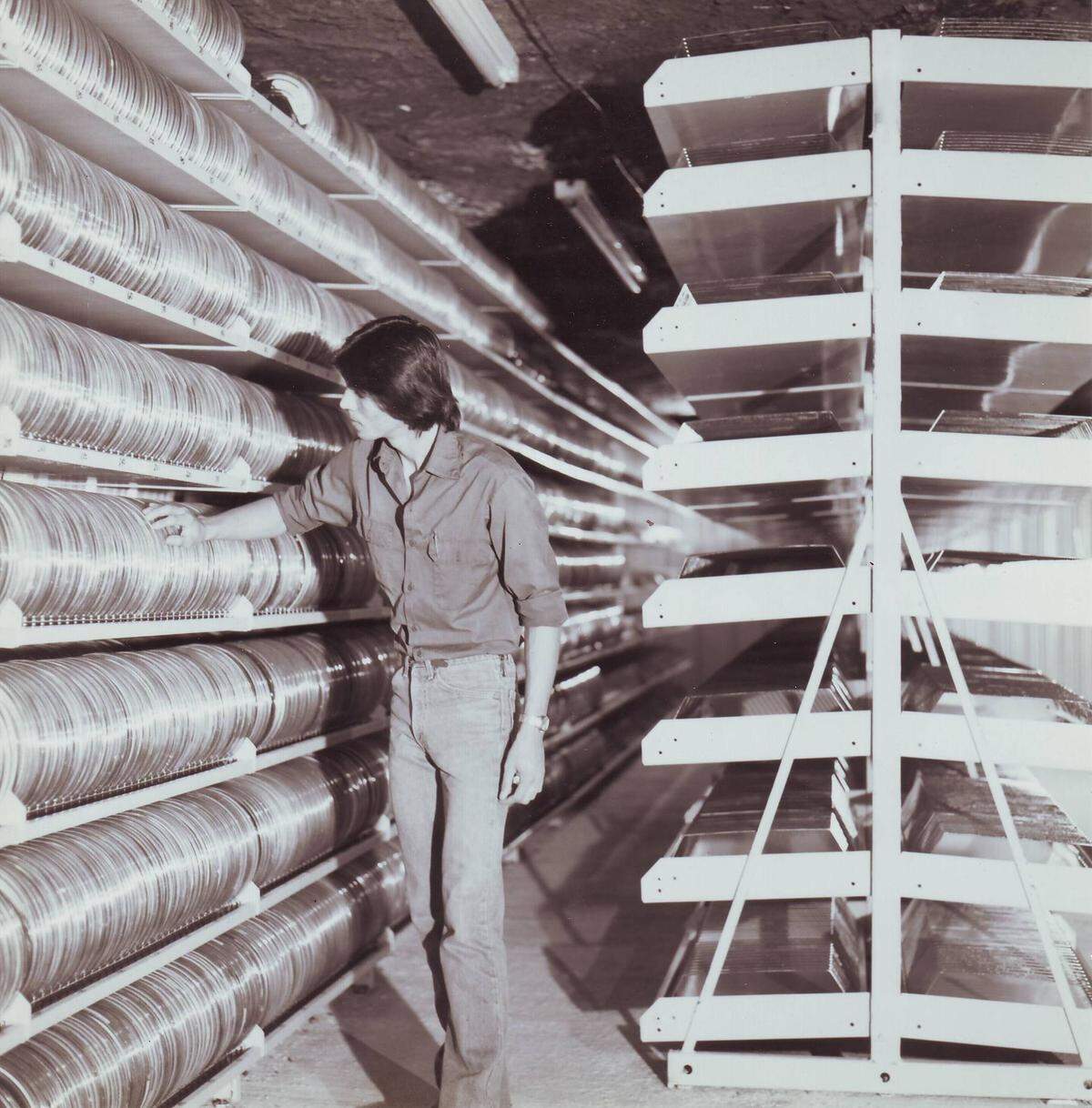
Reisig said he thinks about places across Kansas and around the country, such as the Smithsonian, the Library of Congress and universities, that have untold amounts of deteriorating footage.
“It’s heartbreaking.”
As an example, he said go to eBay and put in “16 millimeter home movie.” All kinds of interesting footage turns up.
An early 1960s Italian wedding. Chicago railroad footage from the 1940s. Pre-World War II footage from Washington, D.C. A black-and-white National Highway Traffic Safety Administration film. Even 1926 flappers caught dancing and 1928 footage of Model T cars on a train.
“There may be a different view of history that we get by looking through that material at some point in life,” Reisig said. “You know, we’re not getting just the news stations’ view. We’re getting all of these other personal views of what this looked like, or what it was like, or the ambiance of that place at that time that you can’t get just anywhere. And we’re . . . going to lose it.”
AI versus history
UV&S currently is working with the Kansas Aviation Museum, which has had donated film sitting in its basement for some time.
There’s a B-52 test flight and real life Rosie the Riveters.
“We want to see . . . how good the material is and and if there’s a possibility of us helping them monetize it,” Reisig said. “It could be doing an aviation channel on YouTube, and they get a percentage (of) that aviation channel. . . . You name the platform these days. I mean, people watch.”
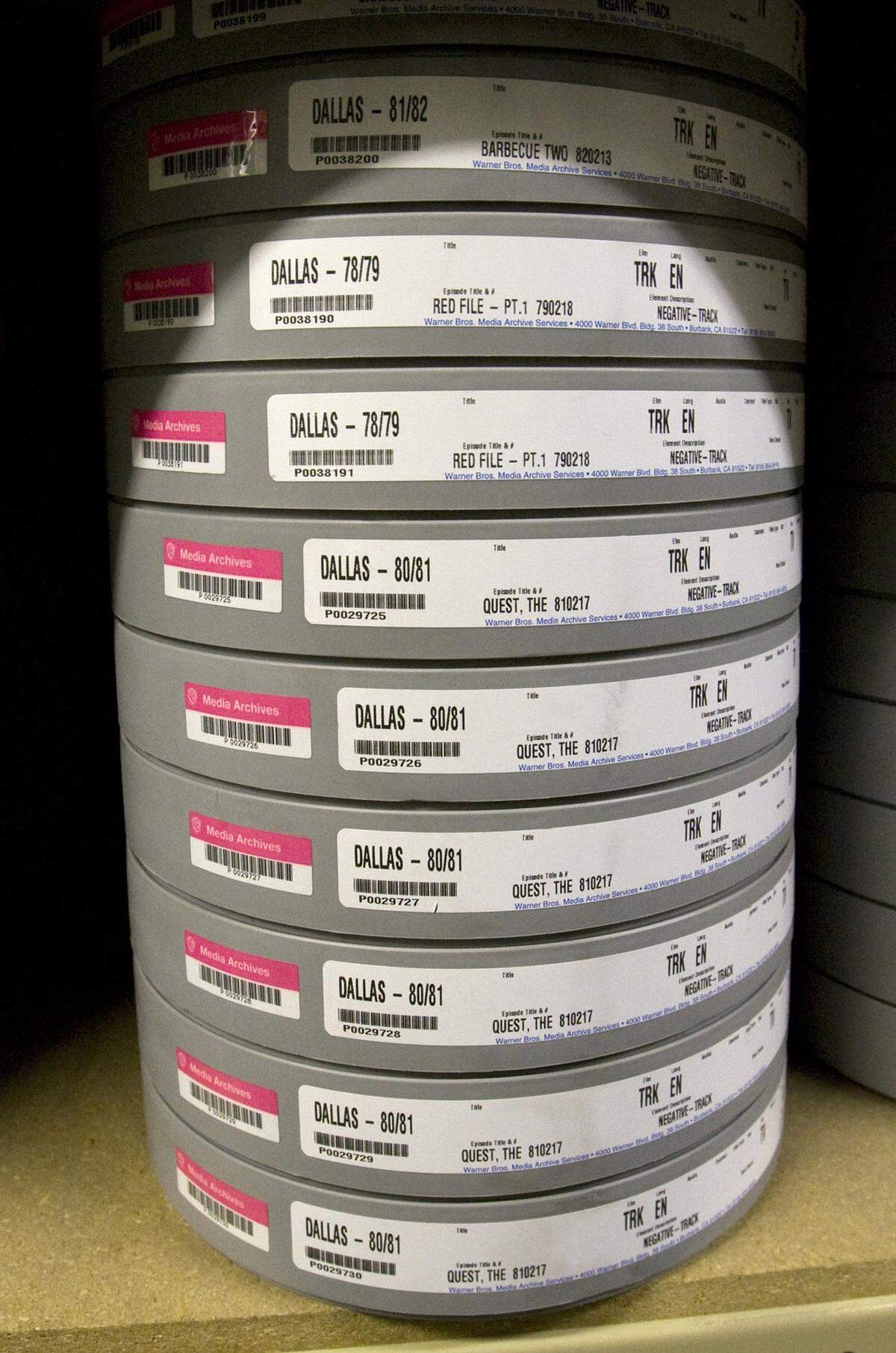
He said it takes some creative thinking, but the material is valuable in a world increasingly ruled by artificial intelligence. Reisig said AI can’t compete with vintage footage.
“AI is only gonna get you so far. . . . I mean, are you gonna ask AI to, you know, build you a film on a B-52 test flight? . . . What’s it gonna give you, right? It’s not going to be anywhere near accurately or historically correct. It’s just not going to be.”
R3Store Studios recently purchased some film from Peru that was set at a couple of different track meets in France and Germany that showed some women in what looked to be the 1950s or ’60s as they were warming up for hurdling.
The women would lie on the ground and one woman would jump over them all, then lie down and let the next woman take a jump in a leap frog sort of warm-up. Odd, sure, but Reisig said “it’s really gold.”
“It’s just looking back into history.”
‘Come on’
Wacky old films can be fun or even educational, but is there an actual use out there for them?
“As a filmmaker, I’ve had to buy stuff like this before for films that I make,” Rhodes said.
UV&S sells footage through www.r3el.com.
“Stock footage is a very economical way of polishing up . . . a film,” Reisig said.
Rhodes said perhaps “you need a period shot from New York City in the 1980s or, you know, Paris in the ’90s or Sydney, Australia, from . . . five years ago,” and there’s a decent chance the company has it.
Outside of films, is there a use?
Rhodes pointed to the success of something as simple as kids watching other kids play video games online.
“I mean, come on.”
He may scoff at that a bit, but he said it’s also one way to monetize footage.
UV&S started in 1959, but in the last decade, it’s particularly ramped up its diversification, including with an events services division that helps clients promote their films at events.
“We’re one of the largest vendors at Cannes Film Festival,” Reisig said.
“We’ll build you out a facility so . . . you can show off your movie and sell your movie,” he said.
The continuing diversification makes sense for UV&S.
“Ours is very unique because of our storage, media and entertainment event services wrapped into the digital services that we do . . . for film and entertainment,” Reisig said.
It’s another reason why monetization of digitization is key.
“If we start thinking kind of out of the box moving forward, how . . . content is king, what can we do with this stuff?” Rhodes said.
“If you can sit around watch kids play video games, you can sit around to watch cool stuff like this.”