
A Wichitan gets the credit — or the blame — for this New York Times crossword
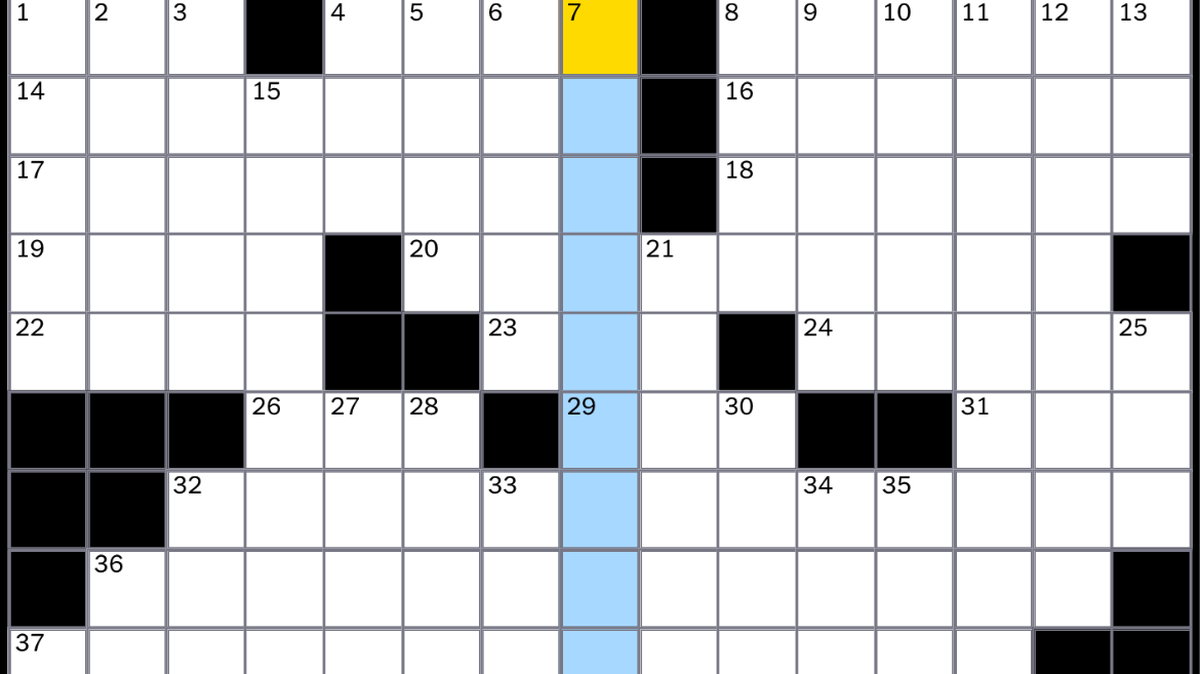
If you’re a crossword guru who enjoyed Saturday’s New York Times puzzle, you’ll probably be delighted to know it’s a Wichitan who created it.
If, however, you’re like a certain English major who did not revel in a Saturday victory (yes, it took me 46 minutes and nine seconds, and that was with cheating), then here’s who to blame:
Rose Conlon, a KMUW health reporter who, somewhat surprisingly, only began playing crosswords during the pandemic when she had more time to kill in the mornings while working from home.
“It was also a good distraction,” Conlon said of all the news at the time, which she said “was like drinking from a fire hose.”
Initially, she began with the physical newspaper and played with a pencil.
Conlon especially likes what she called wordplay-type clues for which crosswords are famous.
“When it comes to trivia, I’m fairly average to below average.”
Not long after beginning to play, Conlon created her first crossword and submitted it to the New York Times, which invites submissions and pays a freelance rate for the ones it accepts.
“I wonder how hard it is to do?” Conlon said she thought.
Turns out, it’s pretty hard, even with software help.
Conlon’s second submission was accepted in 2021.
She then was notified that another crossword she submitted last spring was accepted in the summer. That’s the one that just ran Saturday. The process, obviously, can be a lengthy one.
“You submit the crossword with all of the clues, but the editor changes a good amount of them,” Conlon said.
She said that’s understandable in part since the Times needs to make sure the puzzles conform to its structure and varying levels of difficulty through the week.
Monday is the easiest day, Saturday is the hardest, and Sunday is the longest and has what Conlon judges to be a Wednesday level of difficulty.
Friday and Saturday are Conlon’s favorite days because they don’t have themes. Those days allow for more wordplay, she said.
Unlike mere trivia — names and facts Conlon said she’s not above sometimes having to look up — wordplay is something she tries to get on her own.
“You should have everything you need. . . . It’s just a matter of how hard you’re trying to think about it.”
For instance (though don’t read this paragraph if you’re planning to play her puzzle), Conlon wrote the clue “Big shot performer?” for Saturday’s puzzle. The 15-word answer? “HUMAN CANNONBALL.”
Conlon, a Seattle-area native who moved to Wichita to work at KMUW in July 2022, was unfazed when the Times rejected her first submission.
Similarly, she wasn’t so crazed when her puzzles have been selected that she goes around touting it, either. In fact, she would have preferred not to have a story about her accomplishments but was talked into it by this crossword junkie.
Still, Conlon admitted to having fun getting her puzzles published.
“You also sort of learn other random people in your life that solve the New York Times,” she said. “It’s cool to see, like, how people react to it and things that they notice in your puzzle that maybe you didn’t pay as much attention to.”
Conlon and several of her KMUW colleagues play the Times Mini crossword against each other online daily. It’s only through education reporter Suzanne Perez’s Facebook post that Conlon is getting attention for constructing a Times puzzle.
“I think they think it’s cool,” Conlon said.
They also think it’s cool when they beat her.
“Suzanne always gets excited.”
Local government reporter Celia Hack “is really good.”
Though Conlon said, “I’m still not that good,” she does have some tips for getting better at crosswords.
“Part of it is just knowing . . . the rules for how the clues are written,” she said. “The answer will always be the same part of speech as the clue is.”
That could be plural or past tense, for example.
She said a question mark often means wordplay is afoot.
“Part of it is just there are certain words . . . that show up really commonly in crosswords. You start recognizing those words.”
Like, if a cookie is mentioned, it’s most often an “OREO.” A female jazz singer? “ETTA JAMES.”
Conlon said there’s an effort in the crossword construction community to create clues and answers that aren’t simply geared toward older white men, as crosswords often used to be.
“There’s a lot of effort to sort of diversify that.”
An example of that from Saturday (another spoiler alert) is Conlon’s clue “Time to celebrate female friendship, in a neologism.” The answer: “GALENTINE’S DAY.”
There’s an entire New York Times column called “Wordplay, the Crossword Column,” devoted to analyzing each day’s puzzle. While the column usually is complimentary to its creator, Conlon particularly gets a lot of love for how she evokes writer Dorothy Parker and poet Ogden Nash.
She also gets points for introducing a whole lot of words and phrases that haven’t been in Times puzzles previously, such as (spoiler!) “LAP DANCE” for “Club purchase that comes with rules of etiquette” and for tricky clues such as “Attack words that might be spoken as a compliment” for “I HATE YOU.”
Conlon encourages people to take up playing if they’ve been considering it.
“I would say go for it. It’s definitely fun.”
One final hint, though: You might not want to start with hers.