
For 51 years, this CEO has been ‘doing what he loved best, and that was helping people’
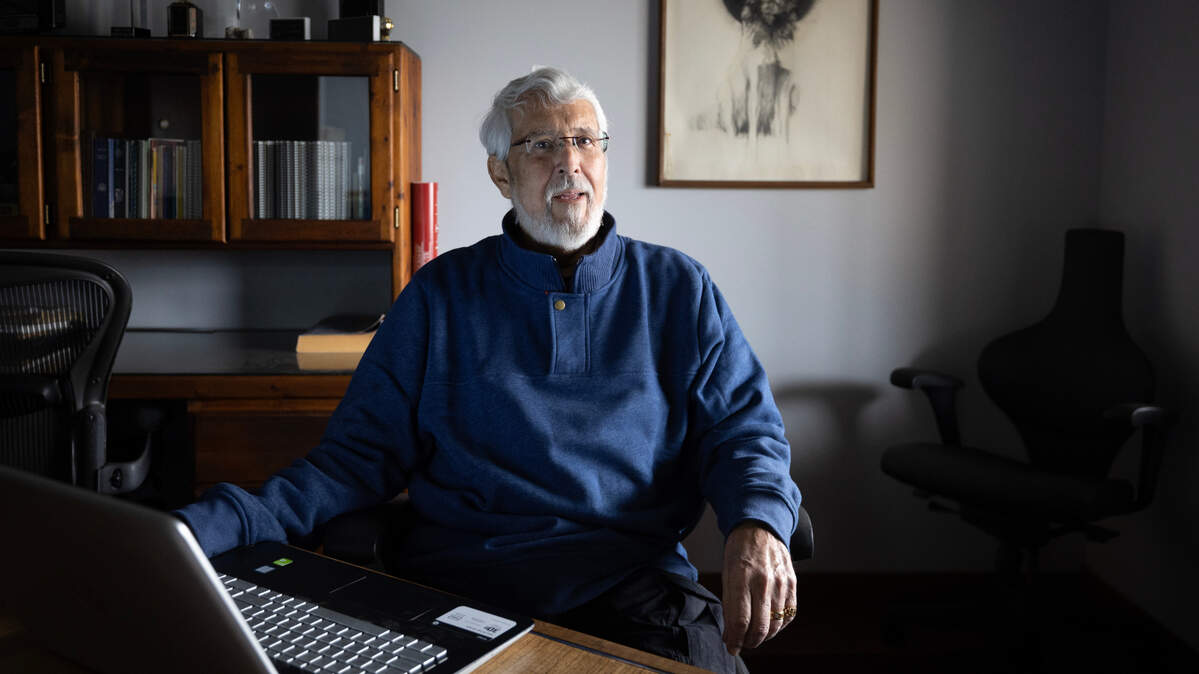
Half a century ago, a 28-year-old Boeing worker saw what he thought might be an opportunity to do something interesting rather than continue doing a repetitive job, so he went for a career at the newly formed Service, Education, and Re-Training Corp. of Kansas.
“I was the very first employee,” Richard Lopez said.
Fifty one years later, he’s still leading the nonprofit — though that will change later this year — which is a rather remarkable amount of time to be CEO of anything.
SER is a nonprofit grantee of the U.S. Department of Labor that provides employment and training services to migrant and seasonal farm workers in Kansas.
“Everything would depend on how we did developing that contract,” Lopez said. “It was a challenge.”
He had a business degree but had been working in electronics, so Lopez said he jumped at the chance for a change.
“Give me a challenge. I love that.”
The challenges have continued through the decades since the contract has to be renewed at least every four years. That may be why Lopez is still working at 79, an age where many others have long since retired.
“He was able to lock in with the Department of Labor to begin getting grants,” said former longtime state Sen. Paul Feleciano.
When he was in the Legislature, Feleciano said Lopez asked him for help with migrant workers who took temporary jobs and then “had nothing to turn to” when those jobs were over.
“I was fascinated by what he was doing,” said Feleciano, who today is SER’s board chairman.
“The vision of Richard . . . just impressed the hell out of me.”
Though a mainstay in the Wichita community, as are other SER branches across the country, the nonprofit is not one of the better-known ones around the city or state.
Still, it has thrived thanks to Lopez, board members said.
“Richard had the tenacity to not be a quitter,” Feleciano said.
Without Lopez, he said, “I think it would have failed probably 20, 30 years ago.”
‘A fighting chance’
When it was established in 1974, the national SER headquarters was in Los Angeles, and the nonprofit set up local SER offices in communities with Hispanic populations.
Feleciano said Congress passed the National Farmworker Jobs Program “in response to the chronic seasonal unemployment . . . and underemployment as far as our agricultural workers.”
“It gave these people a fighting chance of being successful in the United States, and it has worked magnificently.”
However, Lopez said the majority of the people SER has served through the years in Kansas have been white males in rural areas.
One of his first jobs was to make contact with legislative bodies locally and nationally “to start selling the concept of SER.”
“We’re here serving their constituents,” Lopez said.
Through the years, SER began serving more women and intrastate and interstate migrants.
Both sets of Lopez’s grandparents are from Mexico, but he said he did not grow up speaking Spanish, nor is he fluent now.
“I get by.”
SER regularly trains 350 people at a time. That means through its time in Kansas, the nonprofit has helped tens of thousands of people.
During what Lopez called fat years for Congress and the Department of Labor, there’s more money for training.
That includes teaching farm workers to be welders, ranch managers, electricians, windmill workers and drone operators through programs at junior and technical colleges.
“We recruit those individuals that really aren’t aware that they can pursue those careers,” Lopez said.
“Our job is to go out and recruit them and educate them about future careers for them other than working on the farm.”
Constantly updated rules and regulations and the need to continually earn a new contract are the regular challenges Lopez faces.
“It’s always changing. That’s what’s kept me here.”
Through the years, Feleciano said that Lopez has led SER to help students with scholarships, too. Together, they also worked on housing shortages for the people SER assists as well.
Lopez also has helped provide citizenship courses and English as a second language classes for those who need it.
“Right now, the funding environment is not that great for nonprofits to do that work,” Lopez said. “That doesn’t mean the need’s not there in the community.”
That’s when he has to seek alternative grants, he said.
“We’re all the time looking for opportunities.”
‘Blew my mind’
SER has had only two Wichita offices in its existence.
The first was at 21st and Market near a rendering plant, and the smell was an issue, Feleciano said. He told Lopez he had to move.
“It takes money, Paul.”
So Lopez put together a steering committee to raise money, and U.S. Sen. Bob Dole helped him get a $1 million grant for a new facility, “which to me absolutely blew my mind,” Feleciano said.
SER moved to 1020 N. Main St., where it remains today.
There are four other SER offices around the state, which Feleciano said was forward-thinking of Lopez to establish.
Most recently, Feleciano said Lopez landed another four-year contract with the Department of Labor for about $1.4 million.
“It allows us to continue our mission,” Feleciano said.
Soon, though, Lopez will not be the one to lead the mission any longer. He’s retiring and training his replacement, Joel Leiva.
“It’s about time,” Lopez said.
He said he still enjoys his work, though.
“I’m not so old that I’m not able to.”
Feleciano said Lopez will remain as a consultant.
Lopez said he never would have predicted he’d remain with SER for more than half a century.
“I had no idea whatsoever,” he said. “I’d have said, ‘You’re crazy.’ ”
Board member Ricardo Juarez said Lopez has built the kind of organization that now can succeed without him.
“Because he’s been steadfast as the CEO, he’s been able to find the right sort of individuals to lead the offices that we have throughout Kansas.”
Juarez said that will help with the transition when the time comes later this year.
“We’re in a good position.”
He and Feleciano both want to see Lopez lauded for what he’s accomplished over five decades.
As Feleciano put it, he was “doing what he loved best, and that was helping people.”