
New WSU institute could help ‘countless individuals in our community and state’

Sometimes traditional health care isn’t enough to help people, but new technologies can make a difference, and Wichita State University wants to capitalize on that.
That’s why the school has started the new Institute for Rehabilitation Medicine and Assistive Technology.
“We have a pretty unique situation here,” said Gregory Hand, dean of the College of Health Professions.
In addition to having scientists, engineers and clinicians, WSU has fabrication and manufacturing on campus that a lot of schools do not.
“This is going to accelerate solutions to a lot of problems in rehabilitative medicine,” Hand said.
IRMAT is a collaborative effort to address disease and disabilities through research and technology, which can help people with physical and cognitive disabilities.
Think of things such as artificial limbs or other devices that can help people adapt to disabilities, including strokes and paralysis, in their daily lives.
“It will give us an opportunity to accelerate the development of new assistive technologies,” Hand said. “And it will allow Kansans to have an opportunity to participate in clinical trials of these new assistive devices.”
Nationally, Kansans — especially those in rural areas — “are woefully underrepresented in clinical trials,” Hand said.
With its partners and WSU’s own clinics, he said, “We can do all this in house, which would save tens of thousands of dollars.”
In addition to the College of Engineering and WSU’s industry and defense programs, initial partners also include Ascension Via Christi’s Rehabilitation Hospital, Heartspring’s Outpatient Services and the Robert J. Dole VA Medical Center.
“This partnership exemplifies how collaboration with industry leaders can drive innovation and enhance patient care,” said Laurie Labarca, president for Ascension Via Christi St. Teresa and Ascension Via Christi Rehabilitation Hospital, in a news release.
“We are thrilled to be part of this effort, ultimately transforming the way we address complex medical challenges.”
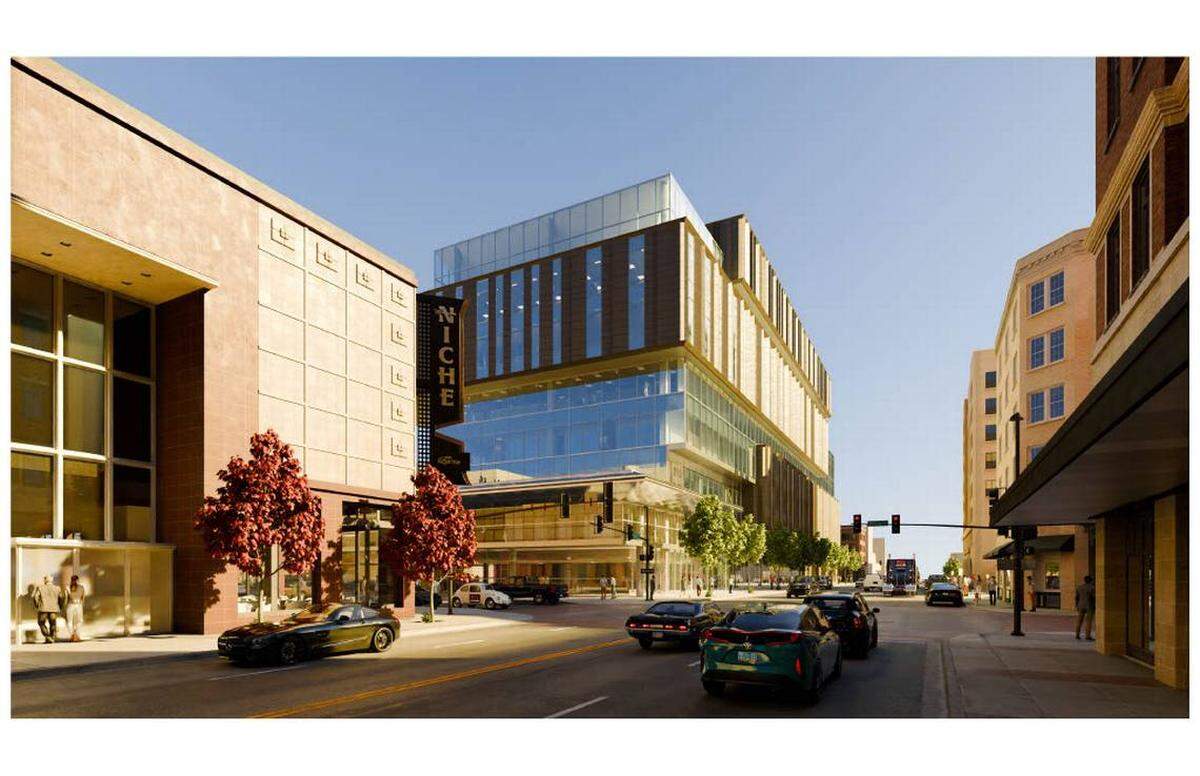
The institute has started on campus now. By 2027, IRMAT will be located at the new Wichita Biomedical Campus in downtown Wichita, which is under construction now at Broadway and William. It’s a partnership with WSU and the University of Kansas Medical Center.
Hand said the assistive technology market is growing and should be a more than $30 billion industry worldwide within five or six years.
Part of the growth is due to an aging population, but it also comes from the drive to help people with accessibility issues.
Also, the health-care industry is increasingly allowing reimbursement that will assist with clinical trials and other advancements.
Hand said the two key growth areas are robotics, such as artificial limbs, and external sensors. Those can be small, hidden sensors or entire exoskeletons.
“I call them Iron Man suits,” Hand said.
They can help people who have been weakened through strokes or other issues.
“It can give you back your strength,” Hand said. “We’ve got people walking on crutches who are paralyzed from the waist down.”
He said IRMAT will be life-changing for “people who have burned through the health care system and can’t find solutions to their problems.”
Hand said the limitation, until now, has been combining the clinical populations with the fabricators, but IRMAT will change that.
As his colleague Pierre Harter, who is associate vice president for research and industry engagement, said in the release:
“The institute has the potential to impact the well-being of countless individuals in our community and state.”
This story was originally published November 20, 2024 at 12:16 PM.