
‘I always called him my dean, but so did 50,000 other people’: Remembering James Rhatigan
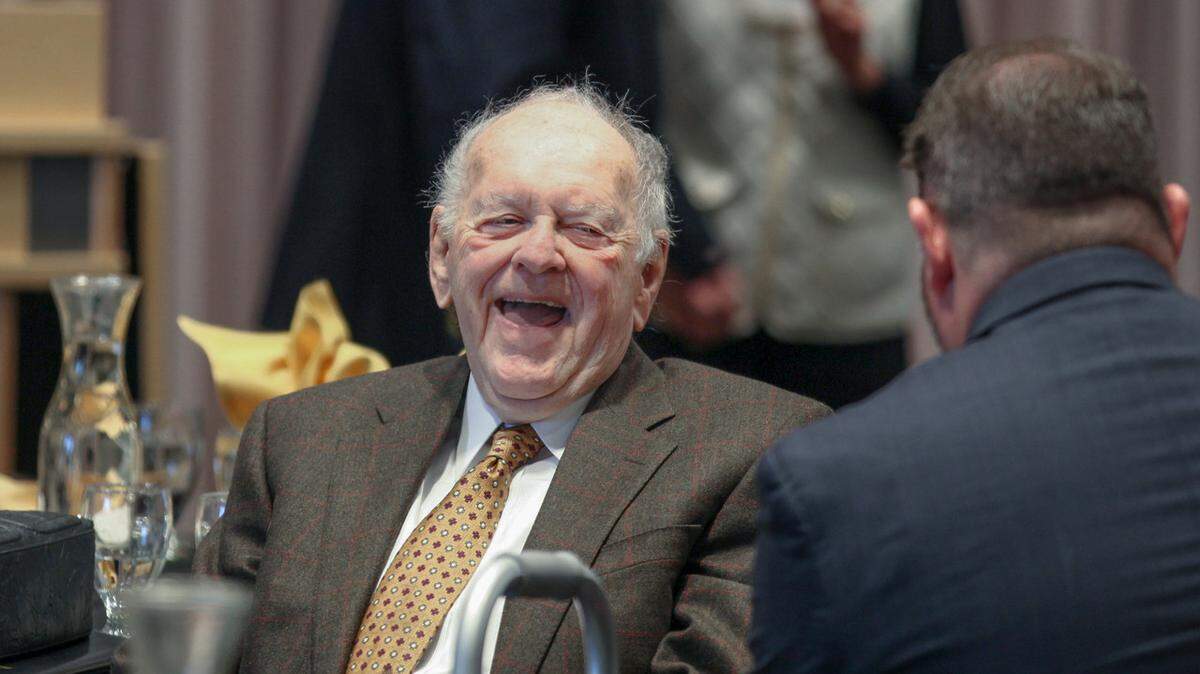
Viola Miller wasn’t feeling entirely comfortable about her daughter, Sheryl Wohlford, leaving for college in 1978, but then Wichita State University vice president for student affairs James Rhatigan reassured her.
“He met my mom, and he said, ‘We pick up where you left off,’ and she immediately fell in love with that man,” Wohlford said.
“It was just the most endearing thing to tell a mother who’s leaving her first child off at college, right?”
Wohlford, too, ended up cherishing him.
“I always called him my dean, but so did 50,000 other people. . . . All over the country, he’s beloved.”
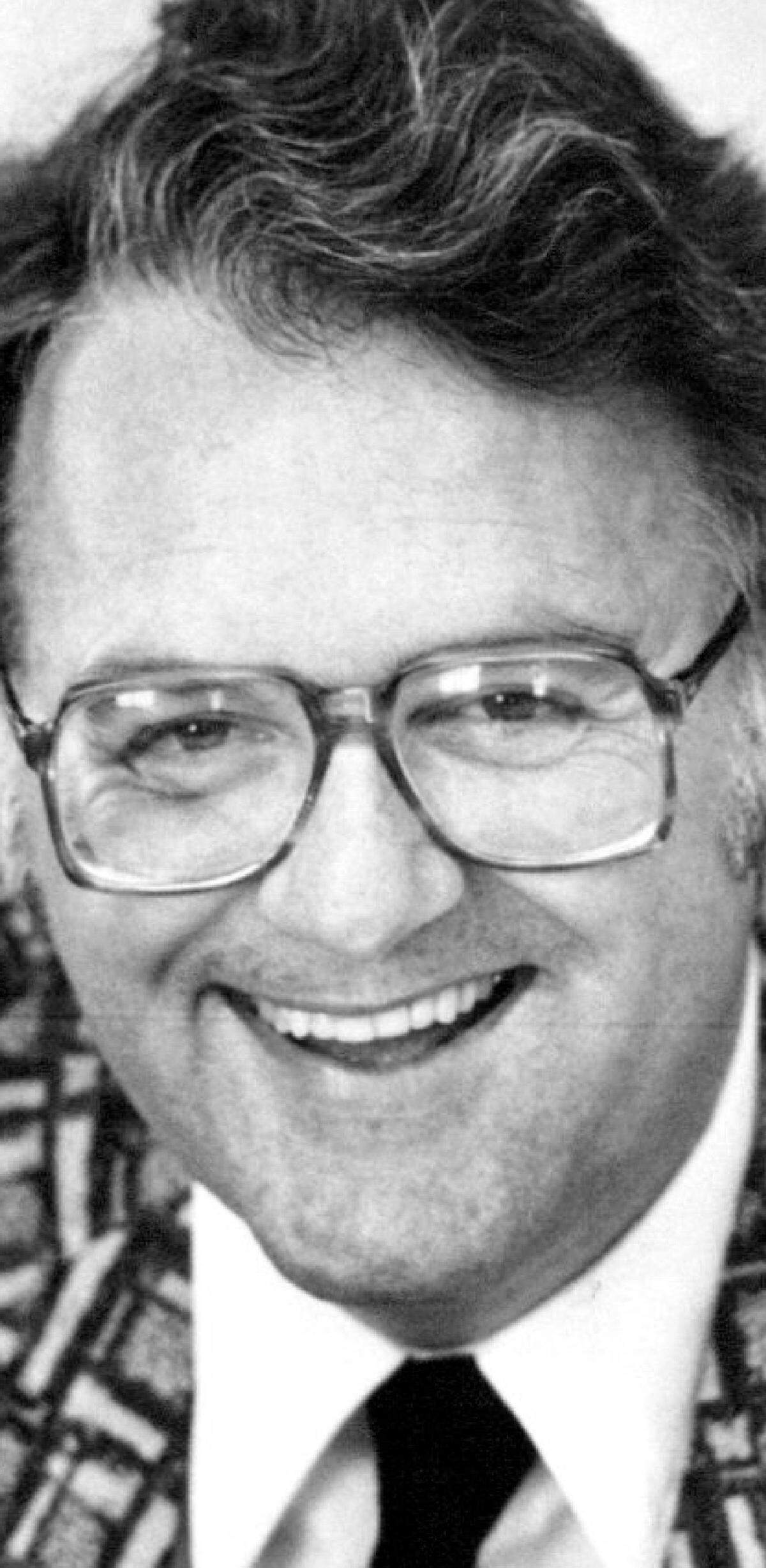
The immensely popular Rhatigan, best known as Jim, died Sunday at age 89.
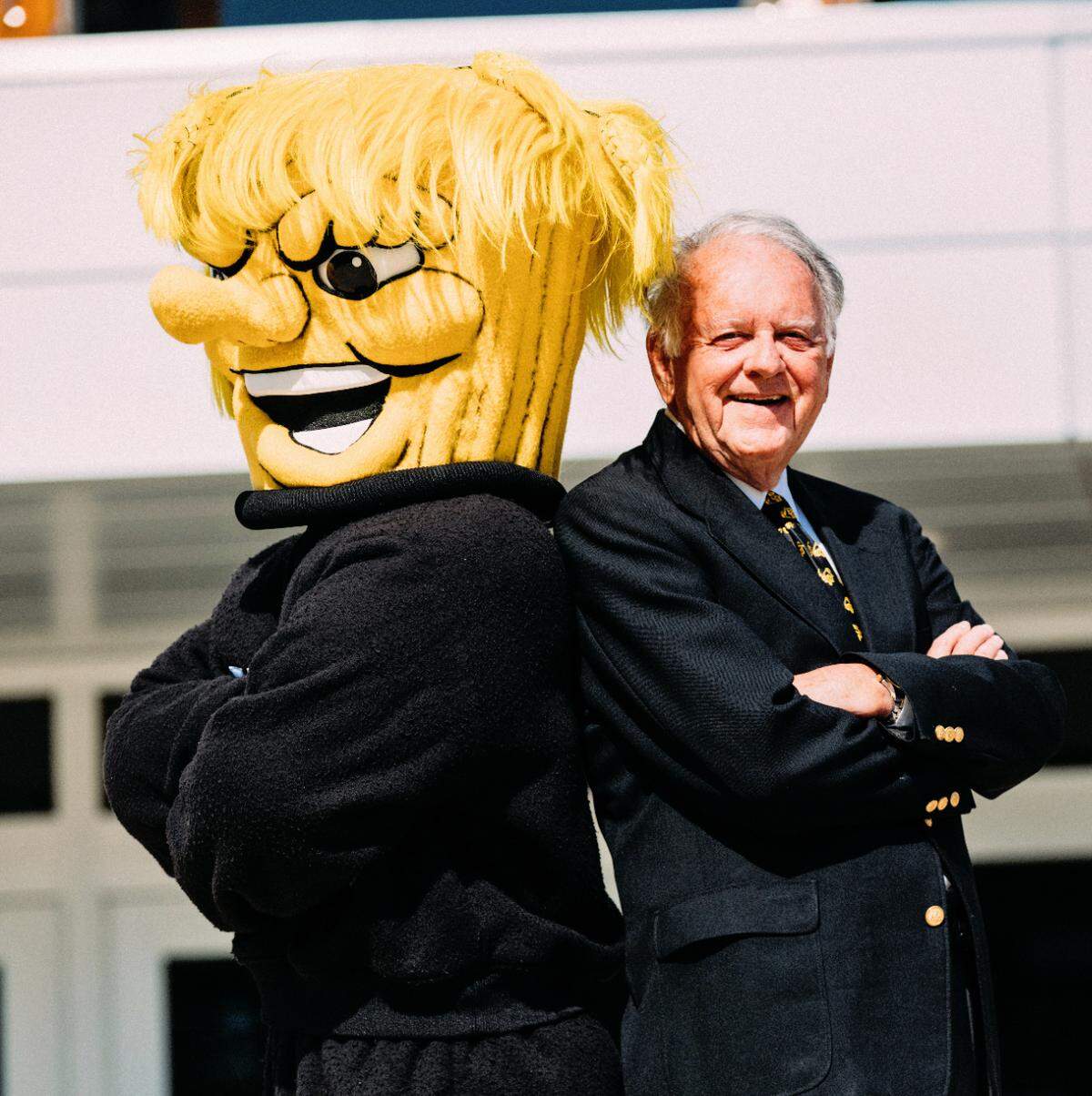
He joined the university at age 30 in 1965, becoming the school’s first dean of students and the youngest one in the country. He eventually became senior vice president under President Don Beggs.
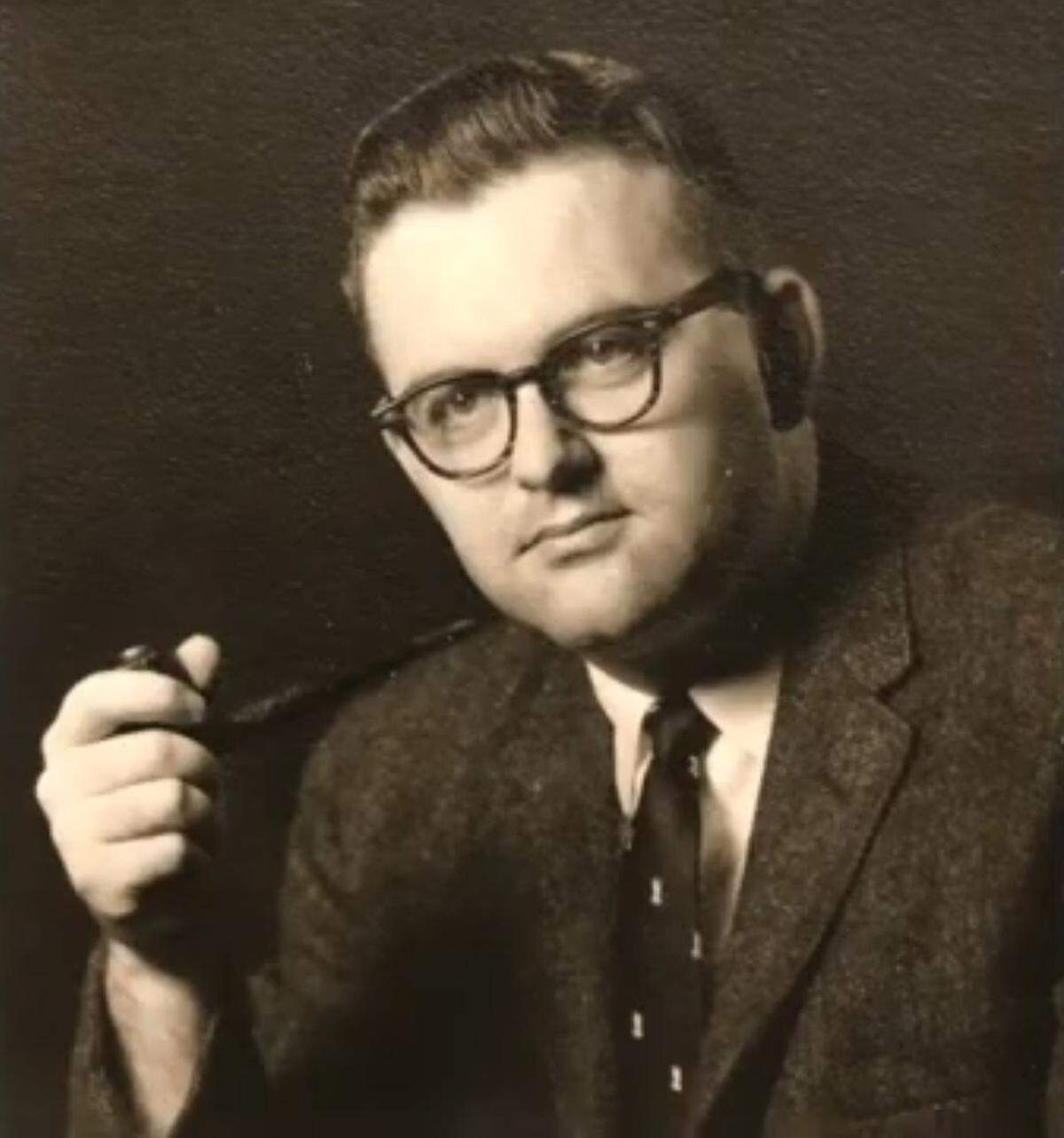
Rhatigan was “the heart of Wichita State University for more than 35 years,” wrote Eagle editorial writer L. Kelly upon his retirement in 2002.
Rather unusually, the Campus Activities Center was renamed the Rhatigan Student Center in 1997, well before his retirement or death, as is more customary for naming a building after someone.
Rhatigan, who had congestive heart failure, regularly went to his campus office after retiring, including as recently as two weeks ago.
Ted Ayres, vice president and general counsel emeritus at WSU, saw him a couple of times in the last month.
“He was physically frail but sharp as a tack. . . . He was cracking jokes. He was just Jim.”
Teachable moments
Christine Schneikart-Luebbe had just accepted a job as WSU’s director of admissions in 1994 when Rhatigan called to congratulate her.
In a gravely voice, he acknowledged a perceived enrollment issue at the school but said he heard she had the skill set to turn things around.
“Really, all you have to do is increase enrollment by one because then we can say enrollment is up.”
Schneikart-Luebbe was confused but soon came to recognize and appreciate Rhatigan’s wit and eternal optimism.
“He had just the perfect blend of love and empathy but also (had a) desire to provide teachable moments for students.”
Sometimes, those moments were for colleagues like Ayres, who said he’ll never forget the time Rhatigan gently schooled him at a president’s cabinet meeting.
After Ayres said something along the lines of students being the school’s customers or consumers, Rhatigan corrected him.
“Jim just looked at me and said, ‘No. They are the essence of what we’re all about, and we should never forget that.’
“I realized I’d been politely put in my place and took that as a learning opportunity for me in my role,” Ayres said. “His whole style was polite, gentle, but purposeful.”
Elizabeth King, foundation and alumni engagement president emerita, said she’d often hear about students facing suspension or expulsion for doing something wrong, but Rhatigan always thought they were worthy of redemption.
“Jim saw something in them,” she said. “Every ounce of his being was focused on the needs of the students at Wichita State.”
Schneikart-Luebbe remembers Rhatigan’s wife, Beverly, talking about how his empathy was off the charts.
She once said to her husband, “If I told you somebody was an ax murderer, you’d say, ‘Yeah, but what else do we need to know about them?’ ”
The peacemaker
Peacekeeping probably wasn’t listed on Rhatigan’s job description, but that often became his role.
Mike James was a student at WSU from 1966 to 1971, which he said was a time of turmoil for a variety of reasons: Vietnam, racial issues and a plane crash that killed 14 WSU football players, 14 staff and boosters and three crew members.
Rhatigan’s level-headed thoughtfulness helped the school and its students through it all, James said.
A case in point was Ron Washington, James’ basketball teammate, “who was very militant.”
James said Washington was antagonistic toward all authority, including Rhatigan, who never lost his composure.
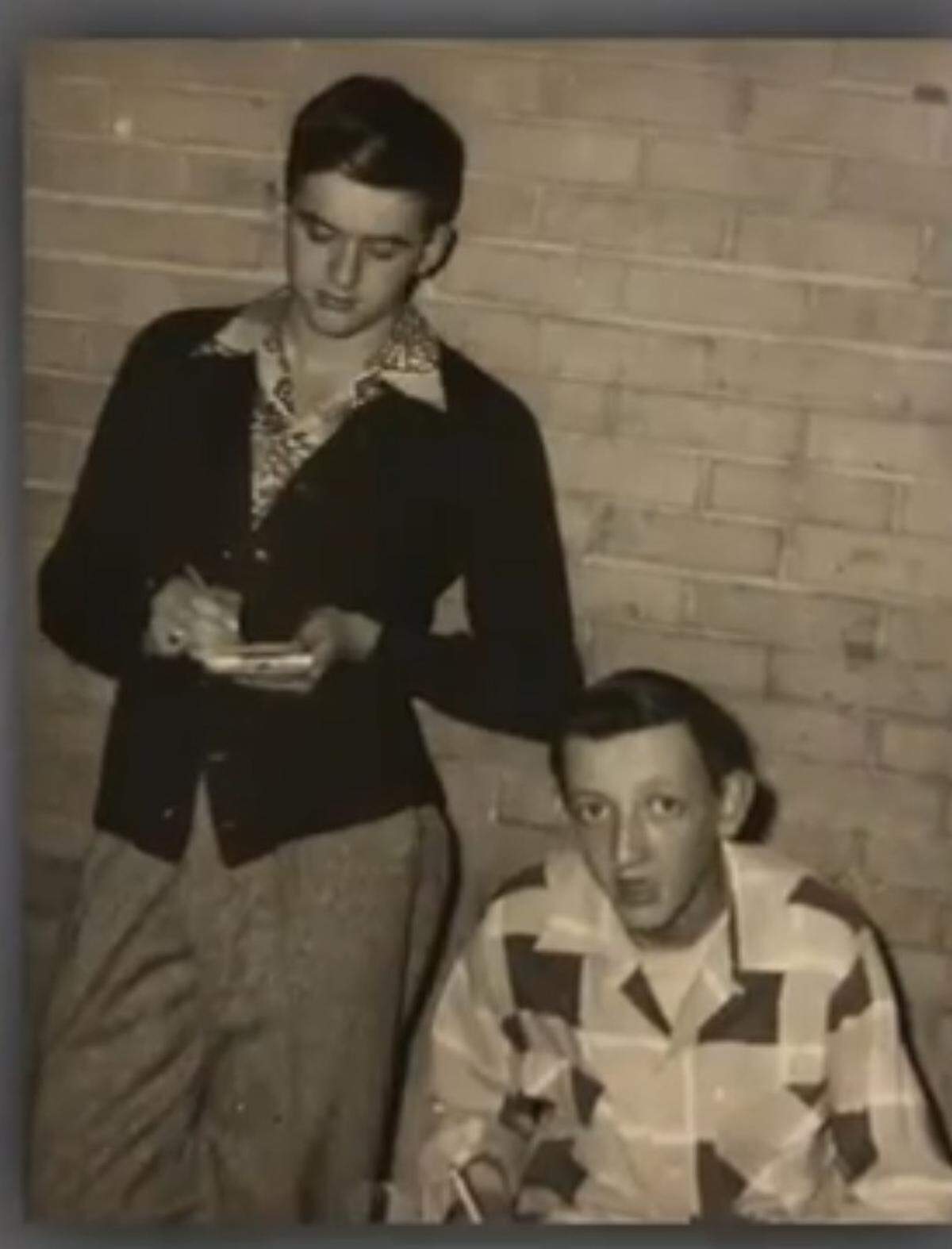
Years later, before Washington died, he made it known that he wanted Rhatigan to speak at his funeral, James said.
“Which is just amazing considering . . . the gap that you would have thought existed between the two of them.”
Wohlford remembers two student senators who liked to filibuster until midnight or beyond during student government meetings, all of which Rhatigan attended.
“If things like that didn’t test his patience, I don’t know what would.”
Rhatigan would sit quietly in a corner, often with a pipe in his mouth, speaking up only occasionally and always with a calming effect, said retired physician Debbie Haynes, a former student body president.
“He would interject with a thought or comment or a question. You know, ‘Have you thought about it this way?’ ”
Though Rhatigan didn’t officially work for the school’s foundation until his later years, Wohlford said he likely was smart enough to sit through a lot of antics knowing, “Some day that kid’s going to be a donor.”
Easing the pain
James was student body president his final year and worked closely with Rhatigan, especially following the October 1970 plane crash.
“He was mourning like everyone but flew into action doing things that would ease the pain.”
King and others said he had a special bond with the families of those lost or injured.
“Jim in his compassionate way just continually reached out to the families,” King said.
When a similar plane accident occurred with Marshall University in West Virginia about a month after the WSU crash, Rhatigan was immediately on the phone to student affairs leaders at the school to help them navigate the situation. His help didn’t end there.
“He became somebody that others could rely upon through their institutional tragedies,” King said.
For as much of an impact as Rhatigan had on campus, he also was impactful on a national level, particularly through the 14,000-member National Association of Student Personnel Administrators, where he once was president.
In her three decades of attending association meetings, Schneikart-Luebbe said she never went to one where Rhatigan wasn’t mentioned from the podium at least once, if not multiple times.
Attending with him “was like walking around with a rock star.”
“He was revered.”
‘I really like this one’
When Don Beggs was interviewing to be president at WSU in 1998, his wife, Shirley, didn’t want to go to a candidate forum unless he promised not to point her out.
So she was sitting somewhat incognito in the audience next to a lovely woman, as she put it.
“She had said to me, ‘I really like this one,’ ” as she pointed to Beggs.
“Well, so do I,” Shirley Beggs replied.
They chatted some more, and eventually Don Beggs broke his promise and outed his wife.
Panicked, the woman next to Shirley Beggs “looks at me like, ‘What have I said to her?’ ”
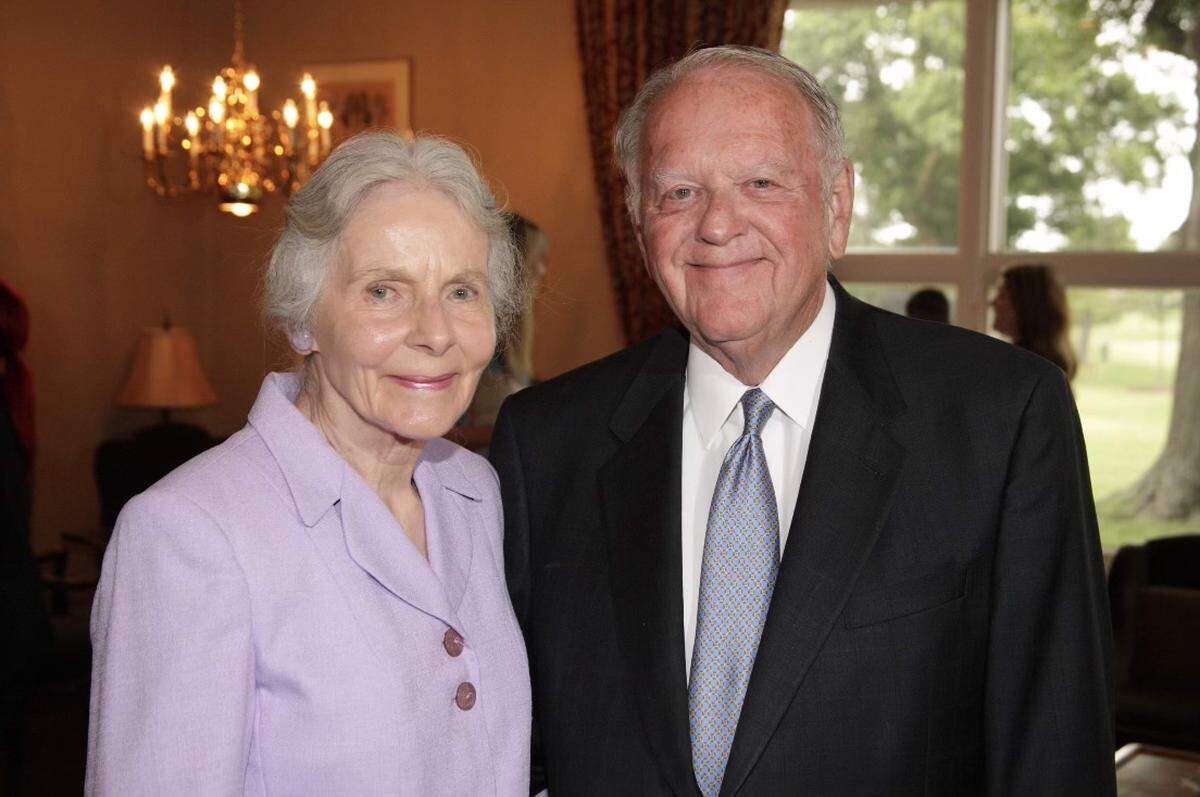
It was Beverly Rhatigan, and it was the start of a close friendship between the couples.
“Jim Rhatigan, like he did with everyone else, just took us under his wing and made sure we knew everything about everyone,” Shirley Beggs said.

She said he made sure they knew who was who and what was what so they didn’t make mistakes.
“He just always made sure that we were protected, and we knew what was going on.”
Don Beggs said he knew Rhatigan already was an established name in student affairs, and he was a bit concerned if he’d be able to work with him.
“I had to have people that work as a team,” he said.
Beggs decided to make no personnel changes for six months.
“It gave me a chance to see if he was as good as his national reputation.”
He was.
Early on, Shirley Beggs said Rhatigan took her and her husband to Maple Grove Cemetery on Hillside to show them the graves of Nathan Morrison, the president who helped save the school when finances almost closed it, and the Isely siblings, who donated money to help save the school.
“He wanted to be sure we knew the story.”
Zest for life
In addition to his unwavering devotion to students and WSU, Rhatigan was known for three things: his humor, his note writing and his unending well of quips and sayings he’d regularly employ.
Oh, and the man liked to eat.
His zest for food and Diet Cokes was legendary. Some colleagues dubbed him Rambo for the way he attacked a table of hors d’oeuvres at a function once, and the name stuck.
“He would always cheat on his diet at lunch because Beverly wouldn’t know,” King said.
She said Rhatigan had “this crazy, wicked sense of humor.”

It’s hard to relate that humor, not because of the subject matter but because Rhatigan’s tales often were rather lengthy.
“He was a master storyteller,” King said.
He was good at one-liners, too.
“Humor was very important to Jim,” Ayres said.
The two used to play in a monthly poker game with some other men.
Once, they had a TV on while playing, and a commercial for Viagra came on. It advised that if someone taking the medicine has a certain condition that lasts more than four hours, he should call a doctor.
“The doctor?” Rhatigan deadpanned. “Hell, I’m going to call The Eagle.”
Mike James remembers once telling Rhatigan he might pursue basketball for a career.
“You better get a lot better jump shot,” Rhatigan advised.
“He had a very wry sense of humor,” James said.
Last year, Schneikart-Luebbe used Facebook to let friends know Rhatigan had fallen and broken his hip but that his funny bone was still intact.
“James J. Rhatigan to EMS — How come I don’t hear the siren?!
“EMS — Sir, this is not an emergency.
“Jim Rhatigan — I am not paying full price until I hear a siren.
“EMS — turns on the siren.”
What was that saying?
Then there were the adages that Rhatigan loved to impart.
Schneikart-Luebbe remembered: “Never do anything wrong on purpose,” and Wohlford recollected: “I believe any thought can change a day.”
Ayres liked one of Rhatigan’s best-known sayings: “Never underestimate the value of an ordinary day.”
“There’s a lot to that,” Ayres said.
Regardless of what he said, Rhatigan made a difference in people’s days.
Haynes, the physician, said her sister, Lori Morgan, remarked the other day that every time she visited with Rhatigan, she left feeling better.
“He just had a way of doing that with everybody,” Haynes said.
Rhatigan’s own mantra was about the small wins in life.
That could be a kind word or a thoughtful note.
He sent at least three if not four a day for decades.

“He never called it a day that he did not take the time to write a note of encouragement and support to somebody,” King said.
Many people have saved Rhatigan’s notes. Tammy Allen, who is the former associate vice president of marketing at WSU and counted Rhatigan as a mentor, is one of them.
“When Jim was ill a year or so ago, I mailed him a note in which I quoted his advice to me on handwritten notes: ‘Keep them short and sincere.’ ”
Rhatigan, of course, wrote back, and Allen pinned his note to her bulletin board.
Ayres said Rhatigan moved him to start writing regular notes, too.
Same with L. Kelly, the former Eagle editorial writer, though she said she can manage only Facebook messages rather than the handwritten kind.
Rhatigan said his rules for notes were they had to be original, they had to be earned, and they had to be brief, so it shouldn’t take more than 20 minutes a day.
“And you would reach 1,000 people in a year,” he said. “You would reach 10,000 people in a decade, and you would never spend more than 20 minutes doing it.”
The last word
Small wins may not be hugely consequential on their own, Rhatigan said, but a lifetime of them mean something.
For the man who was known as a great communicator, it’s perhaps fitting to allow him to have the last word in his own obituary.
In a free-flowing, unpublished interview with The Eagle last year, Rhatigan shared his philosophies for what he called the great mosaic of civilization and how important it is to think of others.
“Everyday life is hallowed, and each of us is responsible for the bit of existence that God has entrusted to our care. We do what we can from where we are.”
He said Mother Teresa may have been a worldwide celebrity, “but her greatness was helping day to day.”
“It isn’t the world you conquer but the small wins you achieve.”
People who don’t practice small wins, Rhatigan said, are the people who shake your hand but look beyond you to see who they need to meet next. Or they ask, “What’s the advantage to me to be nice to you?”
“Kindness in my view is one of the most underestimated emotions in our arsenal,” Rhatigan said.
He said kindness may create joy or at least gratitude.
There may not be hope for all people, “but that doesn’t mean we can’t do anything.”
Rhatigan may be gone — and countless people have said the world will be a lesser place without him — but his legacy likely will live on with all the people he inspired to create their own small wins.
As he said last year, “If we all did that, we’d have a better world.”
Rhatigan’s memorial service will be held at 1 p.m. Saturday at the University Congregational Church with a reception following from 2:30 to 4 p.m. at the Rhatigan Student Center.
Memorials may be made to University Congregational Church, where Rhatigan and his wife, Beverly, were charter members, and the Rhatigan Emergency Fund at WSU. The Rhatigans established the fund in the 1960s to help students in crisis.
This story was originally published October 29, 2024 at 11:33 AM.