Of more than 2 million civilian federal workers, this Wichitan was named one of the three best
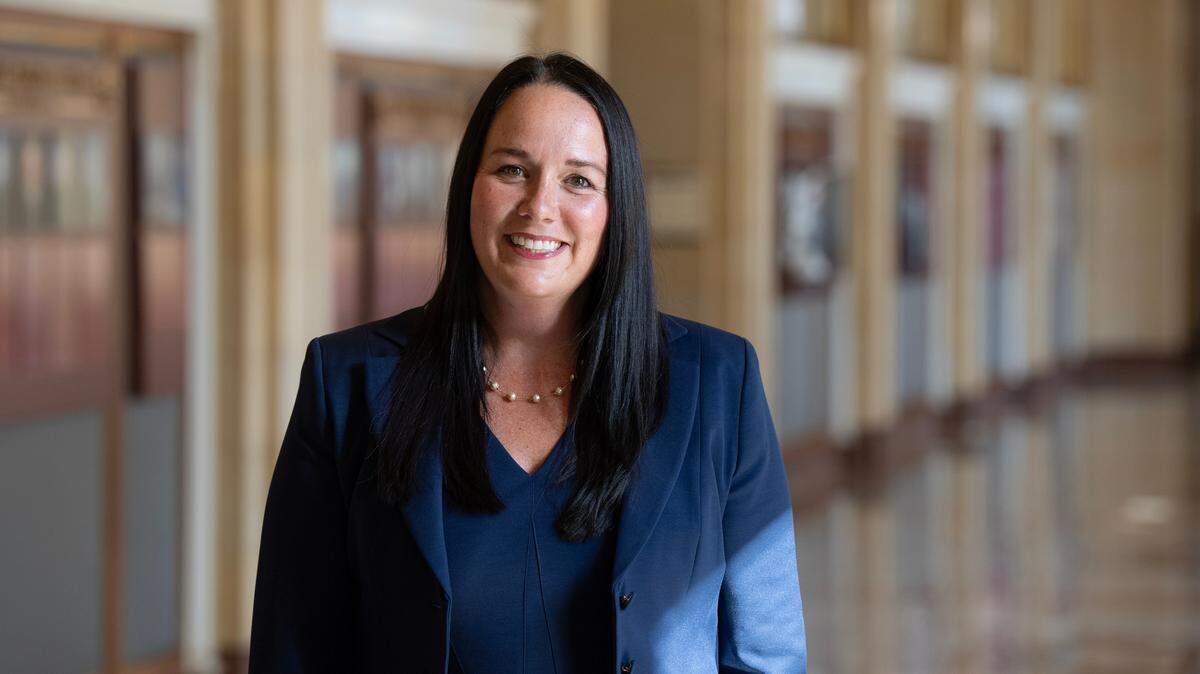
For years, Shannon Rebolledo has been identified by the well-known people in her family.
She’s been called “Roz’s daughter” in reference to her mother, Roz Hutchinson, the outspoken former Ascension Via Christi spokeswoman and one-time journalist.
Then there’s “Bruce’s niece,” a nod to her uncle, Wichita’s equally frank and omnipresent businessman Bruce Rowley.
Also, there’s “Juan’s wife,” because she’s married to Wichita Police Department public information officer Juan Rebolledo.
Now, though, perhaps they all should be known as Shannon Rebolledo’s relatives instead, because the soft spoken, measured government worker has the distinction of being named one of three federal employees of the year for 2024.
“I like it,” said Rebolledo, laughing about how her relatives should be defined by her now.
She won the award — out of more than a couple million civilian workers — for saving children who were being exploited in meatpacking plants.
Rebolledo never expected to work for the federal government. As with most things in life, she got there by a circuitous route.
For a long time, all Rebolledo wanted to do was play basketball. She was on the varsity team at Kapaun Mount Carmel and then on scholarship to the University of St. Mary in Leavenworth for one year before getting injured.
Rebolledo transferred to Wichita State University with the goal of becoming a teacher so she could coach basketball.
In high school, she especially liked her history teacher, Danny Adelhardt, and Spanish teacher, the late Sue Shah, so she figured she’d probably teach one of those subjects.
At WSU, Rebolledo said, “I just found a home in the Spanish department there.”
After getting a Spanish degree and completing a transition to teaching program, she went on to get a master’s degree in Spanish literature while also teaching at Bishop Carroll High School and serving as a graduate teaching assistant.
“I figured out pretty quickly I didn’t want to teach high school.”
While getting her PhD at Texas Tech, a few things started to change her course.
One was Rebolledo had her first child, and she started to feel a pull to be near family in Wichita.
Also, she found that while she loved teaching Spanish and introducing new cultures to students “and kind of seeing the wheels turn,” she decided she didn’t care for all the publishing required with higher degrees in academia.
“That just wasn’t my passion.”
By the time Rebolledo was pregnant with her second child in 2004, she and her husband decided to move to Wichita.
She stayed at home with her children, which lasted six months.
“I started to get that itch to do something.”
Help wanted
Since she didn’t want to teach high school, and there weren’t a lot of college opportunities available, Rebolledo said she began to wonder, “Well, what can I do with a Spanish degree besides teaching?”
She went on a federal job site to look for a job as a translator.
Instead, she saw a job for a Spanish-speaking investigator with the Department of Labor.
She was five months pregnant by the time she got an interview and then the job.
“I think a big part was I spoke Spanish. I’m from the area. I was a good communicator.”
Rebolledo knew nothing about the job other than “that I would make sure that people are protected under the law.”
Except she didn’t know the law.
“We can teach you the law,” she said she was told.
Rebolledo said her job is to level the playing field and make sure everyone is held to the same standard, which she said she likes in part because her father owns his own business.
Though she’s in enforcement, much of her job is helping people learn.
“It’s more about understanding what the right thing is. They want to follow the law. They just might not know how to do it.”
Rebolledo works with employers and employees.
“I like that balance that we were helping both,” she said.
“It’s the American workforce,” she said of her customers.
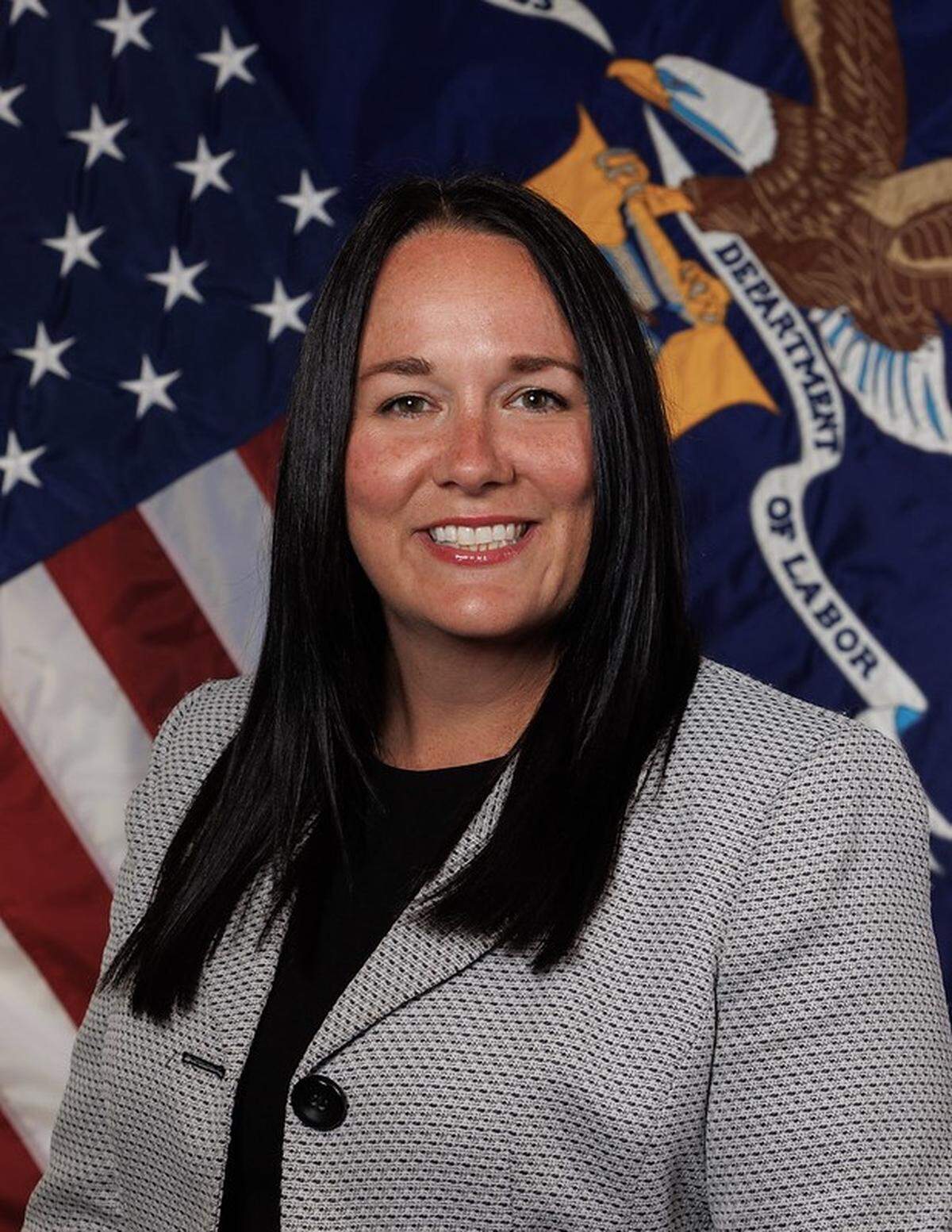
She’s now worked for the department for nearly two decades. Early on, Rebolledo said she worked with some employers who kept her number and kept in touch any time they had questions or concerns regarding issues such as overtime payments or FMLA regulations.
Rebolledo said she doesn’t look like a person who might speak Spanish, so the Spanish-speaking workers and employers she sees generally are surprised when they hear her speak.
Sometimes, they talk about her before they realize she can understand what they’re saying.
Once, Rebolledo walked into a kitchen to speak with some workers.
“Who is this lady?” she heard them say in Spanish. “What are we supposed to say?”
She waited until someone addressed her.
“I kind of sit back and wait until someone says something.”
Rebolledo cultivated her language skills in Ecuador and Mexico, and her husband is Colombian. She also has friends from Paraguay. That’s resulted in a mix of accents and slang.
“I generally get a lot of grace,” she said of working with Spanish speakers. “They’re just appreciative that I’m out there . . . trying to meet them where they are.”
Credible information
Rebolledo, who went on to have a total of four children, was an investigator in the Department of Labor’s Wichita office for five years before becoming the assistant district director, which meant she was responsible for Kansas and the western half of Missouri.
She still works out of Wichita, but she is the regional enforcement coordinator in the Chicago office, which means she oversees 10 states.
Rebolledo describes her position as kind of a catch-all one. She does training and helps managers in their regions.
She also does accountability programming and goes on cases where she’s needed.
A tip led to her starting the meatpacking-plant case in the fall of 2022.
“We received credible information that there were minors working in a meatpacking plant in Nebraska,” she said. “It just didn’t seem very likely. We hoped it wasn’t true.”
She conducted surveillance and found “there were so many kids.”
There were about 10 who arrived to work a night shift.
Through a review of records, she and her team found other children.
“We realized that this case was bigger than a normal case,” Rebolledo said. “This was a systemic issue.”
That meant it warranted a larger operation, including checking other plants, in order to gauge the scope of the issue.
In addition to surveillance, there were confirmations from the community.
There were just over 100 children ages 13 to 17 working in what Rebolledo said were inherently dangerous situations on production floors.
“It was heartbreaking to see the conditions they were working in, knowing how vulnerable they were.”
Children were cleaning and sanitizing skull splitters and bone saws on “kill floors that are just full of hazardous machinery.”
The same children were falling asleep in school the days after working, Rebolledo said, often with signs they were suffering from chemical burns, too.
“I sat down, and I talked to these kids,” Rebolledo said.
She said some wanted to work. Others wanted to be more present in their classes.
Rebolledo shared the lead on the case with Nancy Alcantara from Chicago and Justin Uphold from Lansing, Mich.
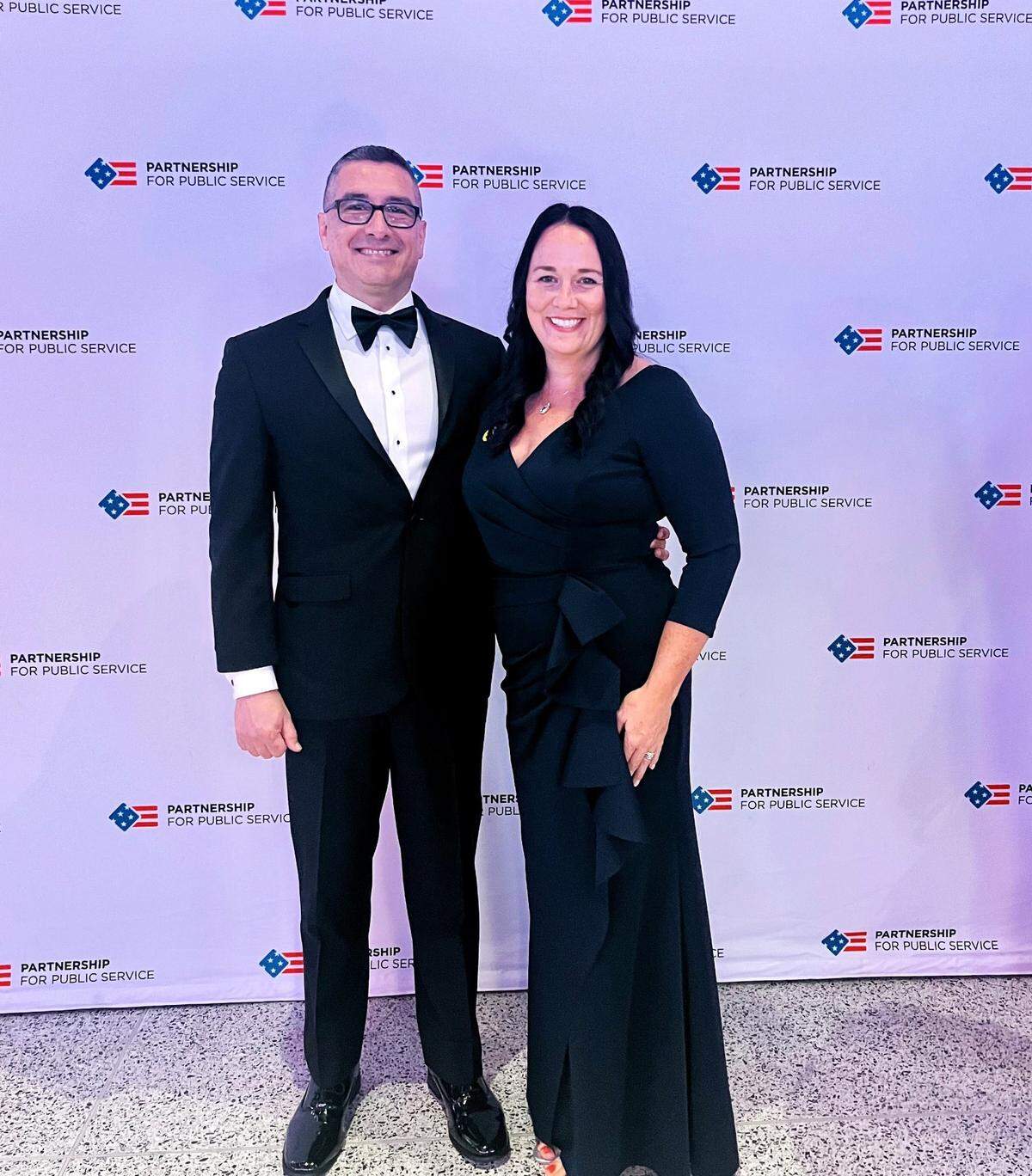
%20Nancy%20Alcantara%20Justin%20Uphold%20Shannon%20Rebolledo.jpg "PFPS_20240911_191 (1) Nancy Alcantara Justin Uphold Shannon Rebolledo.jpg")
They brought in special investigators and, eventually, lawyers, all of whom helped rescue the children.
“They were essential in the resolution of this case.”
Investigators learned an outside sanitation company had hired the children, not the plants.
The plant operators mostly spoke freely to investigators.
It helped that people were used to seeing Rebolledo.
Also, she said, “I’m not very scary looking.”
The sanitation company was fined $1.5 million, one of the largest fines in the department’s history.
There were other penalties as well, and a third-party monitor was assigned to make sure children weren’t further being taken advantage of.
The situation got a lot of press, Rebolledo said, “And that was good.”
The first investigated plant with children was in rural Nebraska.
“They were hidden employees. It brought a lot of attention to the plight of these children.”
The sanitation company also had children working in plants in Kansas, Arkansas, Tennessee, Texas, Minnesota, Indiana and Colorado.
The case lasted through the middle of 2023, and the department continues to get leads because of it, Rebolledo said.
“We keep finding kids in plants.”
The case was difficult for Rebolledo
“It was personal to me because I have kids.”
She had one tiny bit of fun, and that was bragging to her officer husband about what a success her investigation was.
“Oh, for sure.”
Overall, though, she said all the investigators reacted to what they saw.
“It was hard on all of us.”
‘How are you doing this?’
Alcantara, who now happens to be Rebolledo’s boss, said it was incredible to work with her from the get-go of the investigation when they strategized how to navigate it.
“It was Shannon that (was) just kind of brainstorming how we could treat this case differently because we needed to,” Alcantara said.
Not only did Rebolledo have the skill set and experience for the case, Alcantara said, she had the personality.
That was important because they had to coordinate with about 100 people, from investigators and lawyers to regional managers among others.
“Shannon was the go-to,” Alcantara said.
Rebolledo joked that she talked to her fellow case leaders more than her family during that time.
Alcantara said Rebolledo was proactive on envisioning challenges with the case, and she had the leadership and organization to make the investigation run smoothly.
“What is she not good at?”
Alcantara did worry, though, that seeing so many children being exploited would weigh on Rebolledo, especially since they were near her own children’s ages.
“I had to ask her multiple times, like, ‘How are you doing this?’ ”
Keeping kids safe
The legal age to work in the United States is 14, but only under certain circumstances.
“They really have no place at a meatpacking plant,” Rebolledo said.
She said she’s proud of all the work her agency does, and she said it’s gratifying to know there’s now another level of attention for these children.
“We cannot build our economy on the backs of kids working.”
Protecting children “is generally something everyone can agree on, right?”
“We’re supported because everyone wants to keep kids safe.”
Rebolledo said she never had a specific goal for her job. It was more general.
“I felt a call to service to our community, to our government.”
She, Alcantara and Uphold did, though, all win the prestigious 2024 Samuel J. Heyman Service to America Medals, which the nonprofit Partnership for Public Service runs.
Rebolledo isn’t ready to ride off into the sunset on her laurels just yet. She said she wants to keep making a difference.
“As long as I can continue to do that in a work capacity, I’ll keep at it.”
She’s also coaching basketball at Kapaun, her alma mater, which she once expected to be a bigger part of her career.
Rebolledo said she’s still teaching, just in another way than she originally planned.
“Our agency is an enforcement agency,” she said, “but we do want to help.”