
A century after these cars were built in Wichita, ‘The Jones sisters have come home’
More than a century after they were built, four of the last half dozen Jones Six cars that are known to exist are back in Wichita.
“I’ve been scheming for a couple of years to get them home,” said car enthusiast Jeff Breault, a financial adviser who also owns R&J Discount Liquor.
“A guy named J.J. Jones built cars in Wichita, America, from 1915 to 1920, and there are six of them left on the planet.”
At least, that’s what Breault’s extensive research has shown.
“If there’s another one, it’s hidden pretty damn good.”
Breault’s friend Myra Devlin also owns a Jones Six and the Wichita-Sedgwick County Historical Museum has one on its fourth floor. In 1981, it had to be lifted by crane and brought through a window after the museum moved to its current site at 204 S. Main St. downtown.
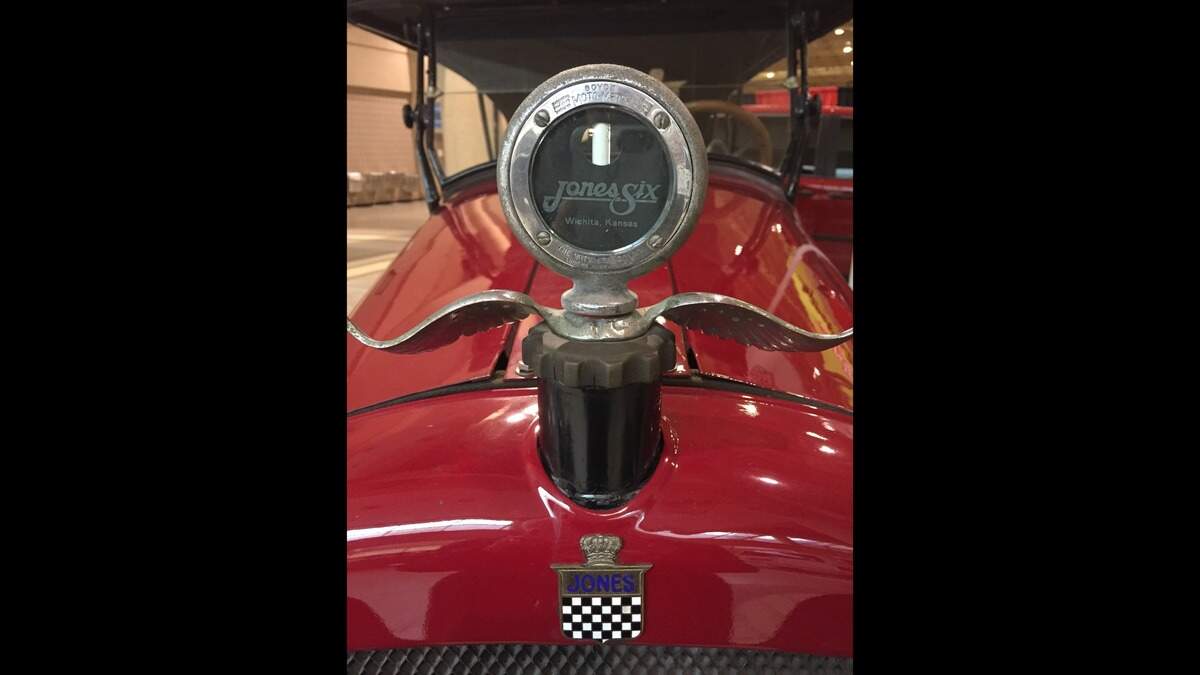
Museum executive director Eric Cale said he remembers the first time he saw that car, which has been on exhibit since the 1960s.
“It was on tour with my third grade teacher, Mrs. Wilkins, from Hyde. I was fascinated with it.”
The cars have always been rare. Breault said there were only about 3,000 built.
The collection has “been legendary for years,” Cale said.
“For us, it’s a very interesting part of our local history. The fact that we had an automobile . . . manufacturer here was significant.”
He said other manufacturers consolidated in Detroit.
Cale agreed with Breault that no other Jones Six cars probably exist anymore.
“In this very information-rich age, I think it’s been pretty thoroughly investigated, unless there’s one in the far reaches of some abandoned barn.”
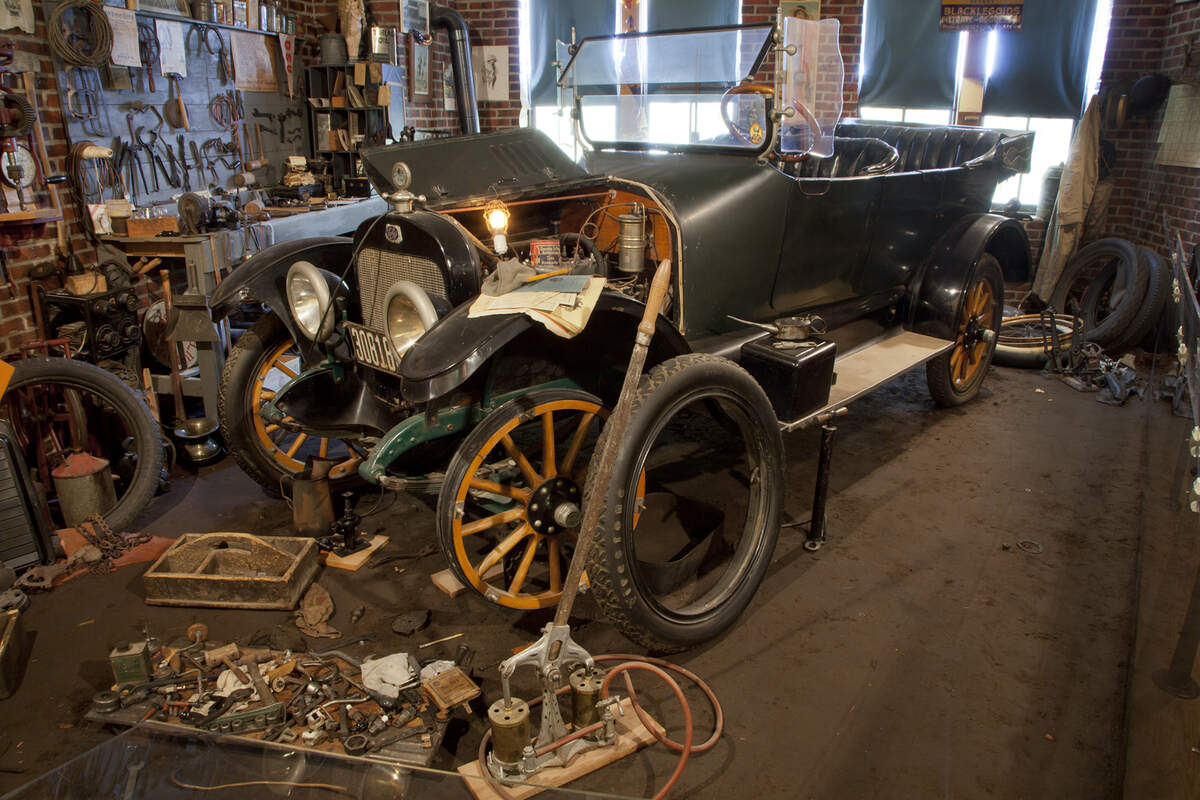
At the time when cars still were relatively new, Breault said, a lot of people built their own.
“These are what are called assembled cars.”
That means that like Jones, people would buy engines and pieces of cars, such as fenders, but then make their own bodies, interiors and tops.
At one point, the company and local media billed the Jones Motor Car Co. as the largest automobile factory west of the Mississippi.
An ad that came out not long after the car was introduced noted it had “a wealth of fine qualities.”
“The clutch action is like velvet.”
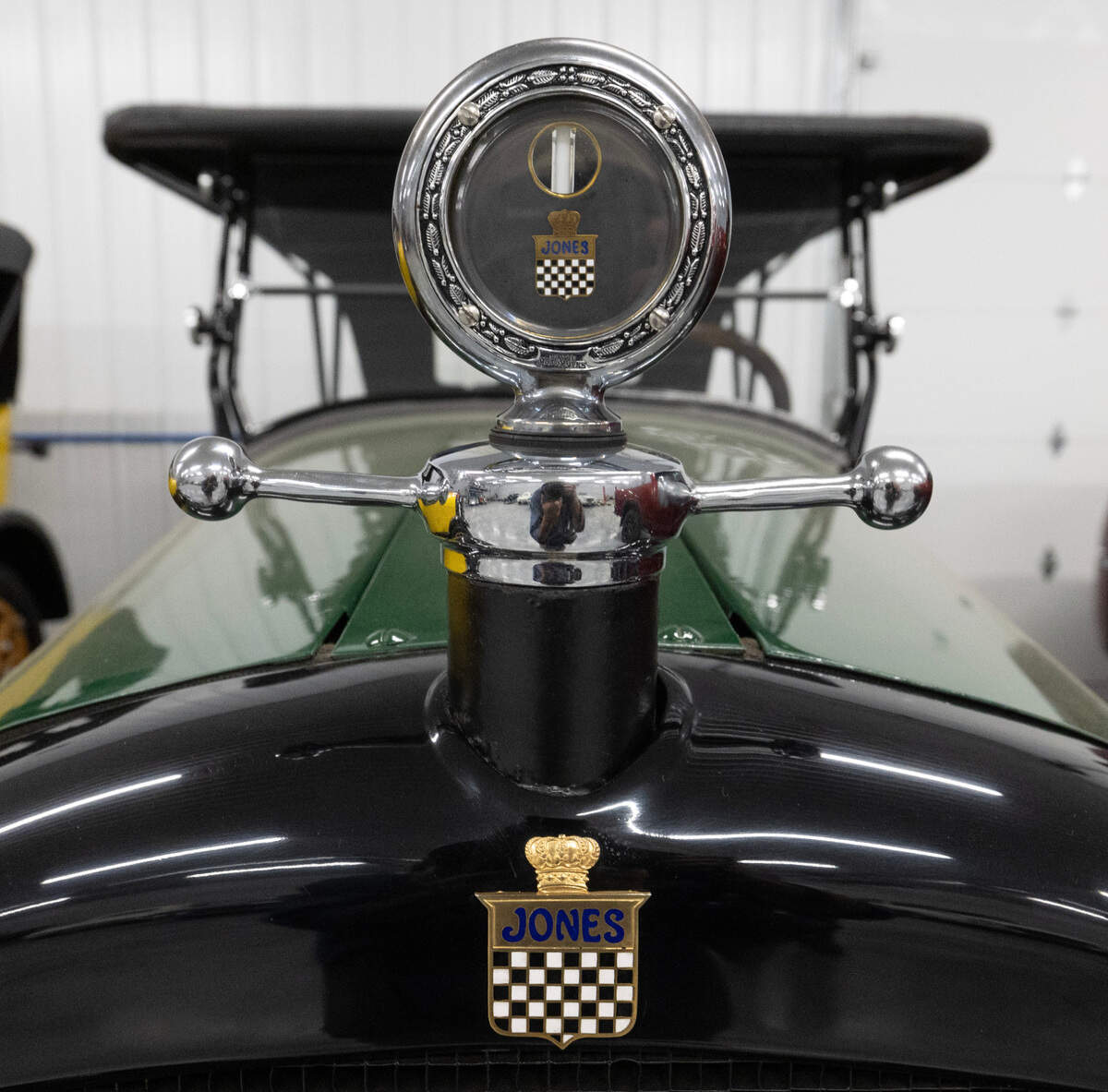
Jones Six was named for its six-cylinder engine, and it would go an impressive — for its time — 60 miles per hour.
“They’re massive cars,” Breault said. “They make a statement.”
They usually were colorful, too.
Breault said Jones was famous for painting “a lot of crazy colors” by customer request. He said that’s what assembled car manufacturers would have to do to sell cars.
A lot of Osage Indians who had come into oil money would come up from Oklahoma to buy cars in Wichita, Breault said.
“A gal would have a color in her petticoat, and they’d say, ‘Paint it this color.’ ”
‘They built America’
Breault appreciates most cars.
In 2022, his car Lucille was named America’s Most Beautiful Roadster.
“I love the sound, the mechanical nature of them, the fact that they built America.”
Now, Breault has developed a soft spot for the Jones Six and Jones himself.
“This guy is an incredible story. He came to Wichita with nothin’.”
Jones was one of the first Ford dealers in the Midwest, Breault said. He sold Model Ts — enough to make a quarter million dollars by 1915, which Breault said is a lot of Model Ts.
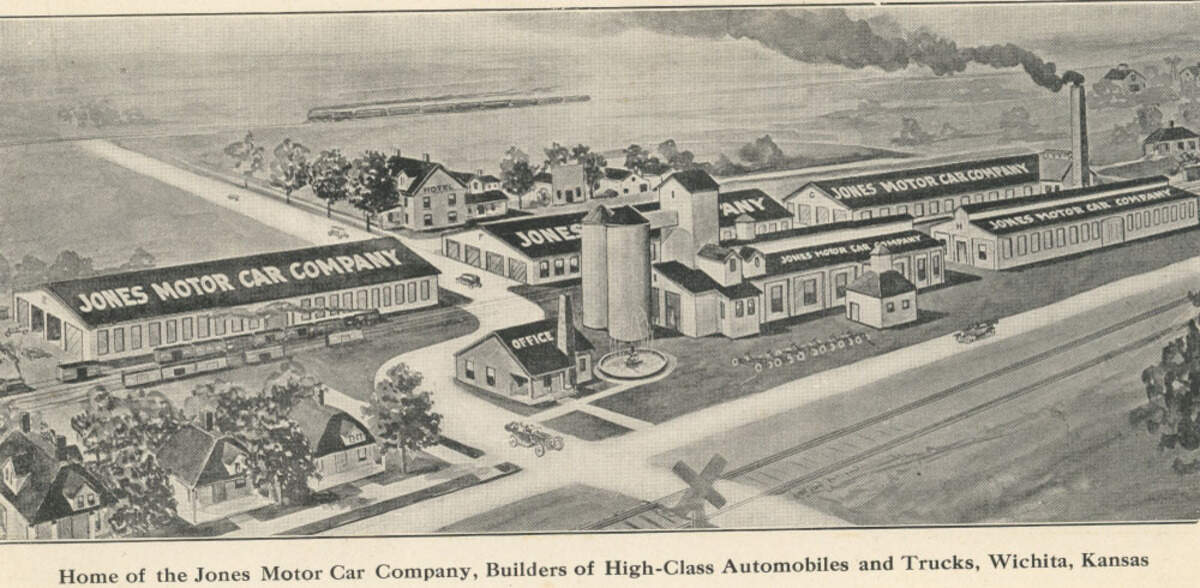
Originally, Jones operated downtown at 210 to 212 W. Douglas where, as one 1915 advertisement noted, car demonstrations would be “cheerfully given.” It then opened a huge plant near 37th North and Broadway that was built in the 1880s for manufacturing livestock cars.
Breault said he understands that “pieces and parts of it are still there” from the Jones days.
“In 1917, he meets a guy named Clyde,” Breault said. “Clyde Cessna. And Clyde needs a place to put together an airplane.”
Cessna gave flying lessons on North Broadway, so Jones laid out a runway in a field and poured a concrete pad for airplanes to turn around.
“And that was Wichita’s first freaking airport,” Breault said. “There’s so many cool parts of this story.”
Jones and Cessna were both marketers, he said. They painted Jones Six on the bottoms of some Cessnas — Cessna most likely did it in return for the space — and there was a race from Hutchinson to Wichita between one of the Jones cars and a Cessna plane.
“Obviously, the Cessna beat them.”
As World War I progressed, the cost of materials began to double and triple, and Jones’ company went bankrupt by the middle of 1920.
Breault said Jones wasn’t deterred. He became a real estate developer instead.
“He was just a wheeler-dealer kind of a guy.”
‘Every scintilla’
There were at least two Jones 6 aficionados before Breault, and he’s taken up the mantle.
One was the late Wichitan Phil Knighton.
“He actually wrote a high school research paper on this whole company and J.J. Jones, like, in 1961, and spent the last 40 years of his life just gathering every scintilla of information he could on them,” Breault said.
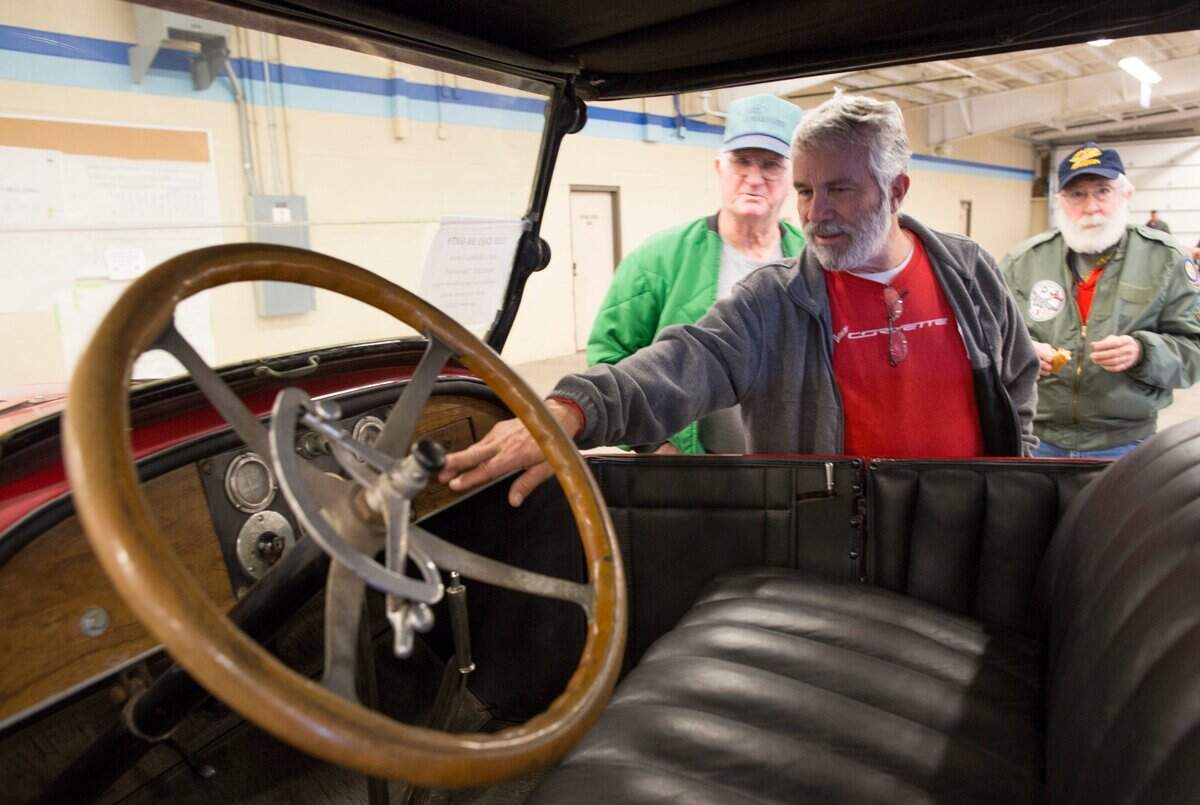
Today, Devlin — a car gal who grew up around her father’s Cleveland, Ohio, automotive repair shop — owns Knighton’s former Jones Six.
“I didn’t want Wichita to lose that vehicle,” she said.
She’s since shown it at the Cars for Charities Rod & Custom Car Show along with research on the vehicle she presented through story boards.
“A lot of people go, like, ‘What? We had a car manufacturer in Wichita?’ ”
It was at that car show in 2019 when Breault saw his first Jones Six.
“I had heard that we made cars in Wichita but didn’t know much about them at that point.”
Then he came to learn of a Nashville, Tenn., man named Bob Jones — no relation to J.J. — who over the years had bought every Jones Six he could find.
“He was a car collector of early cars,” Breault said.
He said Jones had flyers made, took out magazine ads and had a business card advising people to contact him if they knew anything about the Jones Six automobile.
“Bob Jones did an amazing job of bringing these cars back to life,” Breault said. “A couple of these I would call bucket cars. You’d get them out of the barn in buckets.”
Breault knew that Jones had been talking to some people in Wichita about returning the cars here, perhaps to a museum.
“So he knew that they should come back here where they were born.”
After Jones died, Breault worked — and worked — on buying the cars. It finally happened this year.
Bob Jones painted each car about a decade ago.
Olive, the green car, spent most of her life in the United Kingdom. Another unrestored one, the yellow Harriet, had been part of the Harrah’s casino family’s collection. Breault named the orange one Nellie after his granddaughter, and the purple roadster is Violet.
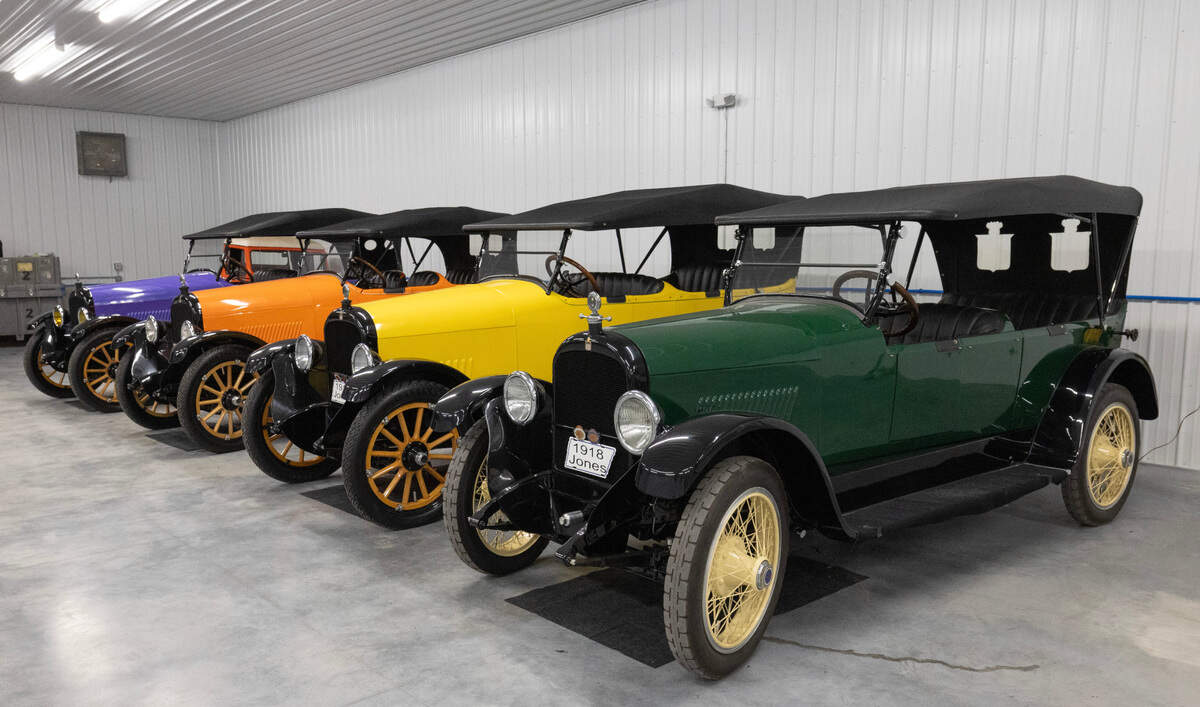
Now, he’s trying to complete as much research on Jones Six as he can. Breault said there’s not much online about the brand.
“I am attempting to get the family . . . to scour their boxes and archives and attics to see if there’s anything.”
If you happen to see Breault out in one of the cars, he’s not likely to be going very fast. About 35 miles an hour is more likely than the 60 miles per hour the cars used to do.
“I don’t know if I want to push them that hard,” Breault said. “If I throw a rod out of the block and hurt the engine, that’s going to be a big problem.”
A November 1914 article in the Wichita Beacon said the first Jones Six would be ready on Jan. 1 and that Jones himself would keep the vehicle “as a remembrance of Wichita’s first home-made car.”
Now, Breault has some of the best remembrances of the Jones Six brand. He said he wants to take care of the ladies.
“The Jones sisters have come home.”
This story was originally published August 12, 2024 at 4:23 AM.
CORRECTION: The manufacturing plant where Jones Six eventually operated near 37th and Broadway originally made livestock cars. An earlier version of this story reported that it was a different kind of manufacturer.