
Two new leaders of Wichita’s premier art museums share one big goal
Two women with a world of different experiences are about to make an impact on Wichita’s art scene with one notable goal in common.
Anne Kraybill and Vivian Zavataro have taken over leadership of the city’s premier art museums, the Wichita Art Museum and the Ulrich Museum of Art at Wichita State University, respectively, with plans to make both places more inviting to everyone.
“We will not matter if people coming through our doors don’t feel welcome and don’t feel represented,” Kraybill said. “Museums have historically not been that. They’ve been these ivory towers or playgrounds for the wealthy.”
Zavataro said they’re places where people often feel like they have to whisper when instead they need to be places to interact with others.
“They have to evolve in order to be relevant, otherwise they will die.”
Neither woman is suggesting that the museums aren’t already welcoming, but they both have visions for new ways to connect with the community. Their tasks are different, though.
At the Ulrich, Zavataro said she’s learned “there’s been a little bit of a disconnect” with community partners who may not be feeling valued of late.
“The community was a little bit alienated and not as involved as they should be. I’d love to just rekindle those relationships.”
At WAM, Kraybill has a different challenge since she’s taking over from Patricia McDonnell, who in her 11 years as director — and in her time leading the Ulrich for five years before that — was known for fostering relationships and finding clever ways to engage new participants.
Kraybill is bringing her own skill set, which includes being part data analyst. Since she became director and CEO Aug. 15, Kraybill has been demanding data as an essential component to propel the institution.
Zavataro started her job as Ulrich creative and executive director Oct. 16.
A different path
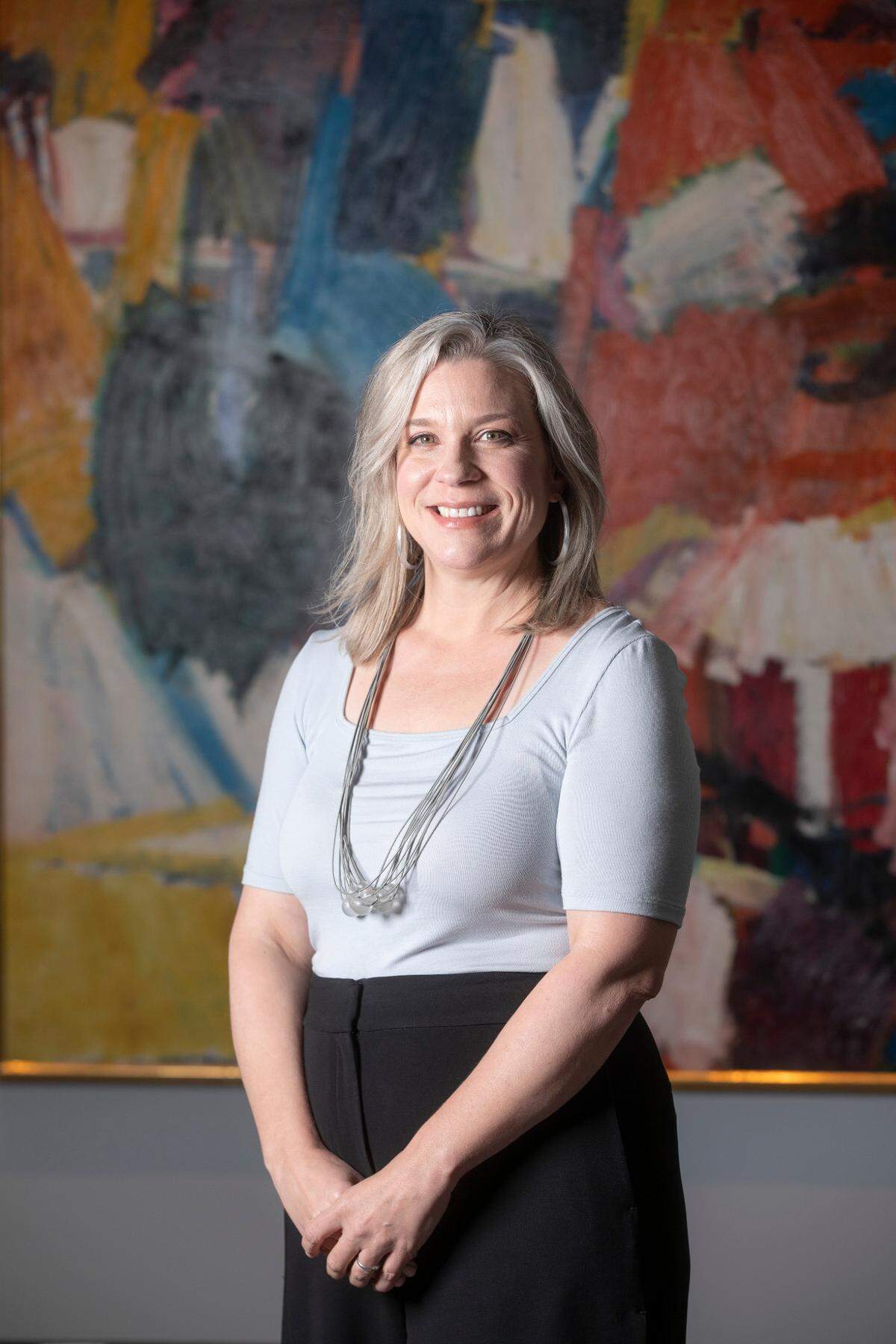
Dressed in complementary shades of a royal blue blouse and pants, with matching earrings that look like they came from an art museum gift shop, 46-year-old Anne Esplin Kraybill looks like the relaxed hostess of chic dinner party.
She smiles in a welcoming way even when a reporter interrupts her packed schedule — and it is jammed with numerous meet-and-greets, including visits with each of WAM’s approximately 50 staff members.
It’s a different path than Kraybill once envisioned. She once saw herself as an artist.
Born in Portland, Ore., Kraybill’s particularly formative years were from ages 6 to 9, when her mother’s dissertation in public health took them to New Delhi, the capital of India. She called it “a place that really shaped my interest in the visual arts because it is so design-centric. It is so beautiful.”
An “amazing art teacher” had an impact, too, especially when she sent her students outside to do simple charcoal drawings and Kraybill learned “line and shading to create dimension, and it just blew my mind.”
She liked painting, ceramics, sculpture, welding — “I was all over the place” — and eventually settled on photography at the Maryland Institute College of Art.
There, Kraybill saw other artists “having this focused awareness of what (they) were trying to communicate, and I knew I just didn’t have that.”
Still, she knew she needed to be around great artists and art.
Extended education
It wasn’t until Kraybill was an adult and became a part-time public program facilitator at the Walters Art Museum in Baltimore that she learned more about the world of museums, such as discovering docents for the first time.
“I didn’t know what that word meant.”
She went on to get a master of arts in museum education from the University of the Arts in Philadelphia and a master of science in instructional technology from East Carolina University in North Carolina.
A job as assistant curator of education at the Norton Museum of Art in West Palm Beach provided Kraybill a further education. She said she didn’t like how the museum felt like an elite institution that was an extension of social circles, with low-income students trotted out to perform for the pleasure of wealthy donors. That “didn’t feel like in service of that community or in collaboration with them.”
Kraybill noted that the Florida museum has changed with the times.
“It was just a function of the time as education departments kind of grew up and figured out their role in changing again what a museum could be and who it was for.”
As the director of education at the Vero Beach Museum of Art in Florida, Kraybill created partnerships with youth organizations and community groups and came to the conclusion that museums shouldn’t dictate what programs they offer.
“It was really, ‘What is it that the museum can do for you?’ ”
Conclusive results
At Crystal Bridges Museum of American Art in Bentonville, Ark., Kraybill discovered the role data can play in running a museum when she started her job as director of school programs with the 2011 opening of the museum.
Crystal Bridges invited school groups to visit for free and then surveyed students — both those who visited the museum and those who didn’t — to see if there was an impact.
“It was like a medical trial for art field trips,” Kraybill said.
In the children who visited the museum, she said they found an increase in critical thinking about art and a higher increase in tolerance for different ideas, among other things.
“We were able to conclusively say these things really matter.”
Of the more than 11,000 students surveyed, she said it was especially true with children from rural and lower-economic areas.
In 2018, the Westmoreland Museum of American Art in Greensburg, Penn., approached her about being its director and CEO — the type of role Kraybill said she hadn’t considered for herself.
“We think that our asset is the community,” board members told her. “We have a great collection, but without the community, we don’t really matter.”
Kraybill said, “It dawned on me that if boards are thinking this way, then directors of education need to get ready and rise to the occasion.”
She took the job. Kraybill embarked on staff meetings, just as she is in Wichita, and got a sense of the organization’s collective hopes and dreams.
Those relationships proved essential when Kraybill suddenly was trying to keep the museum afloat in a pandemic. Staff pushed back against possible layoffs, she said, and Kraybill said she discovered how important each voice at the table was.
“They had information and insight that really shaped our approach to be so much more proactive,” she said. The museum “came out stronger for it.”
‘Where are women?’
Through simply a phone call, it’s easy to feel you’ve gotten to know 37-year-old Vivian Carolina Zavataro Ferreira (Ferreira is her father’s last name, and Zavataro is the last name of her grandparents who raised her). Her personality bursts through the line.
Zavataro said she was “raised by a big Italian family that told me that I couldn’t leave the house until I got married.”
That was in Sao Paulo, Brazil, a city of more than 22 million people in the state of Sao Paulo, where her great-grandparents moved in the early 1900s.
“I love my Brazilian culture,” Zavataro said.
It’s where she began to appreciate art through small acts like taking a subway and being enveloped in the images and colors around her.
She also began going to museums. Zavataro remembers as a young adult noticing that the descriptions on all the labels next to works of art were about the white men who created them.
“I always remember being, like, where are women and Brazilian artists, and why are they not being represented in these spaces?”
Zavataro didn’t initially think of art for a career. She was working with vaccines in a lab at the University of Sao Paulo, studying toward a degree in biotechnology, when a realization hit her.
“It was lonely, and I am very outgoing. It wasn’t for me, and I knew it really fast. I would spend more time making my molecules all pretty and colorful than actually studying the content.”
She quit school and rebelled against her Italian culture by defying her parents, who were pressuring her to marry, and moving to Truckee, Calif., to be a ski bum.
Her mother warned her she would starve, but Zavataro had a plan. She chose Truckee because it was near art and education options, and she knew she wanted to study art history.
“I’ve always been fascinated with . . . the meaning of art . . . and how art has been part of human nature.”
Today, there’s so much imagery everywhere, Zavataro said it’s hard not to take art for granted.
“But art is valuable for us to process,” she said. “I still believe that we can create dialogue with art. . . . That we can live better together if we have art around us.”
Ancient inspiration
As she worked on her bachelor of art history degree at the University of Nevada, Reno, Zavataro interned at museums in Reno, Nev., and in San Francisco. It was at the San Francisco Museum of Modern Art that she said she “fell in love with curation.”
She went on to get a master’s degree in museum and heritage studies at the University of Amsterdam, a place she chose for its culture, food and proximity to so many museums. Zavataro said Amsterdam has one of the highest numbers of museums per capita in the world.
“A lot of ancient art really inspired the way I see contemporary art,” she said.
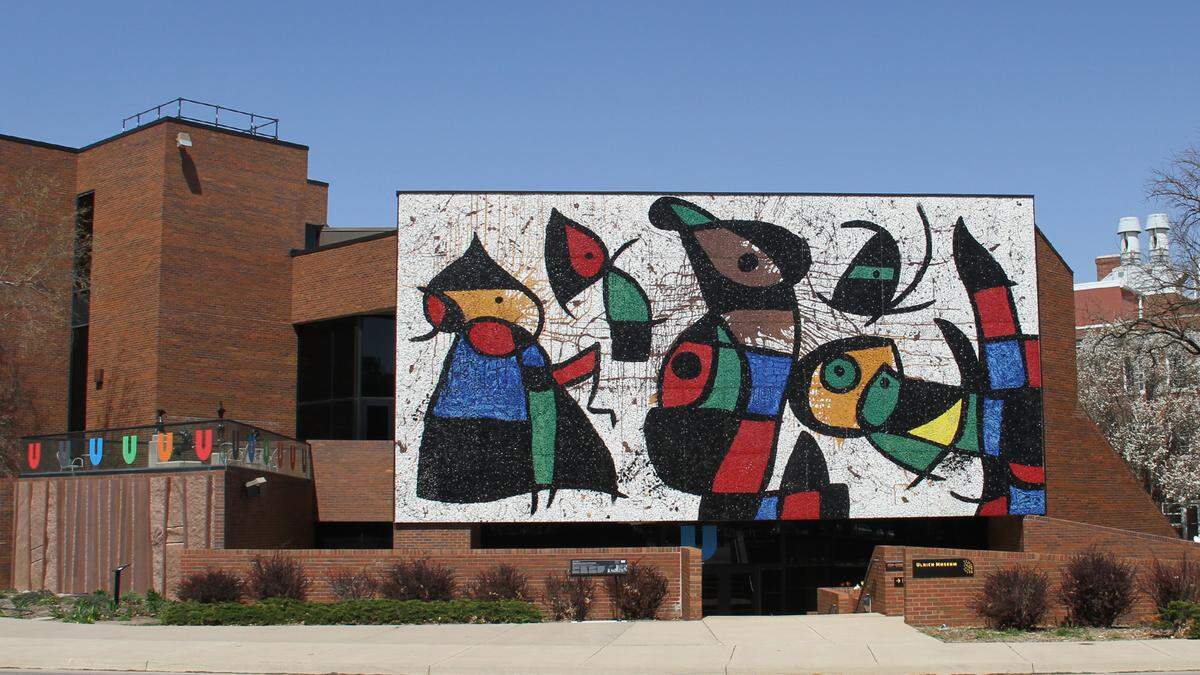
She’s worked at a variety of national and international galleries and museums, most recently as the director and chief curator for the John & Geraldine Lilley Museum of Art at the University of Nevada, Reno, where she helped continue its transformation from a gallery focus to a place with more museum standards.
Zavataro pleased her parents, too, by marrying. Tim Snider is the lead singer for Tim Snider & Wolfgang Timber, a Los Angeles-based touring band. Zavataro and Snider have a 4-year-old daughter, Ines.
At the Lilley Museum, Zavataro once invited a female El Salvadorian artist who works in mixed media to create a response piece to works in the museum’s permanent collection by Keith Haring, who was gay, and Purvis Young, who was Black. She displayed the works together and invited a disc jockey to play cumbia music, a type of rhythmic Latin music, at an event where the artist discussed her work. Zavataro described the scene as an older white crowd that mixed with the Latinx community.
“They were dancing together inside the museum. For me, it was really magical to see that.”
‘Great collaborations’
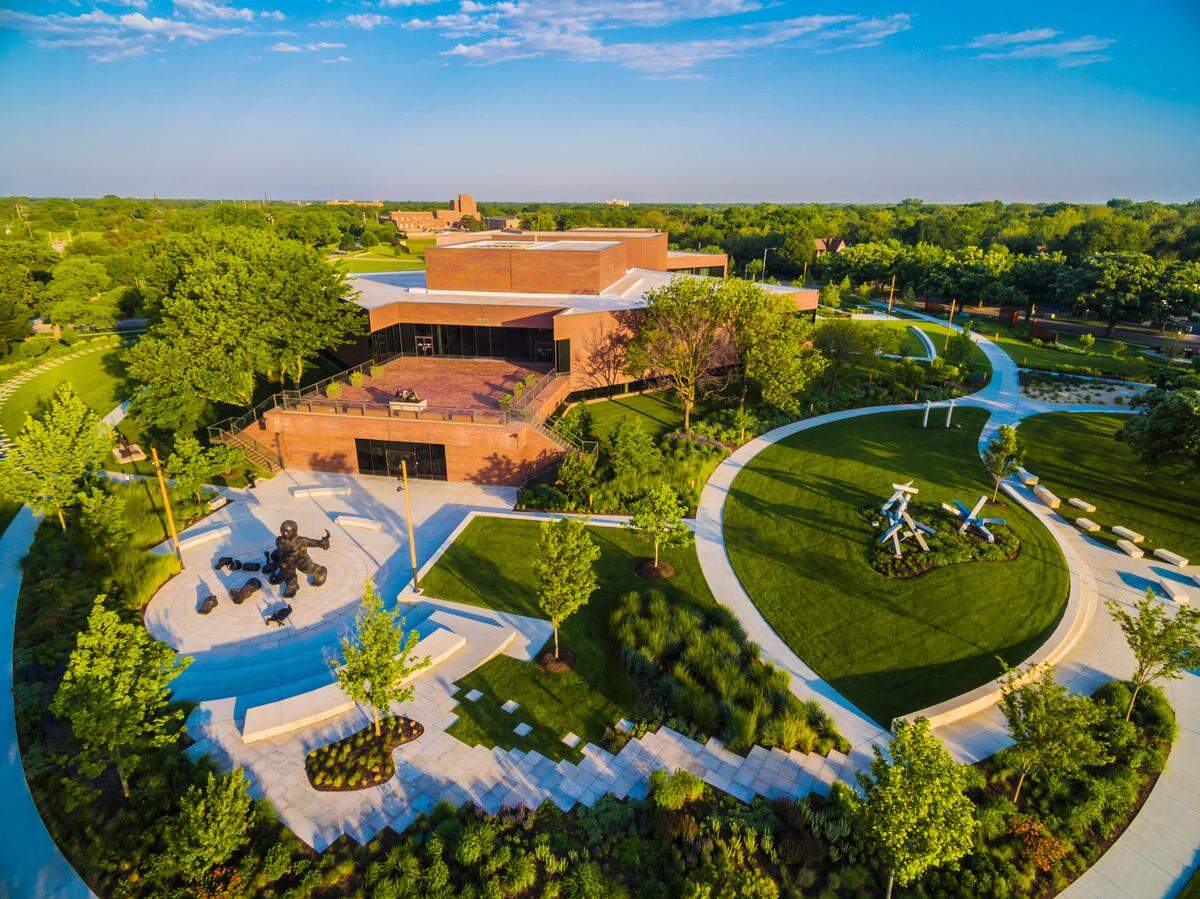
At WAM, Kraybill is leading a new five-year strategic plan. She said she also is eager to explore ideas for the museum’s 8 acres because she thinks there’s “so much potential in being able to do things on the outside.”
Joining her are her husband, James Kraybill, a stay-at-home dad, and their children, Calvin, 6, and Liam, 15, who is a bowler and already eyeing WSU and its vaunted bowling team.
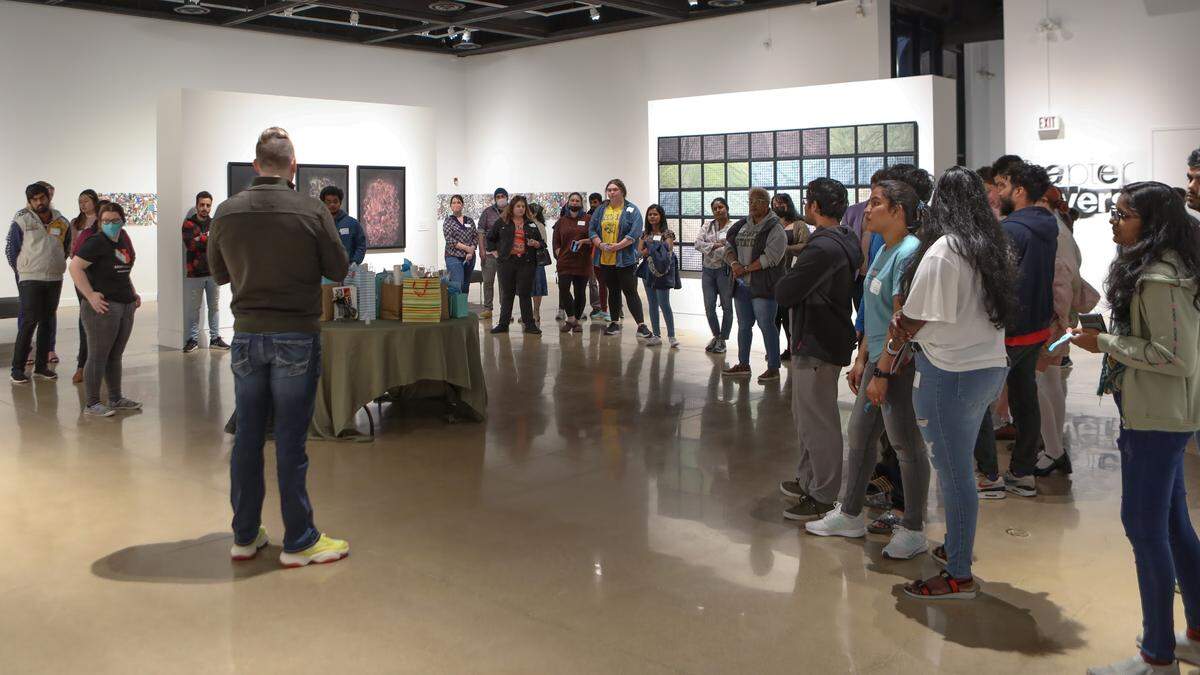
Zavataro is working to re-engage former Ulrich supporters and cultivate new ones.
After meeting with what she describes as an especially welcoming staff, Zavataro said it was “amazing to see how excited they were for a new chapter.”
She and Kraybill want to work together, too.
“The Ulrich and WAM already work together, so we’d love to continue and expand that partnership,” Zavataro said. “I really love . . . doing exhibitions that have chapters, and to see the whole thing, you have to go to both museums.”
She said it’s a fun way to engage curators from both places.
Kraybill said she is “definitely interested in establishing some new and great collaborations” between the museums.
“What if we had an artist in residence they shared?”
Or that could be internships with college students or a host of other things, she said.
“There’s all kinds of possibilities.”
This story was originally published November 17, 2022 at 4:47 AM.