
New field guide offers references and fun facts about birds who call Kansas home
Spring is an ideal time to spot birds in Kansas, though it’s not always easy to identify them, especially with guide books that focus on large regions or whole continents.
“You want to know what’s in your backyard,” said Marc Parnell, an Ohio-based writer who has just published “Birds of Kansas” through Naturalist & Traveler Press.
This is Parnell’s 41st field guide in his Birding Pro’s Field Guides series that focuses on states, cities and provinces in North America.
Parnell’s books feature birding forecasts to help readers know what to look for when. They also have feeding guides and a lot of fun facts, so the books can be reference guides or simply amusing reads.
For instance, do you know the history of the European starling, one of the most common birds in Wichita?
Parnell said they didn’t exist in the United States until a Shakespeare enthusiast, partial to the starring starling in “Henry IV, Part 1,” introduced almost 100 to Central Park in 1890 and 1891. Parnell said there are now more 100 million nationally.
“They’ve established themselves to such an incredible extent.”
Then there’s the Mississippi kite, which is most associated with the American southeast but counts Kansas as its most northwest home.
The bird catches flying insects in the air and takes its prey from its talons to its mouth while still flying and hunting.
“It’s very, very dexterous with its movement, and it’s pretty fascinating,” Parnell said.
As a child, Parnell’s first interest was in reptiles and amphibians, but he said that “contact with birds was sort of an unavoidable thing.”
“I grew very fascinated by their gift of flights.”
Parnell said the migratory nature of birds was mysterious to him when he was younger. For instance, he might see a northern shoveler in March, but then none would be around by May or June.
“It really added to this mystery of what they might be doing when I’m not looking.”
Migration patterns are something for Kansas birders to watch, Parnell said.
“Right now, we are in the midst of full-blown spring migration,” he said. “Each spring and each fall, hundreds of millions of migratory birds pass through the Kansas skies.”
The birds may fly dozens of miles, or even up to 100 miles, in a single evening.
“A lot of birds are quite famished, almost like a family on a road trip,” Parnell said.
When birds stop to eat in the open, he said, “It gives unprecedented viewing opportunities.”
He said thrushes and brightly colored warblers are “arriving in great quantities.”
‘A changing in the seasons’
Parnell said there are a few things that set apart his field guide.
One is a monthly forecast with a bar chart that shows when birds arrive in the area. Each bird has its own forecast.
“Birds of Kansas” features the eastern meadowlark on its front cover.
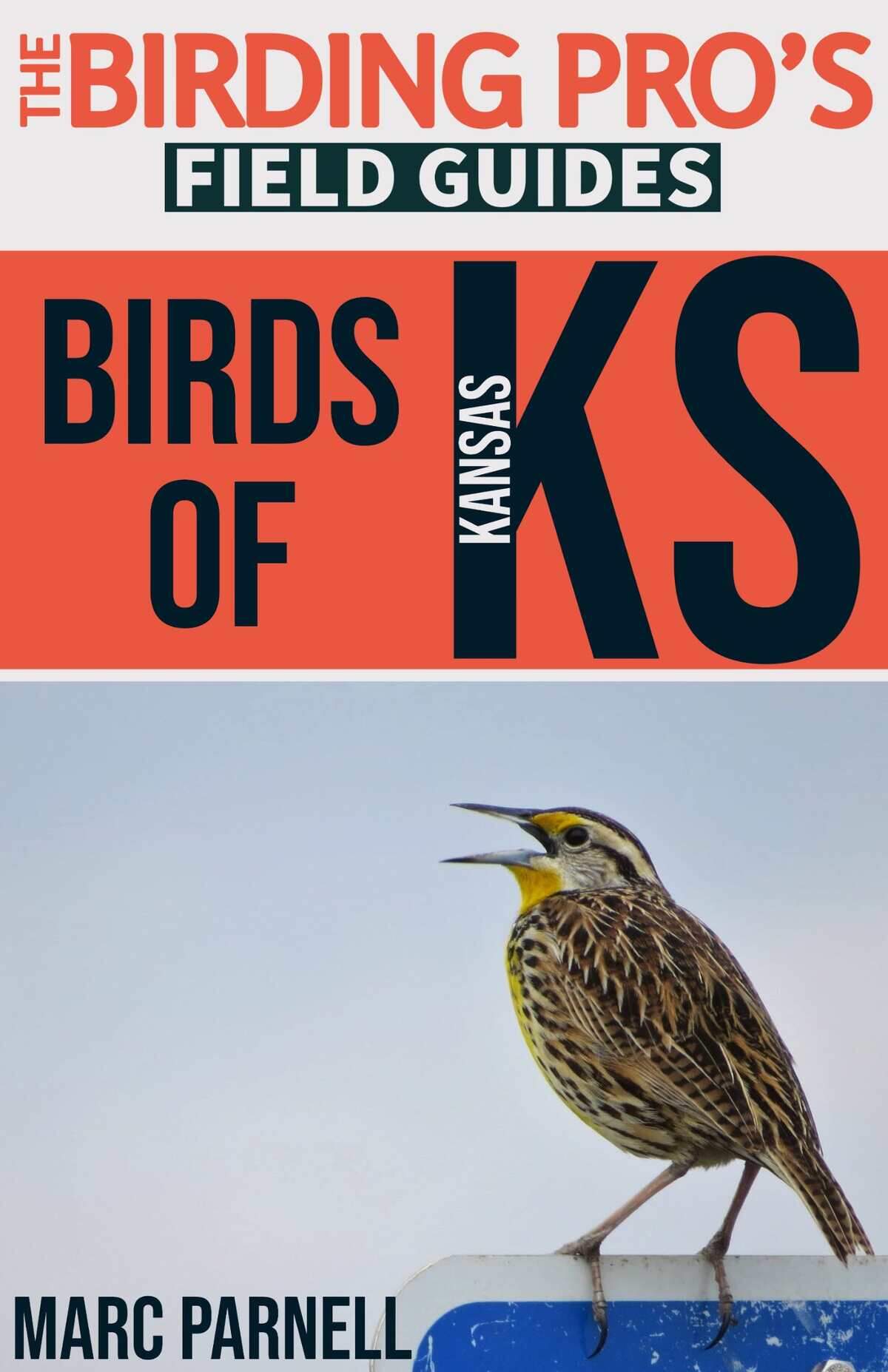
Parnell said the bird whistles sweetly throughout the day, and when it starts to sing in spring, “It sort of signals a changing in the seasons.”
He said birds sing more in the spring as they’re establishing their territories and looking for mates.
Parnell uses a frequency rating system — with ratings of 1 through 5 — for every species. A 4 out of 5 or a 5 out of 5 rating designates some of the most populous birds in the state.
Also, Parnell sorts the birds from the largest to the smallest species so readers can quickly flip through the book to identify them.
Through the years, he began adding feeding information in his books.
“People want to know what kinds of feed or feeders to use.”
Parnell said someone’s own backyard is a great place to start birding since just a few feeders can attract more than 50 species to a yard.
With an inexpensive pair of binoculars, he said that “you can find quite a few birds in just a few weeks.”
“I feel very strongly that that’s a great way to get into birding.”
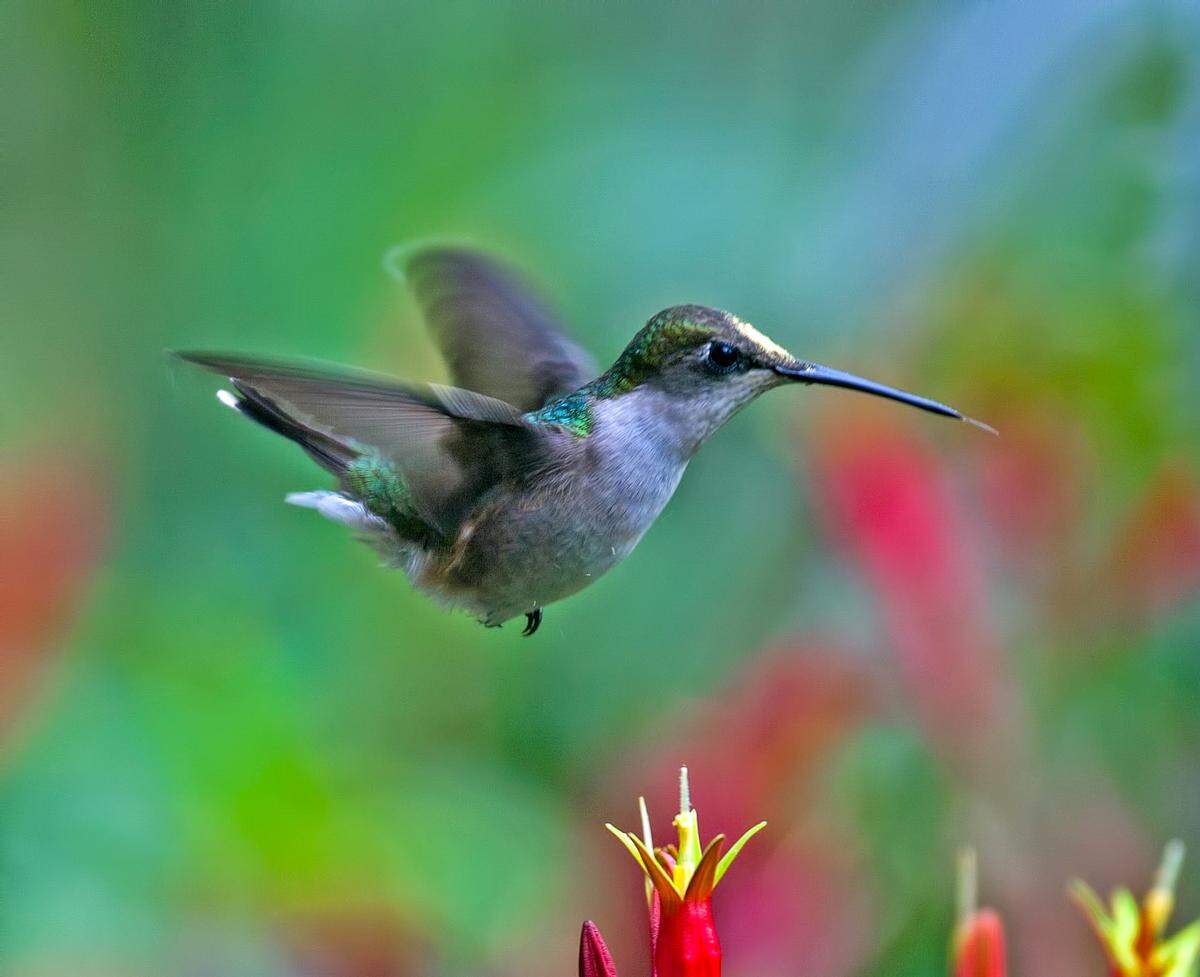
Ruby-throated hummingbirds are common at hummingbird feeders, and they’re beginning to congregate now, Parnell said.
“They’re a personal favorite of mine to observe in the backyard.”
He said the birds are dainty — only the weight of a nickel — and at about 3 inches long are often misidentified as butterflies or large dragonflies. Another fact that’s almost hard to comprehend: The birds can flap their wings up to 100 times a second, though 40 to 65 flaps per second is more common.
For anyone worried about the current outbreak of bird flu and what that means for backyard feeders, Parnell said an abundance of caution is best, though he said the flu generally is found in waterfowl along with their predators — think owls, hawks, eagles and vultures. He said it’s not usually observed in songbirds.
Parnell’s recommendation is if you live within a few miles of a lot of water, take down your feeders. Otherwise, simply clean them thoroughly each week.
“Birds of Kansas” is geared to beginning and intermediate birders, but Parnell said it can be useful to more advanced birders as a reference as well.
As an outsider, he said he thinks there are things some Kansans may not realize about their bird populations.
The state’s mix of grasses and woodlands attracts different types of birds.
The spotted towhee has a white pattern on its wings and a “lovely orange belly” and often can be found in bushes, thickets and wooded edges around the state, unlike some other states.
“It’s a really wonderful Great Plains bird,” Parnell said. “That’s something that I think a lot of Kansans might take for granted.”
He called Kansas’ well-preserved short and tallgrass prairies a natural paradise.
“With Kansas, I was really, really excited about seeing the Great Plains in all of their glory,” Parnell said. “You have this sort of ideal you’ll find in PBS documentaries about long grasses swaying in the wind.”
There are a lot of birds — such as the sparrowlike dickcissel, low-flying harriers and the eastern bluebird so common on country fence posts and power lines — in those habitats, he said.
“It’s one of the best places in all of North America to find all of those birds.”