
The Eagle is the ‘living narrative’ of Wichita, new publisher says
Like most every other media outlet, the 147-year-old Wichita Eagle has been in an intense period of reinvention for more than the past decade.
The publication, which is one of 30 that Sacramento-based McClatchy owns, has faced ever-escalating changes during the transition to a digital-driven model. That’s left questions in the community about what’s happening with the publication.
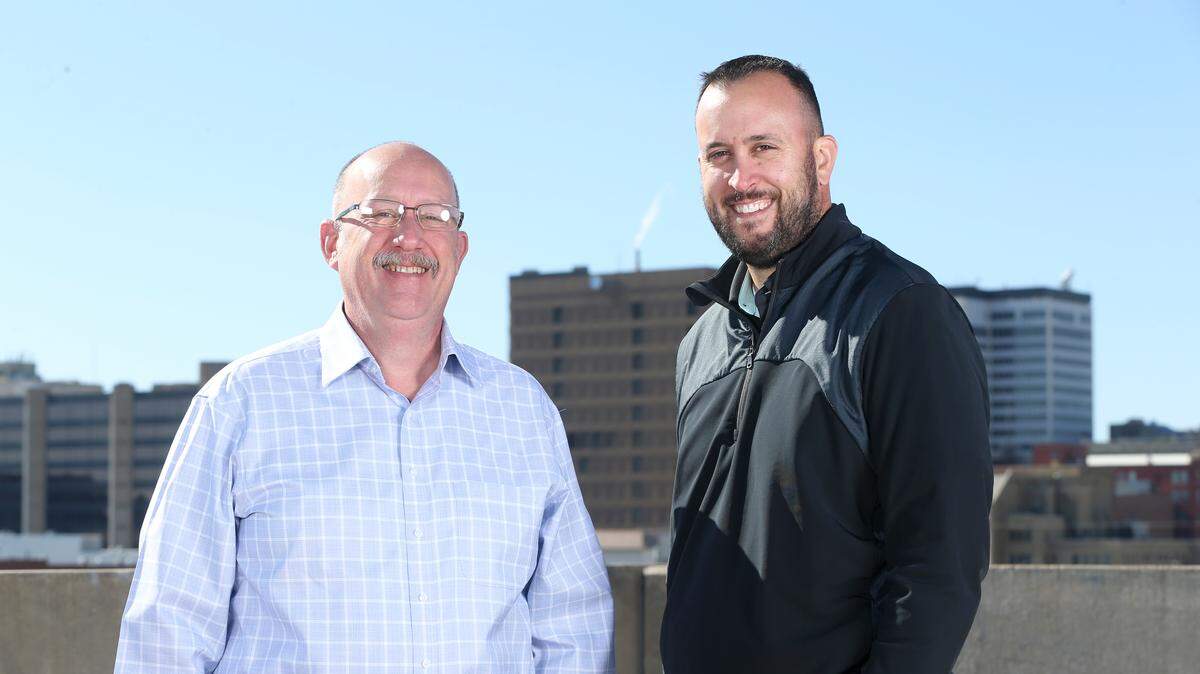
New president and publisher Tony Berg said he regularly fields those questions and wants to address them publicly. He said it’s important people know who he and executive editor Michael Roehrman are, so the two sat down for a wide-ranging discussion about where The Eagle is today and where it is heading.
Tony, you were The Eagle’s vice president of advertising from about 2012 to 2015. Then you went to The Kansas City Star. What did you do there?
Tony: I was the vice president of sales for just about a year and then the publisher about a year and a half and then regional publisher for just about two years since then.
This sounds like such an ugly question, especially since it’s only the second question, but that sounds like a demotion. Can you explain?
Tony: I can. . . . I’ve been doing this for almost 20 years now, and for 20 years I have taken my family from Lawrence, Kansas, to Phoenix, Arizona, to Wichita, Kansas, to Kansas City and now back to Wichita. I had a pretty pivotal moment that I just kind of sat down and started thinking about my family. . . . My wife’s from Cheney, Kansas, and so being here for us is about family, and it’s about us being able to put roots down. . . . I’m ready to be somewhere forever. . . . This was a decision we made as a family and something that I’m really excited about.
So for a while, The Eagle had a general manager instead of a publisher. Employees were told they were never going to have a publisher again, but now they do, which is kind of bucking the trend of how things go. But why is that? Just to accommodate you in returning here?
Tony: This wasn’t a title thing for us. This was more what we want to be able to say to the community, which this is a very important market for us and something that we’re going to invest a lot into. And I say that following on the heels of somebody like (former general manager) Dale Seiwert who has 40 years of institutional knowledge here. You don’t replace somebody like Dale. Dale has been such an advocate for The Eagle, and I think he would even tell you . . . titles don’t matter when you’re in these jobs. At the end of the day, it’s the commitment you have to the community, and I hope to have the same level of commitment he had to the community.
Now that you’re back, what are your immediate objectives?
Tony: How do we invest as much into the newsroom as we possibly can? . . . Our business has been has been challenged like a lot of other businesses. . . . Our transformation to a digital organization is one that is not easy. It’s complicated. . . . What really separates us is our commitment to local journalism and certainly how our content is different from all of the other content that lives out there right now. So my first and primary concern is to sit down with Michael, get his list of needs and wants, and work with him to try and figure out how do we bolster our newsroom?
And so how about some of the long-term objectives?
Tony: Really being able to help bridge the gap between what readership looks like now and what readership is going to look like in the future. Part of that for us I think is really ingraining ourselves into the community. Being able to do journalism that really highlights the talent we have in this room. I mean, things like the water treatment plant, the ballpark, water quality. . . . We’ve put some really good journalism out of The Eagle, and I think my long-term goal for us is to do more of that and be able to be a voice to the voiceless, hold truth to power.
Tony, when you talk about strengthening the newsroom, how will you do that?
Tony: Trying to come up with . . . places that we have content gaps right now. . . . We really do more digging than any other institution in this town. . . . The depth and breadth of that I think is what really is going to separate us.
The Eagle has only 11 reporters now compared with dozens just a few years ago. How do you decide what gets covered with so few people?
Michael: Part of it is data. People have shown what they’re interested in reading. And it’s really easy to look at something like that and go, oh, people want to watch cat videos. But it’s not the reality. The reality is some of our most-read stories of the past year have been political stories. They’re the stories that hold people in positions of power to account; they’re the stories that show how tax dollars are being spent. People care about those things, and you can look at this data, and you can discern what is important and what people are most engaged with and what they’re most interested in, and sometimes that’s, you know, the restaurant that’s opening up down the street, and that’s important for people. . . . That’s not only their life, but that’s also our economy. It crosses many lines. And so that’s the starting point. There’s more to it than that, but that’s the starting point.
What are the top strengths of your newsroom?
Tony: People, no question. . . . We have . . . a good mix of newer talent as well as veteran talent here. . . . It may not be the biggest newsroom, but there is a lot of talent in this newsroom that does some very impactful journalism.
Michael: I would just expand on that answer. Honestly, our strength is our connection to our community. I realize there is a common misperception that we’re all based in Kansas City and obviously commute three hours each way every day; but everybody lives here, they work here, their families are here, and they know this city. They know the people in this city. A large number of them were born and raised here, myself included. We are Wichitans through and through.
You bring up an important point. I think a lot of people believe that when The Eagle’s printing moved to Kansas City, the rest of the publication did, too. That’s a huge obstacle to overcome, especially if you add in some other issues, such as delivery problems and rising costs for people who still take the print product. Are you planning any kind of campaign to change perceptions in the community?
Tony: It’s really important that we connect with the community, and that will be through a series of things. . . . We’re going to make it very clear that it’s not hard to find us, it’s not hard to reach us. . . . People are going to know The Eagle is here, and I think our journalism is going to be the hallmark of that. . . . Our company and our future in large part are determined by the support we get from this community. At the end of the day, subscriptions are king for us. We really need the support of the community to be able to add journalists, to be able to grow what we’re doing, to be everything I know this community wants us to be.
Michael: You brought up the diminishing size of the printed paper, and frankly, that’s the way this industry is going . . . because that’s what our readers have done. Our readers have chosen digital. Every single day, we have roughly four times as many people read us in the digital space as read us on a printed paper.
How many readers are there, say, monthly?
Michael: We have one and a half million unique visitors to Kansas.com, our website, every single month, and those are people that are only counted once no matter how many times they come. We have a tremendous reach in the digital sphere.
How does that compare with TV stations?
Michael: Our reach far exceeds the television stations.
Tony: One of the blessings for our industry is that we had to get in the digital space fairly early, and we’ve learned a lot over time. . . . This isn’t necessarily about traffic. This is about readership. This is about engagement. . . . So I don’t think traffic is always a fair measurement, but I agree that when you put all of our traffic together, we far exceed them in terms of reach. . . . We want our journalism to be what drives our readership.
What do you see the newsroom as having to really strive to do better?
Tony: I don’t think it’s necessarily about being better. I think it’s us creating an environment here that allows journalists to do what they do a great job of, which is digging, which is uncovering things that this community deserves to hear about. That transparency really starts and stops with us.
So, Tony, the other day, you received a profanity-laced voicemail from someone complaining about the paper, and you played it for some young journalists at Wichita State University. Why?
Tony: Being a journalist is in a lot of ways I think a calling, and you’ve got to want to do this stuff. And I was honest with them. I said listen, if you’re looking for high stress, living in a deadline environment every day and not the greatest pay in the world and (getting) this voicemail, you know, think of that every time you walk into a newsroom, because that’s what these people go into every day. . . . Every day you guys show up here, and every day you write these stories, and every day this community is better because of the work you do. . . . It’s just my job to figure out how we can do more of the work we’re already doing.
Michael, you’ve often said The Eagle does not tell its own story well enough. Why is that?
Michael: Part of it is it’s a journalism thing. Part of it is just our Midwestern sensibility. . . . A lot of times we shy from bringing any attention to ourselves. We want the work to speak for itself. But doing that allows others to place what they think our motivations or our thought processes are onto our stories as opposed to us being out there in front of that and making sure we’re absolutely clear.
What do you see as the paper’s role in the community?
Michael: We’re the watchdog. . . . We are the ones who are watching over our elected officials. We are watching over how our tax dollars are spent. How people are treated. That is our central role.
But, yet, one of The Eagle’s most-popular features is restaurant news. How does other reporting besides watchdog journalism fit into the publication’s role?
Michael: People’s lives are multifaceted. They are not focused on single issues. Where somebody is going to eat and knowing what restaurants are open and what restaurants are now closed . . . is very important to them in this portion of their life. How their tax dollars are being spent is very important in this portion of their life. It’s not a choice of one or the other. . . . And in Wichita, people have shown an incredible interest in restaurants, and so as part of us reflecting our community, we reflect that interest.
So what would you say to people who have given up on The Eagle? Meaning people who are frustrated with service issues or rising costs.
Tony: Or, “I don’t like the way you write because you’re too liberal.” Or, “You’re too conservative.” Or this or that. . . . We live in such a charged climate right now. It’s so emotional. . . . Our job is to referee a lot of that. And so support us in that mission. Support us in being a place where people can find the truth. . . . I think you’ll see that that’s one of the best investments you’re going to make not only in your future but your kid’s future.
Are you talking about support through advertising or subscriptions?
Tony: You know advertising is a really important part of our business still, and advertising is getting more competitive every day. Subscriptions are a critical piece of our future as we move forward. . . . The more support we get from the community, the more quality journalism that we can do. It’s not a difficult equation.
What about some of those issues? How are you addressing those?
Tony: I will not run from the fact that the cost of what we do gets more expensive every day. It just — it is what it is. Whether it’s transportation costs, whether it’s material costs. . . . We used to do tours up at the printing plant, and people would walk through there, and they were amazed at all of the things that have to happen here on a daily basis for this to happen. I think people sometimes don’t understand the complexity or the amount of people that it takes to get out what we get out every day. . . . I promise you, it pains me when we don’t get somebody the paper. . . .It eats at my core being. . . . We spend every day working to address that, and we spend every day making this the best product we can put out.
With so many things that could go wrong every step along the way, what keeps you up at night? Or does anything keep you up at night?
Tony: What keeps me up at night is that Michael has everything he needs to be successful. . . . Because that to me is a critical part of our future. . . . I tell people all the time it’s a well-orchestrated ballet to do what we do every day, and when you’re trucking things three-and-a-half to four hours, you better be on time with things every day. And so I trust all of our people that are in that process. What keeps me up is making sure Michael has what he needs.
The Eagle went to a digital-only format on Saturdays as of Nov. 16. What does that signal for the publication’s future?
Tony: At this point there are no plans to make any other changes to what we’re doing to the print product. . . . These moves for us allow us to invest more back into the company. I think there’s a misconception sometimes on why we do some of these things. We want to invest as much into our newsrooms as we possibly can because that is the differentiator for us.
Why Saturday? If it provides more money to the newsroom, why not just get rid of everything except for Sunday?
Tony: We still realize that that’s an important audience for us. . . . I enjoy reading a print edition of a newspaper, and I read our eEdition, too, and I read everything that I can around our platforms, but the reality is that as Michael said earlier, our readers are telling us that they’re moving more to digital. . . . Saturday, we have data that says this is the day that makes the most sense for us to do something like this. And again, that reinvestment for us is such a critical part of our digital transformation.
Michael: We are still publishing on Saturdays. It’s just not a physical product. . . . The example I like to give folks is my dad’s 82 years old, and he reads us on his iPad every day. . . . He loves it. It’s got 50 extra pages every day. He is getting more of what he’s used to but in the format that he likes. And on Saturdays, we’re still going to have that. And we’re bumping up the size of the Friday print edition on top of it.
Why?
Michael: We’re adding some extra content. Were adding a section called Uplift, which is feel-good news, and new puzzles.
So what is The Eagle’s future?
Tony: I’ve always believed that as I’ve progressed in my career, all of us are torch bearers, and I’ve always loved that analogy, that it is our job to pass the torch to the next person. . . . I get asked all the time, “Do you see . . . the end of the newspaper?” . . . Not on my watch. . . . I’ve always been proud to be part of a legacy that runs that deep in these communities. There’s very few people that get to say they’re the narrators or they’re the writers of their city’s history, and we all get a chance to be a part of that every day. And I think sometimes because of what we have to do every day, we lose sight of that, but we are living narrative of Wichita, Kansas, and to be a part of that is something that motivates me and drives me every day to make sure that I’m passing that torch to the next person.