
Moran: Boeing buyback of Spirit makes sense. But don’t forget about Wichita’s defense work
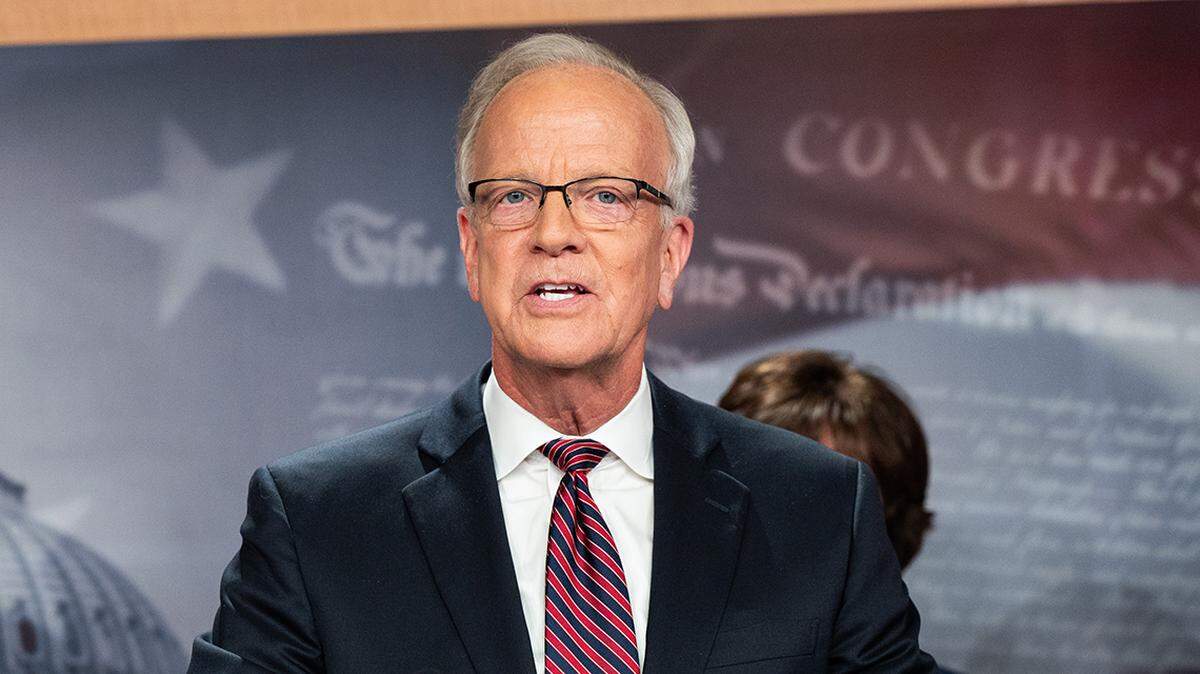
U.S. Sen. Jerry Moran says a potential Boeing buyback of Spirit AeroSystems makes sense as long as it doesn’t jeopardize the burgeoning defense work being done in Wichita.
No deal has been reached between the two companies yet, but on Capitol Hill last week, Moran expressed concern that Spirit’s defense programs and the employees who work on them could get lost in the shuffle of a Boeing acquisition.
“My assumption is that Boeing is almost exclusively interested in this for commercial manufacturing, and yet, in the absence of Spirit AeroSystems, we lose a lot of defense capabilities,” Moran said during a Senate Appropriation subcommittee hearing.
On Monday, after touring Spirit’s south Wichita plant, Moran sought to clarify his position.
“Most of the conversations taking place about this merger or acquisition has been about Boeing and the needs of the commercial side and the amount of work that Spirit does on fuselages for Boeing. All that makes sense actually to me that it would be combined into one entity,” Moran told reporters.
“But what I want to make sure doesn’t happen is, in that process, it cannot be forgotten that Spirit also has about 2,000 employees who do defense work for companies other than Boeing.”
Boeing does contract with Spirit on two defense programs — the KC-46A refueling tanker aircraft and P-8A Poseidon, a military-specific derivative of the 737. Other high-profile defense programs at Spirit include the Bell Helicopter V-280 and the Lockheed Martin-Sikorsky CH-53K helicopter. In its first quarter financial report, Spirit reported a 33% year-over-year rise in its defense and space revenue.
“As this conversation takes place and negotiations occur, we need to make certain other companies who do business with Spirit still have the opportunity to continue to have those services provided and manufacturing occurring in Wichita,” Moran said.
Oversight
The senator’s visit to Spirit came days after the company announced it plans to lay off between 400 and 450 production employees working on commercial programs.
737 MAX fuselages have piled up in Wichita in recent months as Federal Aviation Administration and Boeing inspectors check Spirit employees’ work. The extra layer of oversight is a response to the Jan. 5 in-flight emergency when a door plug initially installed by Spirit blew out of an Alaska Airlines plane.
“I’ve had conversations with the FAA administrator indicating that there is no future for aviation in Wichita or in this country if it’s not safe. Safety has got to be the priority,” Moran said. “Americans have to feel safe flying, have to know when they get on a plane that they’re going to be safe and secure. But let’s make sure there’s no sort of unnecessary hindrance towards getting this workforce back to work and planes coming off the line.”
Moran said he anticipates FAA Administrator Mike Whitaker will make a decision in early June about whether or not to lift the cap on 737 MAX production. The cap is currently set at 38 planes per month, but Spirit has said it expects to maintain its current delivery rate of 31 fuselages per month through the end of the year.
Moran said while he was at the facility, he asked employees what they thought of Boeing and Spirit potentially being reintegrated after almost 20 years as separate companies. Boeing sold its Wichita commercial plant, which became Spirit, in 2005.
“My take on my conversations with employees at Spirit, almost none of whom have ever worked for Boeing before — it’s a younger generation than the ones who were here in 2005 and 2006,” Moran said. “But I think they see this as a way of stabilizing Spirit, of providing additional financial resources for Spirit to be successful. And just kind of a common sense thing where we’re doing the work for Boeing. Why wouldn’t it make sense for us to be one company?”