Aviation is key to Wichita. For workers, what does a diversified economy mean?
Russell Speirs worked in Wichita’s aircraft industry for nearly two decades. He loved his job with Bombardier so much that after he was laid off in 2016, he tried to return to the company, later taking on contract work there. He hoped to make his way back up in the business full time.
That didn’t happen. Speirs was officially let go from that contract work last year. And now he’s not sure he’ll go back into aviation at all.
“It’s so volatile,” he said of the industry.
Instead of relying on aircraft, Speirs is working toward an associate’s degree in business administration at WSU Tech, able to attend as a full-time student because of Trade Adjustment Assistance benefits, a federal program he applied for and was approved for with the help of the Wichita Workforce Center.
Durable goods manufacturing, which includes the aviation sector, made up about 23% of the Wichita metropolitan area’s gross domestic product in 2018, the most recent year data is available. Manufacturing more generally made up about 29% percent of Wichita’s GDP in 2018, according to data from the Bureau of Economic Analysis. That’s a larger share of the local economy than any other industry tracked by the BEA.
Aviation, as a significant portion of Wichita’s economy, has experienced a downturn in 2020 between the fallout from the 737 Max and the coronavirus pandemic’s impact on commercial air travel. The Workforce Alliance of South Central Kansas estimates around 54,852 people in the region, across all industries, have been either laid off or furloughed since December. Spirit AeroSystems in January laid off 2,800 workers and Textron Aviation announced this month it would lay off 800 employees.
When aviation hurts, Wichita hurts, business leaders and experts say. One way to lessen the damage, they argue, is to diversify Wichita’s economy so that workers and businesses aren’t so reliant on aviation when the sector isn’t doing as well.
If the local aerospace sector were more diversified in 2020, before the fallout from the 737 Max and the COVID-19 pandemic, job losses in aviation wouldn’t be as bad this year, said Jeremy Hill, director of the Center for Economic Development and Business Research at Wichita State University. Hill prepares employment forecasts and workforce dynamics research, among other work at the Center.
But what does it actually mean to diversify a local economy in practice, and how could it impact the aviation industry the city is so proud to uniquely host? Are the outcomes of a diversified economy helpful to out-of-work employees?
“When we think, as a community, that we need to have another industry for diversification, that is an oversimplification” of the issue, said Hill.
A healthy outlook on diversifying Wichita’s economy — in a way that benefits workers — includes using the specific strengths and talents employees in Wichita already have in regards to aerospace and highly-skilled manufacturing, Hill said.
What does it mean to have a diversified economy?
Broadly, to diversify an economy means both to expand the types of businesses in a city and what products those businesses create, where they export goods to or who they sell to. It creates a more varied structure and a broader range of economic activities in a region.
In practice, diversifying Wichita’s economy can look like a number of different approaches.
It might mean a new company moving to town and hiring workers — for example, AgEagle’s relocation to Wichita. A new business could be a part of the manufacturing or health care industry, where lots of Wichita jobs already exist, or in a completely different field.
Diversification could also look like the expansion of a company that’s already located in Wichita, said Jeff Fluhr, president of the Greater Wichita Partnership. The Partnership is an economic development agency focused on creating jobs and attracting and retaining talent, among other initiatives. There are businesses already in Wichita that want to do new things, Fluhr said.
“We have diversity here, we just have to cultivate it,” Fluhr said.
Diversification doesn’t always appear as sweeping change, said Andrew Nave, executive vice president for economic development at the Partnership. It can be as simple as an existing Wichita company expanding the products it makes or its customer base.
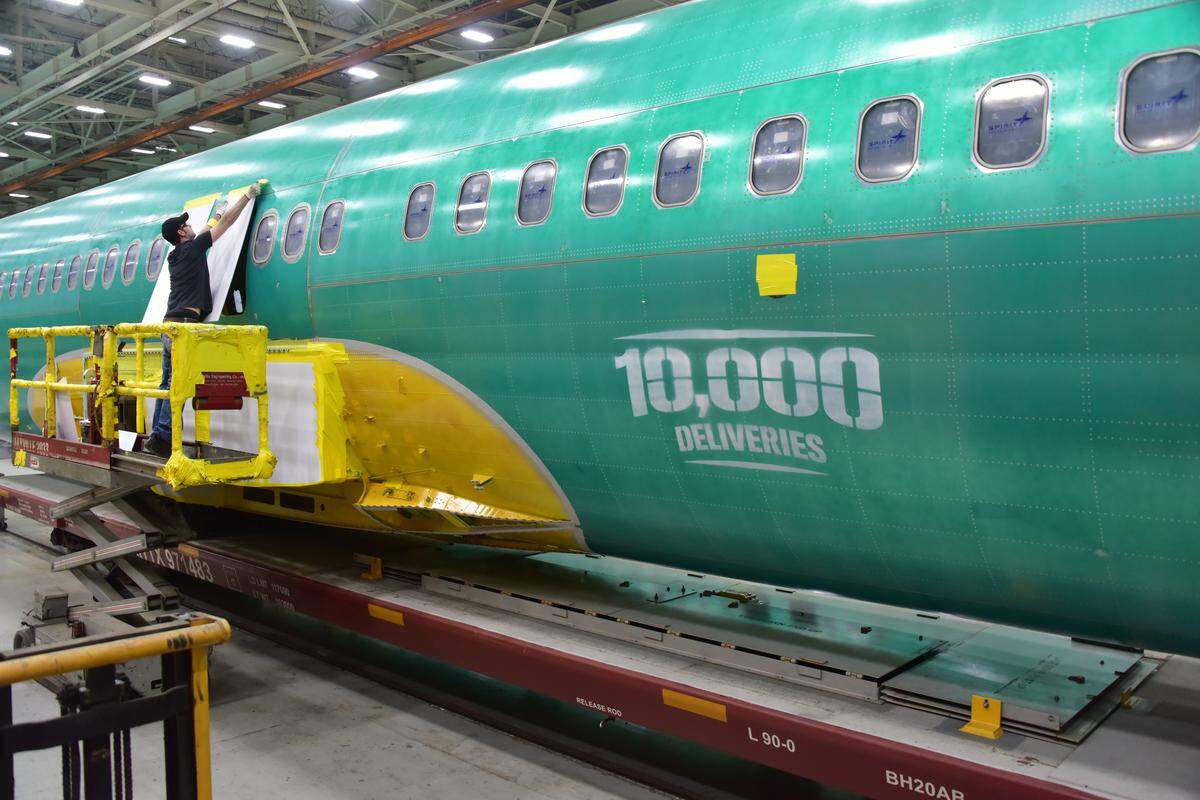
Spirit AeroSystems has already worked to do this, Nave said. Diversification can be seen in its partnership with Vyaire Medical to manufacture medical ventilators. Spirit has also worked to diversify the type of work it does — the company announced in June that it received $80 million from the Department of Defense to support those types of projects. In addition, Spirit is working with Virgin Hyperloop to help manufacture the new mode of transportation.
“You can’t grow something out of thin air. But we’re more diverse than people think already,” said Nave.
The Vyaire Medical partnership was estimated to keep around 700 Spirit Wichita workers employed, at least in the short term. That’s where diversification can help, Nave said — by offering new opportunities.
Spirit itself would say that diversification is key to its future success in Wichita, said Gary Plummer, president and CEO of the Wichita Regional Chamber of Commerce.
And at a time when Wichita has lost around 8,100 jobs in aviation since December, whether permanent or temporary, the conversation about how to provide more opportunity for workers has been pushed front and center, Plummer said.
“Sometimes a crisis like this can turn into an opportunity too,” Plummer said. “How do we sell the advantages of the Midwest and rural America? I think it’s an opportunity we need to seize on.”
Is a diversified economy helpful to workers?
Whether or not a move to diversify Wichita’s economy can be useful for workers depends on how it’s approached, Hill, with WSU, said.
A healthy way to diversify, Hill said, would be to focus on adding jobs that build upon Wichita’s existing talent in highly-skilled manufacturing. That doesn’t have to be a job in aviation, but could mean work that isn’t too far of a leap from what laid-off aviation employees already know how to do. Jobs elsewhere in manufacturing, or in logistics or cybersecurity, might make sense.
If new companies bring new jobs, or new jobs are created, that might sound like good news on its face — but do existing Wichita workers have the skills and education to fill those jobs, Hill asks. If not, the cost of retraining can fall onto the individual workers and their families.
That can be both timely and expensive, and cause growing pains in the Wichita economy as a whole. That wouldn’t be good for businesses either, Hill said.
At the same time, it’s important for workers to keep up with the changing skill sets as economic growth occurs, said Keith Lawing, president and CEO of the Workforce Alliance of South Central Kansas, which operates the Wichita Workforce Center. For example, new jobs are much more reliant on technology skills than in past economies.
At the workforce centers, Lawing said they look to help people find skill sets to build upon that will propel a business or the economy forward, too — it’s about making connections that make sense and putting investment into your own skills.
Nave and Fluhr with the Partnership see diversification as good for workers because it creates new opportunities.
“A more diverse economy is better in the long run,” Nave said. “I can see how there might be a short-term adjustment for workers, but this is good overall.”
Taking advantage of existing infrastructure
Over time, as the aerospace industry emerged in Wichita, the infrastructure to support it developed in the city and region. Schools such as WSU Tech, formerly known as Wichita Area Technical College, built a specialization in aerospace education not seen elsewhere in the country, Hill said. The National Institute for Aviation Research and the National Center for Aviation Training developed right here in Wichita.
Infrastructure like that is costly over time, Hill said, but makes a big difference in our economy. Those programs build up institutional and generational knowledge that make Wichita workers so talented and efficient.
That talent is why Wichita is competitive on a national level, said Hill.
“We’re really good at aerospace,” he said. “We have skills in aerospace that the whole world wants, that it really needs to be competitive.”
In any move to diversify, Wichita shouldn’t forget about the benefits of that infrastructure, Hill said.
Lawing said Wichita can look at larger economic trends across the country and even globe to see what types of jobs and companies make sense for Wichita. There are others who want to capitalize on the existing talent in Wichita, he said.
“While it’s not good for us, it’s definitely not all doom and gloom,” he said. “We have some opportunities we need to take advantage of.”
Long-term value in aviation endures
The amount of manufacturing expertise in Wichita makes the city and its workers unique, said Nave, with the Partnership. There are jobs in general manufacturing outside of aviation too. However, Nave said we’re already seeing more diversification than you might think.
Jobs revolving around cybersecurity, logistics, e-commerce and renewable materials are all examples of a healthy diversified focus for Wichita, Nave said. These sectors go hand-in-hand with skills our workers have or are able to expand easier than others, although they aren’t the only fields.
Today, Wichita’s economy is less focused on aviation than it used to be, Hill said. Job losses have added up over time and naturally diversified our region with new focuses cropping up.
Speirs, the laid-off aviation worker, is grateful for his time in the industry. He moved to Wichita from Las Vegas as a young adult, eventually landing at Bombardier. With a lot of hard work, he said he was able to make his way up in the company.
Now, he’s looking to work his way up in his personal life. He sees the chance to diversify his own skills as a chance to help himself get another leg up in Wichita’s economy.
However, Hill said it’s important for the city not to give up on something with long-term value in the economy. In Wichita, that’s aviation.
He said the city needs to hold onto what it does best: maintaining its status as the air capital of the world while seeking opportunity for growth in ways that make the most sense for Wichitans.
This story was originally published July 26, 2020 at 4:53 AM.