
World War II bomber ‘Doc’ marks milestone with roll-out event (VIDEO)
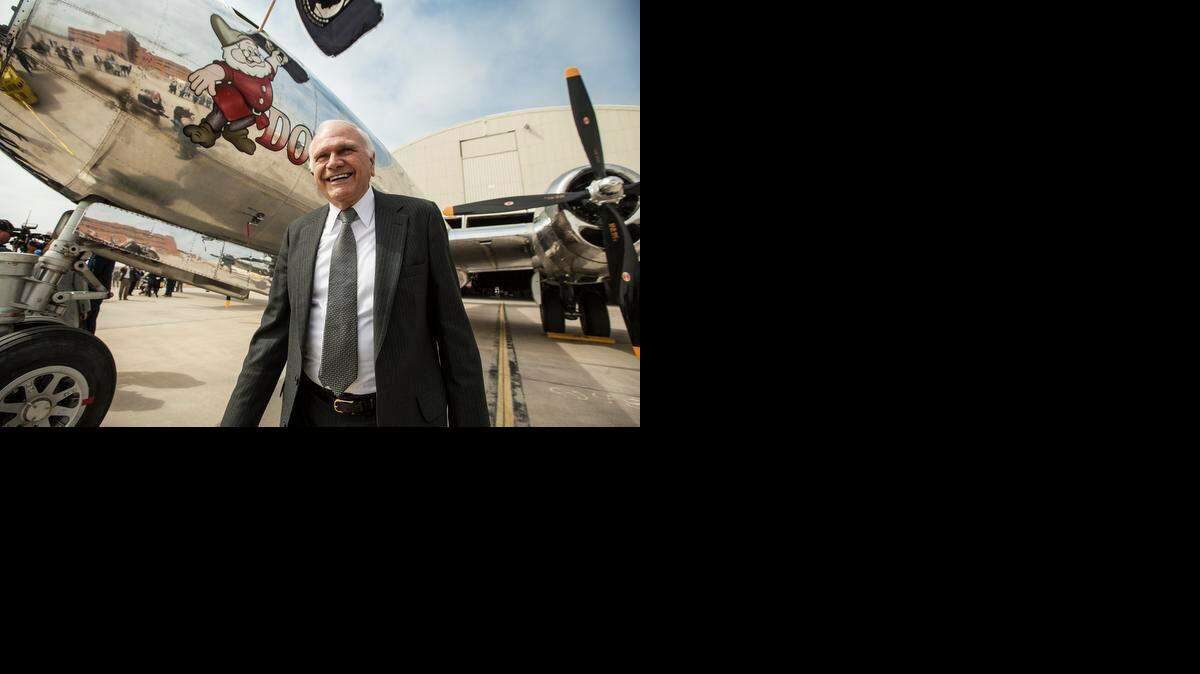
Doc saw sunlight on Monday.
The Wichita-built B-29 Superfortress bomber was towed out of its hangar Monday on South Oliver to a waiting crowd of about 300 restoration volunteers, and Air Force and Spirit AeroSystems officials.
A recording of the U.S. Air Force song blared as a yellow tug slowly pulled Doc from its quonset hut-styled hangar on the grounds of the former Boeing Wichita – now Air Capital Flight Line.
Monday’s invitation-only roll-out of Doc was largely symbolic and included a ceremonial delivery of the airplane to Col. James Dermer, vice commander of the 22nd Air Refueling Wing at McConnell Air Force Base. Doc was originally delivered to the Army Air Forces 70 years to the day on Monday.
Spirit CEO Larry Lawson presented a replica of the B-29’s horn button from the yoke of Doc to Dermer as part of the delivery ceremony.
The roll-out also represented a milestone in the nearly 15-year restoration effort of the airplane.
It “means its time in the factory is done, and it’s ready for ramp tests … prior to its first flight,” said Jeff Turner, retired Spirit CEO and chairman of Doc’s Friends, the nonprofit organization that owns Doc and is leading its restoration.
The airplane – originally part of a squadron known as Snow White and the Seven Dwarfs – was plucked from the Mojave desert in California in 1987 by Tony Mazzolini. It had been there for more than 30 years as a target on the China Lake Naval Air Warfare Center Weapons range.
“It was a very long journey,” Mazzolini said at a luncheon preceding the roll-out. “There were many, many obstacles to overcome.
“I’m just emotionally taken by all of the effort, the quality of work (of the volunteers) and the amount of support from Boeing and Spirit,” he said to the audience.
Officials estimated that volunteers have spent more than 300,000 hours restoring the airplane. Some of those volunteers worked on the original B-29 line at Boeing in Wichita, or had served as crew members.
Other volunteers include current and former employees of Spirit and Boeing. The restoration effort was on hiatus for a few years because of a lack of hangar space and a poor economy.
The Wichita plant turned out 1,644 of the airplanes – best known as the bomber type that was used to drop atomic bombs on the Japanese cities of Hiroshima and Nagasaki, ending World War II in the Pacific.
Chuck Chauncey, a former B-29 pilot in World War II and one of the early volunteers on Doc’s restoration, sat on a folding chair about 50 yards from Doc. He said the airplane was in better shape than when Mazzolini had it trucked from California to Wichita in May 2000.
“It was a junk pile when it came in,” said Chauncey, 91, adding, “I didn’t think it would ever fly.”
“This is a real great day,” adding that the Doc’s new “hybrid” engines are much improved from the ones originally used on the B-29. Chauncey, who said he flew 35 missions as a B-29 pilot over six months in 1945, said the earlier engines were known for “swallowing valves,” having “runaway props” and nacelles – engine coverings – that “fit too close” and didn’t provide proper cooling for the engines.
The next milestone for the airplane will be its first flight. It would be only the second B-29 in the world in flying condition. The other is Fifi, which is operated by the Commemorative Air Force.
Turner declined to give a specific date for that event, which is expected this year. But “we’re hopeful it (first flight) will be before it gets too hot,” he said.
Beyond that, Doc’s Friends will need to find a permanent location to house the airplane and ongoing support to operate it as a flying museum. The organization estimates it will need to raise an additional $7 million to $9 million to complete those efforts.
Turner said Doc’s Friends’ plans for the airplane are important because they honor the veterans who flew the B-29 and the people who built it. It’s an operating artifact from World War II that can educate future generations about the war and Wichita’s role in it, he said.
Turner said his father served in the war in the South Pacific, “so it’s an emotional connection as well.”
Reach Jerry Siebenmark at 316-268-6576 or jsiebenmark@wichitaeagle.com. Follow him on Twitter: @jsiebenmark.
This story was originally published March 23, 2015 at 10:57 AM with the headline "World War II bomber ‘Doc’ marks milestone with roll-out event (VIDEO)."