
Avionics industry leader says FAA mandate will cost aircraft owners, add jobs
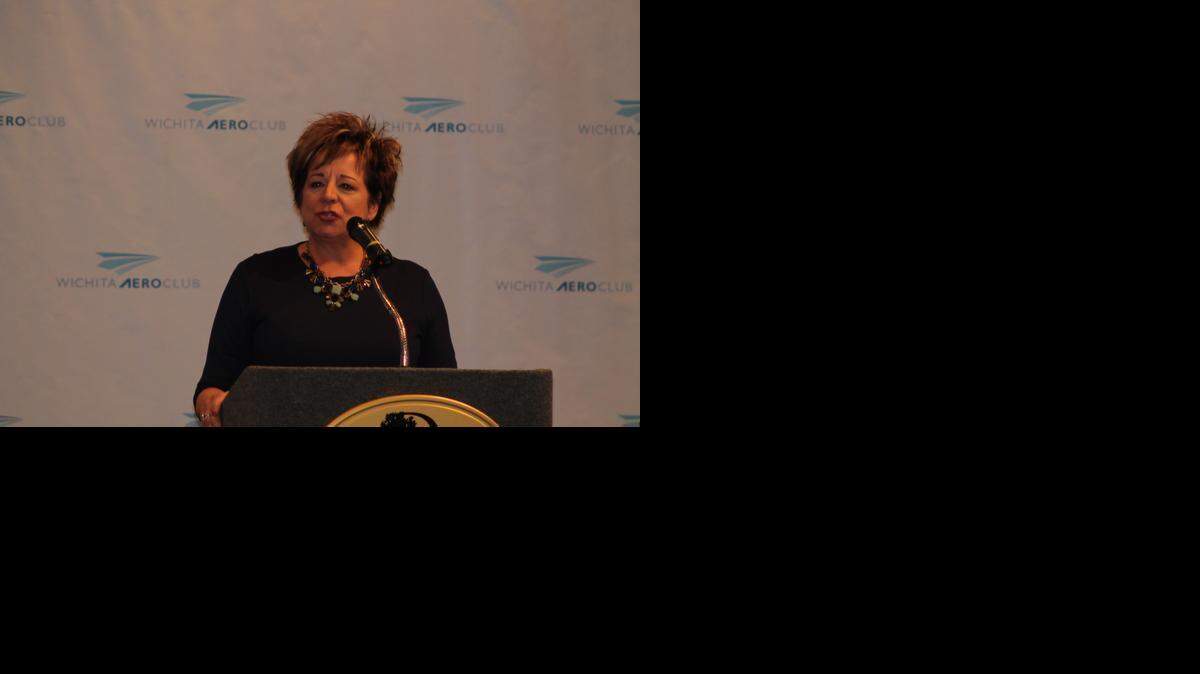
The head of an avionics industry trade group told a Wichita audience Tuesday that a federal rule for all aircraft flying in controlled airspace to be equipped with new GPS-based identification technology in the next five years will have significant impact.
Paula Derks, president of the Aircraft Electronics Association, said at a Wichita Aero Club luncheon that the Federal Aviation Administration’s automatic dependent surveillance broadcast, or ADS-B, mandate will mean safer skies, and more jobs for avionics repair shops.
But for aircraft owners, it will mean more money out of their pocketbooks, with costs to equip their plane with the new technology ranging from $1,500 to $250,000 depending on the type and age of the plane.
“There’s no doubt the segment of the industry we represent, they’re going to benefit from the mandate,” she said in an interview before her noon presentation at the Doubletree by Hilton Wichita Airport. “But we’re sensitive to the consumer.”
The ADS-B rule was established in 2010 and takes effect on Jan. 1, 2020. The technology, Derks said, uses satellite navigation and periodically transmits an airplane’s position to air traffic control. For pilots whose airplanes are equipped to receive ADS-B, which is not part of the FAA mandate, it will allow them to also see other aircraft in their immediate airspace, as well as view constantly updated weather conditions.
Of the roughly 150,000 general aviation aircraft operating in the U.S., Derks said, about 10,000 have been equipped with ADS-B.
“So time is running out, and the FAA says over and over again it will not extend the mandate,” she said.
Derks added that aircraft not equipped with ADS-B transmission technology won’t be permitted to fly after the mandate takes effect, so aircraft owners have to install the technology in their airplanes.
For experimental and light-sport airplanes, the cost for ADS-B is about $1,000, she said. For slightly larger piston aircraft such as a Cessna 172, she said the cost is about $3,000.
And for business jets, the cost can range from $8,000 to as much as $250,000. She said the costs for business jets are a lot higher because they are bigger and more complex aircraft, and require more time to install.
The cases in which costs to purchase and install ADS-B run into hundreds of thousands of dollars, Derks said, are those in which the aircraft are bigger and older.
She also said the range of ADS-B products on the market for business jets is much smaller compared with a larger variety of ADS-B products for smaller, lighter airplanes. Derks said she expects the number of ADS-B options for business jets to increase in the next few years.
She said that in a survey of AEA-member avionics repair shops that specialize in small aircraft, 73 percent expect to hire more workers for ADS-B installations. That percentage increased to 83 percent among shops that specialize in business jets, Derks said.
Among airplanes coming off production lines, ADS-B installations vary by manufacturer, AEA spokesman Geoff Hill said.
Officials from Textron Aviation said in a statement Tuesday that the company that owns Cessna and Beechcraft is actively investing in ADS-B transmitting technology across its product line, and many of its new production aircraft are compliant with the FAA mandate, though it did not specify which aircraft.
“Throughout the year, we plan on issuing product updates regarding ADS-B Out functionality for many of our Beechcraft, Cessna and Hawker aircraft,” the statement said.
Reach Jerry Siebenmark at 316-268-6576 or jsiebenmark@wichitaeagle.com. Follow him on Twitter: @jsiebenmark.
This story was originally published February 17, 2015 at 7:44 AM with the headline "Avionics industry leader says FAA mandate will cost aircraft owners, add jobs."