
Tumbling oil prices bring new scrutiny to Kansas’ biggest driller
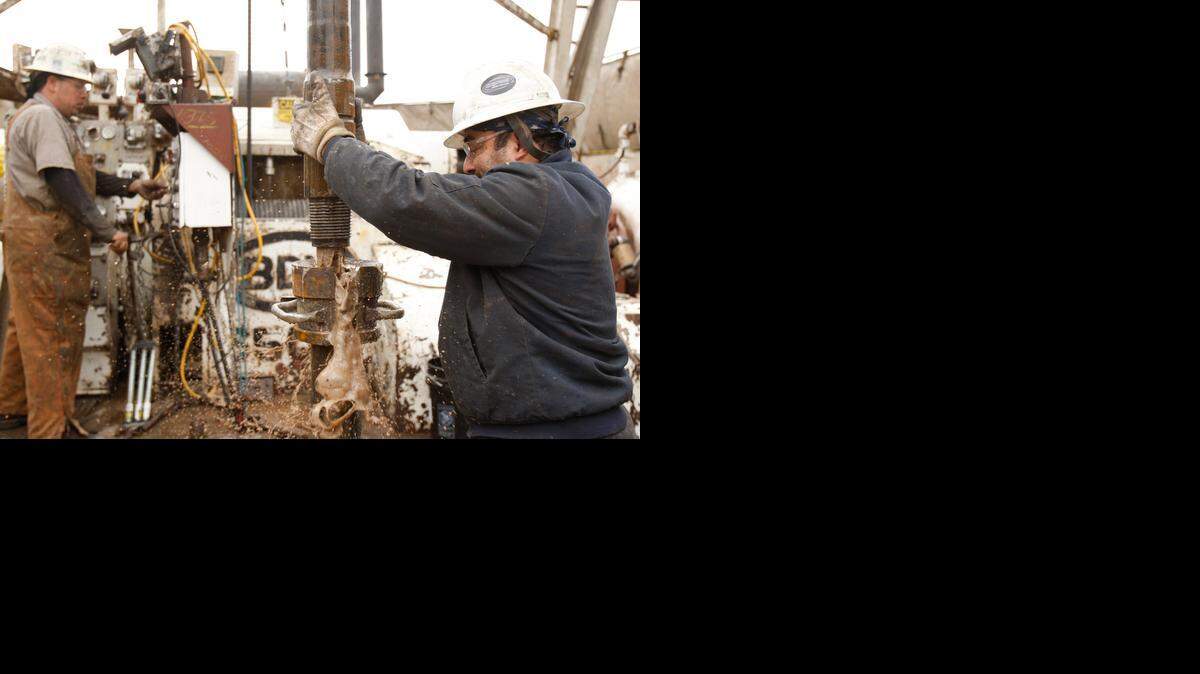
Investors are skeptical about SandRidge Energy’s prospects these days.
All oil companies have been hammered by the $50 drop in the price of a barrel of crude oil, but SandRidge’s stock has been particularly hard hit. One of the worst performers of the year, the stock’s value has fallen 80 percent since July 1, to $1.35 a share on Wednesday.
Based in Oklahoma City, SandRidge has a big impact north of the border because it was Kansas’ top oil producer and fourth highest gas producer in 2013, the most recent complete year available. And it is, by far, the largest oil and gas producer in the state using horizontal drilling in the state’s Mississippian Limestone formation — and it’s among the last survivors of the state’s horizontal drilling boom.
It may be its horizontal technology that is proving its undoing in a low-price environment. SandRidge says it can drill a horizontal well for $2.9 million. A typical vertical well in Kansas costs $400,000 to $700,000.
Company CEO James Bennett said at the company’s last conference call in early November that SandRidge would cut back on its capital expenditures – its well drilling – in response to the fall in oil prices. Exactly how much, he said, will be announced later.
At the time of the call, West Texas Intermediate, the benchmark for American oil, had fallen from $100 a barrel to $80.
On the call Bennett was upbeat about the company’s prospects for this year.
“I will stress that we are not that sensitive in the year 2015 to changing commodity prices,” he said.
Bennett noted in the call that the company has hedged about two-thirds of its projected 2015 production. That means the company can sell about a third of production at more than $90 per barrel, another third at whatever the market price dictates, and about a third priced in between using a complicated three-way collar hedge.
“The hedge position gives us natural downside protection,” he told analysts.
Company spokesman Jeff Wilson said Wednesday that SandRidge isn’t losing money on its existing wells.
“Even at today’s prices our wells are commercial,” Wilson said. “We are not shutting down production.”
What about new wells?
Hiram Lewis, area operations manager for Source Energy MidCon, based in Wichita, said the fall in oil prices and the difficulty in getting consistent strong oil production has pushed his company to switch from horizontal drilling to traditional vertical drilling to cut costs.
He said vertical drillers in Kansas, if they are careful, can still make money at current prices. Kansas producers tend to get $8 to $12 per barrel less than the West Texas Intermediate benchmark price because of the cost of transporting the oil. The price Wednesday for a barrel of Kansas Common crude at the NCRA refinery was $37.75.
Lewis said he has all the admiration in the world for SandRidge and its focus on cost-cutting, but he doesn’t believe it can’t make money on horizontal drilling at current prices.
“If they’ve got a strong hedge position, maybe they can keep drilling heavy and hope prices turn around before their hedges run out,” Lewis said.
Wayne Woolsey, president of Woolsey Energy in Wichita, who has drilled some horizontal wells, said he had no doubt that SandRidge can’t make money at this price.
“I don’t see how they can, I’m sorry,” he said. “At $50, even drilling a vertical well is tough; drilling horizontal wells has to be even tougher.”
SandRidge, though, may have enough cash in reserve and enough investor money to keep going in anticipation of a recovery in oil prices.
Woolsey said he has stopped drilling new wells and is now looking to fine-tune his 350 operating wells to get as much production from them as possible.
“This is a long-term deal,” he said. “There have always been cycles. It may only be $50 for two years.”
Less in 2015
The cutback in new well drilling at SandRidge has apparently already begun. The company filed with the Kansas Corporation Commission an intent to drill for 25 wells in October, 15 in November and two in December.
But how long can SandRidge afford to drill no wells? One of the biggest concerns by equity analysts and investors is the company’s $3.2 billion in long-term debt. In November, Bennett said he was comfortable with the company’s loan payments relative to its cash flow.
But as drilling slows and existing wells’ production declines, that cuts cash flow. All of which makes debt payments relatively larger on the company’s income statement. The loan contains a cap on just how low the company’s earnings can be before it violates the loan agreement.
And the company’s prospects cloud in 2016 when the percentage of SandRidge’s hedged oil falls to about a quarter of production, leaving the company to sell most of its oil at market price.
Wilson said such skepticism is misplaced.
“I understand there has been speculation,” Wilson said. “But those sentiments don’t make any sense.”
He said the company has $1.4 billion in both cash and a credit facility that it hasn’t drawn on. Its first bonds don’t mature until 2020. The company is making its bond payments easily, he said.
“Couple all that with our substantial hedge position and, 2015, we’re fine,” Wilson said.
Reach Dan Voorhis at 316-268-6577 or dvoorhis@wichitaeagle.com. Follow him on Twitter: @danvoorhis.
This story was originally published January 7, 2015 at 4:48 PM with the headline "Tumbling oil prices bring new scrutiny to Kansas’ biggest driller."