
Cure for Wichita’s economic doldrums could lie overseas
Well, waiting for Wichita’s general aircraft industry to snap back hasn’t worked. What now?
One piece of “low-hanging fruit” for reviving the Wichita economy, say local and state economic development leaders, is revving up the region’s exports, and not just by hoping that Middle Eastern potentates buy more business jets.
A coalition of local and state groups, in cooperation with a national effort, will push for more companies in Wichita and Kansas to export more of their goods and services.
Staff members of Kansas Global Trade Services, based in Wichita, and the state of Kansas will speak at six gatherings of local government and business leaders around the state in the coming months. The first meeting will be in Manhattan on Thursday. A meeting in Wichita will be announced soon.
The idea is to gather a community to identify the companies that seem ready to export, but that haven’t for one reason or another. KGTS staff will call on 100 companies following the meetings.
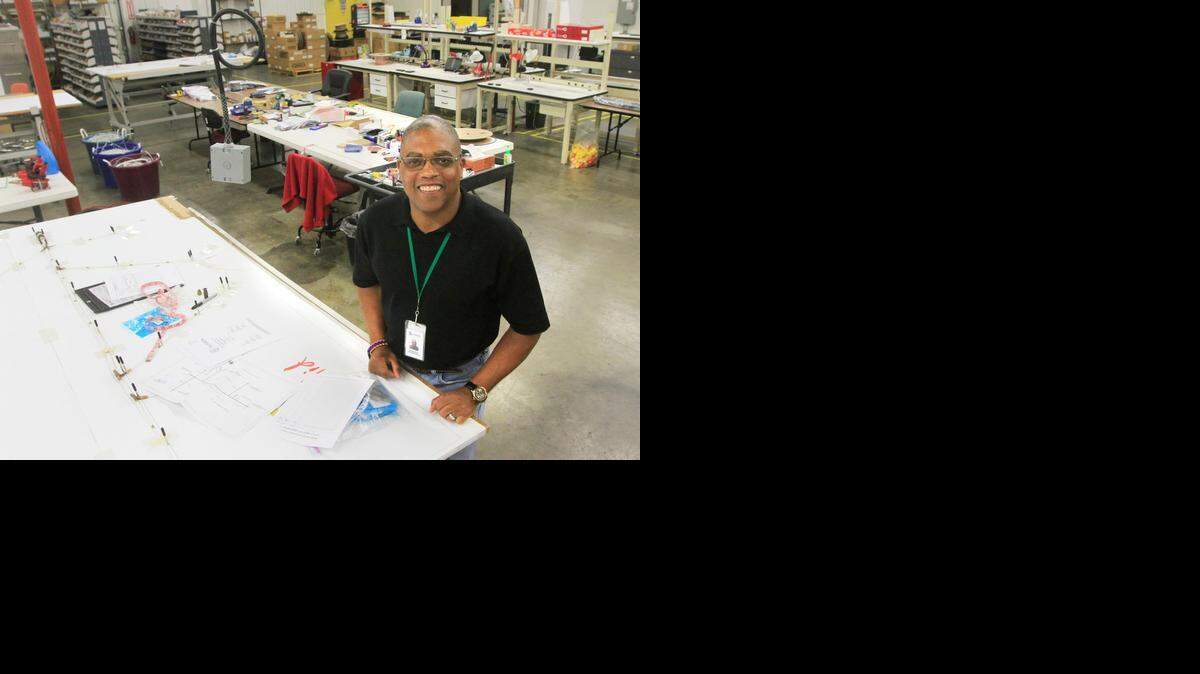
Global Aviation Technology’s co-owner Woody Cottner is among the companies that are working to build exports.
The 15-employee company, 1704 S. Baehr, fills a range of niches in aviation, from making aircraft engine electrical harnesses to modifying older model Learjet, Beechcraft and Hawker aircraft.
Cottner got several business leads after traveling to Ghana with a Wichita delegation and to a defense trade show in South Africa. His wife and company co-owner, Candace Cottner, will travel to China next month with a Wichita delegation. The Cottners definitely buy into the effort to build exports.
“In the States, our industry is still lagging,” Woody Cottner said. “There is a lot of business in emerging markets. Their aviation market is just heating up.”
Not the big guys
Such a quest might seem odd. Wichita is already one of the nation’s leading exporters, but economic development officials say Wichita is leaving money on the table.
Wichita is an export powerhouse because of its aircraft industry. Aircraft exports make up about 57 percent of the Wichita metro area’s exports.
But there is a whole range of local industries beyond aircraft that also export, the largest of which are machinery, chemicals, agriculture, petroleum products, computers and electronics, and processed food products.
Development officials say they will aim not at the big guys in those industries – Koch Industries, Agco, CNH, NetApp and the like – but for niche players and suppliers, the second- or third-tier companies.
They are looking for companies with “export potential,” said Karyn Page, president and CEO of Kansas Global Trade Services. These are companies that make world-class products or services, particularly in a range of industries in which strong exporting already exists.
“In each of those industry, there is one or two big companies … that are doing really well in exports, but if you look a little deeper in that industry, you see companies that don’t export or export to one or two countries. It’s those companies within those industries that we really want to concentrate some support services in order to help them grow faster.”
Her basic argument is hard to refute: The rest of the world is far bigger and growing faster. And the companies to be targeted are already making world class products or offer world-class services because they already compete against worldwide competitors in the U.S.
And the basic economic development argument is hard to deny as well, Page said.
Wichita’s economy has been tied to the cycles of aircraft industry for decades. City leaders have said for years they want to diversify to buffer the sharp ups and downs. This is one way to do it long term.
Each additional $1 billion in exports equals 6,000 jobs, according to studies cited by KGTS.
“We can sit back and ride the wave, or we say, hmm, maybe we can diversify,” Page said.
Why or why not
The study, Wichita Regional Export Planning Initiative, shows that even many companies that do export aren’t doing it aggressively. In a survey, the second most common answer given as to why they export, survey respondents said that a foreign customer contacted them to buy their product.
The biggest barrier to exporting, according to the survey, is the amount of paperwork involved in selling in a foreign country. Other top reasons cited: lack of training and not having events where they can network with potential customers.
“That’s easily solved,” Page said. “People in my office can go out to a company and help them fill out paperwork.”
An action plan on how to boost exports containing numerical goals is due out by the end of the year.
Tim Chase, president of the Greater Wichita Economic Development Coalition, said that they have a tentative goal of 10 percent growth in exports.
That would be the equivalent of luring a $770 million company to town, enough to move the needle in the local economy.
Chase said that although the project is long-term, he expects some quick successes.
“Within a year, will see growth in exporting, although the global economy will have to help out,” he said. “But the plan is that five years from now, or 10 years from now, when the aviation is going through its cycle, we will have a stronger foundation and it won’t be quite as big a ripple.”
One of Wichita’s exporting success stories is Balco, 2626 S. Sheridan, a company that makes specialty architectural products, including lighting systems, for large projects.
After the demand for construction crashed in the U.S. during the recession, the company moved to expand globally. In two years, the company has moved from 6 percent of revenues from exporting to 25 percent, said CEO Ronnie Leonard. These days, company staff are working major projects in Dubai, Qatar and Panama.
“For a lot of people, there’s fear of the unknown,” Leonard said. “It’s a lot of paperwork, you have to ahve all of the i’s dotted and the t’s crossed, but there is tremendous opportunity because business is so global anymore.”
Reach Dan Voorhis at 316-268-6577 or dvoorhis@wichitaeagle.com. Follow him on Twitter: @danvoorhis.
Wichita area exports
▪ Total value of Wichita area exports, in 2012: $7.7 billion
▪ Percent of Wichita economy dependent on exports: 27.7
▪ Rank among U.S. metros in export dependence: 3
▪ Percent of all exports coming from aircraft sales: 57
▪ Export growth rate from 2003 to 2008: 22.3 percent a year.
▪ Export growth rate from 2009 to 2012: 5.1 percent a year.
Source: Kansas Global Trade Services
This story was originally published October 24, 2014 at 5:23 PM with the headline "Cure for Wichita’s economic doldrums could lie overseas."