Workers could lose wages under climate change. Here’s what that means in Kansas
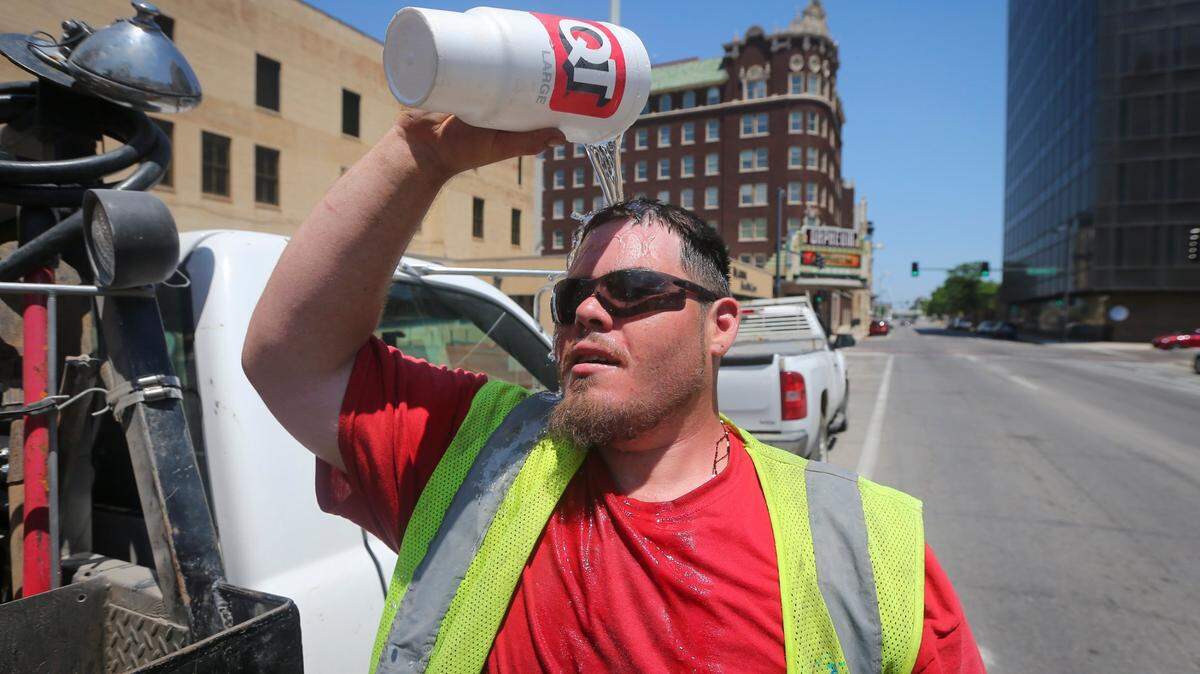
As the climate changes and the world warms, outdoor workers will see an increase in the number of days that they won’t be able to work outside, according to a recent study from the Union for Concerned Scientists.
Outdoor workers will lose wages, and as a majority of outdoor workers are Black, Hispanic or are located in rural areas, these communities will be the most impacted.
One-fifth of Kansas’ workforce is outdoors.
“There are limits to how much people can produce and people shouldn’t work if it’s unsafe,” said Rachel Licker, lead analyst of the study and report co-author. “For employers, they should also see themselves in this study. It’s going to affect their bottom line as well, if they don’t have people able to do their jobs and they can’t run their businesses.”
Across the nation, 32 million people are classified as outdoor workers, which includes roles such as farming, construction, maintenance and first responders, such as police officers and EMS.
The study looked at heat index projects under different climate change scenarios and combined that with U.S. Census data on outdoor workers and their earnings to determined the number of days that would be too dangerous for workers to be outside.
Outdoor workers during these days could experience heat stroke, other health problems and even death.
The study found the number of days and how many wages will be lost varies wildly depending on how much emissions are reduced.
Historically, Kansas experiences an average of two days a year that are too hot to work under CDC guidelines, as it would put workers at high risk of heatstroke. Based on U.S. Census Data, the study found that this equated to a loss of $271 in wages for the average Kansas outdoor worker.
By 2050, however, if emissions are not reduced, Kansas will experience an average of 16 days a year that will be too dangerous to work, and the average worker could lose over $2,000 dollars in wages.
If emissions aren’t reduced by late century, this jumps to 31 days that are too dangerous to work, and over $4,000 in lost wages per worker.
“The Gulf Coast states and the Southern Great Plains states are the ones that generally pop out as being the most at risk,” Licker said.
Currently, there are no federal or Kansas state protections for workers from the heat, although federal legislators did present a bill earlier this year that would protect workers from exposure to excessive heat.
“This study shows how important it is to protect outdoor workers’ earnings so that people aren’t put in the position of having to choose between their health and a paycheck,” Licker said. “If it’s too hot to work, they’re not going to lose out on their earnings for that day, but they’re guaranteed safety with respect to their livelihood.”
The Wichita government does provide guidance for their outdoor workers, such as taking frequent breaks and assessing how hazardous it will be to work, according to Linda Summervill, the Wichita safety coordinator.