
Can we make cheaper bridges? A KU professor thinks so
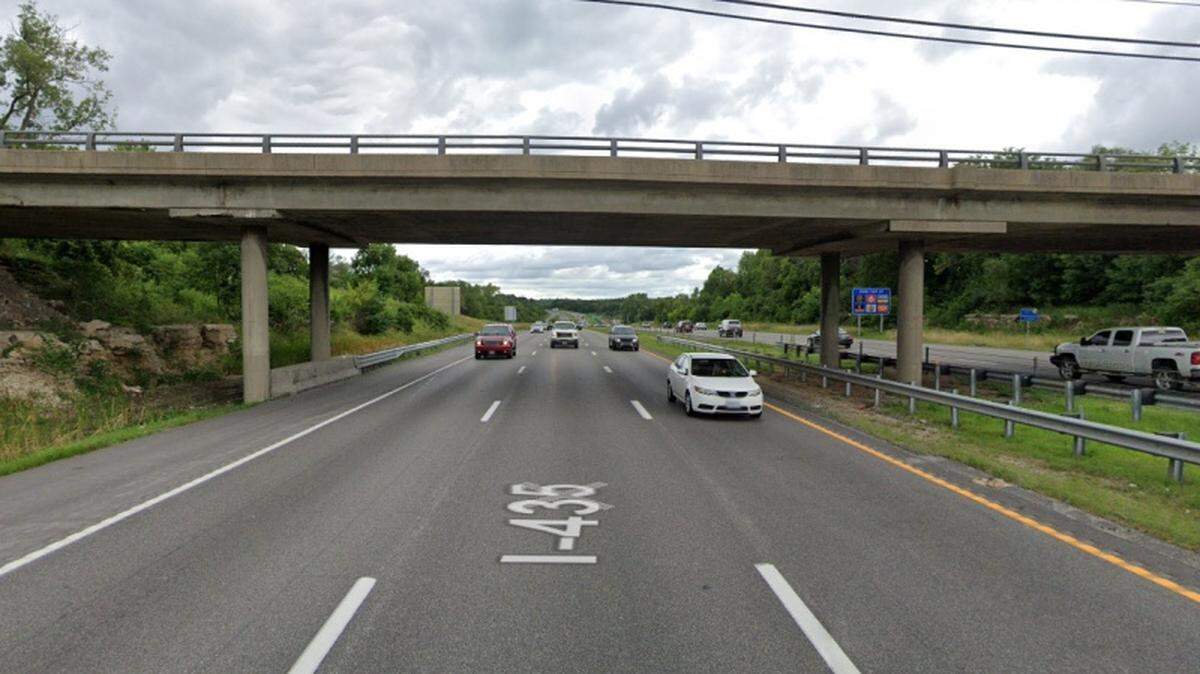
As you drive over one of the nearly 600 bridges in Sedgwick County, you’ll notice that most of them are concrete bridges. Through a project at the University of Kansas, that might change one day.
William Collins, an associate professor in the department of civil, environmental, and architectural engineering at the University of Kansas recently won an award from the American Institute of Steel Construction to study innovative steel bridge designs. Such designs could lead to bridges that cost less across their lifespan than bridges in use today.
“Steel is more expensive than concrete but if we can come up with a solution that doesn’t need to be replaced... this option could be more cost effective and save money in the long term, even if it’s more money up front,” Collins said.
Bridges in Kansas today
According to the Kansas Department of Transportation, approximately 3 out of every 5 of the 25,000 bridges in Kansas are made out of concrete.
While building a bridge out of concrete instead of steel can be cheaper upfront, maintenance costs and repairs over the lifespan of the bridge can potentially change which material is cheaper.
For steel bridges, that can include painting the bridge to prevent corrosion, and for concrete bridges, that can include patching the deck, the part that vehicles drive over, which can crack according to Collins.
Reducing those maintenance costs could then lower the cost of the bridge.
“When we talk about [a] 100-year bridge, that deck is going to have to be replaced 3, 4, 5 times throughout that life,” Collins said. “If we can somehow limit that, that could be a good thing.”
However, not all costs can be reduced when it comes to maintaining bridges.
“There is one thing that has an impact on bridges that [there’s] no way around it. We do have snow and ice, so we do have to salt our bridges in the winter,” Jim Weber, the director of Public Works for Sedgwick County said. “Salt is detrimental to concrete and steel.”
According to Weber, bridges in Sedgwick County typically last 50-60 years while ones that don’t see high volumes of road salt can last longer. New bridges built today typically last at least 75 years, according to the U.S. Department of Transportation.
What bridges of the future could be
Instead of using concrete for small and medium length bridges, Collins proposed to create a modular steel bridge. A modular bridge would allow any steel fabricator to create the individual pieces and then ship them to the site. The pieces could then be connected to a bridge in place rather than built in place like current bridges are, potentially allowing bridges to be constructed more quickly, saving additional costs.
“We’re always looking for new technologies and we do like things that are prefabricated off-site, kind of plug and play, because of the speed factor,” Weber said.
To test the feasibility of modular steel bridges, Collins and his team plan to build full size panels and test them in their lab.
Using data about how many cars and trucks drive over bridges during a typical year, they can use actuators to simulate decades of traffic to see how long before the panels would need to be replaced. They can then compare projected maintenance costs over the lifetime of the bridge.
“If somebody comes up with some kind of pre-cast component or prefabricated component that we could use and it made sense, we might use it,” Weber said. “If you can buy a prefabricated steel deck that you just swung in there, you know, build up the back wall so you have a support for it and swing the deck in there, it might be the greatest thing. We’d have to wait and see.”