
Trump tariffs ‘manageable’ so far for Wichita manufacturers; trade war a concern
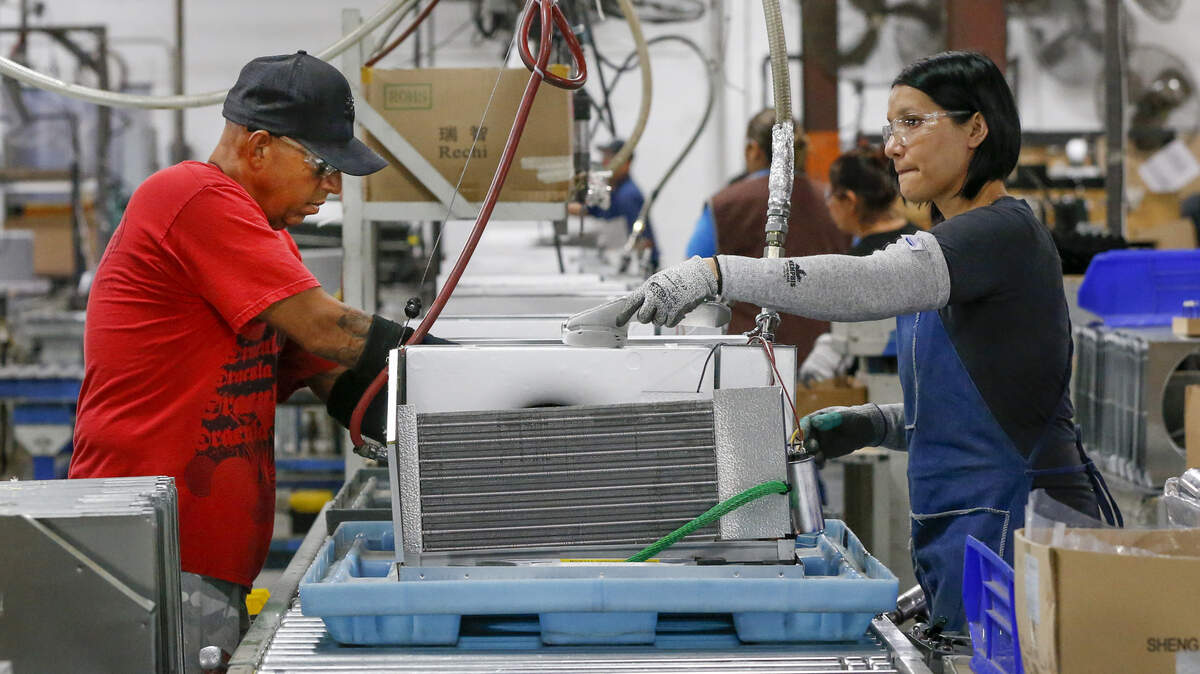
More than a month into new tariffs on imported raw materials and finished goods, Wichita manufacturers say they are holding their own.
President Donald Trump’s tariffs on imported steel and aluminum from China, Canada, Mexico and the European Union so far aren’t having a notable impact on small aircraft suppliers such as McGinty Machine Co. or original equipment manufacturers such as RV Products, which builds air conditioners for recreational vehicles.
“We’re not seeing a big effect on the bottom line,” said Don McGinty, second-generation owner of the 70-year-old company that employs 55 people on the eastern edge of downtown Wichita.
The tariffs — a tax on imported or exported goods — on steel and aluminum took effect June 1, followed by a first round of tariffs aimed at Chinese goods this month.
The Trump administration called the tariffs on imported steel and aluminum a matter of U.S. national security. The tariffs on Chinese goods come as part of a broader complaint of unfair trade practices by China, including theft of U.S. technology and intellectual property.
But between the imposition of retaliatory tariffs from those countries and a growing list of tariffs the U.S. plans to impose on thousands of other imports from China, other Wichita manufacturing executives worry about that will mean for their companies in the longer term.
“Clearly tariffs could impact us,” Tom Gentile, CEO of Spirit AeroSystems, said during a video interview this week with organizers of the Farnborough International Airshow in the United Kingdom. “We’re one of the largest users of aluminum in the world because we make so many metallic aircraft still, but the tariffs on the goods themselves is not necessarily material. It’ll be several million dollars but that will be manageable.”
‘Wave’ of tariffs
Rob Leach, RV Products president, said beginning July 6 his company began paying a 25 percent tariff on products it purchases from China — motors, compressors, capacitors — to manufacture its air conditioners.
Yet a competitor from China that also makes RV air conditioners isn’t yet subject to an import tariff.
Last week Leach invited staff from the offices of Sens. Pat Roberts and Jerry Moran, and Rep. Ron Estes, to tour RV Products and learn how the expanded tariffs on China affected the north Wichita company that employs about 350.
“All I’m asking is for them to level the playing field,” Leach said.
The tariffs RV Products are paying are the first part of what is so far three “waves” of potential tariffs on materials, goods and food from China, said Karyn Page, president and CEO of Kansas Global Trade Services.
The first wave of 25 percent tariffs covers $34 billion of imported goods, Page said, while a proposed second wave of 10 percent tariffs is expected to cover an additional $16 billion of goods, which would include the air conditioners made by the Chinese competitor to RV Products.
It’s a proposed third wave of 10 percent tariffs that Page said most concerns her because it covers $200 billion of imported goods. “It’s thousands of goods,” she said, that could affect hundreds of area manufacturers.
“We have not proactively sought input from the manufacturers but we understand our manufacturers,” Page said. “We have thought about what inputs they need to manufacture their final goods . . . the tariffs that have been imposed are definitely impacting our manufacturers.”
She said manufacturers affected by the current wave of tariffs on Chinese goods can request a product exclusion from the U.S. Trade Representative.
Resolution?
Gentile said in his interview at Farnborough this week he’s hopeful that the levying of additional tariffs specifically on China wouldn’t lead to a trade war between it and the U.S.
Such an outcome could be bad for the commercial airplane business, especially since airlines in China account for so much of manufacturers’ backlog. That’s not to mention the ripple effect a trade war between economic giants could have on the rest of the world.
“The bigger concern is if those tariffs trigger a trade war,” Gentile said. “And that you start to get some slowdown in traffic or movement of goods and people between regions. And that would be much more concerning. “
“But there’s no doubt that tariffs would cost us money but I worry more broadly about the implications it could have on trade and air traffic. “
McGinty said he’s hopeful for a resolution on the tariffs.
“I’m sure we’ll see things go back and forth until they make a deal,” he said. If there’s not a deal, “we’ll work with that, too.”
“The bottom line is it’s not good for either one of us.”
This story was originally published July 18, 2018 at 5:40 PM with the headline "Trump tariffs ‘manageable’ so far for Wichita manufacturers; trade war a concern."