
Developers pitch their plans for southeast Kansas casinos
Wichita billionaire Phil Ruffin ran into a snag with his southeast Kansas casino proposal at the Kansas Lottery Commission last week.
His group is one of three seeking the state license to build a casino in either Crawford or Cherokee county. His group proposes building it on top of Ruffin’s former Camptown Greyhound Park in Frontenac, a town just north of Pittsburg.
The issue arose when Ruffin’s representatives showed the Lottery Commission a basic budget that lists his investment at $84 million.
But his budget lists $25 million of that as the value of the existing vacant dog track and land in Frontenac. Crawford County values the property at about $450,000.
Commission spokeswoman Sally Lunsford acknowledged that the commission had questions about several items included in Ruffin’s plan.
It was ready to vote on the proposals, but delayed the vote until Friday when it could get a clarification from Ruffin’s group on how the property could be worth what he said it was.
The commission doesn’t decide which proposal wins, but only whether the proposals meet the minimum financial investment of $50 million and the management capability requirements. Those that pass those requirements are passed on to the Gaming Facility Review Board, which has 60 days to make a final decision on the winner.
Ruffin said he wasn’t worried about his proposal.
“I don’t think we’ll have any trouble,” he said Thursday. “We’ll get an appraiser out there next week and get them what they asked for.”
The commission hired HLT Advisory to evaluate three proposals to see whether the backers had the money and the experience to run the casino. The casino would be similar to ones in Mulvane, Dodge City and Kansas City, Kan.
Castle Rock Casino
Castle Rock Casino Resort, led by Wichita brothers Rodney and Brandon Steven along with 18 other investors, is about twice the size of the other proposals – Kansas Crossing Casino and Hotel, and Camptown Casino.
It would be built on U.S. 400 less than a mile from where the Kansas/Oklahoma/Missouri borders come together. The applicant estimates that the casino would pull in 1.5 million visitors, three-quarters from outside the state. It sits about a mile from Interstate 44 connecting Springfield, Mo., and Tulsa, Okla.
The Castle Rock group has pledged $50 million in cash and $90 million in long-term debt, according to Brandon Steven. According to the documents, the four largest investors, who include the Steven brothers, will contribute 80 percent of the cash. The consultant looked at the personal net worth of those four investors and tax statements and was satisfied they had enough. The group also supplied letters from three large lenders, each indicating the ability to supply between $95 million and $110 million.
The Steven brothers would own a 70.2 percent stake in the project. There are also a host of passive investors in the project, including Ron and Marty Cornejo; Pat Do; Dave Burk; Dave Wells; Mike Vess; WG Farha II; Steve Rudd; Ivan, Bennie, Mike and Patrick Crossland; Johnny and Mike Steven; David Becker; David Murfin; Gregory Schmidt; Robert Snyder; and Greg Ferris.
Where would the money come from to pay for the investment? In documents, Castle Rock said it would have 1,400 slot machines generating a net $129.61 per machine per day; and 35 table games and 16 poker tables with an average net of $884.22 per table per day.
In addition to the casino, the development calls for a 200-room hotel, meeting rooms, and a number of restaurants and bars.
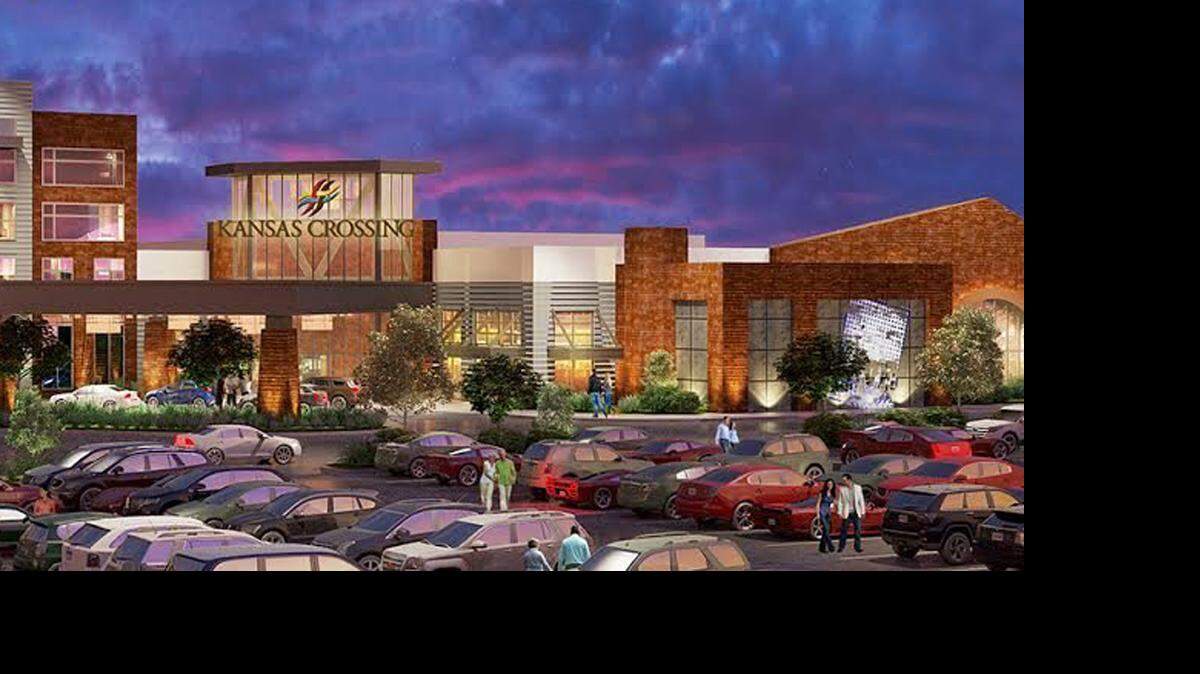
Kansas Crossing Casino and Hotel
Kansas Crossing, slated for the junction of U.S. 400 and 69 just south of Pittsburg and close to the Missouri border, is estimated to cost $70.2 million.
The group estimates about 500,000 annual visits, with half from outside the state.
The investment group consists mainly of a Topeka-based development group that includes Bruce Christianson, HDT Cameron Hotels, Bruce McPherson, Michael McPherson, Nancy Seitz, James Walker, Jonathan Swain, Natalie Schramm and Brent Stevens. The group also includes Wichita developer George Laham.
Many of the partners were involved in earlier winning bids to develop the Kansas Star Casino in Mulvane and Boot Hill Casino & Resort in Dodge City.
According to documents, the group will supply $25.9 million in equity and up to $44.3 million in long-term debt. Christianson and the two McPhersons have committed to providing 80 percent of the equity, or $20.7 million,. HLT said it examined financial statements and found the three to have sufficient capital.
The group promises 625 slot machines, paying the casino a net of $149 per unit per day; and 16 game tables, paying $1,027 per table per day.
The plan also calls for a 120-room hotel, a 400-seat event center, a restaurant and bar and parking.
Camptown Casino
Ruffin’s Camptown Casino, intended for the former greyhound track in Frontenac, was estimated by the applicants at $78.5 million.
The group estimates that 740,000 of the 949,000 visitors will come from out of state.
The group consists of Ruffin, and will be financed by him. The consultant said it believes Ruffin has sufficient money to handle the project.
The group promises 750 slot machines, generating $140 to $159 per day per unit; and 20 game tables, paying $814 to $928 per table per day.
The plan also calls for a 62-room hotel, two restaurants and a bar.
Reach Dan Voorhis at 316-268-6577 or dvoorhis@wichitaeagle.com. Follow him on Twitter: @danvoorhis.
This story was originally published April 18, 2015 at 7:33 PM with the headline "Developers pitch their plans for southeast Kansas casinos."