Here’s how Kansas farmers are working to reduce pollution in the Gulf of Mexico
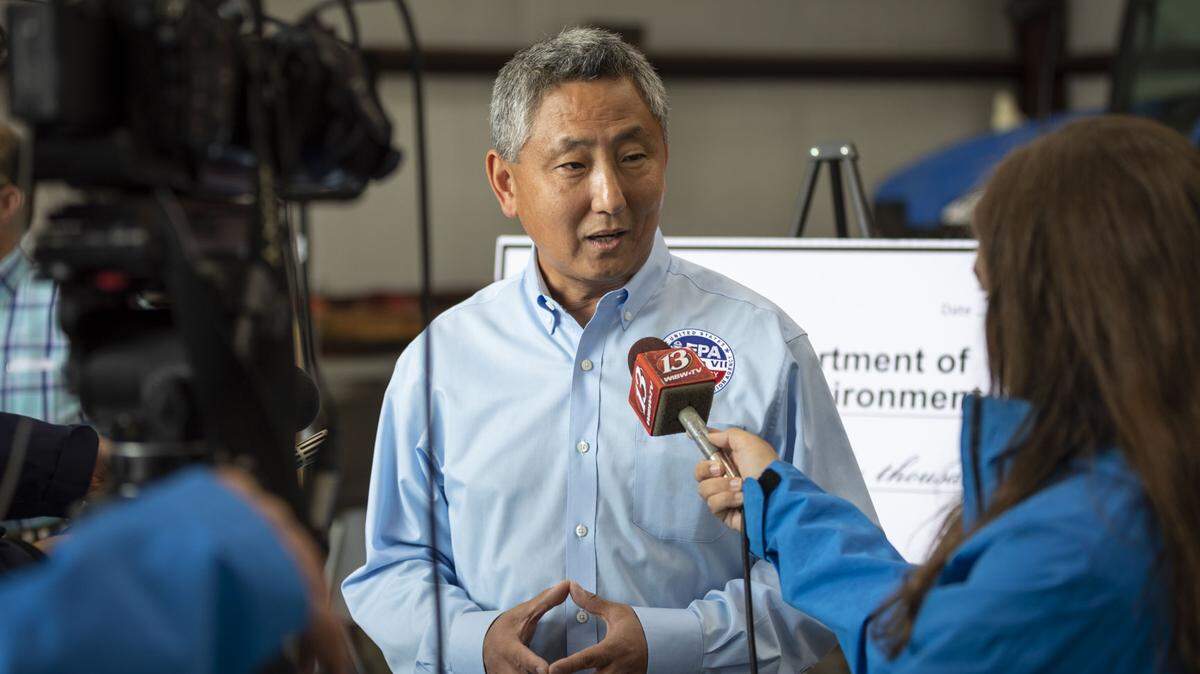
Kansas farmers will reduce pollution in the Gulf of Mexico as part of a new Kansas Department of Health and Environment program.
Earlier this week, KDHE received a $750,000 grant from the Environmental Protection Agency to educate eastern Kansas farmers and share innovative practices to prevent nonpoint source pollution.
Nonpoint source pollution is when water, moving through the ground after it rains, picks up and carries pollutants, such as excess nitrogen and phosphorous, into lakes, rivers and groundwater.
“The challenges that we’ve gotten in the Gulf of Mexico can’t just be solved in the Gulf,” said Jeffrey Robichaud, EPA’s Region 7 Water Division Director. “These grants are provided to projects further up in the watersheds and are intended to make fixes and get people doing things so the excess nutrients that come down to the gulf can be stopped.”
Farmers have the opportunity to be the first line of defense in reducing this pollution because of their relationship to the land and their opportunity to build soil health.
“Nutrients remain one of the most challenging pollutants that we have in our region and certainly down to the Gulf of Mexico,” Robichaud said. “They are precursors to harmful algae blooms that we have throughout Kansas and the Midwest.”
By focusing on building soil health, farmers’ land will also be more resistant to drought and flood. In addition, they will be able to sequester carbon from the atmosphere using cover crops, which will aid as these are climate change-causing greenhouse gases, Robichaud added.
“It’s a good thing to reduce nutrient export, but it really also helps farmers out in terms of the durability and the sustainability of their farms,” Robichaud said.
KDHE’s grant is one of the first projects in the Farmer to Farmer program in a state not along the gulf, Robichaud said.
“This grant funding will specifically be used for training, time, travel and equipment for farmers in Kansas who are currently practicing the soil health principles on their farms,” wrote Kristi Zears, communications for KDHE, in an email. “Participating farmers will become coaches for their neighbors and communities to teach others how to find soil health resources and start implementing soil health practices on their own farms.”
Over the next three years, KDHE will work with 10 coaches, who will be responsible for recruiting and teaching five other farmers how to transition their farms to incorporate soil health practices.
“One of the things I think is unique and something we’re certainly excited about is farmers learning from other farmers,” Robichaud said. “It’s much more efficacious when farmers are working with each other, getting their hands dirty and learning from their neighbors.”
The $750,000 grant was announced earlier this week as part of the Environmental Protection Agency’s Farmer to Farmer program. Kansas was one of 12 programs chosen, which were awarded between $250,000 and $1 million to fund their three-year projects.
“The maximum an entity can request is $1 million dollars,” said Emily Albano, press officer for EPA Region 7. “They asked for a pretty good chunk of change and they got it because of our confidence in the project.”
The Farmer to Farmer program offers grant funding to develop and incorporate practices in farming communities that will improve water quality in the Gulf of Mexico because of the area’s “tremendous value in ecological, economic, and social terms.”
This story was originally published July 2, 2021 at 9:36 AM.