Organic tools: How this Kansas company uses all-natural products to help farmers
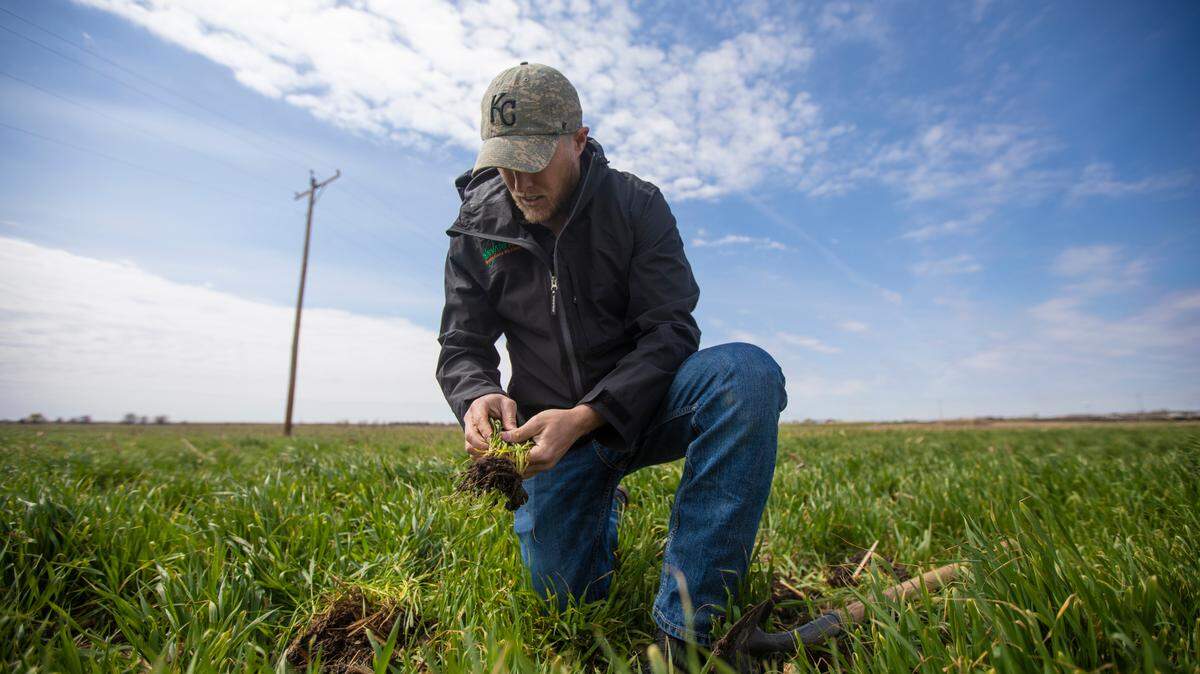
Elevate Ag, a new Kansas farmer-founded and led company, is trying to help farmers save money by creating healthier soil.
The group is consulting with farmers throughout the Midwest and parts of the South to help them learn to become more environmentally friendly while saving money and reducing the number of synthetic compounds they put on their crops.
“What we’re trying to go back to is farming with biology, not chemistry,” said Shawn Tiffany, an Elevate Ag partner and owner of Tiffany Cattle Company, who joined because he wanted to integrate his livestock back into farming. “As a farmer I just got so tired of spending so much money on chemistry.”
Working with farmers of all types, from conventional farmers to organic, Elevate Ag was started in June 2019 by Arman Miller, a Kansas farmer. They’ve expanded their operation quickly, assisting farmers on 80 acres of land last year, to more than 500,000 acres in 2021.
Their goal is to examine the soil and help farmers understand what their soil issues are and turn their families and farms into success stories, said Nikki Tiffany, Elevate Ag’s marketing and web page moderator.
To do this, they help farmers practice regenerative agriculture, which builds soil health, increasing biodiversity and creating resilient soil that can bounce back from the effects of climate change, such as drought or extreme weather events.
“We believe that a bridge is missing between farmers and this knowledge of consumer and grower,” Nikki Tiffany said. “Elevate Ag is that bridge.”
It starts with education
Switching to organic or regenerative farming can be a time-consuming and challenging transition to make, and with limited use of fertilizers, farmers have to spend extra time growing the soil’s health.
The company’s process starts with education, and employees bring tools to show farmers the difference between crops grown with regenerative agriculture, and those grown without. The first thing Travis Kraft, Elevate Ag’ regenerative agriculture advisor, does when connecting with growers is to test the soil and then explain to the grower what their soil issues are and why different products they use, like fungicides and herbicides, could have more negative impacts than benefits.
“Farmers want someone they can have a relationship with,” Kraft said. “Right now most farmers just get salesmen who come once a year or so.”
Additionally, using just one tablespoon of the crop, Kraft is able to show that wheat grown with regenerative agriculture practices has a higher, more desirable protein content.
Tiffany said he’d seen a shift as farmers are starting to think about quality versus quantity and are marketing wheat based on protein content, for example. Studies also show that food is not as nutritious as it used to be because of changing farming methods, which Elevate Ag would like to change.
Everything a farmer does affects everything down the line, like nutrient density, according to Kraft. To help plants be healthier and mitigate stress, they have to make sure nutrients are available in the soil and not in synthetic form.
“When Travis (Kraft) compares the plants, this helps farmers understand and then they get hope that they can do better,” Miller said.
Elevate Ag employees say they see the company as a way to build a community where farmers can talk and learn from each other.
“We’ve gotten away from neighbors talking to neighbors about what works,” said Del Ficke, Elevate Ag’s ag relationship advisor. “It’s become more competitive and that’s because of systems built that weren’t the best for us.”
Creating natural farm products
Before Elevate Ag existed, Miller worked with an experimental solution of waste manures and calcium on crops and started seeing many benefits.
Called HyprGrow, the in-house concoction of composted manure, sea kelp, and other natural ingredients is a thick black liquid and can be applied in various ways, using between 1 and 3 gallons per acre.
Kraft and others at Elevate Ag are working on test sites to compare plants with their product and without. They are looking for signals of health, such as massive roots with soil that looks like “chocolate cake” and green from the top to the base of the plants, according to Kraft.
Elevate Ag shows and describes these differences in soil and roots to farmers to help educate them and get them through drought, Miller said.
Elevate Ag currently works with about 15 input partners, who supply them with various natural products for farmers. One partnership is a local Kansas preserve that raises Tilapia and sells the wastewater to organic farmers as a fertilizer. In January, they sold 4,700 gallons to an organic wheat farmer in Oklahoma, with plans for another 10,000 gallons at the end of this month.
Unlike synthetic treatments, which are usually geared towards specific plants, natural treatments can be put on anything. They’re constantly looking for new tools, like the tilapia water, that they can offer organic farmers, who are even more handcuffed by what they can put on the soil.