
Lower crop prices expected to reduce income for farmers
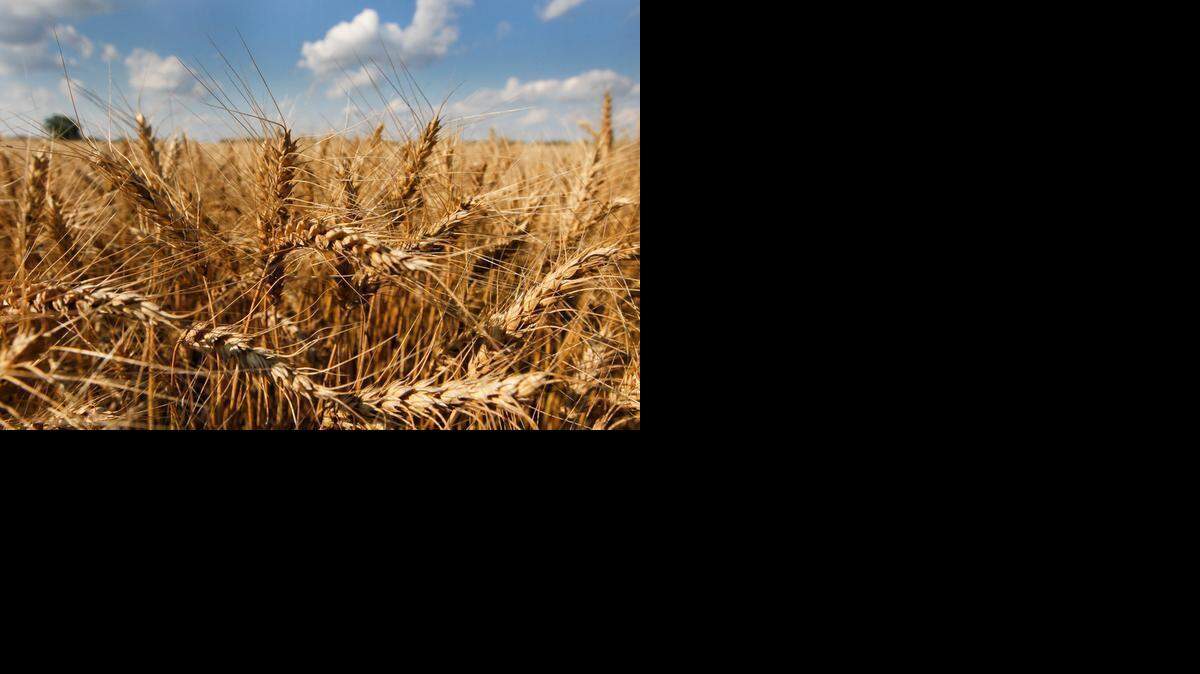
As green sprigs of wheat begin to lend fields across Kansas their spring color, farmers will begin to pay new attention to the crop.
As the 2015 wheat crop leaves winter behind and starts shooting toward summer harvest, producers will monitor its progress with anxiety and anticipation – hoping for timely rains and higher prices, and dreading possible hail, drought, pests and disease.
Agricultural economists expect 2015 to be a so-so year for farmers. It won’t measure up to some of the giddy years of the early 2000s, when big yields combined with high wheat prices. And if the spring rains come, it won’t be the miserable disappointment of 2014, when drought sucked yields in much of Kansas down to almost nothing.
“Although we have low prices, I don’t see any of the pessimism that you saw during the farm crisis in the 1980s,” said Dan O’Brien, extension agricultural economist with Kansas State University.
He said during an interview in early February that prices were right at or below production costs. But because the lower crop prices are coming after a run of good years, farmers are so far taking the lackluster commodity prices in stride.
Nationwide, farmers’ incomes in 2015 are expected to drop an average 32 percent, compared to last year, according to a report from the U.S. Department of Agriculture. The USDA said the drop will come atop a 16 percent decline in 2014, compared to 2013.
Lower crop prices are a primary reason for expected decline.
Wheat that a couple of years ago was selling for $8 or more a bushel was selling for about $5.40 a bushel in mid-February.
Where wheat prices will be come harvest time – usually June and July in Kansas – will depend on a multitude of factors that include not only the weather in the Plains states, but also the strength of the U.S. dollar and the size of wheat crops harvested in Asia, Australia and Europe.
“I think it’s judicious right now to be conservative,” said O’Brien, who is based in Colby.
Farmers seemed to be restrained when they planted wheat in the fall, putting fewer Kansas acres into wheat than in 2013 – 9.4 million acres compared to 9.6 million.
Corn and soybeans
Spring also will be when Kansas farmers decide how many acres to plant in corn, milo and soybeans.
How they divvy up acreage for those fall crops often depends on where they anticipate the markets will go. Export markets in recent years have been strong, especially for corn. And the U.S. tends to have fewer competitors for corn and soybean exports than for wheat, O’Brien said.
“There are a number of places people can go to buy wheat,” he said.
While some of the calculation about what to plant includes consideration of what markets specific for corn, soybeans and sorghum might do six or seven months down the road, producers also tend to “try to take a balanced portfolio” he said.
Like wheat, corn, sorghum and soybean prices have all fallen substantially over the last year. While much could happen to create more demand for U.S. grains, the outlook is generally for prices that are 25 to 40 percent lower than they were a year ago.
So producers will be taking their best guesses about prices down the road and weighing them against input costs –including fuel, seed and fertilizer.
A better idea of what decisions they have made won’t come until May, when actual planting begins in earnest.
Cheaper livestock feed
The bad news for those who grow corn and milo translates to less expense for livestock producers, which rely on the grains to feed livestock.
But not all producers will benefit equally, said Glynn Tonsor, associate professor in K-State’s department of agricultural economics.
He expects cow-calf operations to benefit most from the current economic dynamics: “2015 is going to be a very good year historically, but not as good as 2014.”
At the other end, feedlots will continue to struggle with very tight margins and a limited number of cattle.
“I think we will see a few more feed yards and a few more packing plants close” over the next couple of years, he said. “There are a lot of reasons to be optimistic for cow and calf operations … but margins are a lot tighter in feedlots.”
That’s because ranchers are keeping more of their cattle as they rebuild herds from a multi-year drought.
That drought left ranchers with less pasture and more expensive feed, and they sold off or reduced their cattle herds as a result. That shrunken supply helped push beef prices – as well as cattle prices – even higher.
Now, as ranchers rebuild their cattle herds, they are holding back cattle, leaving some feedlots and packing plants short of the numbers they need to operate at peak efficiency.
That makes their margins thinner and thinner, because the cost of the cattle going into the feed yards has gone up too.
“It’s a necessary evil to enlarge the herds,” Tonsor said, adding “by 2017 that will get a lot better.”
He says the region could currently have 20 to 30 percent overcapacity in feedlots.
The outlook is mixed for pig producers as well.
Tonsor called 2014 “an abnormally good year.”
A virus that reduced pig numbers and increased export demand helped boost prices, but 2015 isn’t likely to be as bright for producers.
Tonsor said his outlook shows producers’ costs could outrun profits in the first and fourth quarters, while the second and third quarters could be break-even or a little better.
How 2015 and beyond shape up for livestock producers, he said, could depend increasingly on export markets.
“I tend to be one of the more bullish people on the global market,” he said.
He thinks incomes outside the U.S. will grow faster than inside it, and that will create demand for high-quality protein, such as U.S. fed beef and pork.
In the short term, the export market faces some serious obstacles, including ongoing labor disputes at West Coast ports and the relative strength of the U.S. dollar.
Longer range, many in agriculture see government regulation and animal welfare activists as challenges. Tonsor said those kinds of factors tend to increase uncertainty about the industry – and uncertainty typically crimps expansion.
But in the end, dealing with those kinds of issues is part of the business, Tonsor said, and most producers understand that.
Farmland values
Prosperous years for ranchers and farmers have helped push land prices to record levels in recent years.
The increases have been so substantial that some feared a rural version of the housing market bubble. There are few signs that the bubble is about to burst, but lower grain prices have reined in some of the exuberance.
O’Brien said he expects it to continue to be a seller’s market in Kansas.
In Kansas, there’s not a lot of land that comes on the market, and there are still a lot of farmers interested in buying – so that supply-and-demand equation is still working as much or more for the seller than the buyer, he said.
If grain prices stay low a few more years, that equation could change substantially. More land owners would be pressured to sell, he said, especially if they carried substantial debt. And that would bring more land on the market – brought by sellers who needed to sell, rather than who were looking to get out at the top of the market.
But O’Brien points out that talking about where crop prices will be a year or two years from now is pure speculation. At this point, he doesn’t see any reasons for dramatic swings in the next few months – much less the next few years.
“We generally don’t talk about extremes (this time of year),” he said, “but averages.”
This story was originally published February 16, 2015 at 2:05 PM with the headline "Lower crop prices expected to reduce income for farmers."