
How the time change affects our health
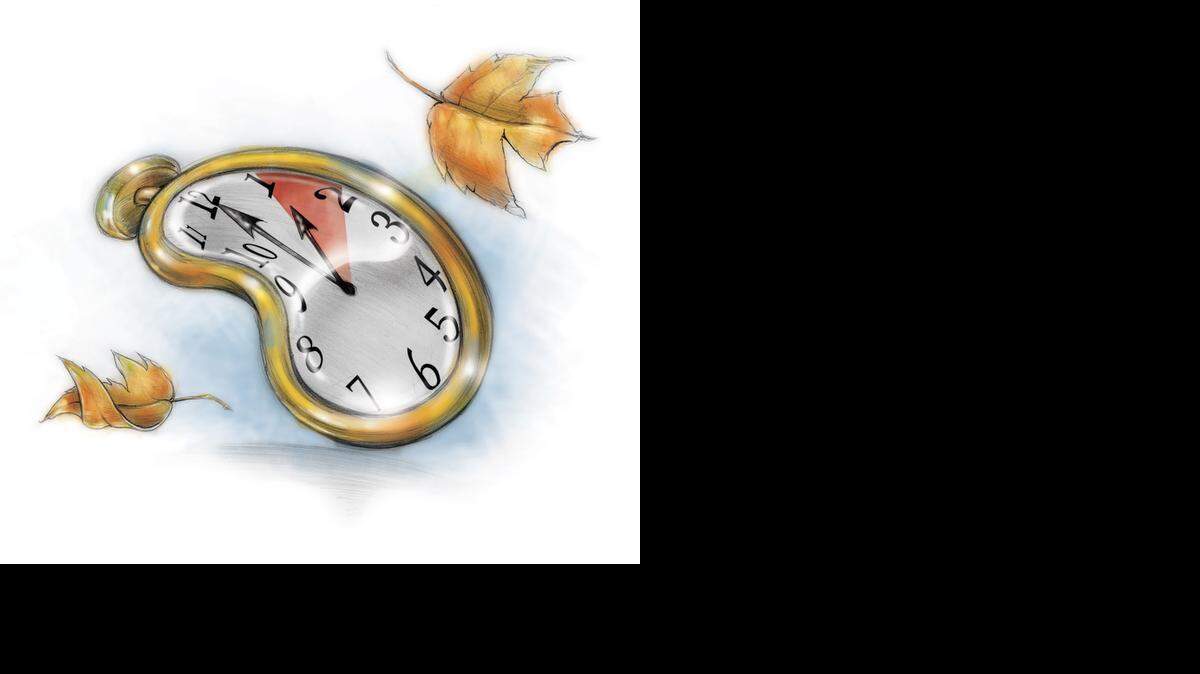
Many people will relish the extra hour we’ll gain when we set back our clocks an hour this Sunday. It’s the one day when we actually seem to fulfill that wish of “if I only had more time.”
“‘Fall back’ is my absolute favorite day of the year,” said Deborah Ballard-Reisch, a communications professor at Wichita State University. “I feel like I’m ahead of the game for almost a week after that day. That extra hour is a godsend. ‘Spring forward,’ on the other hand, makes me want to cry for days.”
Health experts agree that the spring time change – when we lose an hour by “springing forward” the clocks – is harder to recover from than the fall time change, when clocks “fall back” and we gain an hour.
Some studies have shown decreases in heart attacks and accidents in the days immediately following the end of daylight saving time in the fall. On the flip side, studies have shown increases in accidents and heart attacks when it begins in the spring.
But for some, the extra hour of sleep this Sunday and those encouraging statistics are little consolation for the dreary, sluggish feeling that can come in the weeks after the fall time change, thanks to shorter days and longer nights. And for others, winter blues can turn into seasonal affective disorder, or SAD, a debilitating condition similar to depression.
Like jet lag
The one-hour time change we experience during spring and fall is like traveling between time zones, explained Thomas Bloxham, a Wichita doctor who’s been practicing sleep medicine for more than three decades.
Traveling into the Eastern time zone from Kansas, which is predominantly in the Central time zone, is like springing forward. Traveling west into Mountain time zone is like falling back, when daylight saving time ends.
“East is least, west is best,” said Bloxham, using a navigator’s mnemonic phrase to describe how one feels as they travel between time zones.
Just as most travelers adjust better to westward travel, we adjust better to the fall time change, he said.
What we don’t adjust to so well is the lack of sunlight.
“Our brain is set to sunlight, not anything Thomas Edison worked on,” said Bloxham, who runs Kansas Sleep Medicine. “The part of the brain that is our internal pacemaker and controls melatonin – one of the biggest things it depends on is bright light, and in particular, the bright light at the beginning of the day.”
Melatonin – a hormone produced by the brain’s pineal gland – controls our body’s sleep and wake cycles.
If you’re one of those people who dread the shorter days and longer nights, start making lifestyle changes now, recommended two area mental health experts.
In the fall, some people slip into not-so-good habits – like overindulging on Halloween and holiday treats or slacking off on exercise routines because of busier schedules or colder weather.
It’s important to get enough sleep, eat healthy and stay active if you want to avoid winter blahs, advised Dominica West, a licensed master social worker with Wichita Therapy Care, and Amy Driskill, a licensed marriage and family therapist with Integrative Counseling Center.
Here are some things you can do to help keep the winter blues at bay:
▪ Soak up the sun. The sun’s rays will affect your body’s natural clock and its production of a mood-enhancing chemical. Get sunlight when you can, even through a window, but remember morning time is best.
“If you get that bright light in the morning, it advances your circadian rhythm (the body’s natural clock) and it makes you fall asleep earlier and get up earlier,” said Bloxham. That can help make you feel like you’re making the most of those shorter days and longer nights.
The sun’s bright light boosts serotonin levels, a chemical that helps maintain our mood balance, according to Driskill and West.
For people with seasonal affective disorder, a doctor or mental health professional may prescribe antidepressants, which help increase serotonin production, or bright light therapy that mimics the sun’s intensity.
▪ Don’t ease up on exercise. Colder weather forces many people inside and can lead to finding excuses not to exercise. Find ways to fit in even short exercise times of 20 to 30 minutes a few times a week to help release endorphins, a hormone that gives one a natural high, recommended West and Driskill.
▪ Stay regular. Regular bedtimes and wake-up times help train our circadian rhythm, as well, Bloxham said. Keeping irregular sleep habits can have the same effect as jet lag. In fact, that practice has led to researchers coining the term “social jet lag.”
▪ Get help if needed. According to the National Institutes of Health, seasonal affective disorder symptoms, which are much like those experienced with depression, can build up in the fall and winter months. People living in places with longer nights are at higher risk. If you are experiencing changes in appetite, sleep habits and energy levels and are becoming withdrawn, visit your doctor to determine if you have SAD, mental health experts recommend.
Safety check
Safety and home organizing experts suggest using the fall time change – and the extra hour it brings – to do a couple of important tasks: replacing batteries in smoke and carbon monoxide detectors and replacing burnt-out light bulbs. The former will help ensure those life-saving devices work properly, while the latter will help ensure you can light up the longer nights.
This story was originally published October 25, 2014 at 2:40 PM with the headline "How the time change affects our health."