
Running for a cause: Experts offer advice for novices
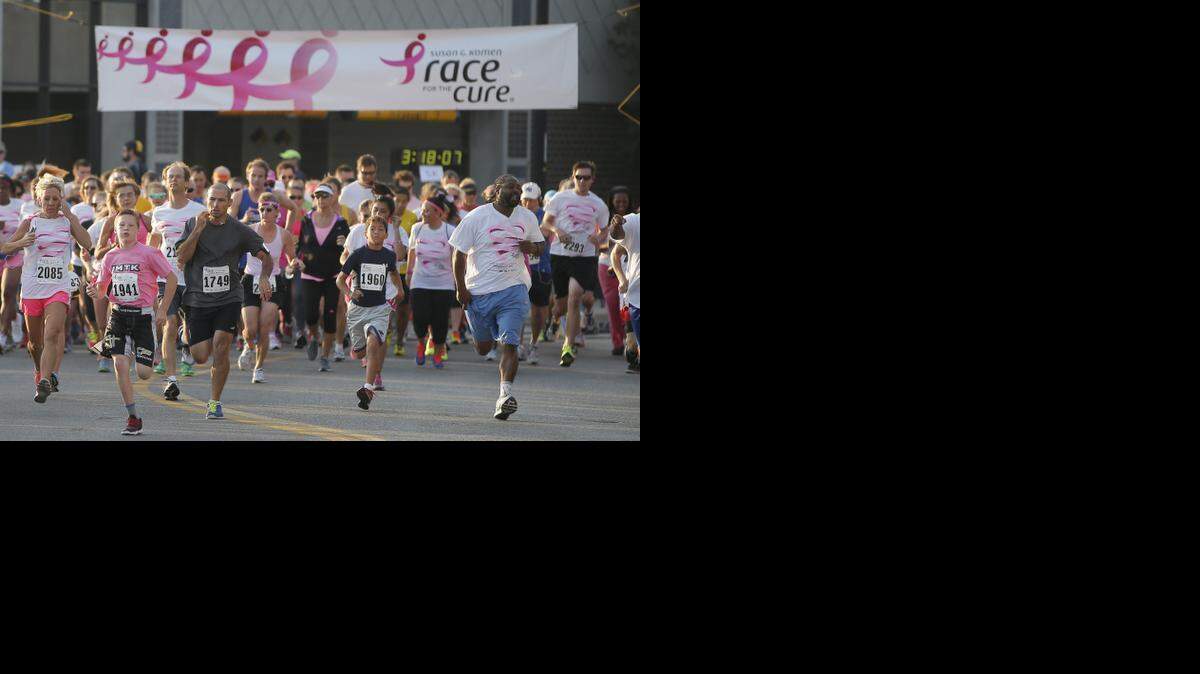
Talk to Julie Reams about running and she takes off, sharing her excitement about how she’s helping herself and others by participating in charity races.
Before 2011, Reams hadn’t even considered running. Then one day a neighbor interrupted a run to suggest the then-39-year-old Reams join her in a half-marathon. In the four years since, the Andover resident has logged thousands of miles, many of them for charity races.
The proliferation of charity races has created a steady stream of people interested in tying on a pair of running shoes and raising money for a cause. In an enthusiastic rush to help their favorite causes, some novice runners – considered from the “couch to 5K” runners by those in the running industry – can end up being injured or discouraged, however.
According to a 2013 article in Runners World magazine, Running USA estimated that charity races raised more than $1.2 billion for nonprofit organizations in 2012 – more than double the amount raised a decade before.
“We’ve seen an uptick in the sport, no doubt about it,” said Joel Stansloski, the new owner of the east-side and west-side GoRun stores in Wichita. “(Charity races) are drawing a lot more folks into the sport. It’s helping people get involved (who) traditionally might not have. The one thing that a lot of people do, however, is go overboard from the start.”
Go slow
Getting involved in a charity race isn’t as simple as pulling out your athletic shoes from the closet.
“Charity races tend to be geared to a doable distance,” which is why many people choose to participate, said Raquel Stucky, a longtime runner and co-owner of First Gear Running Company, which offers free training classes for runners. But even shorter races like a 5K, which is about 3 miles, require long-term training.
Getting the right shoes, pacing oneself in training, understanding pain and the recovery time needed for muscles, and paying attention to one’s diet is important.
“Be smart about how you start,” advised Andrew Porter, a family medicine and sports medicine physician with Via Christi Health, when asked how novices should approach training. “You need to ease into it and go slow when you start.”
A good general rule of thumb is to make sure it’s safe to start a running program, he said. Anyone with a chronic medical condition such as high blood pressure, high cholesterol, diabetes or heart disease should talk to a physician first, and possibly even undergo a stress test, he said.
“For most people it is safe, and as physicians, we want our patients to be active so we don’t want to discourage them,” Porter said. Visiting with your physician and sharing any health concerns can help you set the right course for your training.
Give yourself ample time to train, advised Porter and Stucky, and be prepared to do a combination of more walking plus short running distances when you start training.
“The process of getting into shape is a marathon, not a sprint,” Porter said.
The best way to avoid injury is to follow the 10 percent rule, say sports medicine experts. If, for example, you are running a quarter mile four times your first week, the next week you would increase your distance by only 10 percent, Porter said.
“It’s been proven to be effective at injury prevention and easing into getting more mileage under one’s belt,” he said.
Train in packs
Many runners, from novices to experienced runners, get support, encouragement and tips from other runners.
After her neighbor’s invitation to run, Reams signed up for a training group offered through First Gear Running Company. Her overzealous start – running too hard and long, which led to an injury – caused her to doubt whether she would continue. But then she learned to ask questions and seek advice from the group. She realizes now she was trying to make up for lost ground, having waited until she had the “inspiration” of turning 40 to start running.
“You really need to listen to others,” Reams said. She initially thought a rest day meant lying around not doing anything – until she talked to other runners. They explained that it was a day to rest from running but to use the time to stretch or do what’s called rolling out muscles – using a foam roller to help sore muscles to recover.
Besides tapping into the advice of fellow runners, Reams also consults with staff at First Gear and explores the Runners World website and running blogs if she has training or other questions.
Many communities have running groups or training opportunities. Wichita running stores, First Gear and GoRun, offer training groups. Two nonprofit organizations – the Leukemia and Lymphoma Society and the Greater Wichita YMCA – offer endurance sports training.
On the right track
Once Reams learned the do’s and don’ts of running, the sport became an important part of her life. For Reams, a development coordinator at Rainbows United, training for and participating in charity races has a dual purpose.
“I know I am helping a cause, but I’m also getting healthy, too,” Reams said.
Running has even become a family event. Two years ago her husband joined her in some charity races and last year her entire family participated in the Rainbows Run, to benefit Rainbows United, a nonprofit that helps special needs children.
Reams said she is a lot healthier than when she began running – she’s losing inches, getting more muscle tone and developing healthier eating habits to support her physical activity.
“I really believe running saved my life,” she said.
Getting a good start
To ensure you get on the right track when starting a running program, local runners and a Wichita doctor offer the following advice:
▪ Get the right shoes. Based on his own running experience, Andrew Porter, a family medicine and sports medicine physician with Via Christi Health, said the right shoes do make a difference in how they provide cushioning, motion control and other features. Stores that specialize in running gear usually provide fitting services for shoes.
▪ Use the 10 percent rule. Don’t go overboard in training. A proven way to avoid injury, yet build up endurance, is to increase your running distances by only 10 percent each week.
▪ Listen to your body. It’s OK to walk when you first start training. Most people will need to start with short running distances of under a mile during a training session. Stretching is important, as well, to help your muscles and tendons recover better and prevent injury. The best time to stretch and gain more flexibility is after your muscles are warm from a workout, Porter advised. Novice runners should always incorporate a day or two of rest from running during the week. Use that rest day to do other activities, such as yoga or using an elliptical machine.
▪ Listen to others. Learn from other runners by joining a running group or reading online resources such as www.runnersworld.com or blogs about running.
▪ Pay attention to pain. Muscle and joint soreness and stiffness are fairly normal, especially if you haven’t done much physical activity or if running is a new activity. Seek medical help for pain that persists beyond a day or two or doesn’t go away as you warm up. Also visit a health care professional for swelling.
▪ Pay attention to your nutritional needs. Calculate the calories you are burning in your training and make sure your body is getting enough calories or energy to be able to repair and restore itself. Keep yourself well hydrated; the best gauge for hydration is if your urine is light yellow or clear. If it’s not light yellow or clear, you’re not getting enough liquids. To avoid stress fractures, which often result from adding a weight-bearing exercise such as running, ensure you are getting 2,000 mg of calcium and 800 international units of vitamin D daily, Porter said. (One serving of dairy is about 300 mg of calcium.)
Find a group
Here are some local Wichita resources for group training for novice and experienced runners:
▪ First Gear and GoRun, two local running stores, offer training group opportunities. First Gear offers two, free training sessions weekly: a 6 p.m. Tuesday strength and training session that starts at College Hill Park near Advanced Physical Therapy and a 6:30 p.m. Wednesday workout at Wichita State’s Cessna Stadium.
In April, GoRun plans to launch a Saturday morning program tailored toward novice runners who want to participate in 5K runs. Cost is $50 for the eight-week program. It also offers a longer-term training program.
For more information, contact First Gear at 316-264-5500 or www.firstgearrunningcompany.com, or GoRun stores at 316-978-9690, 316-613-2479 or www.gorunwichita.com
▪ Run Wichita is a local membership club for individual runners and families that offers group run opportunities. It also has an extensive list of upcoming races on its website. Go to runwichita.org for more information.
▪ For those interested in competing in triathlons, the Greater Wichita YMCA (ymcawichita.org) offers triathlon training at its local Y locations. Triathlons combine swimming, biking and running. Contact a Greater Wichita YMCA location for more information about its Triathlon Training Club.
▪ Team In Training (TNT) (www.teamintraining.org), offers endurance sports training for runners, cyclists and walkers. TNT participants must also raise funds to support the sponsoring organization, the Leukemia and Lymphoma Society. TNT participants can compete in “destination events,” such as a marathon in Seattle, with TNT picking up the tab for entrance fees and hotel stays, according to Stacy Duncan, the Team in Training campaign director for the mid-America chapter of LLS. The group is also offering a Moms in Training option, where running strollers can be used, for moms who want to participate in the Wichita River Run on June 6. TNT also offers customized training for other competitive events through a program called TNT Your Way, Duncan said. Information meetings about TNT are held at 7 p.m. the first Tuesday of every month at Reverie Coffee Roasters, 2611 E. Douglas.
This story was originally published March 23, 2015 at 5:58 PM with the headline "Running for a cause: Experts offer advice for novices."