
In matters of the heart, young women can face high risks
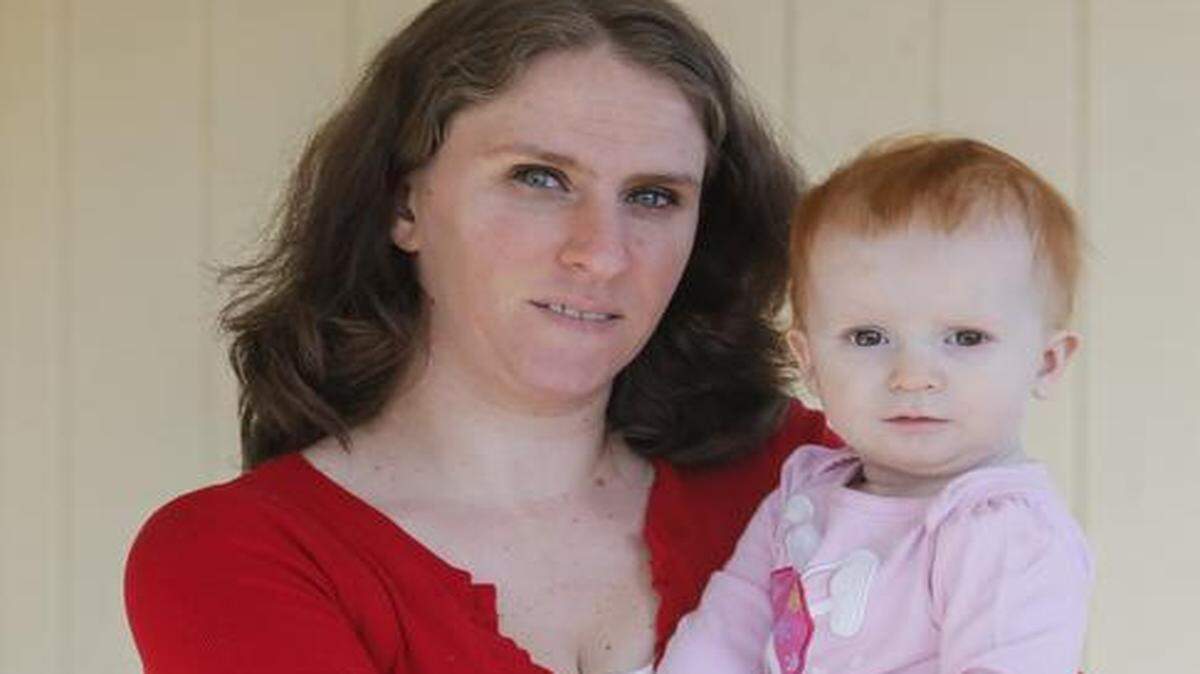
Stacy Boring thought she was going to die – alone, in the dark, on the side of a road.
Though she had all the telltale symptoms, it never crossed her mind that she was having a heart attack early that morning on July 13, 2009.
Every year, about 720,000 Americans have a heart attack. About 35,000 of them are young and middle-aged women, like Boring. Recent studies show that young women are at greater risk for heart disease and attacks than young men.
“I was a 29-year-old who thought she was invincible,” said Boring, who had a second heart attack later that day at Wesley Medical Center. She wasn’t overweight, had good cholesterol numbers and had no family history of heart disease.
“I can’t remember what I told (the 911 operator), but it was along the lines that something serious was happening,” Boring said.
“All I knew was that if I didn’t get help that I was going to die on the side of the road. At 5:30 in the morning, that’s a scary feeling. There were no cars driving by, it’s dark, I’m on an off-ramp where there’s not much light and I’m thinking, ‘Oh my God, if someone doesn’t come soon, I’m going to die here and someone eventually will drive by and find me dead in my seat.’”
Even the emergency responders kept asking how old she was when they got to her car, parked on the shoulder of K-96 in northeast Wichita, where she’d pulled over. Her symptoms – a sharp pain in her left shoulder that traveled down her arm; a constricting, heavy chest; a hot feeling, nauseousness, then vomiting; and a cold sweat – had started as she rounded the exit from I-35 onto K-96.
Around lunchtime – just as her two children who at the time were about 11 and 9 were coming to see her at the hospital – she had her second heart attack. Her eyes well up as she remembers how her kids ran down the hall after her, as the medical staff rushed her from her room. She later found out that her cardiologist, Ravi Bajaj, told the children’s father that he wasn’t sure she’d be OK before he hurried off to save her.
Doctors eventually determined that Boring, now 35, had severe blockage in the blood flow to her heart that caused her heart attacks. She and her doctors determined that a combination of smoking – one of the risk factors for heart disease – and birth control medication had increased her risk.
“Heart disease knows no age,” Boring said she came to realize. “Just because you’re young doesn’t mean it can’t happen. You don’t think that at a young age your body can fail you, but it can.”
Rising risks
Bajaj, with Heartland Cardiology, said there are three factors contributing to young women being at higher risk for heart attacks, with two of them being rising smoking and obesity rates among teen and young women.
The third factor relates to the body’s ability to adapt to blood flow blockages. Older patients develop blockages slower and over many years, and during that time their bodies often develop natural bypasses to the blockages, Bajaj said. Exercise helps with that rerouting. Younger people haven’t developed some of those natural bypasses, so a heart attack due to blockage can be more severe in younger people, like it was for Boring, he explained.
About 80 percent of heart disease is caused by treatable risk factors, Bajaj said, such as obesity, physical activity levels and smoking. He also advises that young women avoid smoking while on birth control drugs, since the combination increases one’s risks for heart attacks and strokes.
The symptoms
While Boring experienced chest pain, some young women don’t always have this common symptom.
According to a study published in late 2013 of 1,000 young patients hospitalized for acute coronary syndromes – when blood flow to the heart is suddenly blocked – researchers found that one in five women ages 55 and younger didn’t experience chest pain during a heart attack. Women in general are less likely to experience chest pain with a heart attack compared to men.
Boring exhibited most of the other common symptoms found in both men and women. According to the American Heart Association, those common symptoms include:
▪ Pain or discomfort in one or both arms, the back, neck, jaw or stomach
▪ Shortness of breath
▪ Breaking out in a cold sweat, nausea or lightheadedness
When it comes to young women and heart attacks, studies show they don’t fare as well in recovery and survival compared to men, according to Yale University studies published in the American Heart Association’s journal, Circulation.
A study published last year found that 2 to 3 percent of women ages 30-54 hospitalized for a heart attack died compared to 1.7 percent of men in that same age group. In a study published this month, researchers found younger women have poorer recovery rates compared to similarly aged men. The researchers also found that women had significantly higher levels of mental stress than the men, which they say may explain the difference.
Making changes
Like many heart attack patients, Boring spent time in cardiac rehabilitation therapy, learning to make lifestyle changes such as eating healthier and staying physically active.
It took her a while to get over her anxiety about driving. She now takes a different route to her job at T-Mobile to avoid the highway exit where she had her heart attack.
She has two stents that create a better passageway for blood to pump through her arteries. She also has implantable defibrillator in her chest that will deliver electrical pulses or shocks to her heart if she develops an irregular heartbeat that could cause another heart attack.
Since her heart attack, Boring’s ejection fraction rate – which refers to how well your heart pumps blood – has generally remained less than 25 percent, and has dipped as low as 15 percent. A normal EF rate is 55 to 70 percent, and someone with an EF rate less than 35 percent is considered at risk for irregular heart rates that can lead to a heart attack.
Boring has been on as many as 13 heart medications, but now is on only three. She sees her cardiologist only once a year.
Being a single mom who came close to dying, Boring realized she needed to get paperwork and planning in place to take care of her kids in case she faces another life-threatening situation.
She also had two other changes that affected her heart in another way: She found love and became a new mom again.
Because her heart history put her in a high-risk category, she was monitored frequently during her pregnancy. Her EF rate actually got better, increasing to 35 percent during her pregnancy. Doctors didn’t think she would go beyond 29 weeks in her pregnancy but she made it to 39 weeks, giving birth to daughter Peyton the day after Christmas 2013.
She doesn’t question why she had a heart attack and instead enjoys her life, with her two teenage kids, her “Christmas miracle” baby as she calls Peyton, and her significant other, Nathan Killman.
“I feel better now than I have felt in years,” she said.
Statistics of the heart
The No. 1 cause of death for both men and women is heart disease, accounting for 40 percent of all U.S. deaths.
About 600,000 people die of heart disease – about one in every four deaths – every year in the U.S.
The risk for heart disease for men and women goes up significantly by middle age, around mid-40s for men and around the age of menopause for women.
Every year about 720,000 Americans have a heart attack, striking someone about every 34 seconds.
About 35,000 young and middle-aged women annually suffer heart attacks.
About 800,000 people in the U.S. have a stroke every year, with one American dying of stoke every 4 minutes on average.
According to the American Heart Association, taking steps to lower one’s risk for a heart attack should start by age 20, by assessing risk factors and keeping them low. Controllable risk factors include smoking, high blood pressure, high blood cholesterol, diabetes, being overweight or obese, and physical inactivity.
Sources: American Heart Association, Centers for Disease Control and Prevention
Know your numbers
Keeping tabs on your cholesterol and blood pressure numbers is important in determining if you’re at risk for heart disease, stroke or diabetes. Here are the numbers that can indicate you’re at risk:
▪ Waist circumference of 35 inches or more for women and 40 inches or more for men
▪ Blood pressure higher than 130/85
▪ Cholesterol higher than 200
▪ High blood triglycerides of 150 or higher
▪ An HDL (good) cholesterol level of less than 50 for women and less than 40 for men
▪ A fasting blood glucose level of 100 or higher
American Heart Association
Stroke rates rising among young people
Strokes, like heart attacks, can happen to young people.
Just ask Park City resident Shareena Turley, who suffered a stroke last March at age 26.
Stroke rates for people ages 20 to 64 have been increasing worldwide. The rates in America have also increased, according to the Centers for Disease Control and Prevention.
Obesity, smoking and diabetes, which are also risk factors for heart disease and heart attacks, can increase one’s risk for stroke. Turley, however, had none of those. It’s probable that a switch in her birth control medication three months earlier led to her stroke, she said.
The signs of a stroke are different than a heart attack since it’s more of a brain attack – a stroke affects the arteries leading to and within the brain, according to the American Stroke Association.
Symptoms of a stroke include one-sided face drooping, arm weakness and speech difficulty.
With her training and prior career as a veterinary technician, Turley recognized she was suffering from a stroke and was able to call 911 to get help. Now, a customer service representative at Menard’s, Turley had the stroke while driving in Mulvane as part of her then-job as an insurance salesperson.
Strokes can have lasting effects and are the No. 1 cause of adult disability in the U.S., according to the American Stroke Association.
Turley spent nearly a month hospitalized at Via Christi Hospital St. Francis and Via Christ Rehabilitation Hospital and three months in therapy, working with speech, physical and occupational therapists to help her to swallow and walk again and regain use of her left arm.
She has a half-dollar-size dead zone in her brain because of her stroke, but has few lingering effects now.
Amy Geiszler-Jones
Heart Month happenings
As part of American Heart Month in February, Via Christi is sponsoring a free webcast and vouchers for a discounted health screening.
Cardiologist Darrell Youngman and internist Jennifer Jackson will discuss heart disease prevention, diagnosis and treatment and answer submitted questions during a free, 30-minute live webcast at 12:30 p.m. Tuesday, Feb. 17. To participate in the live webcast or to view a recorded version afterward, go to www.viachristi.org/lifematters. Tune in to KWLS 107.9 FM to listen to the show live, as well.
During the Women’s Fair on Feb. 20-22 at Century II, Via Christi will offer free blood pressure checks and vouchers for a $5 glucose and cholesterol blood screen at any AMS Laboratory-Wichita location.
This story was originally published February 13, 2015 at 7:03 PM with the headline "In matters of the heart, young women can face high risks."